

WHY IS MADINAH SO SPECIAL TO MUSLIMS? DISCOVER THE SPIRITUAL SIGNIFICANCE, HISTORY, AND BLESSINGS OF THE CITY OF THE PROPHET (ﷺ)

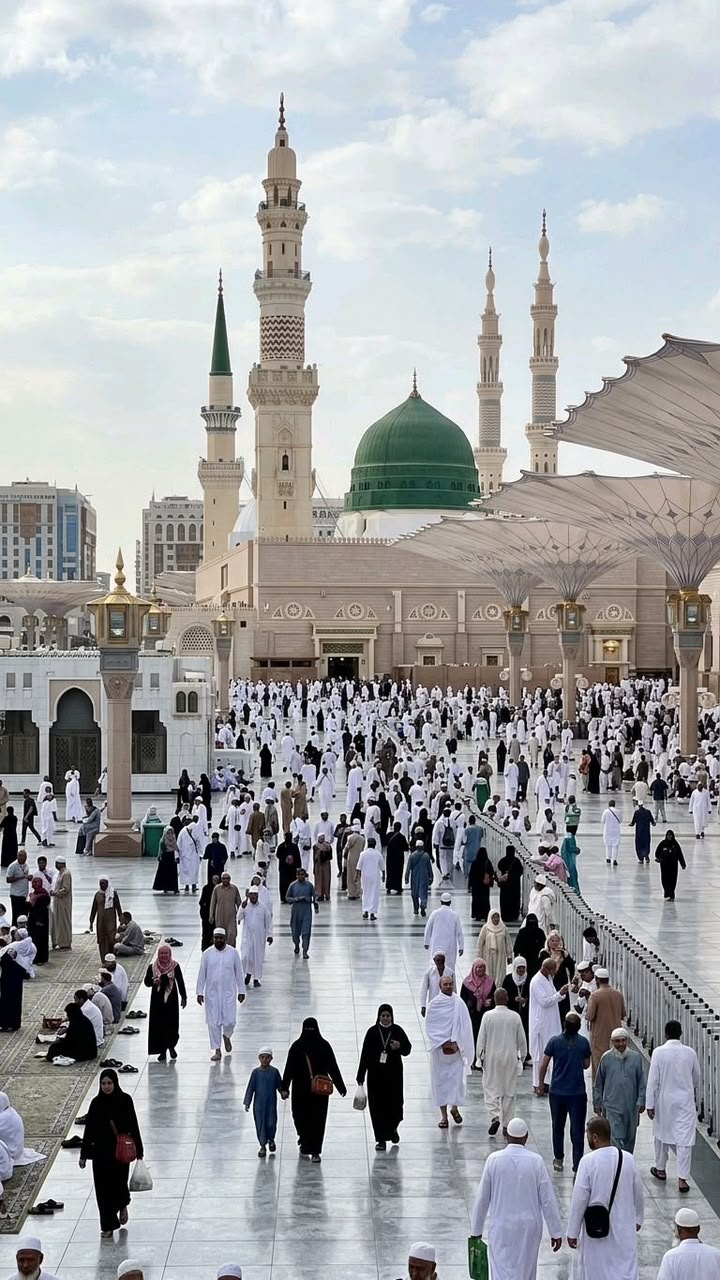
Madinah is one of the most beloved and sacred cities in Islam. Located in present-day Saudi Arabia, it holds a special place in the hearts of Muslims around the world because of its deep connection to Prophet Muhammad (peace and blessings be upon him), the history of Islam, and the establishment of the first Muslim community.
For millions of Muslims, Madinah is more than just a city. It is a place of peace, faith, love, reflection, and spiritual connection. Every year, Muslims travel from different parts of the world to visit this blessed city, particularly to pray at Masjid an-Nabawi, the Prophet’s Mosque.
But what exactly makes Madinah so special to Muslims? Why is it considered one of the holiest cities in Islam? Let’s explore its history, spiritual significance, and the blessings that make it unforgettable.
1. MADINAH IS THE CITY OF PROPHET MUHAMMAD (ﷺ)
One of the greatest reasons Madinah is special to Muslims is its close connection to Prophet Muhammad (peace be upon him).
After facing persecution and hardship in Makkah, the Prophet (ﷺ) migrated to Madinah in 622 CE in an event known as the Hijrah. This migration marked a major turning point in Islamic history and became the starting point of the Islamic calendar.
The people of Madinah, known as the Ansar (the Helpers), welcomed the Prophet (ﷺ) and the Muslim emigrants from Makkah with remarkable kindness and generosity.
Madinah became the home of the Prophet (ﷺ) for the final years of his life. It was also where he established the foundations of the Muslim community, taught Islam, and strengthened the bonds of brotherhood among believers.
For Muslims, visiting Madinah creates a special opportunity to reflect on the life, sacrifices, and teachings of the Prophet (ﷺ).
2. IT IS HOME TO MASJID AN-NABAWI
One of the most important landmarks in Madinah is Masjid an-Nabawi, also known as the Prophet’s Mosque.
The mosque was originally established by Prophet Muhammad (ﷺ) after his arrival in Madinah. It served as a place of worship, learning, community gatherings, and guidance for the early Muslims.
Today, Masjid an-Nabawi is one of the largest mosques in the world and welcomes millions of worshippers.
One of its most beloved features is Ar-Rawdah Ash-Sharifah, a blessed area between the Prophet’s house and his pulpit.
The Prophet (ﷺ) said:
“What is between my house and my pulpit is a garden from the gardens of Paradise.”
(Sahih al-Bukhari and Sahih Muslim)
This narration explains why Muslims attach such great spiritual significance to praying in this special area.
3. MADINAH IS WHERE THE PROPHET (ﷺ) IS BURIED
Another reason Madinah holds such a special place in Islam is that Prophet Muhammad (ﷺ) is buried in his chamber, which is now within the expanded area of Masjid an-Nabawi.
Two of his closest companions, Abu Bakr As-Siddiq (RA) and Umar ibn Al-Khattab (RA), are also buried beside him.
For Muslims, this is a deeply meaningful historical and spiritual landmark.
Visitors to Madinah often send greetings and salutations upon the Prophet (ﷺ), remembering his message, character, and immense contribution to humanity.
Muslims believe that loving and following the Prophet (ﷺ) is an essential part of their faith.
4. MADINAH IS A CITY OF PEACE AND BLESSINGS
Madinah is described in Islamic teachings as a city of special blessings.
Prophet Muhammad (ﷺ) made supplication for blessings in Madinah, including its food and provisions.
In an authentic narration, the Prophet (ﷺ) prayed:
“O Allah, make Madinah beloved to us as You made Makkah beloved to us, or even more.”
(Sahih al-Bukhari and Sahih Muslim)
The Prophet (ﷺ) also established Madinah as a sanctuary, just as Makkah has its own sacred status.
This means the city has special protections in Islamic teachings, including restrictions against hunting its game and cutting its trees within the designated sanctuary boundaries.
For Muslims, Madinah represents tranquillity, security, and a deep sense of belonging.
5. THE FIRST ISLAMIC COMMUNITY WAS ESTABLISHED IN MADINAH
Madinah played a central role in the development and spread of Islam.
After the Hijrah, the Prophet Muhammad (ﷺ) established a united Muslim community that brought together the Muhajirun (those who migrated from Makkah) and the Ansar (the people of Madinah who welcomed them).
This brotherhood became one of the most beautiful examples of unity, generosity, compassion, and mutual support in Islamic history.
Madinah was also where important Islamic teachings were implemented, the Muslim community grew stronger, and Islam spread beyond the Arabian Peninsula.
The city therefore represents the beginning of an organised Muslim society built upon faith, justice, and brotherhood.
6. MADINAH IS HOME TO HISTORIC ISLAMIC LANDMARKS
Beyond Masjid an-Nabawi, Madinah contains several important locations connected to the history of Islam.
Some of the most significant include:
Quba Mosque
Masjid Quba is widely recognised as the first mosque established in Islam. Prophet Muhammad (ﷺ) participated in its establishment after arriving near Madinah during the Hijrah.
The Prophet (ﷺ) said that performing ablution at home and then praying in Masjid Quba carries a reward equivalent to the reward of an Umrah.
(Sunan Ibn Majah)
Mount Uhud
Mount Uhud is the location of the historic Battle of Uhud, which took place in the third year after the Hijrah.
The battle was a defining moment in early Islamic history. Many companions, including Hamza ibn Abdul-Muttalib (RA), the beloved uncle of the Prophet (ﷺ), were martyred there.
The Prophet (ﷺ) said:
“Uhud is a mountain that loves us and we love it.”
(Sahih al-Bukhari and Sahih Muslim)
Al-Baqi Cemetery
Jannat al-Baqi is the historic cemetery located near Masjid an-Nabawi. Many companions of the Prophet (ﷺ), members of his family, and other prominent early Muslims are buried there.
It reminds visitors of the sacrifices made by the early Muslim community and the temporary nature of worldly life.
7. PRAYING IN MASJID AN-NABAWI CARRIES A GREAT REWARD
Another reason Muslims cherish Madinah is the special virtue of praying in Masjid an-Nabawi.
Prophet Muhammad (ﷺ) said:
“One prayer in my mosque is better than one thousand prayers elsewhere, except Al-Masjid Al-Haram.”
(Sahih al-Bukhari and Sahih Muslim)
This special virtue makes Masjid an-Nabawi one of the most beloved places of worship for Muslims.
Many pilgrims who travel for Hajj or Umrah make time to visit Madinah, offering prayers, remembering Allah, and reflecting on the life of the Prophet (ﷺ).
However, visiting Madinah is not a requirement for Hajj or Umrah. It is a highly cherished journey that Muslims undertake out of love and devotion.
8. MADINAH TEACHES MUSLIMS ABOUT LOVE, SACRIFICE, AND BROTHERHOOD
The story of Madinah is not only about buildings, mosques, and historical events. It is also a story of human kindness and sacrifice.
When the Muslims migrated from Makkah, many left behind their homes, businesses, wealth, and families for the sake of their faith.
The people of Madinah welcomed them, shared their resources, and treated them as brothers and sisters.
This beautiful relationship between the Muhajirun and Ansar remains an important lesson for Muslims today.
Madinah reminds believers to practise generosity, support one another, remain patient during difficult times, and place faith above worldly possessions.
9. WHY DO MUSLIMS LOVE VISITING MADINAH?
For many Muslims, visiting Madinah is a lifelong dream.
The opportunity to pray in Masjid an-Nabawi, send salutations upon Prophet Muhammad (ﷺ), visit historic Islamic landmarks, and experience the peaceful atmosphere of the city makes the journey deeply memorable.
Many visitors describe a special feeling of calmness and spiritual reflection while in Madinah.
Although the emotions experienced during a visit may differ from person to person, the city’s Islamic history and connection to the Prophet (ﷺ) give it a unique place in Muslim hearts.
For those travelling for Hajj or Umrah, a visit to Madinah can make the entire spiritual journey even more meaningful.
10. MADINAH REMAINS A SYMBOL OF FAITH AND SPIRITUALITY
Centuries after the lifetime of Prophet Muhammad (ﷺ), Madinah continues to inspire Muslims across the world.
Its streets, mosques, mountains, and historic sites tell the story of the early days of Islam and the sacrifices made by the first generation of Muslims.
The city remains a reminder of the Prophet’s teachings, the importance of prayer, the value of good character, and the power of unity among believers.
Whether someone visits Madinah for the first time or returns after many years, its significance remains deeply rooted in Islamic faith and history.
CONCLUSION: MADINAH IS MORE THAN A CITY; IT IS A PLACE OF LOVE AND FAITH
So, why is Madinah so special to Muslims?
It is the city where Prophet Muhammad (ﷺ) found refuge after the Hijrah, where the first Muslim community flourished, where Masjid an-Nabawi was established, and where the Prophet (ﷺ) was laid to rest.
It is a city associated with peace, blessings, sacrifice, brotherhood, and some of the most important events in Islamic history.
For Muslims, Madinah is not simply a destination on a travel itinerary. It is a place that strengthens their connection to the Prophet (ﷺ), deepens their appreciation of Islam, and reminds them of the beauty of living according to Islamic teachings.
May Allah bless us with the opportunity to visit Madinah, pray in Masjid an-Nabawi, and send our sincere salutations upon Prophet Muhammad (ﷺ).
Allahumma salli wa sallim ‘ala Nabiyyina Muhammad. Ameen.
FREQUENTLY ASKED QUESTIONS (FAQs)
1. Why is Madinah important in Islam?
Madinah is important because Prophet Muhammad (ﷺ) migrated there, established the first Muslim community, and spent the final years of his life there. It is also home to Masjid an-Nabawi.
2. Is Madinah the second holiest city in Islam?
Yes. Madinah is generally recognised as the second-holiest city in Islam after Makkah, followed by Jerusalem (Al-Quds).
3. What is Masjid an-Nabawi famous for?
Masjid an-Nabawi is famous for being the mosque established by Prophet Muhammad (ﷺ). It also contains the Prophet’s burial chamber and the blessed area known as Ar-Rawdah.
4. Is visiting Madinah compulsory during Hajj or Umrah?
No. Visiting Madinah is not a compulsory part of Hajj or Umrah. However, many Muslims choose to visit because of its immense historical and spiritual significance.
5. What is the reward for praying in Masjid an-Nabawi?
According to an authentic hadith, one prayer in Masjid an-Nabawi is better than one thousand prayers elsewhere, except Al-Masjid Al-Haram in Makkah.
6. What are the important places to visit in Madinah?
Some important Islamic landmarks include Masjid an-Nabawi, Masjid Quba, Mount Uhud, and Jannat al-Baqi.
7. Why do Muslims send salutations upon Prophet Muhammad (ﷺ) in Madinah?
Muslims send salutations upon the Prophet (ﷺ) out of love, respect, and obedience to Allah’s command to send blessings upon him. This is an important act of worship wherever Muslims may be.
