

WHY IS THE KAABA SO IMPORTANT TO MUSLIMS? DISCOVER ITS HISTORY, SIGNIFICANCE, AND SPIRITUAL MEANING

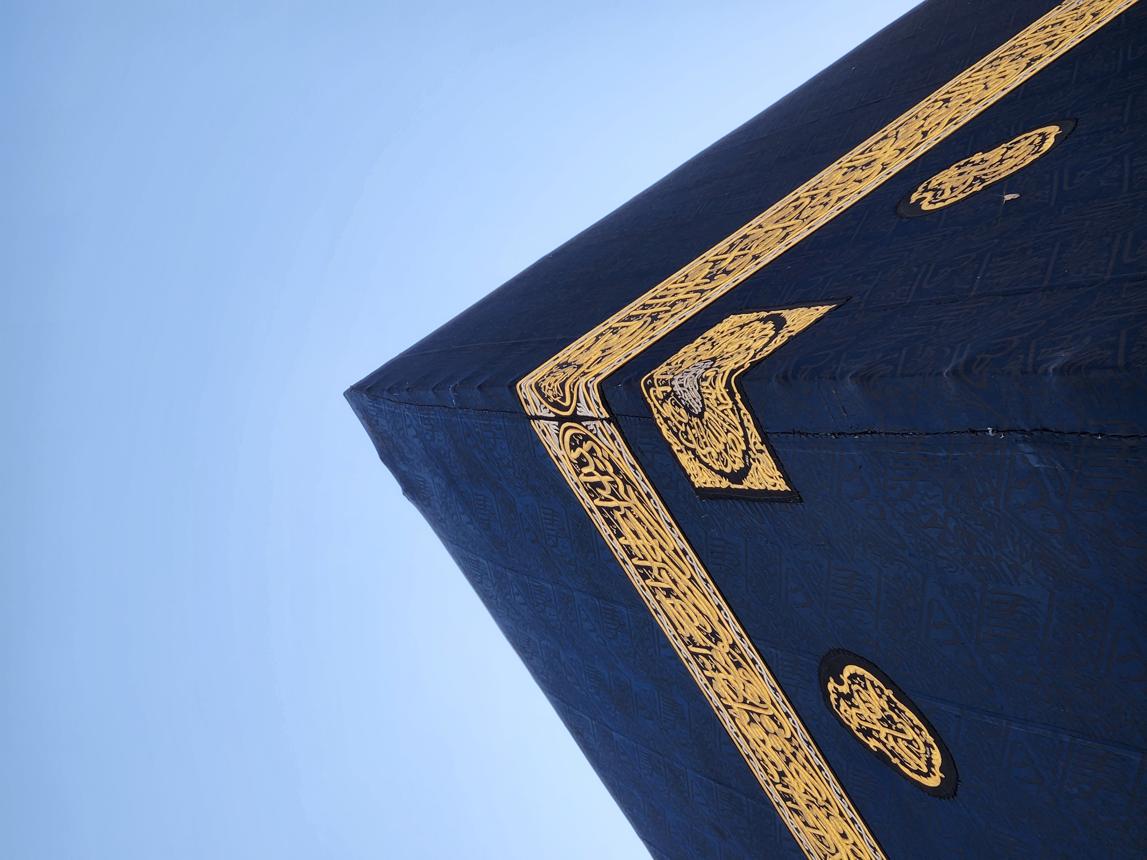
The Kaaba is one of the most sacred and recognisable places in Islam. Located at the centre of Masjid al-Haram in Makkah, Saudi Arabia, it is the direction towards which Muslims around the world turn when performing their daily prayers.
For Muslims, the Kaaba is much more than a beautiful sacred structure covered in black cloth. It represents unity, faith, devotion, and the long history of worshipping Allah.
Every year, millions of Muslims travel to Makkah to perform Hajj and Umrah, where they gather around the Kaaba to pray, make supplications, and perform Tawaf.
But why is the Kaaba so important to Muslims? Who built it? What is its connection to Prophet Ibrahim (AS)? And why do Muslims face it when praying?
In this article, we explore the history, religious significance, and spiritual meaning of the Holy Kaaba.
1. WHAT IS THE KAABA?
The Kaaba is a sacred, cube-shaped structure located inside Masjid al-Haram in Makkah, Saudi Arabia.
It is also known as Baytullah, meaning the House of Allah.
Muslims around the world face the direction of the Kaaba when performing their five daily prayers. This direction is known as the Qiblah.
Although the Kaaba is called the House of Allah, Muslims do not believe that Allah lives inside it. Allah is not confined to any place or structure. The name reflects its special status as a place dedicated to the worship of Allah alone.
The Kaaba is also the central point around which Muslims perform Tawaf during Hajj and Umrah.
2. WHO BUILT THE KAABA?
The history of the Kaaba is closely connected to Prophet Ibrahim (Abraham) and his son Prophet Ismail (Ishmael), peace be upon them.
According to the Qur’an, Allah commanded Prophet Ibrahim (AS) to establish the foundations of the Sacred House.
With the help of his son Ismail (AS), he raised the foundations of the Kaaba as a place dedicated to the worship of Allah.
Allah says in the Qur’an:
“And when Ibrahim was raising the foundations of the House and [with him] Ismail, [saying], ‘Our Lord, accept [this] from us. Indeed You are the Hearing, the Knowing.'”
(Surah Al-Baqarah 2:127)
This verse highlights the importance of sincerity and obedience in worship.
The Kaaba therefore has a deep connection to the message of Tawheed, which means believing in the oneness of Allah.
3. WHY DO MUSLIMS FACE THE KAABA WHEN PRAYING?
One of the most important reasons the Kaaba holds a special place in Islam is that it serves as the Qiblah for Muslims.
Regardless of where they live, Muslims face the direction of the Kaaba when performing their obligatory prayers.
Whether someone is in Nigeria, Saudi Arabia, the United Kingdom, Indonesia, or anywhere else in the world, Muslims share the same direction of prayer.
Allah instructed Muslims to turn towards Al-Masjid al-Haram in the Qur’an:
“So turn your face toward al-Masjid al-Haram. And wherever you [believers] may be, turn your faces toward it.”
(Surah Al-Baqarah 2:144)
Facing the Kaaba symbolises unity and obedience to Allah.
It does not mean that Muslims worship the Kaaba. Rather, they worship Allah alone and follow His command regarding the direction of prayer.
4. THE KAABA IS THE FIRST HOUSE ESTABLISHED FOR THE WORSHIP OF ALLAH
The Kaaba holds a unique position because Allah describes the first House established for humanity as being at Bakkah, another name associated with Makkah.
Allah says:
“Indeed, the first House [of worship] established for mankind was that at Bakkah – blessed and a guidance for the worlds.”
(Surah Ali ‘Imran 3:96)
This verse highlights the Kaaba’s importance as a centre of worship and guidance.
It is a reminder that the message of worshipping one God is central to the teachings of Islam and the mission of the prophets.
5. WHY DO MUSLIMS WALK AROUND THE KAABA SEVEN TIMES?
Walking around the Kaaba seven times is known as Tawaf.
It is one of the major rituals of Hajj and Umrah.
During Tawaf, pilgrims walk counterclockwise around the Kaaba, beginning at the level of the Hajr al-Aswad (the Black Stone).
Each complete circuit is counted as one round, and pilgrims complete seven rounds.
Tawaf is an act of worship performed in obedience to Allah and following the example of Prophet Muhammad (ﷺ).
Allah says:
“And purify My House for those who perform Tawaf and those who stand [in prayer] and those who bow and prostrate.”
(Surah Al-Baqarah 2:125)
As Muslims perform Tawaf, they remember Allah, make supplications, and reflect on their relationship with their Creator.
It is important to understand that Muslims are not worshipping the Kaaba by walking around it. They are worshipping Allah through a ritual He has prescribed.
6. WHAT IS THE BLACK CLOTH COVERING THE KAABA?
The black cloth covering the Kaaba is known as the Kiswah.
It is one of the most recognisable features of the Holy Kaaba.
The Kiswah is traditionally made from high-quality black silk and decorated with embroidered Qur’anic verses and Islamic calligraphy in gold and silver-coloured thread.
Its preparation involves skilled craftsmanship and careful attention to detail.
The Kiswah is replaced periodically, and its production is an important part of the care and maintenance of the Kaaba.
Although the covering is beautiful and highly respected, it is not an object of worship. Its purpose is to honour and cover the sacred structure.
7. WHAT IS THE HAJR AL-ASWAD AND WHY IS IT IMPORTANT?
The Hajr al-Aswad, also known as the Black Stone, is located in the eastern corner of the Kaaba.
It is one of the most significant features of the structure.
Muslims acknowledge the Black Stone when beginning each round of Tawaf.
If possible, pilgrims may kiss or touch it. If the area is crowded, they can point towards it and say Allahu Akbar.
Prophet Muhammad (ﷺ) kissed the Black Stone, and Muslims follow his example as an act of Sunnah.
Umar ibn Al-Khattab (RA) once explained his understanding of the stone by saying:
“I know that you are only a stone and can neither benefit nor harm.”
(Sahih al-Bukhari)
This teaches Muslims that the Black Stone is respected because of its connection to Islamic teachings, but worship belongs to Allah alone.
8. WHAT IS THE CONNECTION BETWEEN THE KAABA AND PROPHET IBRAHIM (AS)?
Prophet Ibrahim (AS) is closely connected to the history of the Kaaba.
After Allah instructed him to establish the Sacred House with his son Ismail (AS), he made several beautiful supplications for the people of Makkah.
One of these supplications is recorded in the Qur’an:
“Our Lord, I have settled some of my descendants in an uncultivated valley near Your sacred House…”
(Surah Ibrahim 14:37)
This verse refers to the settlement of his family in the valley of Makkah.
Prophet Ibrahim’s obedience, patience, and complete trust in Allah remain powerful lessons for Muslims.
His connection to the Kaaba also explains why his legacy is remembered during Hajj, particularly through the rituals associated with his family.
9. WHY IS THE KAABA IMPORTANT DURING HAJJ AND UMRAH?
The Kaaba is at the centre of several important rituals performed during Hajj and Umrah.
Some of these include:
Tawaf: Pilgrims walk around the Kaaba seven times as an act of worship.
Prayer: Muslims pray in the direction of the Kaaba throughout their journey.
Sa’i: Pilgrims walk between Safa and Marwah, remembering the struggle and faith of Hajar (AS), the wife of Prophet Ibrahim (AS).
Tawaf al-Ifadah: This is an essential ritual of Hajj performed after the pilgrims leave Arafat, according to the prescribed order of Hajj rites.
These rituals connect Muslims to the history of Prophet Ibrahim (AS), Hajar (AS), Ismail (AS), and Prophet Muhammad (ﷺ).
For many believers, visiting the Kaaba is a lifelong dream and an unforgettable spiritual experience.
10. DOES TOUCHING OR KISSING THE KAABA BRING BLESSINGS?
Many pilgrims wish to touch the Kaaba, kiss the Black Stone, or pray close to its walls.
However, it is important to distinguish between practices established in the Sunnah and actions that are not specifically prescribed.
The Black Stone and the Yemeni Corner have particular significance in the Sunnah.
Muslims may touch the Black Stone when possible, while the Yemeni Corner may be touched if it can be reached easily.
However, Muslims should not believe that touching every part of the Kaaba is necessary for forgiveness or that the structure possesses independent powers.
Blessings and forgiveness come from Allah alone.
The most important part of visiting the Kaaba is to worship Allah sincerely and follow the teachings of Prophet Muhammad (ﷺ).
11. WHY DOES THE KAABA BRING MUSLIMS TOGETHER?
One of the most beautiful aspects of the Kaaba is how it unites Muslims from different backgrounds.
During daily prayers, Muslims across the world face the same direction.
During Hajj, millions of people gather in Makkah, dressed in simple garments and performing the same acts of worship.
They come from different countries, speak different languages, and have different cultures, but they share one faith and one direction of prayer.
The Kaaba reminds Muslims that their unity is based on their belief in Allah, not their nationality, wealth, social status, or ethnicity.
This is one of the most powerful lessons of Islam.
12. CAN NON-MUSLIMS ENTER THE KAABA?
Makkah is a sacred city with special entry restrictions.
Non-Muslims are not permitted to enter the sacred precinct of Makkah.
The Kaaba itself is not generally open for public entry, including Muslim visitors.
Access to its interior is restricted and depends on official arrangements.
For Muslims, the opportunity to visit Masjid al-Haram and see the Kaaba is already a deeply meaningful experience.
CONCLUSION: THE KAABA IS A SYMBOL OF WORSHIP, UNITY, AND FAITH
The Kaaba is important to Muslims because of its deep connection to the worship of Allah, the history of Prophet Ibrahim (AS), and the teachings of Prophet Muhammad (ﷺ).
It is the Qiblah towards which Muslims pray, the centre of Tawaf during Hajj and Umrah, and one of the most sacred places in Islam.
However, the greatest lesson of the Kaaba is that worship belongs to Allah alone.
Muslims do not worship the structure, its covering, or the Black Stone. They worship the Creator who commanded them to honour this Sacred House.
For millions of believers, seeing the Kaaba for the first time is an emotional and unforgettable moment.
May Allah invite us to His Sacred House, grant us the opportunity to perform Hajj and Umrah, accept our prayers, and make us among those who worship Him sincerely.
Allahumma arzuqna ziyarata Baytikal-Haram. Ameen.
FREQUENTLY ASKED QUESTIONS (FAQs)
1. Why is the Kaaba so important in Islam?
The Kaaba is important because it is the Qiblah for Muslims, the centre of Tawaf, and a sacred House associated with Prophet Ibrahim (AS) and the worship of Allah.
2. Who built the Kaaba?
According to the Qur’an, Prophet Ibrahim (AS) and his son Prophet Ismail (AS) raised the foundations of the Kaaba.
3. Do Muslims worship the Kaaba?
No. Muslims worship Allah alone. The Kaaba is the sacred direction of prayer and a centre of Islamic worship.
4. Why do Muslims walk around the Kaaba seven times?
Muslims perform seven rounds of Tawaf because it is a prescribed ritual of Hajj and Umrah, following the example of Prophet Muhammad (ﷺ).
5. What is the black cloth covering the Kaaba called?
It is called the Kiswah. It is traditionally made of black silk and decorated with embroidered Qur’anic verses.
6. Why do Muslims face the Kaaba during prayer?
Muslims face the Kaaba because Allah commanded them to turn towards Al-Masjid al-Haram when performing their prayers.
7. Can Muslims pray inside the Kaaba?
Yes, prayer inside the Kaaba is permissible for those who are granted access. However, the interior is not generally open to ordinary visitors.
8. Is visiting the Kaaba compulsory for every Muslim?
Performing Hajj at least once in a lifetime is obligatory for Muslims who meet the conditions of ability. Visiting the Kaaba through Hajj is therefore part of this obligation. Umrah has a different ruling depending on the Islamic school of thought.
9. What is the difference between the Kaaba and Masjid al-Haram?
The Kaaba is the sacred structure at the centre of Masjid al-Haram. Masjid al-Haram is the much larger mosque surrounding it.
10. What should Muslims say when they first see the Kaaba?
There is no single universally established authentic supplication that must be recited upon first seeing the Kaaba. Muslims may sincerely make personal supplications and ask Allah for goodness in this life and the Hereafter.
