

WHY DO MUSLIMS KISS OR POINT TOWARDS HAJR AL-ASWAD? UNDERSTANDING THE HISTORY, SIGNIFICANCE, AND SUNNAH OF THE BLACK STONE

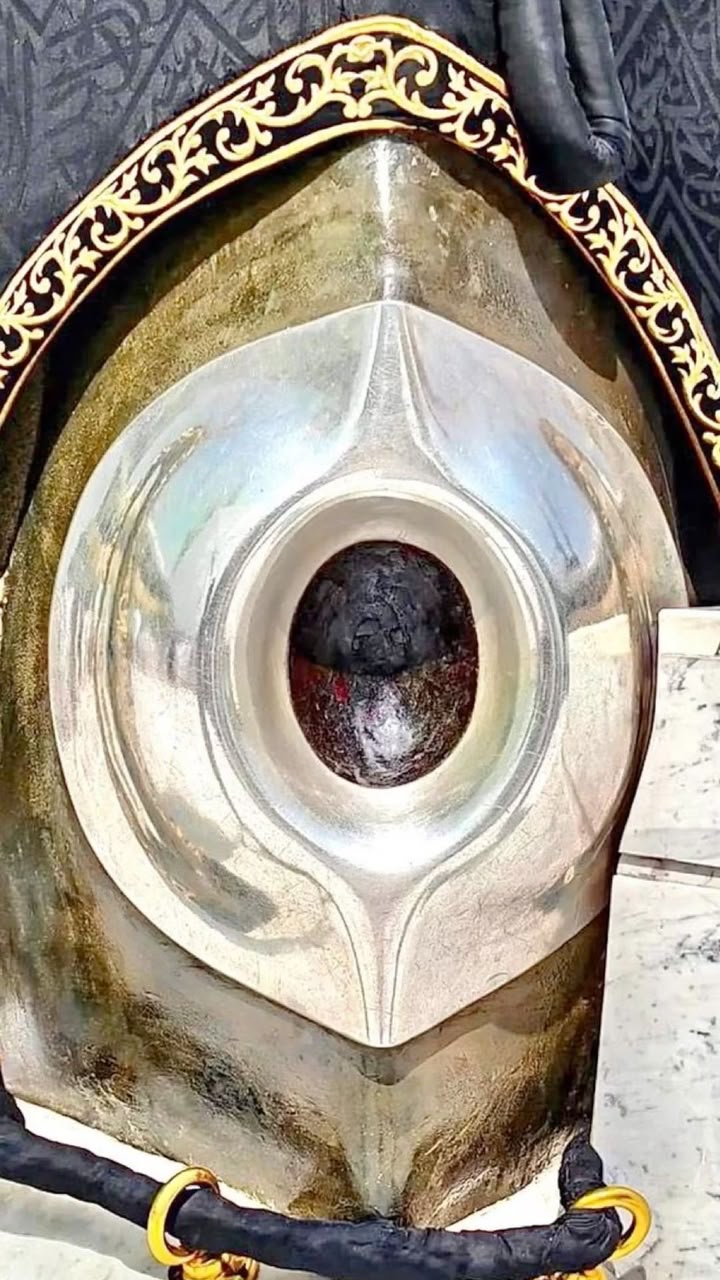
The Hajr al-Aswad, also known as the Black Stone, is one of the most significant features of the Holy Kaaba in Makkah, Saudi Arabia. Located in the eastern corner of the Kaaba, this sacred stone holds a special place in Islamic history and is closely connected to the rituals of Hajj and Umrah.
One of the most fascinating things visitors notice when they arrive at Masjid al-Haram is how Muslims try to kiss the Black Stone, touch it, or point towards it while performing Tawaf (circumambulation around the Kaaba).
But why do Muslims kiss the Hajr al-Aswad? What makes it so special? And why do some Muslims simply raise their hands and point towards it instead of touching or kissing it?
The answer lies in the teachings of Prophet Muhammad (peace and blessings be upon him), the history of the Kaaba, and the importance of following the Sunnah.
In this article, we explore the history, religious significance, and correct Islamic practices associated with the Hajr al-Aswad.
1. WHAT IS HAJR AL-ASWAD?
Hajr al-Aswad, which translates to “The Black Stone” in Arabic, is a stone fixed into the eastern corner of the Holy Kaaba.
It is one of the most recognisable features of the Kaaba and serves as the starting and ending point of each round of Tawaf.
According to Islamic tradition, the Black Stone has a special connection to Prophet Ibrahim (Abraham) and his son Prophet Ismail (Ishmael), who were commanded by Allah to raise the foundations of the Kaaba.
The stone is believed to have been brought down from Paradise. Islamic narrations also describe how it was originally white before becoming black.
Although the stone is deeply respected by Muslims, it is important to understand that Muslims do not worship it. Worship is directed exclusively to Allah.
2. WHY DO MUSLIMS KISS THE BLACK STONE?
Muslims kiss the Hajr al-Aswad because Prophet Muhammad (ﷺ) did so, and Muslims follow his example.
The Prophet (ﷺ) kissed the Black Stone during Tawaf, demonstrating that it is part of the Sunnah to do so when possible.
One famous narration comes from Umar ibn Al-Khattab (RA), who approached the Black Stone and kissed it. He then said:
“I know that you are only a stone and can neither benefit nor harm. Had I not seen the Messenger of Allah (ﷺ) kissing you, I would not have kissed you.”
(Sahih al-Bukhari and Sahih Muslim)
This statement explains the Islamic understanding of kissing the Black Stone.
Muslims kiss it not because they believe it has independent powers, but because Prophet Muhammad (ﷺ) did so.
It is an act of following the Sunnah and expressing obedience to Allah.
3. WHY DO SOME MUSLIMS POINT TOWARDS THE BLACK STONE?
Not everyone performing Tawaf can reach the Hajr al-Aswad.
During busy periods, especially in Ramadan and the Hajj season, thousands of pilgrims may be moving around the Kaaba at the same time.
Trying to reach the Black Stone can cause overcrowding, pushing, and unnecessary harm to other worshippers.
Islam encourages ease, consideration, and respect for others.
For this reason, when a pilgrim cannot kiss or touch the Black Stone, they may point towards it with their right hand while saying:
Allahu Akbar (Allah is the Greatest).
This practice is known as Istilam.
It allows Muslims to follow the Sunnah without causing harm or disturbing other pilgrims.
4. WHAT DID PROPHET MUHAMMAD (ﷺ) TEACH ABOUT THE BLACK STONE?
The Prophet Muhammad (ﷺ) demonstrated the importance of the Black Stone through his actions during Tawaf.
Authentic narrations describe different ways of acknowledging it:
- Kissing the Black Stone when it is possible.
- Touching it and kissing the hand that touched it, as reported in narrations.
- Pointing towards it and saying Allahu Akbar when unable to reach it.
These practices demonstrate that Islam provides flexibility while maintaining the importance of following the Prophet’s example.
Importantly, Muslims should never push, fight, or hurt others just to kiss the Black Stone.
Protecting fellow Muslims from harm is more important than performing an optional act of Sunnah in a way that causes injury or distress.
5. WHAT IS THE SPIRITUAL SIGNIFICANCE OF THE BLACK STONE?
The Hajr al-Aswad carries great significance in Islamic tradition.
One well-known narration states that the Black Stone descended from Paradise and was originally whiter than milk before the sins of the children of Adam caused it to turn black.
This narration is reported in Jami’ at-Tirmidhi.
The Black Stone also serves as a reminder of the history of Prophet Ibrahim (AS), Prophet Ismail (AS), and the construction of the Kaaba.
For Muslims, it represents an important connection to the sacred history of Islam and the Sunnah of Prophet Muhammad (ﷺ).
However, its significance should never be confused with worship. Muslims worship Allah alone.
6. DOES KISSING THE BLACK STONE REMOVE SINS?
There are narrations that describe the virtues of touching the Black Stone and the Yemeni Corner.
Prophet Muhammad (ﷺ) said that touching these two corners causes sins to be removed.
This narration is reported in Jami’ at-Tirmidhi and other collections.
However, Muslims should understand that forgiveness ultimately comes from Allah.
Kissing the Black Stone should not be treated as a guarantee that someone will automatically have all their sins forgiven.
Sincere repentance, good deeds, obedience to Allah, and seeking His forgiveness remain essential parts of a Muslim’s spiritual life.
7. WHAT SHOULD YOU SAY WHEN POINTING TOWARDS HAJR AL-ASWAD?
When beginning Tawaf or reaching the level of the Black Stone during each round, Muslims acknowledge it by saying:
Allahu Akbar.
This means “Allah is the Greatest.”
The pilgrim may also say:
Bismillahi, Allahu Akbar.
Meaning: “In the name of Allah, Allah is the Greatest.”
The essential practice when pointing is to say Allahu Akbar.
It is important to remember that there is no need to recite a long special prayer every time you reach the Black Stone.
8. IS IT COMPULSORY TO KISS THE BLACK STONE DURING HAJJ OR UMRAH?
No. Kissing the Hajr al-Aswad is not compulsory for Hajj or Umrah.
It is a Sunnah that Prophet Muhammad (ﷺ) practised.
If a pilgrim can kiss or touch it without causing harm or difficulty, they may do so.
However, if the area is crowded, they can simply point towards it and say Allahu Akbar.
Your Hajj or Umrah remains valid even if you never touch or kiss the Black Stone.
This is an important reminder for first-time pilgrims who may feel pressured to reach the stone.
The purpose of Tawaf is to worship Allah, not to compete with other pilgrims for access to the Black Stone.
9. WHY SHOULD MUSLIMS AVOID PUSHING TO REACH THE BLACK STONE?
During busy periods, the area around the Black Stone can become extremely crowded.
Some pilgrims may push, struggle, or force their way through others in an attempt to kiss it.
However, such behaviour goes against the Islamic principles of kindness, patience, and avoiding harm.
The Prophet Muhammad (ﷺ) taught Muslims to treat one another with mercy and consideration.
It is better to point towards the Black Stone peacefully than to hurt another Muslim while trying to touch it.
Remember, following the Sunnah should never become an excuse for harming others.
10. WHAT IS THE DIFFERENCE BETWEEN HAJR AL-ASWAD AND THE YEMENI CORNER?
The Kaaba has four corners, but two have particular significance during Tawaf:
Hajr al-Aswad (The Black Stone):
- Located in the eastern corner of the Kaaba.
- Marks the starting and ending point of Tawaf.
- Muslims may kiss, touch, or point towards it.
- It is acknowledged with Takbir.
Rukn al-Yamani (The Yemeni Corner):
- Located before the Black Stone when moving around the Kaaba.
- Muslims are encouraged to touch it if they can do so easily.
- It is not kissed.
- If they cannot reach it, they continue without pointing towards it.
There is also a well-known supplication that Muslims recite between the Yemeni Corner and the Black Stone:
Rabbana atina fid-dunya hasanatan wa fil-akhirati hasanatan wa qina adhaban-nar.
Meaning:
“Our Lord, give us good in this world and good in the Hereafter, and protect us from the punishment of the Fire.”
(Qur’an 2:201)
CONCLUSION: MUSLIMS KISS THE BLACK STONE OUT OF LOVE FOR THE SUNNAH, NOT WORSHIP
The Hajr al-Aswad is one of the most remarkable features of the Holy Kaaba and holds a special place in Islamic history.
Muslims kiss, touch, or point towards it because Prophet Muhammad (ﷺ) did so. It is an act of following his Sunnah and showing obedience to Allah.
As the statement of Umar ibn Al-Khattab (RA) reminds us, the Black Stone cannot independently benefit or harm anyone. It is Allah alone who deserves worship.
Whether you are fortunate enough to kiss the Black Stone or simply point towards it from a distance, what matters is performing your worship with sincerity, humility, and respect for others.
May Allah grant every Muslim the opportunity to visit the Holy Kaaba, perform Hajj and Umrah, and worship Him with sincerity. Ameen.
FREQUENTLY ASKED QUESTIONS (FAQs)
1. Why do Muslims kiss Hajr al-Aswad?
Muslims kiss the Black Stone because Prophet Muhammad (ﷺ) kissed it. They do so to follow his Sunnah, not because they worship the stone.
2. Is Hajr al-Aswad from Paradise?
According to Islamic narrations, the Black Stone descended from Paradise and was originally white before becoming black.
3. Can I point at the Black Stone instead of kissing it?
Yes. If you cannot reach it, you may point towards it with your right hand and say Allahu Akbar.
4. Is kissing Hajr al-Aswad compulsory during Umrah?
No. It is Sunnah, not a compulsory requirement. Your Umrah remains valid even if you do not kiss or touch it.
5. Does the Black Stone have the power to forgive sins?
No. Forgiveness comes from Allah alone. The Black Stone has a special place in Islamic tradition, but it has no independent power.
6. What should I say when pointing towards Hajr al-Aswad?
You should say Allahu Akbar, meaning Allah is the Greatest.
7. Is it permissible to push others to kiss the Black Stone?
No. Muslims should avoid hurting or pushing others. Pointing towards the Black Stone is sufficient when reaching it is difficult.
8. Who placed the Black Stone in the Kaaba?
Islamic tradition connects the Black Stone with the construction of the Kaaba by Prophet Ibrahim (AS) and Prophet Ismail (AS). The Prophet Muhammad (ﷺ) also played an important role in resolving a dispute over its placement during the rebuilding of the Kaaba before his prophethood.
