


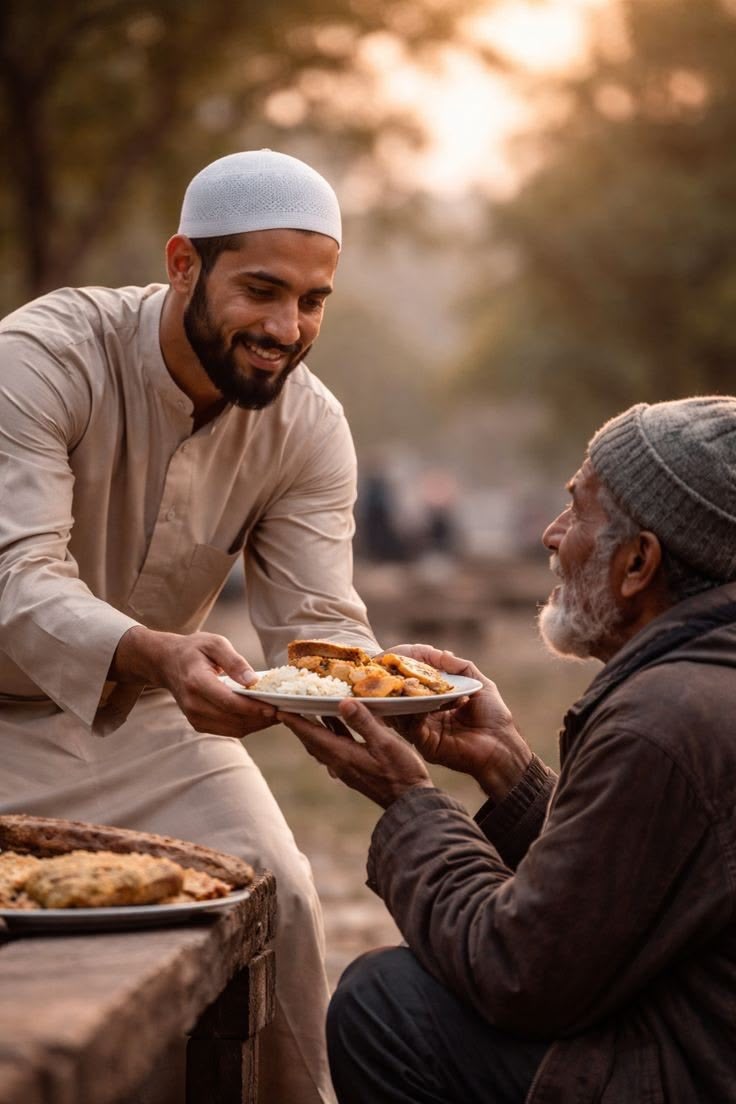
You see someone struggling to buy food. A neighbour is going through a difficult time. An elderly person needs assistance, or a vulnerable child is being neglected.
You notice what is happening, but you walk away because you believe it is not your responsibility.
Have you ever considered how your actions reflect your faith?
Islam teaches us that worship is not limited to what we do privately. Our relationship with Allah should also influence how we treat people and respond to their needs.
THE QUR’AN WARNS AGAINST NEGLECTING THE NEEDY
Allah says:
**”Have you seen the one who denies the Recompense? For that is the one who drives away the orphan. And does not encourage the feeding of the poor.” Qur’an 107:1–3
These verses connect our treatment of vulnerable people with our understanding of accountability before Allah.
A person should not claim to care about religion while deliberately neglecting those who need compassion and assistance.
Our faith should encourage us to become more conscious of the difficulties others face.
YOU DO NOT HAVE TO BE WEALTHY TO HELP SOMEONE
Sometimes, people assume that helping others is only for those who have plenty of money.
But kindness and assistance come in different forms.
You can:
– Share food with someone who needs it.
– Help an elderly neighbour with a simple task.
– Support a child who needs educational materials.
– Offer useful advice to someone facing a challenge.
– Volunteer your time for a beneficial cause.
– Donate according to your financial ability.
Even when you cannot provide financial assistance, you can still treat people with dignity and compassion.
DO NOT MAKE PEOPLE FEEL INFERIOR WHEN HELPING THEM
Helping someone should not become an opportunity to humiliate them.
Avoid announcing another person’s hardship without permission or reminding them repeatedly of what you have done for them.
A person who is already struggling should not have to endure embarrassment because they needed assistance.
Give sincerely, protect people’s dignity and remember that you, too, may need help someday.
CARE SHOULD EXTEND BEYOND YOUR IMMEDIATE CIRCLE
It is natural to feel especially responsible for family and close friends. However, Islam also teaches us to care about neighbours, travellers, orphans and people experiencing hardship.
Look beyond your immediate environment.
You may not be able to solve every problem in your community, but you can contribute positively in the ways available to you.
Support trustworthy charitable efforts, share verified information about genuine needs and encourage others to participate in beneficial activities.
HEART CHECK
Do not become so occupied with your personal comfort that you become blind to the suffering around you.
Your wealth, time, knowledge and abilities can all become means of helping others.
Remember that Allah sees the good you do, even when nobody praises you.
A compassionate Muslim does not ask only, “What can I gain?” but also, “Who can I benefit?”
REFLECTION: When you notice someone struggling, do you look for a reasonable way to help, or do you immediately look away?
DU’A: O Allah, make us compassionate towards those in need. Grant us the ability to help others sincerely, protect the vulnerable and use our blessings for what pleases You. Ameen.
3SIXTYISLAM
At 3SixtyIslam, we believe Islamic knowledge should reach every generation. From Hajj and Umrah guidance to practical Islamic lessons for everyday life, our goal is to help Muslims learn, grow and strengthen their connection with Islam.
Follow 3SixtyIslam for more Islamic knowledge, guidance and inspiring stories for the whole family.
