

WHAT SHOULD YOU DO WHEN YOU FIRST SEE THE KA’BAH? A COMPLETE GUIDE FOR EVERY MUSLIM PILGRIM

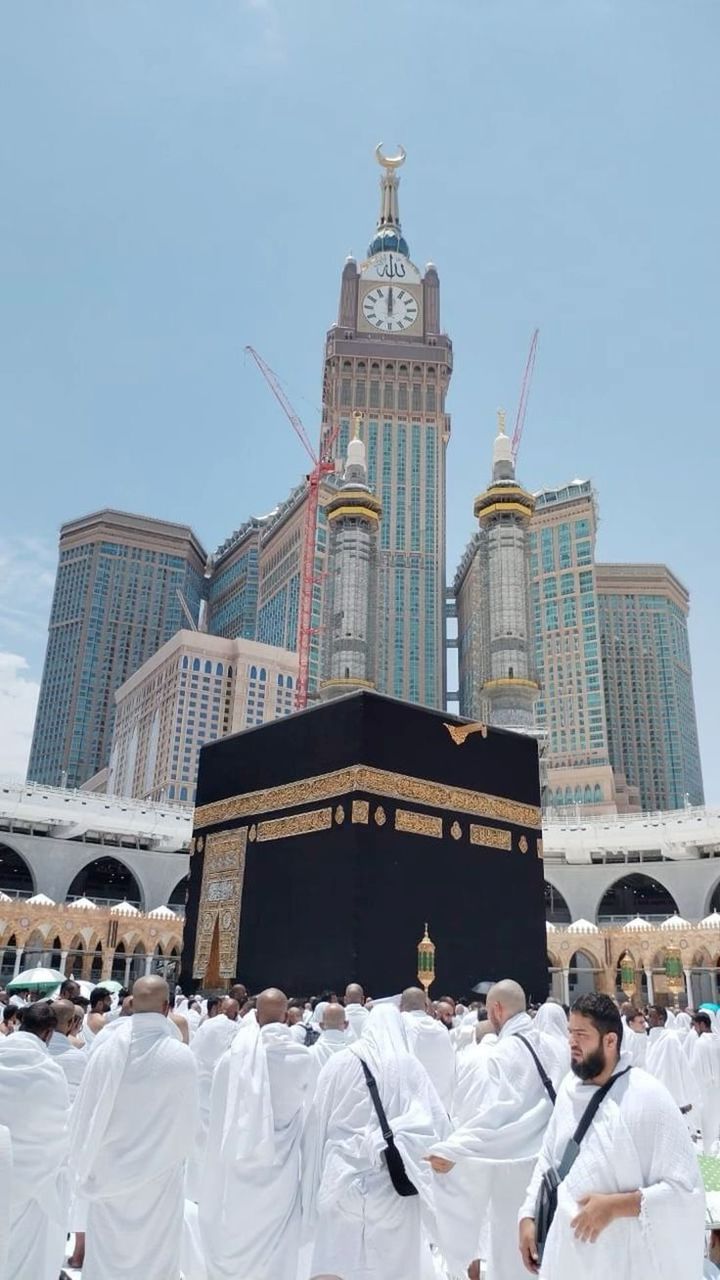
Imagine walking into Masjid al-Haram for the first time, surrounded by thousands of Muslims, all gathered for one purpose: to worship Allah (SWT). As you approach the Ka’bah and finally catch your first glimpse of the Sacred House, your heart may fill with emotions that words cannot fully describe.
For many Muslims, seeing the Ka’bah for the first time is one of the most emotional and unforgettable moments of their lives. Some cry, others raise their hands in prayer, while many remain speechless as they take in the beauty and significance of the House of Allah.
But an important question often comes to mind: What should you do when you first see the Ka’bah? Is there a special dua to recite? Should you raise your hands? Can you make personal supplications?
If you are preparing for Umrah or Hajj, understanding what to do during this special moment can help you make the most of your experience.
In this guide, we will explore the recommended actions, authentic Islamic teachings, common misconceptions, and important things every Muslim pilgrim should know when seeing the Ka’bah for the first time.
1. Remain Calm and Take a Moment to Reflect
The first thing to do when you see the Ka’bah is to pause and appreciate the moment.
You may have spent years praying towards the Ka’bah, watching videos of Masjid al-Haram, and dreaming of the day you would finally stand before it.
Now, that dream has become reality.
Instead of rushing into the next activity, take a moment to reflect on the blessing Allah has granted you.
Remember that you are standing in one of the most sacred places on earth, a place towards which millions of Muslims turn every day during their prayers.
Allow yourself to experience the moment with gratitude, humility, and sincerity.
There is no need to force yourself to cry or behave in a particular way. Some people become emotional, while others feel peaceful or overwhelmed. Every person’s experience is different.
2. Praise and Glorify Allah (SWT)
When you first see the Ka’bah, remember Allah and praise Him for granting you the opportunity to visit His Sacred House.
You can say:
Allahu Akbar (الله أكبر)
Meaning: Allah is the Greatest.
You may also say:
SubhanAllah (سبحان الله)
Meaning: Glory be to Allah.
And:
Alhamdulillah (الحمد لله)
Meaning: All praise is due to Allah.
These are beautiful expressions of remembrance that help you remain conscious of Allah during this special moment.
You can also make sincere personal supplications, thanking Allah for bringing you safely to Makkah and asking Him to accept your journey.
3. Make Dua When You First See the Ka’bah
One of the most common questions among pilgrims is whether there is a special dua that must be recited when seeing the Ka’bah for the first time.
There are various supplications circulated among Muslims for this occasion. However, it is important to understand that there is no firmly established authentic prophetic dua that every pilgrim must recite specifically upon their first sight of the Ka’bah.
You are free to make personal dua and ask Allah for anything good.
This is a wonderful opportunity to ask for:
- Forgiveness for your sins.
- Guidance and steadfastness in your faith.
- Good health and protection.
- Blessings for your parents and family.
- Relief from difficulties.
- Halal provision and success.
- Acceptance of your Umrah or Hajj.
- A beautiful ending and entry into Jannah.
You can make your supplications in Arabic, English, or any language you understand.
Allah knows what is in your heart, even when you cannot find the perfect words to express it.
4. Make Dua for Your Loved Ones
Your first sight of the Ka’bah is also a beautiful opportunity to remember the people who mean so much to you.
Remember your parents, spouse, children, siblings, relatives, friends, and anyone who has asked you to pray for them.
Ask Allah to forgive their sins, protect them from harm, grant them good health, increase their provision, and bless them with goodness in this life and the Hereafter.
You can also remember those who are struggling, sick, grieving, or facing difficult situations.
A simple personal dua could be:
“O Allah, forgive me, my parents, my family, and all those I love. Grant us good health, protect us from hardship, guide us to the straight path, and bless us with goodness in this world and the Hereafter. Ameen.”
Do not forget to pray for the entire Muslim Ummah.
5. Do Not Believe That a Particular Dua Is Compulsory
There is a popular belief that when someone sees the Ka’bah for the first time, they must recite a particular supplication for their wishes to be granted.
Some people also believe that every dua made at that exact moment is automatically guaranteed acceptance.
Although making dua at sacred places is encouraged, Muslims should be careful not to attribute specific religious rulings to the Prophet Muhammad (peace and blessings be upon him) without authentic evidence.
There is no obligation to recite a particular formula when seeing the Ka’bah.
You do not need to memorise a long Arabic supplication before travelling.
Instead, focus on sincerity, humility, and asking Allah for what is best.
6. Should You Raise Your Hands When You First See the Ka’bah?
Raising one’s hands while making dua is a recognised practice in Islam.
Therefore, if you wish to raise your hands and supplicate when you see the Ka’bah, you may do so.
However, there is no firmly established authentic prophetic instruction requiring every pilgrim to raise their hands at the first sight of the Ka’bah.
Do not feel that your dua is incomplete if you do not raise your hands.
What matters most is that your heart is sincere and your supplication is directed to Allah alone.
7. Do Not Forget Your Umrah Intention and Rituals
For pilgrims performing Umrah, seeing the Ka’bah is an emotional moment, but it is also important to remember the purpose of your journey.
After entering Masjid al-Haram, you should remain mindful of the Umrah rituals.
If you have entered Ihram and are ready to begin Tawaf, proceed according to your group’s arrangements and the applicable guidance.
Remember these important rituals:
Ihram: Entering the sacred state of worship with the intention of performing Umrah and observing its restrictions.
Tawaf: Circling the Ka’bah seven times, beginning at the Black Stone.
Sa’i: Walking seven circuits between Safa and Marwah.
Taqsir or Halq: Shortening the hair for women and either shortening or shaving the head for men.
Seeing the Ka’bah is a special moment, but remember that your ultimate goal is to complete your worship sincerely and correctly.
8. Avoid Pushing or Disturbing Other Pilgrims
The excitement of seeing the Ka’bah for the first time can make some pilgrims rush forward to get a closer view.
However, it is important to maintain good manners and respect other worshippers.
Avoid:
- Pushing people to get closer to the Ka’bah.
- Blocking walkways while taking pictures.
- Shouting or creating unnecessary disturbances.
- Stopping in crowded areas for extended periods.
- Disturbing people who are praying or performing Tawaf.
Remember that everyone around you is also there to worship Allah.
Islam teaches kindness, patience, and consideration for others. Your good manners are part of your worship.
9. Should You Take Pictures When You First See the Ka’bah?
Many pilgrims want to capture their first sight of the Ka’bah through photographs or videos.
While taking pictures may be important to preserve memories, consider experiencing the moment before reaching for your phone.
You may never get that exact moment back.
Instead of immediately recording everything, take a few minutes to appreciate the experience, remember Allah, and make dua.
If you decide to take pictures, be considerate of other pilgrims and follow the mosque’s rules.
Avoid allowing photography to distract you from your worship.
The most beautiful memories of your Umrah may be the moments you experience with your heart rather than those stored on your phone.
10. Can You Touch or Kiss the Ka’bah When You First See It?
Seeing the Ka’bah does not mean that you must immediately approach it, touch it, or kiss it.
There are specific Sunnah practices associated with the Black Stone (Hajar al-Aswad) during Tawaf.
If it is safe and possible without harming or disturbing others, pilgrims may kiss the Black Stone or touch it according to the established Sunnah.
If the area is crowded, pointing towards it and saying Allahu Akbar is sufficient.
There is no need to push, struggle, or put yourself or others in danger.
Also, touching other parts of the Ka’bah or its covering should not be treated as a religious requirement or as something that guarantees the acceptance of dua.
Worship should always be based on authentic Islamic teachings.
11. What If You Do Not Cry When You First See the Ka’bah?
Some pilgrims become overwhelmed with emotion when they first see the Ka’bah. Others cry uncontrollably, while some simply smile, remain quiet, or feel a deep sense of peace.
If you do not cry, do not feel guilty.
Crying is not a requirement for a successful Umrah or Hajj.
The strength of your faith cannot be measured by how many tears you shed.
What matters is the sincerity of your heart, your devotion to Allah, and your willingness to worship Him.
Do not compare your experience with that of other pilgrims.
Everyone experiences spiritual moments differently.
12. Important Duas to Make When You See the Ka’bah
Although there is no compulsory first-sight dua, here are some beautiful supplications you can make when you see the Sacred House.
Dua 1: Asking Allah for Acceptance
اللَّهُمَّ تَقَبَّلْ مِنِّي
“Allahumma taqabbal minni.”
Meaning: O Allah, accept from me.
Dua 2: Asking for Forgiveness
رَبِّ اغْفِرْ لِي وَارْحَمْنِي
“Rabbi-ghfir li warhamni.”
Meaning: My Lord, forgive me and have mercy upon me.
Dua 3: Asking for Goodness in This Life and the Hereafter
رَبَّنَا آتِنَا فِي الدُّنْيَا حَسَنَةً وَفِي الْآخِرَةِ حَسَنَةً وَقِنَا عَذَابَ النَّارِ
“Rabbana atina fid-dunya hasanatan wa fil-akhirati hasanatan wa qina adhaban-nar.”
Meaning: Our Lord, give us good in this world and good in the Hereafter and protect us from the punishment of the Fire.
(Qur’an 2:201)
Dua 4: Asking Allah for Guidance
اللَّهُمَّ اهْدِنِي وَسَدِّدْنِي
“Allahumma ihdini wa saddidni.”
Meaning: O Allah, guide me and keep me on the right path.
These supplications can be made at any appropriate time, including when you first see the Ka’bah.
You can also make personal duas in your own words.
Preparing yourself spiritually and practically before travelling can make your first experience more meaningful.
Here are some things to consider:
- Learn the basic steps of Umrah before departure.
- Memorise a few short duas.
- Make a list of personal supplications.
- Remember the names of people who have asked you to pray for them.
- Understand the restrictions of Ihram.
- Wear comfortable footwear suitable for walking outside the prayer area.
- Keep your phone and belongings secure.
- Stay close to your group if you are travelling with an organised Umrah package.
- Be patient, especially during busy periods.
Most importantly, prepare your heart.
Remember that you are travelling to worship Allah, not simply to visit a beautiful place.
FREQUENTLY ASKED QUESTIONS ABOUT SEEING THE KA’BAH FOR THE FIRST TIME
1. Is there a special dua for seeing the Ka’bah for the first time?
There is no firmly established authentic prophetic supplication specifically prescribed for the first sight of the Ka’bah. You may praise Allah and make any sincere personal dua.
2. Will every dua made when seeing the Ka’bah be accepted?
Muslims should have hope in Allah’s mercy and make dua with sincerity. However, there is no authentic guarantee that every supplication made at the exact moment of first seeing the Ka’bah will automatically be granted.
3. Should I raise my hands when I see the Ka’bah?
You may raise your hands when making dua, but it is not an established requirement specifically for the first sight of the Ka’bah.
4. Should I perform Tawaf immediately after seeing the Ka’bah?
If you are performing Umrah, Tawaf is part of your required rituals. Follow the correct order of the rites and any guidance provided by your group leader.
5. Can I make dua in English when I see the Ka’bah?
Yes. You can ask Allah in English or any language you understand. Allah knows every language and what is in every heart.
6. Is crying when seeing the Ka’bah a Sunnah?
There is no requirement to cry when seeing the Ka’bah. Some people become emotional, while others do not. Both experiences are normal.
7. Can I make dua for someone else when I see the Ka’bah?
Absolutely. You can pray for your parents, family, friends, and the entire Muslim community.
8. Can I take pictures when I first see the Ka’bah?
You should follow the mosque’s rules and avoid disturbing other worshippers. It is also advisable to appreciate the moment and prioritise worship before taking photographs.
9. Can I touch the Ka’bah when I first see it?
There is no requirement to touch the Ka’bah upon first seeing it. The established Sunnah concerning touching or kissing relates particularly to the Black Stone during Tawaf, where it can be done safely.
10. What if I feel nothing when I first see the Ka’bah?
Do not worry or judge your faith based on your immediate emotions. Remain grateful, continue making dua, and focus on sincere worship.
FINAL THOUGHTS
Seeing the Ka’bah for the first time is a blessing that many Muslims spend years praying for. It is a moment that can bring tears, happiness, gratitude, and a renewed sense of closeness to Allah.
When that beautiful moment finally arrives, remember to praise Allah, reflect on His mercy, make sincere supplications, and ask Him to accept your worship.
Do not become so concerned about finding the perfect words or performing a particular gesture that you forget to appreciate the blessing before you.
There is no compulsory first-sight dua, no requirement to cry, and no need to rush towards the Ka’bah.
Simply turn your heart towards Allah and ask Him for everything good.
May Allah invite every Muslim to His Sacred House, grant us the opportunity to see the Ka’bah with our own eyes, accept our Umrah and Hajj, forgive our sins, and grant us a beautiful return to Makkah. Ameen.
Ameen ya Rabbal Alameen.
