

THE PRESSURE TO GET MARRIED IN MUSLIM COMMUNITIES: NAVIGATING CULTURAL EXPECTATIONS, PERSONAL CHOICES AND ISLAMIC TEACHINGS

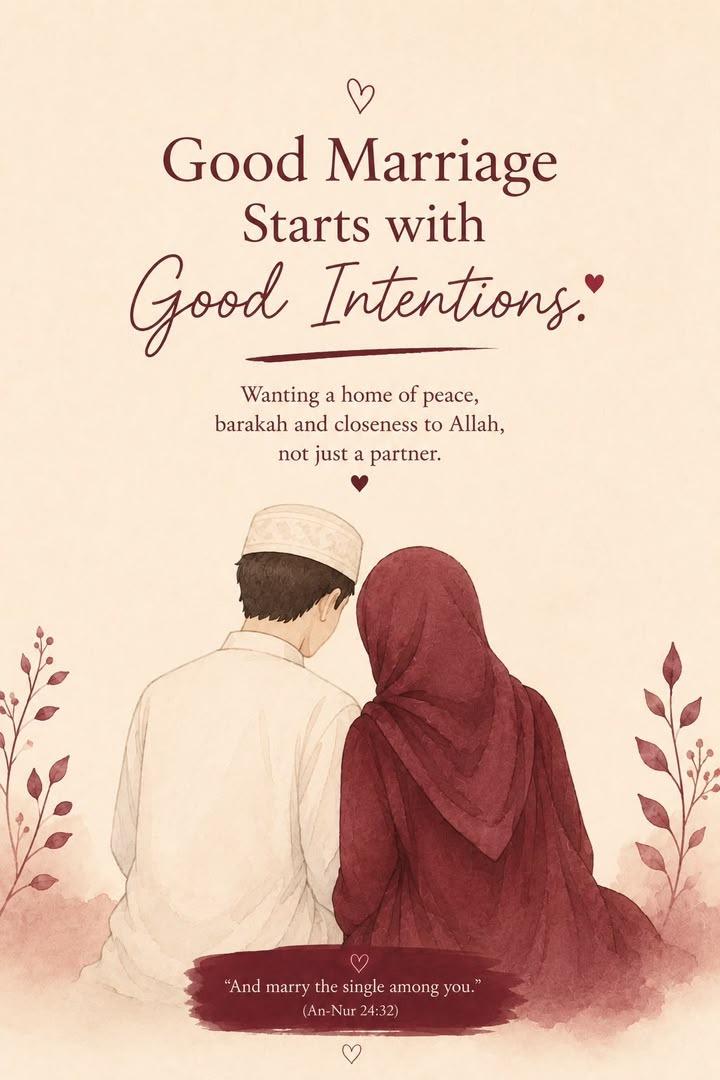
Marriage is one of the beautiful institutions established in Islam. It is a relationship built on love, mercy, companionship, mutual understanding, and the desire to build a family in accordance with the teachings of Allah.
In Muslim communities, marriage is often celebrated as an important milestone. From engagement announcements to elaborate wedding ceremonies, marriage is frequently presented as one of the most significant achievements in an individual’s life.
However, beneath these celebrations lies an issue that deserves more attention: the pressure to get married.
For many Muslims, particularly young adults, conversations about marriage can become overwhelming. The questions begin gradually: “When are you getting married?” “Have you found someone?” “What are you waiting for?” “Your younger siblings are already married; what about you?”
At family gatherings, weddings, religious events, and even casual conversations, unmarried individuals may find themselves repeatedly answering questions about their marital status.
What begins as genuine concern can sometimes become emotional pressure, unnecessary comparison, and even public embarrassment.
For some, the pressure comes from parents who are eager to see their children settled. For others, it comes from relatives who believe marriage should happen at a particular age. Some experience pressure from friends who are already married, while others struggle with the fear of being perceived as unsuccessful simply because they are unmarried.
Unfortunately, this pressure can lead people to rush into marriages without adequate preparation, overlook important incompatibilities, or accept proposals they are not comfortable with.
But is marriage supposed to be a race? Should someone feel incomplete because they have not found a spouse? And when did getting married become more important than building a healthy marriage?
Perhaps it is time for Muslim communities to reconsider how we approach marriage, singleness, family expectations, and the personal journeys of individuals.
Islam encourages marriage, but it also teaches wisdom, compassion, responsibility, and mutual consent. These principles should guide our conversations and expectations.
1. THE IDEA THAT EVERYONE MUST GET MARRIED BY A CERTAIN AGE
One of the most common sources of marriage pressure is the belief that everyone should be married by a particular age.
In some communities, once a person reaches their mid-twenties, questions about marriage become increasingly frequent. By their late twenties or early thirties, the conversations may become more serious, uncomfortable, and sometimes insensitive.
Women may be told that their time is running out, while men may be reminded that they should already have established families.
This creates an imaginary deadline that society expects everyone to meet.
But who established this deadline?
Islam does not prescribe one universal age by which every Muslim must be married. People’s circumstances differ, and their journeys are not identical.
Some individuals meet suitable partners early in life. Others need more time to complete their education, establish financial stability, understand themselves, or find someone with whom they share compatible values.
Some genuinely desire marriage but have not encountered a suitable person. Others may have personal circumstances that make marriage less practical at a particular stage of their lives.
None of these situations should automatically become a reason for public criticism.
We must stop treating marriage as an achievement that everyone must complete before reaching a particular birthday.
Life is not a competition, and marriage should not be approached as though people are racing against one another.
2. WHEN CULTURAL EXPECTATIONS ARE CONFUSED WITH ISLAMIC OBLIGATIONS
Another important issue is the tendency to confuse cultural expectations with Islamic teachings.
Islam recognises the importance of marriage and encourages Muslims to pursue it. However, certain expectations surrounding marriage are influenced more by local traditions and societal attitudes than by religious obligations.
For example, some communities place excessive importance on marrying at a particular age, having an elaborate wedding, meeting specific financial standards, or following a particular order of marriage within the family.
In some cultures, an older sibling is expected to marry before younger siblings. When this does not happen, the unmarried individual may become a subject of unnecessary discussion.
But cultural preferences should not automatically be presented as religious requirements.
Allah says:
“And among His signs is that He created for you from yourselves mates that you may find tranquillity in them; and He placed between you affection and mercy. Indeed in that are signs for a people who give thought.” (Qur’an 30:21).
This verse highlights the purpose of marriage: tranquillity, affection, and mercy.
The focus should therefore be on building a relationship that reflects these qualities, not simply meeting society’s expectations.
We must be careful not to use Islam as a justification for cultural pressure or personal preferences.
A healthy Muslim community should understand the difference between what Allah has prescribed and what society has become accustomed to expecting.
3. THE EMOTIONAL BURDEN OF CONSTANT QUESTIONS
Imagine attending a family gathering and knowing that someone will eventually ask about your marriage plans.
You may have already answered the question several times. You may be actively seeking a spouse, or perhaps you are still figuring out what you want.
Yet the questions continue.
Sometimes, people make jokes about your age, compare you with younger relatives, or suggest that something must be wrong because you are still unmarried.
Although such comments may appear harmless to the people making them, they can have a significant emotional impact.
For someone who genuinely desires marriage, repeated reminders may intensify feelings of loneliness, frustration, or disappointment.
For someone who has experienced a broken engagement, divorce, rejection, or the loss of a spouse, these conversations may reopen painful experiences.
Others may begin to question their attractiveness, personality, financial circumstances, or worth.
Some even start avoiding weddings and family gatherings because they do not want to deal with uncomfortable questions.
We must recognise that not everyone is comfortable discussing their private lives.
A person’s silence does not mean they have no plans. Their decision not to explain themselves does not mean they are being disrespectful.
Sometimes, the most considerate thing we can do is allow people to live without constantly reminding them of what they have not achieved.
Not every personal matter requires a public explanation.
4. THE PRESSURE ON MUSLIM WOMEN: WHEN MARITAL STATUS BECOMES A MEASURE OF WORTH
In many communities, women experience a particular form of marriage pressure.
An unmarried woman may constantly hear comments about her age, appearance, fertility, or perceived marriage prospects.
Some are told that they are becoming too old. Others are advised to lower their standards simply because they have reached a certain age.
Women who prioritise education, professional development, or personal goals may sometimes be made to feel that they have neglected marriage.
The situation can become even more complicated for divorced women and widows, who may experience additional judgement when considering remarriage.
This raises an important question: why do we sometimes treat a woman’s marital status as though it determines her entire identity?
A Muslim woman is more than her relationship with a man.
She is a servant of Allah, an individual with intellectual abilities, talents, ambitions, responsibilities, and contributions to society.
Marriage can be a beautiful part of her journey, but it should not become the only standard by which her life is evaluated.
Islam recognises the dignity and individuality of women.
We should also remember that some of the most respected women in Islamic history had different marital experiences.
Maryam (Mary), the mother of Prophet Isa (Jesus), is honoured in the Qur’an for her faith, devotion, and righteousness. Her significance was not dependent on being married.
Khadijah (may Allah be pleased with her), the first wife of Prophet Muhammad (peace and blessings be upon him), was a successful businesswoman and a respected individual before her marriage.
These examples remind us that Muslim women have always had meaningful identities and contributions beyond marital status.
We should encourage women to pursue marriage when appropriate without making them feel that their lives are incomplete until they do.
5. THE PRESSURE ON MUSLIM MEN: FINANCIAL EXPECTATIONS AND THE FEAR OF NOT BEING READY
While women may experience pressure relating to age and marriageability, men often face different expectations.
In many Muslim communities, men are expected to be financially established before getting married.
They may be expected to own a house, have a stable career, purchase a car, provide an expensive wedding, and meet various cultural demands.
Although financial responsibility is an important consideration in marriage, unrealistic expectations can make the process unnecessarily difficult.
A young Muslim man who genuinely desires marriage may feel discouraged because he cannot afford the lifestyle or wedding arrangements expected by society.
Some men delay marriage because they believe they must become wealthy before approaching a family.
Others experience embarrassment because they cannot meet the financial standards imposed by prospective spouses or their relatives.
This raises the need to distinguish between reasonable marital responsibilities and unnecessary financial expectations.
Islam recognises the husband’s responsibility to provide according to his means and circumstances. However, this should not be confused with an obligation to fund extravagant ceremonies or demonstrate wealth.
Allah says:
“Let a man of wealth spend from his wealth, and he whose provision is restricted – let him spend from what Allah has given him. Allah does not charge a soul except [according to] what He has given it.” (Qur’an 65:7).
This verse highlights the importance of considering individual financial circumstances.
Marriage should not be made unnecessarily difficult through unrealistic demands.
At the same time, prospective husbands should approach marriage with sincerity, responsibility, and a realistic understanding of their obligations.
The goal should be to establish a healthy household, not to compete financially with other families.
6. THE DANGER OF MARRYING SIMPLY TO ESCAPE SOCIETAL PRESSURE
One of the most concerning consequences of excessive marriage pressure is the tendency to rush into marriage.
When someone becomes tired of being questioned, compared, or judged, they may begin to view marriage as an escape from societal expectations.
They may accept a proposal without asking important questions about compatibility, character, values, or future responsibilities.
Others may ignore warning signs because they fear that another opportunity may not come.
Some may even marry someone they barely understand simply because their families are impatient.
But marriage is not a decision that should be made to silence relatives.
It is a major commitment that can affect nearly every aspect of an individual’s life.
A successful marriage requires more than attraction, financial resources, or family approval.
It requires communication, patience, emotional maturity, respect, accountability, and a willingness to fulfil responsibilities.
Before accepting a proposal, individuals should consider important questions:
- Does this person demonstrate good character?
- Do we share compatible religious values?
- Can we communicate honestly and respectfully?
- Do we have similar expectations about family life?
- How does this person handle disagreements?
- Are we both emotionally prepared for marriage?
- Do we understand our respective rights and responsibilities?
These questions deserve attention before any major commitment is made.
It is better to take time to make an informed decision than to enter an unsuitable marriage simply because society expects you to be married.
7. ARE WE MORE CONCERNED ABOUT WEDDINGS THAN THE MARRIAGES THEMSELVES?
Another issue that deserves attention is the growing emphasis on elaborate wedding celebrations.
In some Muslim communities, weddings have become major social productions involving expensive venues, multiple ceremonies, luxury clothing, elaborate decorations, and significant financial commitments.
Social media has intensified this trend.
People see beautiful wedding photographs and videos and begin comparing their celebrations with those of others.
Families may feel pressured to organise ceremonies that meet certain standards, even when doing so creates financial difficulties.
Some prospective couples postpone marriage because they cannot afford the wedding society expects.
Others accumulate debt to impress guests and relatives.
But what exactly are we celebrating?
Is the purpose of marriage to organise the most impressive ceremony, or to establish a relationship built on faith, responsibility, love, and mercy?
Islam encourages simplicity and discourages extravagance.
Allah says:
“And do not spend wastefully. Indeed, the wasteful are brothers of the devils…” (Qur’an 17:26-27).
A wedding does not have to be expensive to be beautiful.
A simple Nikah can be meaningful, joyful, and dignified.
Muslim communities should stop creating financial barriers that make marriage difficult for people who genuinely wish to establish families.
We should place greater emphasis on the quality of the marriage than the appearance of the wedding.
8. PARENTS AND THE RESPONSIBILITY TO GUIDE WITHOUT COERCING
Parents naturally want their children to experience happiness, companionship, and stability.
They may worry about their children’s future and believe that marriage will provide emotional and spiritual support.
These concerns can come from genuine love.
However, there is a difference between guidance and pressure.
Parents can advise their children, introduce suitable potential spouses, share their experiences, and help them understand the responsibilities of marriage.
But they should also listen to their children’s concerns.
A person should not be made to feel guilty for refusing a proposal they are uncomfortable with.
Nor should emotional manipulation, threats, or family reputation be used to force someone into marriage.
The Prophet Muhammad (peace and blessings be upon him) taught that a previously married woman should not be married until she is consulted, and a virgin should not be married until her permission is sought.
This teaching is recorded in Sahih al-Bukhari and Sahih Muslim.
It establishes the importance of consent in marriage.
Marriage should involve the willing participation of both individuals.
Parents should understand that their responsibility is not simply to ensure that their children get married, but also to help them make wise decisions.
A healthy family environment allows difficult conversations to happen without fear, intimidation, or judgement.
9. SINGLENESS SHOULD NOT BE TREATED AS A PERSONAL FAILURE
Perhaps one of the most harmful assumptions in some Muslim communities is that unmarried people are somehow incomplete.
There is a tendency to treat marriage as the ultimate measure of adulthood, success, and personal fulfilment.
As a result, unmarried individuals may feel that their lives are on hold until they find a spouse.
But an individual’s worth is not determined by their marital status.
A Muslim can worship Allah, pursue education, establish a career, support their family, develop beneficial friendships, contribute to society, and live a meaningful life while unmarried.
Marriage is an important Sunnah and a beautiful opportunity for companionship, but it is not the only way a person can experience fulfilment or contribute positively to the Ummah.
An unmarried person is not automatically lonely, unsuccessful, immature, or unhappy.
Some people are actively seeking marriage. Others are not currently ready. Some may have personal circumstances they prefer to keep private.
We should respect these differences.
A person’s life deserves recognition and respect regardless of whether they have a spouse.
Do not make someone feel that their life has not started simply because they have not married.
10. THE EXPERIENCE OF DIVORCED AND WIDOWED MUSLIMS
Marriage conversations should also include people whose previous marriages have ended.
Divorce and widowhood can introduce emotional, financial, social, and family challenges.
Unfortunately, some individuals experience additional stigma within their communities.
Divorced women may be subjected to unfair assumptions about their character or expectations about what they should accept in a future marriage.
Divorced men may also face judgement, while widows and widowers may be discouraged from considering remarriage because of cultural attitudes.
These reactions are inconsistent with the compassion and dignity that Muslim communities should promote.
Divorce does not make someone less worthy of respect.
Widowhood does not mean a person must abandon the possibility of companionship.
The Qur’an recognises the rights of widows and divorced individuals and provides guidance concerning marriage, waiting periods, and family responsibilities.
In Surah Al-Baqarah, verse 234, Allah addresses the waiting period of widows. In Surah Al-Baqarah, verse 232, Allah warns against preventing divorced women from remarrying when they have mutually agreed in an acceptable manner.
These teachings remind us that marriage and remarriage should be approached with dignity and respect.
We should not create cultural barriers that make it harder for people to rebuild their lives.
11. TRUSTING ALLAH WHILE TAKING RESPONSIBILITY FOR YOUR JOURNEY
For Muslims who sincerely desire marriage, waiting can sometimes be emotionally challenging.
You may have made du’a repeatedly, considered several proposals, and still not found someone suitable.
You may have watched friends get married while your own circumstances remain unchanged.
At times, you may wonder whether you will ever find the companionship you desire.
During these moments, remembering Tawakkul is important.
Tawakkul means placing your trust in Allah while making sincere efforts.
It does not mean refusing to pursue opportunities or expecting everything to happen without taking practical steps.
You can seek marriage through appropriate channels, involve trusted family members, attend suitable introductions, prepare yourself emotionally and practically, and make du’a.
You can also seek advice from knowledgeable and trustworthy people.
However, you must recognise that not every proposal is necessarily right for you.
Allah says:
“And whoever relies upon Allah – then He is sufficient for him.” (Qur’an 65:3).
This verse reminds believers of the importance of trusting Allah’s wisdom.
Sometimes, an opportunity may not work out despite your sincere efforts. That disappointment does not mean your prayers have been ignored or that your life has lost its direction.
Continue to pursue what is beneficial while maintaining patience and hope.
Do not allow people’s expectations to make you doubt Allah’s mercy.
12. HOW CAN WE BUILD A HEALTHIER MARRIAGE CULTURE IN OUR COMMUNITIES?
Changing the culture surrounding marriage requires a collective effort.
It is not enough to tell unmarried people to ignore societal pressure while continuing to create the same pressure through our conversations and expectations.
Parents, relatives, Islamic scholars, community leaders, and married couples all have a role to play.
Here are some practical ways we can create a healthier marriage culture:
Respect people’s privacy.
Stop asking intrusive questions about marriage, relationships, fertility, and personal circumstances.
Encourage compatibility rather than urgency.
Help prospective couples focus on character, religious commitment, emotional maturity, and shared expectations.
Make marriage financially accessible.
Discourage extravagant wedding demands, unnecessary expenses, and cultural practices that create avoidable financial burdens.
Respect individual consent.
Ensure that both prospective spouses are genuinely willing to enter the marriage.
Stop comparing people’s timelines.
Avoid making comments about younger siblings getting married first or friends reaching certain milestones.
Support divorced and widowed individuals.
Treat people with dignity and recognise their right to rebuild their lives.
Provide proper marriage education.
Teach young Muslims about communication, financial responsibilities, conflict resolution, emotional maturity, and the Islamic rights and responsibilities of spouses.
Celebrate marriages without humiliating unmarried people.
A wedding should be an occasion of happiness and du’a, not an opportunity to remind others that they are still single.
Our communities should become places where marriage is encouraged with wisdom, kindness, and understanding.
CONCLUSION: LET MARRIAGE BE A BLESSING, NOT A BURDEN
Marriage is a beautiful institution in Islam, but the pressure surrounding it in some Muslim communities deserves serious reflection.
We must stop treating marriage as a competition, a deadline, or the ultimate measure of an individual’s worth.
Marriage should be approached with faith, understanding, readiness, mutual consent, and a sincere desire to fulfil its responsibilities.
For those who desire marriage, continue making sincere efforts, seek suitable partners, and make du’a.
For parents and relatives, offer guidance without making people feel inadequate.
For those who are already married, remember that your journey is different from someone else’s. Celebrate your blessings without turning them into a standard by which others should be judged.
And for our communities, let us reconsider the traditions, conversations, and expectations that make marriage unnecessarily difficult.
We should be more concerned about whether people are entering healthy marriages than whether they are getting married quickly.
We should care about the emotional well-being of unmarried Muslims just as much as we celebrate newly married couples.
Most importantly, we should remember that marriage is one aspect of life, not the entire definition of it.
You are not less valuable because you are unmarried. You are not behind because someone else got married before you. And you should never have to enter an unsuitable marriage simply to satisfy society’s expectations.
May Allah grant those seeking marriage righteous and compatible spouses, bless married couples with love and mercy, ease the difficulties of those experiencing marital challenges, and guide our Muslim communities towards a culture that makes marriage easier, healthier, and more meaningful.
Ameen.
A MESSAGE TO THE UNMARRIED MUSLIM
To the person who is tired of hearing, “When are you getting married?”
To the woman who feels pressured because her younger friends are already married.
To the man who feels inadequate because he cannot yet meet society’s financial expectations.
To the person who has received several proposals but has not found someone suitable.
To the divorced Muslim who is trying to begin again.
And to everyone who sometimes feels that they are falling behind:
Please remember that your life is not a competition.
You do not have to explain your marital status to everyone. You do not have to accept every proposal. You do not have to lower your important values simply because people are becoming impatient.
Continue growing. Strengthen your relationship with Allah. Pursue beneficial opportunities. Build meaningful relationships. Take care of your emotional and spiritual well-being.
If marriage is something you desire, continue making sincere efforts and asking Allah for what is best.
But do not allow the pressure to get married to make you forget the blessings and opportunities already present in your life.
Marriage is a beautiful chapter, but it is not the only chapter worth living.
QUESTIONS FOR REFLECTION
- Have we turned marriage into a social competition rather than a meaningful Islamic commitment?
- Are parents guiding their children towards suitable marriages or simply pressuring them to marry quickly?
- Why do we sometimes treat unmarried Muslims as though they are incomplete?
- Are expensive wedding traditions making marriage unnecessarily difficult?
- How can we encourage marriage without creating emotional pressure?
- What can Muslim communities do to support singles, divorced individuals, and widows without judgement?
Perhaps it is time we stopped asking people when they will get married and started asking ourselves how we can make marriage a more peaceful, accessible, and meaningful experience for everyone.
