
THE FUTURE OF ISLAMIC EDUCATION IN A DIGITAL WORLD: PRESERVING AUTHENTIC KNOWLEDGE WHILE EMBRACING MODERN TECHNOLOGY

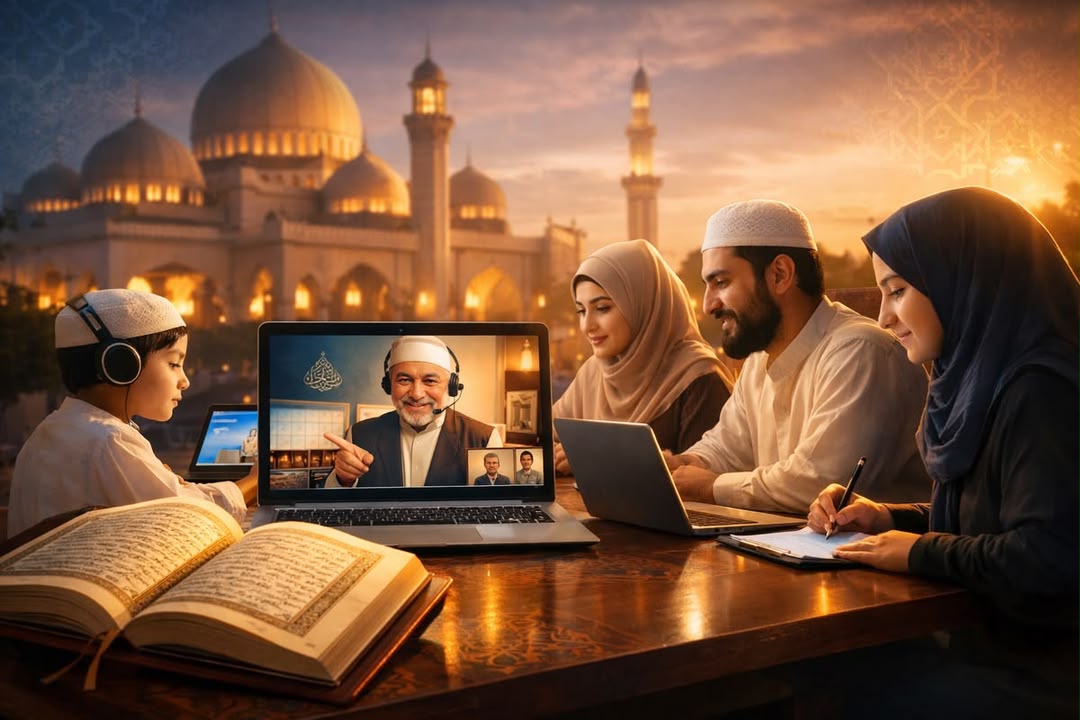
The world of education is changing rapidly. Technology has transformed how people learn, access information, communicate, and share knowledge. Today, a student can attend a lecture from another continent, access thousands of books with a smartphone, listen to educational podcasts while travelling, and learn new skills without stepping into a traditional classroom.
Islamic education is not excluded from this transformation.
For centuries, Islamic knowledge has been preserved and transmitted through scholars, teachers, Islamic institutions, traditional learning circles, and the study of the Qur’an and Sunnah. Knowledge was passed from one generation to another through teaching, memorisation, discussion, and practical application.
However, in today’s digital age, the methods through which people access Islamic knowledge are evolving. Online Islamic classes, YouTube lectures, digital Qur’ans, Islamic applications, podcasts, virtual learning platforms, and social media have created new opportunities for Muslims to learn about their religion.
A young Muslim today can learn about Tafsir, Hadith, Fiqh, Seerah, and Islamic history without necessarily attending a physical Islamic institution.
But this development also raises important questions.
Are digital platforms improving Islamic education or making religious knowledge more vulnerable to misinformation? Can technology preserve the traditional depth of Islamic scholarship? How do we ensure that convenience does not replace authenticity? And what does the future of Islamic education look like in a world increasingly influenced by artificial intelligence?
The challenge before the Muslim community is not whether to embrace technology or reject it. Rather, it is how to use modern tools responsibly while preserving the authenticity, values, and intellectual traditions of Islam.
1. THE TRANSFORMATION OF ISLAMIC EDUCATION
Traditionally, Islamic education was closely connected to mosques, madrasahs, Islamic schools, universities, and gatherings led by knowledgeable scholars.
Students travelled long distances to study under respected teachers, memorise the Qur’an, learn Hadith, understand Islamic jurisprudence, and develop their knowledge of the religion.
These traditional methods played a significant role in preserving Islamic scholarship and ensuring that knowledge was transmitted through recognised educational relationships.
Today, digital technology has introduced another dimension to this process.
Muslims can now access:
- Online Qur’an memorisation classes.
- Virtual Arabic language lessons.
- Recorded Islamic lectures and seminars.
- Digital libraries containing classical Islamic texts.
- Online courses on Hadith, Fiqh, and Islamic history.
- Educational podcasts and video discussions.
- Live lessons with qualified Islamic teachers.
This transformation has made Islamic learning more accessible to people who may not have access to established Islamic institutions in their immediate communities.
However, digital education should complement rather than automatically replace traditional Islamic learning. Personal interaction with qualified teachers remains important for correcting mistakes, developing understanding, and appreciating the context of religious knowledge.
2. MAKING ISLAMIC KNOWLEDGE MORE ACCESSIBLE TO YOUNG MUSLIMS
One of the greatest opportunities technology offers is its ability to make Islamic education more accessible to younger generations.
Young Muslims are growing up in a world where digital platforms are central to communication, entertainment, and learning.
Many spend significant portions of their day on social media, watching videos, reading online content, and interacting with digital communities.
This presents an opportunity for Islamic educators to communicate knowledge through platforms young people already use.
For example, short educational videos can introduce Islamic concepts, podcasts can explore contemporary religious questions, and interactive learning applications can help children memorise Qur’anic verses and learn daily supplications.
Rather than assuming that young Muslims are uninterested in religion, we should consider whether the methods through which Islamic knowledge is presented are connecting with their experiences.
The objective should not be to turn Islamic education into entertainment. Instead, it should be to make authentic knowledge engaging, understandable, and accessible without compromising its seriousness.
Young Muslims deserve an education that helps them understand their religion, develop sound Islamic values, and apply what they learn to everyday situations.
3. THE ROLE OF SOCIAL MEDIA IN ISLAMIC EDUCATION
Social media has become one of the most influential platforms for sharing religious information.
Today, Islamic reminders, Qur’anic reflections, Hadith explanations, lectures, and discussions about contemporary Muslim life circulate across Instagram, TikTok, Facebook, YouTube, and other platforms.
This has allowed Islamic messages to reach audiences far beyond traditional classrooms and mosques.
A person who may never have attended a particular Islamic lecture can watch it online. Someone who cannot afford physical Islamic books may access digital learning resources. Muslims living in communities with limited Islamic educational facilities can connect with scholars and teachers from other parts of the world.
However, social media also presents significant challenges.
The popularity of a religious content creator does not automatically establish their Islamic qualifications. A short video may leave out important context, while an attractive quotation may be incorrectly attributed to the Prophet Muhammad (peace and blessings be upon him).
Some individuals also share religious rulings without the necessary knowledge or understanding of the relevant circumstances.
This makes digital Islamic literacy extremely important.
Muslims must learn to:
- Verify religious information before sharing it.
- Consult reliable Islamic scholars.
- Check the authenticity and context of Hadith.
- Distinguish established Islamic teachings from personal opinions.
- Avoid treating viral religious content as a substitute for proper study.
Social media can be a powerful means of spreading beneficial knowledge, but it must be used with responsibility and sincerity.
4. ARTIFICIAL INTELLIGENCE AND THE FUTURE OF ISLAMIC LEARNING
Artificial intelligence is introducing another major development into education.
AI-powered tools can explain unfamiliar concepts, translate texts, summarise educational materials, create revision questions, and assist students in organising their learning.
In Islamic education, these technologies may provide useful support.
For instance, a student learning Arabic may use digital tools to practise vocabulary. Someone studying Islamic history may use technology to organise historical timelines. Teachers may use AI-assisted resources to prepare lesson plans, develop quizzes, and simplify complex educational concepts.
However, the use of artificial intelligence in religious education requires particular caution.
AI systems can generate inaccurate information, misunderstand religious context, misquote sources, or present scholarly disagreements as though there is only one established position.
An AI-generated answer should therefore never automatically be treated as an authentic Islamic ruling.
Questions involving Aqeedah, Fiqh, Hadith authentication, and religious obligations should be checked against reliable sources and discussed with qualified scholars.
Technology can assist the process of learning, but it cannot replace the responsibility of seeking authentic knowledge.
The future of Islamic education should involve using AI as an educational assistant, not treating it as an independent religious authority.
5. PRESERVING AUTHENTICITY IN A WORLD OF UNLIMITED INFORMATION
One of the biggest challenges of the digital age is that access to information does not necessarily translate into genuine knowledge.
Today, anyone can publish an Islamic article, upload a religious lecture, create a social media page, or offer online religious lessons.
While this freedom has created opportunities for beneficial education, it has also made it easier for misinformation to circulate.
A person can encounter conflicting religious opinions within minutes without understanding the scholarly principles behind them.
This can create confusion, especially among young Muslims who are still developing their understanding of Islam.
The Muslim community must therefore place greater emphasis on the importance of authentic Islamic scholarship.
Allah says in the Qur’an:
“Ask the people of knowledge if you do not know.” (Qur’an 16:43).
This verse highlights the importance of seeking guidance from those who possess knowledge.
Digital platforms should make it easier for Muslims to connect with qualified scholars, not encourage the assumption that every online opinion carries equal authority.
Islamic educational institutions must also ensure that digital learning materials are properly researched, referenced, and reviewed.
The preservation of authentic knowledge must remain a priority, regardless of how advanced technology becomes.
6. THE IMPORTANCE OF COMBINING TRADITIONAL AND DIGITAL LEARNING
There is sometimes a perception that traditional Islamic education and modern technology are competing approaches.
However, they do not necessarily have to be alternatives.
Traditional Islamic learning offers important benefits, including direct interaction with teachers, personal mentorship, structured study, scholarly guidance, and the development of good character.
Digital learning offers flexibility, accessibility, convenience, and opportunities to reach wider audiences.
Combining both approaches can create a more effective educational experience.
For example, a student may attend physical Qur’an lessons during the week and use a mobile application to revise memorisation at home.
An Islamic school may provide classroom instruction while using an online learning platform to share additional reading materials and assignments.
A mosque may organise weekly physical lectures while broadcasting them online for Muslims who cannot attend.
This approach allows technology to strengthen established educational structures rather than weaken them.
The future of Islamic education should not be about abandoning tradition. It should be about preserving what works while responsibly improving how knowledge is delivered.
7. DIGITAL ISLAMIC EDUCATION AND THE CHALLENGE OF ACCESSIBILITY
Although digital learning has created many opportunities, not everyone has equal access to it.
Some Muslim communities lack reliable internet connections, affordable digital devices, or adequate technological infrastructure.
In certain areas, students may also face financial difficulties that prevent them from accessing paid online courses and educational resources.
This is particularly relevant in developing countries, where access to digital education may differ significantly between urban and rural communities.
If Islamic education becomes increasingly dependent on technology, there is a risk that some Muslims may be left behind.
Islamic organisations, schools, charitable institutions, and community leaders should therefore consider ways to make digital Islamic education more inclusive.
Possible initiatives include:
- Providing affordable or free online Islamic courses.
- Establishing digital learning centres in underserved communities.
- Offering downloadable lessons for students with limited internet access.
- Supporting Islamic schools with appropriate technological resources.
- Creating educational materials in local languages.
- Providing scholarships for students who cannot afford Islamic education.
The purpose of technology should be to widen access to beneficial knowledge, not create another barrier for people who are already disadvantaged.
8. THE ROLE OF PARENTS IN DIGITAL ISLAMIC EDUCATION
Parents remain important in shaping the religious development of their children.
In today’s digital environment, children are exposed to countless sources of information, opinions, entertainment, and cultural influences.
While digital platforms can support Islamic learning, they can also expose children to inappropriate content and misleading religious information.
Parents should therefore take an active role in guiding their children’s digital experiences.
This does not necessarily mean preventing children from using technology. Rather, it means teaching them how to use it responsibly.
Parents can introduce age-appropriate Islamic educational applications, encourage Qur’an learning through trusted digital resources, listen to Islamic podcasts together, and discuss religious lessons encountered online.
They should also teach children that not every person who speaks confidently about Islam online is necessarily knowledgeable.
Most importantly, parents should remember that digital Islamic education cannot replace their own responsibility to teach Islamic values through daily conduct.
Children learn not only from what their parents tell them but also from what they observe.
A home where prayer, kindness, honesty, Qur’an recitation, and respect are part of everyday life provides an important foundation for Islamic education.
9. DEVELOPING CRITICAL THINKING AMONG MUSLIM STUDENTS
The digital world exposes students to an enormous amount of information, including different religious interpretations, philosophical arguments, scientific discussions, and social ideologies.
Young Muslims must therefore develop the ability to think critically and evaluate information responsibly.
Islamic education should not simply teach students to memorise information. It should also help them understand concepts, examine evidence, ask meaningful questions, and distinguish reliable knowledge from misinformation.
Students should learn how to approach religious discussions with intellectual humility and respect.
They should understand that some Islamic issues have established scholarly consensus, while others involve legitimate differences of opinion among qualified scholars.
This understanding can help reduce unnecessary arguments and prevent young Muslims from becoming confused whenever they encounter a different interpretation.
An educated Muslim should be able to engage with the modern world while remaining grounded in authentic Islamic principles.
10. MAKING ISLAMIC EDUCATION RELEVANT TO CONTEMPORARY ISSUES
For Islamic education to remain meaningful, it must help Muslims understand how Islamic principles apply to the circumstances they encounter today.
Students should learn the foundations of their religion while also exploring the ethical questions associated with modern society.
For example:
- What does Islam teach about artificial intelligence and responsible technology use?
- How should Muslims protect their privacy in the digital age?
- What are the Islamic principles of online business and digital transactions?
- How should Muslims respond to cyberbullying and online harassment?
- What does Islam teach about digital communication and maintaining modesty?
- How can Muslims balance professional ambitions with religious responsibilities?
- What ethical considerations should guide Muslims who create digital content?
These questions demonstrate that Islamic education is not limited to historical events or theoretical discussions.
Islamic principles can provide guidance for contemporary challenges, although specific new issues may require careful scholarly analysis and consultation.
When students understand the connection between their faith and their everyday experiences, they are more likely to appreciate the practical value of Islamic knowledge.
11. THE RESPONSIBILITY OF ISLAMIC SCHOLARS AND EDUCATIONAL INSTITUTIONS
The future of Islamic education cannot depend on technology alone. It also requires the commitment of scholars, teachers, parents, and educational institutions.
Islamic scholars must continue to make authentic knowledge accessible while helping Muslims navigate emerging questions.
Teachers should explore appropriate digital teaching methods and develop resources that support different learning needs.
Islamic institutions should invest in digital libraries, structured online programmes, educational platforms, and partnerships with credible technology providers.
There should also be greater collaboration between Islamic scholars, educators, researchers, and technology professionals.
Such collaboration can help ensure that technological innovations are developed and used in ways that respect Islamic ethics and educational priorities.
The objective should be to create an educational environment where technology supports knowledge, scholarship maintains authenticity, and students develop both intellectual ability and strong Islamic character.
12. PREPARING THE NEXT GENERATION OF MUSLIM EDUCATORS
As technology continues to transform education, the Muslim community must prepare individuals who understand both Islamic scholarship and the digital environment.
The next generation will need qualified Qur’an teachers who can teach through digital platforms, Islamic researchers who understand online information systems, educators who can develop engaging learning resources, and scholars who can address contemporary questions with sound knowledge.
Muslim students should also be encouraged to pursue education in technology, science, communication, and other professional fields while maintaining a strong foundation in Islam.
The aim is not simply to produce Muslims who consume digital content but Muslims who can contribute meaningfully to the development of knowledge.
We need individuals who can build beneficial educational platforms, preserve Islamic manuscripts digitally, develop accessible learning applications, and use technology to serve the Ummah.
This is an opportunity for Muslims to become active contributors to the future of education.
CONCLUSION: EMBRACING THE FUTURE WITHOUT LOSING OUR FOUNDATION
The future of Islamic education in a digital world presents both extraordinary opportunities and serious responsibilities.
Technology has made Islamic knowledge more accessible than ever before. It has created new ways for students to learn, teachers to communicate, scholars to share knowledge, and Muslim communities to remain connected.
However, accessibility must never be confused with authenticity, and convenience must never replace the discipline required to acquire genuine knowledge.
As Muslims, we must recognise that technology is a tool. Its value depends on how responsibly and purposefully we use it.
We should embrace beneficial innovations, encourage digital literacy, support Islamic educational institutions, and create opportunities for young Muslims to learn their religion through reliable and engaging methods.
At the same time, we must preserve the foundations of Islamic education: the Qur’an, the authentic Sunnah, sound scholarship, good character, sincerity, and the proper transmission of knowledge.
The future should not be a choice between tradition and technology. It should be a thoughtful combination of both.
Ultimately, the success of Islamic education will not be measured by how many digital platforms we create or how many followers our Islamic pages attract. It will be measured by whether the knowledge being shared helps people understand their religion, improve their character, strengthen their relationship with Allah, and contribute positively to society.
Technology may change how we learn, but it must never change the importance of learning Islam correctly.
May Allah grant us beneficial knowledge, protect us from misinformation, guide our educators and scholars, and make technology a means of spreading authentic knowledge and strengthening the Ummah. Ameen.
REFLECTION FOR OUR READERS
As we embrace the digital future, we must ask ourselves:
- Are we using technology to strengthen our understanding of Islam or simply consuming religious content?
- Do we verify Islamic information before accepting and sharing it?
- Are we preparing our children to navigate the digital world with Islamic values?
- Are Islamic institutions adapting to modern educational needs without compromising authenticity?
- How can we use our digital skills to benefit the Muslim community?
The digital world is already shaping the future of education. The question is whether we will participate responsibly in shaping the future of Islamic education.
Let us embrace innovation, preserve authentic knowledge, and raise a generation that is both digitally equipped and firmly grounded in Islam.
