


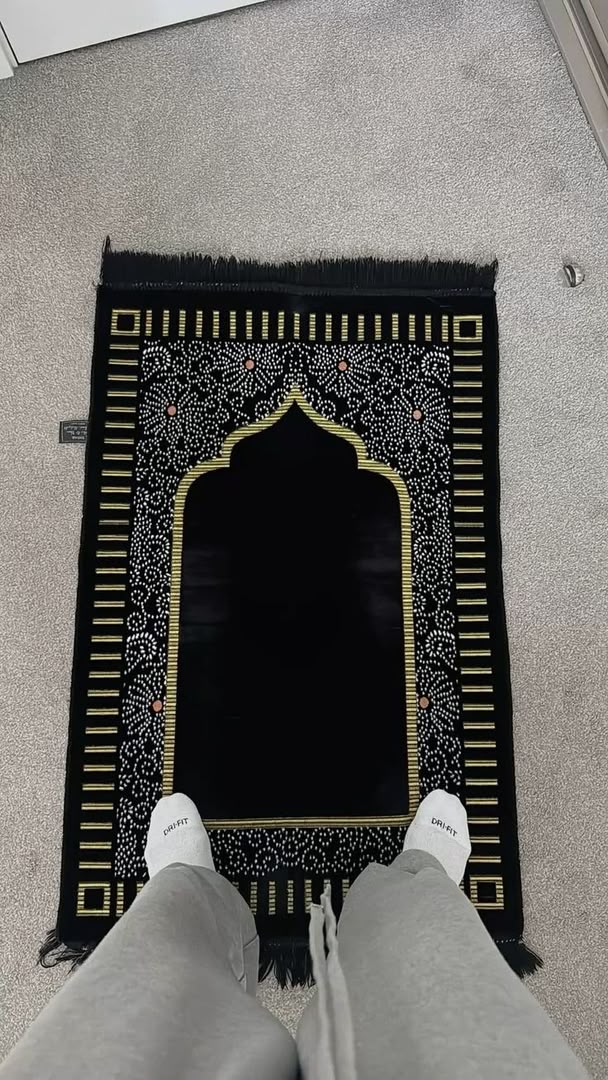
There comes a time in life when you look back and realise that you have been away from Allah for far too long. Perhaps you stopped praying Salah (Salat) for months, years, or even decades. Maybe you started missing prayers because of distractions, personal struggles, depression, laziness, bad habits, or simply because you gradually lost your connection with Islam.
Now, something has changed. Your heart wants to return to Allah. You want to start praying again, but a question keeps bothering you:
What happens to all the Salah I missed over the years? Can I just start praying again? Will Allah forgive me? Is it too late for me?
If these questions are on your mind, take a deep breath. The fact that you want to return to Salah is something you should take seriously and be grateful for. You should never allow guilt about your past to stop you from building a better relationship with Allah today.
Let’s discuss what Islam teaches about missing Salah for years and how you can begin again.
1. FIRST, UNDERSTAND THAT IT IS NEVER TOO LATE TO RETURN TO ALLAH
One of the biggest mistakes people make after abandoning Salah is believing that they have gone too far to be forgiven.
They think about all the prayers they missed, feel ashamed, and become discouraged. Some even convince themselves that there is no point in starting again because they have already failed so many times.
But this is not how a Muslim should approach repentance.
Allah says in the Qur’an:
“Say, O My servants who have exceeded the limits against their souls! Do not lose hope in Allah’s mercy, for Allah certainly forgives all sins. He is indeed the All-Forgiving, Most Merciful.”
(Qur’an 39:53)
This verse is a powerful reminder that no matter how far you have strayed, you should never despair of Allah’s mercy.
You may have missed thousands of prayers, but you can still repent. You may have spent years away from the mosque, but you can still return. You may feel unworthy of standing before Allah, but Salah is precisely one of the ways you reconnect with Him.
Do not let Shaytan convince you that your past mistakes make your future efforts meaningless.
Start again.
2. WHAT HAPPENS TO THE SALAH YOU MISSED FOR YEARS?
This is one of the most important questions.
In Islam, the five daily prayers are obligatory upon every accountable Muslim. Deliberately abandoning Salah is a serious matter and should never be treated lightly.
If you missed Salah for several years, Islamic scholars have discussed what you should do about those missed prayers.
There are two important scholarly positions:
Position One: You must make up the missed prayers (Qada).
The majority of classical Islamic scholars, including the four major Sunni schools of jurisprudence, hold that missed obligatory prayers must be made up, even if they were missed deliberately.
According to this position, you should:
- Repent sincerely to Allah.
- Begin performing your five daily prayers consistently.
- Estimate the number of obligatory prayers you missed.
- Gradually make up those prayers alongside your current daily prayers.
You do not necessarily have to complete everything in a few days or weeks. You can develop a realistic schedule and remain consistent.
Position Two: Sincere repentance and increased voluntary worship.
Some scholars, including Ibn Taymiyyah and other scholars who have discussed the issue, hold that deliberately abandoned prayers cannot be made up in the same way as prayers missed through sleep or forgetfulness.
According to this position, the person should make sincere Tawbah, guard all future obligatory prayers, increase voluntary worship, and perform good deeds.
Because this is a matter of scholarly disagreement, it is best to consult a knowledgeable and trustworthy scholar from the school of Islamic jurisprudence you follow.
However, there is one thing all Muslims should understand: Do not delay restarting your five daily prayers while trying to figure out how to deal with the past.
Your first priority is to pray the Salah that is due now.
3. HOW DO YOU START PRAYING AGAIN AFTER YEARS OF NEGLECT?
If you have not prayed consistently for years, returning to Salah may feel overwhelming.
You might have forgotten some aspects of the prayer. You might struggle to wake up for Fajr. You may feel uncomfortable praying around people who have always been practising Muslims.
That is okay. You can relearn what you have forgotten.
Here are practical steps to help you begin.
Step 1: Make sincere Tawbah
Tawbah means sincerely repenting to Allah.
Find a quiet moment and acknowledge your mistakes. Ask Allah to forgive you for the years you neglected Salah.
A sincere repentance involves:
- Feeling genuine regret for abandoning the prayers.
- Stopping the neglect and returning to Salah.
- Making a sincere commitment not to abandon it again.
You do not need complicated words to repent. Speak to Allah sincerely and ask Him to guide you.
You can say:
“Ya Allah, I know I have neglected my prayers. I regret the time I spent away from You. Please forgive me, guide me, strengthen my faith, and make me among those who establish Salah consistently.”
Step 2: Start with the five daily prayers
Do not make the mistake of thinking you must first complete all your missed prayers before you can start praying today’s Salah.
Start with the current obligatory prayers:
- Fajr – 2 Rak’ahs.
- Dhuhr – 4 Rak’ahs.
- Asr – 4 Rak’ahs.
- Maghrib – 3 Rak’ahs.
- Isha – 4 Rak’ahs.
Make these five prayers your daily priority.
Even if you feel spiritually weak, pray. Even if you are still struggling with consistency, keep trying.
Your goal is to rebuild the habit of standing before Allah.
Step 3: Relearn anything you have forgotten
If you have been away from Salah for a long time, you may have forgotten the correct way to perform Wudu, the words recited during prayer, or some of the movements.
Do not allow embarrassment to stop you.
Learn again:
- How to perform Wudu.
- How to pray each of the five daily prayers.
- The essential recitations in Salah.
- The conditions and essential requirements of prayer.
You can use reliable Islamic books, attend lessons at your local mosque, or ask a knowledgeable Muslim to guide you.
Remember, learning again is not something to be ashamed of.
Step 4: Create a prayer routine
Consistency becomes easier when you make Salah part of your daily schedule.
Set alarms for each prayer. Keep your prayer mat somewhere accessible. Prepare for prayer before the Adhan whenever possible.
If you work or attend school, plan your day around your prayer times rather than constantly trying to fit Salah into whatever time remains.
The more you practise, the more natural it becomes.
4. SHOULD YOU PRAY ALL YOUR MISSED SALAH AT ONCE?
If you follow the scholarly position that missed obligatory prayers must be made up, you may wonder how to deal with years of missed prayers.
Imagine someone who has not prayed for five years. Thinking about the number of missed prayers can be frightening.
But you can approach the matter gradually.
For example, you could:
- Pray your five current obligatory prayers every day.
- Make up one missed Fajr after your current Fajr.
- Make up one missed Dhuhr after your current Dhuhr.
- Continue this approach for the other prayers as you are able.
You can adjust the schedule according to your circumstances.
If this feels too difficult, begin with a manageable number and increase it gradually.
You should also make a reasonable estimate of the prayers you missed. You do not need to become obsessed with calculating every single prayer perfectly.
Ask a knowledgeable scholar how to estimate and organise your Qada prayers according to the school you follow.
The important thing is to remain consistent rather than becoming overwhelmed and giving up.
5. WHAT IF YOU START PRAYING AGAIN BUT KEEP MISSING SOME PRAYERS?
This is another struggle many people experience.
You decide to return to Islam. You pray for three days, one week, or even a month. Then you miss Fajr. After that, you miss Dhuhr. Eventually, you find yourself falling back into your old habits.
You begin to feel guilty and wonder whether there is any point in trying again.
There is.
If you miss a prayer, do not use that mistake as an excuse to abandon the remaining prayers.
If you miss Fajr, still pray Dhuhr when its time comes. If you miss one day, do not allow it to become another year.
Repent, address what caused you to miss the prayer, and continue.
The Prophet Muhammad (peace and blessings be upon him) taught that the most beloved deeds to Allah are those done consistently, even if they are small.
This teaches us the importance of building lasting habits rather than relying only on temporary excitement.
Do not wait until you feel perfectly religious before you start practising Islam consistently.
Keep returning to Allah.
6. WILL ALLAH FORGIVE YOU FOR ABANDONING SALAH?
Yes, Allah’s mercy is vast, and sincere repentance is open to those who turn back to Him.
Never believe that your years of neglect automatically mean you have lost your opportunity to be forgiven.
Allah says:
“And whoever does evil or wrongs themselves but afterwards seeks Allah’s forgiveness will find Allah All-Forgiving, Most Merciful.”
(Qur’an 4:110)
Think about what this means.
You are not being asked to pretend that your past never happened. You are being encouraged to acknowledge your mistakes, seek forgiveness, and change your direction.
Perhaps you spent ten years without praying. Perhaps you spent twenty years neglecting Salah.
Those years cannot be recovered, but the remaining years of your life can be different.
Instead of spending every day regretting the past, use that regret to motivate you to become a better Muslim.
Never underestimate the importance of sincere Tawbah.
7. DO NOT WAIT UNTIL YOU BECOME A PERFECT MUSLIM
Some people delay returning to Salah because they believe they must first stop every other sin.
They say things like:
“I still listen to music.”
“I still struggle with certain bad habits.”
“I am not yet ready to become a good Muslim.”
“I need to fix my life before I start praying.”
But this way of thinking can become a dangerous trap.
Salah is not a reward reserved for people who have no sins. It is an obligation and a means of remembering Allah and seeking His guidance.
If you are struggling with other sins, work on leaving them while continuing to pray.
Do not abandon one obligation because you are struggling with another part of your life.
You do not have to become perfect before returning to Allah.
You need to take the first step.
8. PRACTICAL TIPS TO HELP YOU NEVER ABANDON SALAH AGAIN
Returning to Salah is one thing. Maintaining consistency is another.
Here are some practical ways to protect your prayers.
1. Set prayer reminders.
Use your phone to receive Adhan notifications and reminders. Do not rely entirely on remembering prayer times yourself.
2. Keep good company.
Spend time with people who remind you of Allah and encourage you to pray. Your environment can have a powerful influence on your religious habits.
3. Learn about the importance of Salah.
Read about the virtues of prayer and the warnings against neglecting it. Understanding its importance can strengthen your commitment.
4. Make Dua regularly.
Ask Allah to keep your heart firm upon His religion.
One beautiful supplication taught in the Qur’an is:
“Our Lord! Do not let our hearts deviate after You have guided us, and grant us mercy from Yourself. Surely You are the Giver of all bounties.”
(Qur’an 3:8)
5. Pray even when you do not feel motivated.
Do not make Salah dependent on your emotions. Some days you will feel spiritually connected, while other days you may feel distracted or tired.
Pray anyway.
6. Make the mosque part of your routine.
If possible, attend congregational prayers regularly. Being surrounded by other Muslims can help you maintain consistency.
9. WHAT IF YOU FEEL ASHAMED TO RETURN TO THE MOSQUE?
Perhaps you used to be a practising Muslim. People knew you as someone who prayed regularly. Then you disappeared from the mosque for years.
Now you feel embarrassed about returning.
You wonder what people will say or whether they will judge you.
Remember that your relationship with Allah is more important than people’s opinions.
You do not need to explain your entire past to everyone.
Walk into the mosque, perform Wudu, and pray.
If someone asks where you have been, you do not have to share personal details. You can simply say that you are trying to become consistent again.
The mosque is a place of worship, not a place reserved for people who have never made mistakes.
Let your return be about Allah, not about what people think.
10. YOUR PAST DOES NOT HAVE TO DEFINE YOUR FUTURE
Imagine waking up tomorrow and deciding that you will never deliberately abandon Salah again.
You perform Wudu, spread your prayer mat, face the Qiblah, and say Allahu Akbar.
That simple moment could become the beginning of a completely different chapter in your life.
You cannot change the prayers you neglected yesterday. You cannot return to the years you spent away from Salah.
But you can decide what happens next.
Do not allow the weight of your missed prayers to prevent you from performing the prayer that is due today.
Do not allow guilt to become hopelessness.
Do not allow Shaytan to convince you that Allah will not accept your repentance.
Keep asking for forgiveness. Keep learning. Keep praying. Keep trying.
And if you fall short, return again.
FINAL WORDS: START AGAIN, EVEN IF YOU HAVE MISSED SALAH FOR 20 YEARS
If you have missed Salah for years and now want to return, let today be the day you take that decision seriously.
Do not wait for Ramadan. Do not wait for a special Islamic occasion. Do not wait until your life becomes perfect.
Start with the next prayer.
If it is Fajr, pray Fajr. If it is Dhuhr, pray Dhuhr. If it is Asr, pray Asr. Make the intention to remain consistent and seek Allah’s forgiveness for the past.
Learn about making up missed prayers and follow reliable scholarly guidance on the matter.
Most importantly, never give up hope in Allah’s mercy.
You may have spent years away from Salah, but you can spend the rest of your life establishing it.
Your journey back to Allah does not have to begin with a perfect record. It can begin with one sincere prayer.
May Allah forgive everyone who has neglected Salah, guide our hearts, make prayer beloved to us, and grant us the strength to remain consistent until our last breath.
Ameen.
FREQUENTLY ASKED QUESTIONS (FAQs)
1. Can I start praying again after 10 years of not praying?
Yes. You should return to Salah immediately, sincerely repent for abandoning it, and begin observing all five daily prayers. Do not allow the number of missed prayers to discourage you.
2. Do I have to make up all the Salah I missed?
The majority of classical Sunni scholars say that missed obligatory prayers must be made up, including those deliberately neglected. Some scholars hold a different position for deliberately abandoned prayers. Consult a knowledgeable scholar for guidance.
3. Can Allah forgive someone who has not prayed for years?
Yes. Never despair of Allah’s mercy. Sincere repentance is open to anyone who turns back to Him.
4. Should I make up missed Salah before praying today’s Salah?
No. Do not delay current obligatory prayers while dealing with missed prayers. Protect the five daily prayers first, and organise any make-up prayers according to the scholarly position you follow.
5. What if I cannot remember how many prayers I missed?
Make a reasonable estimate based on your circumstances and seek guidance from a knowledgeable scholar. Avoid allowing uncertainty to prevent you from restarting.
6. Is it okay to start with only one prayer a day?
The five daily prayers are obligatory, so you should aim to establish all five immediately. If you struggle, keep working towards consistency rather than accepting one prayer as a permanent replacement for the five.
7. What if I keep falling back into missing Salah?
Repent, renew your commitment, and return to prayer. Do not let one missed prayer become an excuse to abandon the rest. Keep seeking Allah’s help and working on your consistency.
