
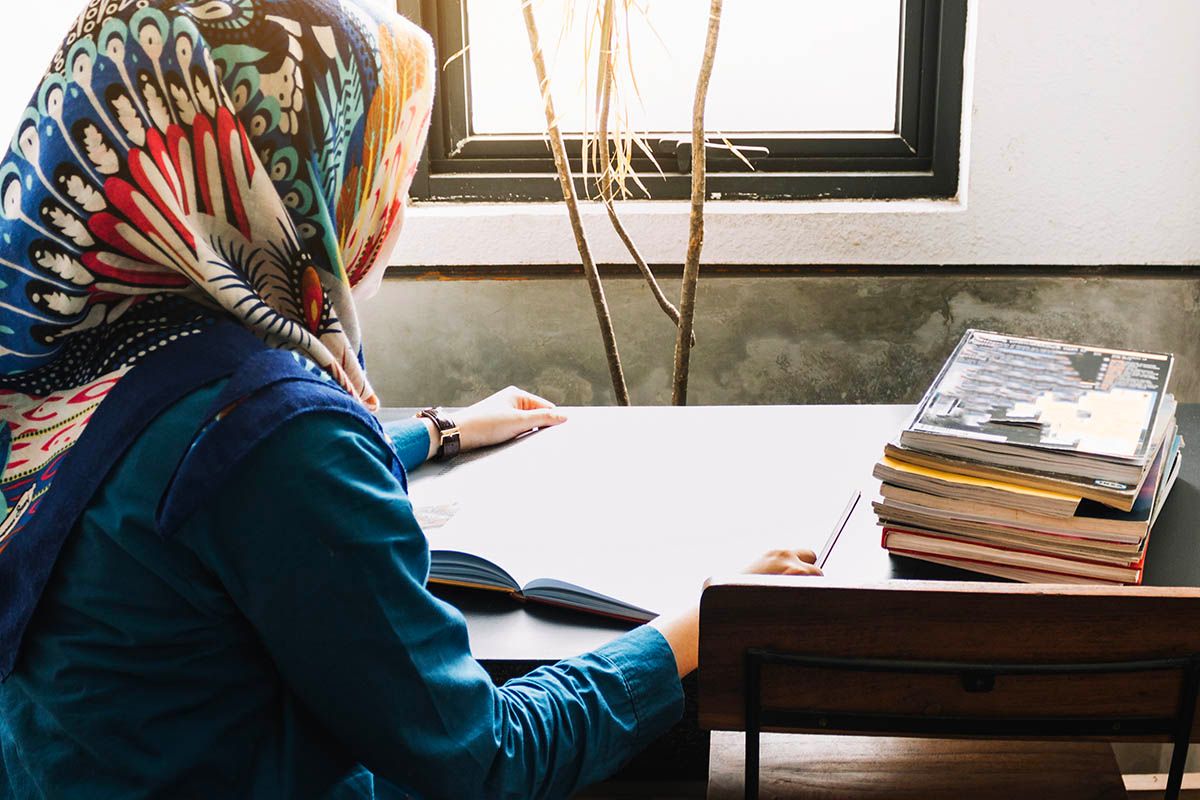
There is a common misconception in society that Islam discourages women from pursuing education. Some people believe that a Muslim woman should focus exclusively on marriage, motherhood, and household responsibilities rather than pursuing academic qualifications, building a career, or gaining professional knowledge.
Others assume that educating women goes against Islamic values or that a woman who wants to attend university, become a doctor, teach, or pursue other professional ambitions is somehow neglecting her religion.
But how accurate are these beliefs?
Does Islam really restrict women from acquiring knowledge? Are Muslim women discouraged from attending school? Can a Muslim woman pursue higher education, become a professional, or build a successful career while remaining committed to her Deen?
The truth is that Islam does not prohibit women from seeking beneficial knowledge. In fact, the pursuit of knowledge holds an important position in Islam, and women have historically played significant roles in Islamic scholarship, education, medicine, and society.
Unfortunately, cultural expectations, misinformation, and the actions of certain individuals have sometimes been confused with Islamic teachings.
It is important to distinguish between what Islam actually teaches and what certain communities may practise.
Let’s explore the misconception that Islam restricts women’s education and understand what the religion really says.
1. ISLAM ENCOURAGES THE PURSUIT OF KNOWLEDGE
One of the clearest indications of the importance of knowledge in Islam is that the first revelation given to Prophet Muhammad (peace and blessings be upon him) began with the command:
“Read in the name of your Lord who created.”
(Qur’an 96:1)
The first revealed verses emphasise reading, learning, and the importance of knowledge.
This is significant because Islam encourages human beings to reflect, understand, learn, and seek guidance.
Allah also says:
“Say, ‘Are those who know equal to those who do not know?'”
(Qur’an 39:9)
This verse highlights the distinction between knowledge and ignorance.
The pursuit of beneficial knowledge is an important part of a Muslim’s life.
A Muslim woman is not excluded from this encouragement simply because she is a woman.
She needs knowledge to understand her religion, fulfil her responsibilities, make informed decisions, and contribute positively to society.
Whether she wants to study Islamic jurisprudence, medicine, education, science, business, or another beneficial discipline, acquiring knowledge can be valuable.
2. THE PURSUIT OF KNOWLEDGE IS NOT EXCLUSIVELY FOR MEN
One of the biggest misunderstandings about Islamic education is the assumption that religious learning is primarily for men.
But Islam recognises that women also need knowledge to understand their obligations and practise their religion correctly.
The Prophet Muhammad (peace and blessings be upon him) made time to teach women.
In an authentic narration, some women approached the Prophet and explained that men had taken most of his time. They requested a specific day when he could teach them.
He agreed and designated a day to teach them.
(Sahih al-Bukhari 101)
Think about what this teaches us.
The women of that generation understood the importance of education. They did not simply accept being excluded from opportunities to learn.
They requested access to knowledge, and the Prophet responded positively.
This is an important reminder that women have a place in Islamic education.
A Muslim woman should not be made to feel that wanting to learn is inappropriate or that education is somehow reserved for men.
3. WOMEN HAVE PLAYED IMPORTANT ROLES IN ISLAMIC SCHOLARSHIP
If Islam truly prohibited women from acquiring knowledge, how would we explain the many Muslim women who became respected scholars, teachers, narrators of Hadith, and contributors to Islamic intellectual history?
One of the most remarkable examples is Aisha bint Abi Bakr (RA).
Aisha (RA), the wife of Prophet Muhammad (peace and blessings be upon him), was one of the most knowledgeable women in Islamic history.
She was renowned for her understanding of:
- Hadith.
- Islamic jurisprudence.
- The Qur’an.
- Arabic language and poetry.
- Medicine and historical knowledge.
Many companions and later generations benefited from her knowledge.
She transmitted a significant number of Hadith and was consulted on important religious matters.
Her contribution demonstrates that women were not expected to remain ignorant or excluded from religious discussions.
Another important historical figure was Umm Salama (RA), who was also known for her wisdom and understanding.
These women remind us that Islamic history includes knowledgeable women whose contributions shaped the understanding and transmission of Islam.
4. ISLAM DOES NOT REQUIRE WOMEN TO REMAIN UNEDUCATED AFTER MARRIAGE
Another misconception is that once a woman gets married, her educational journey should come to an end.
Some women are made to believe that marriage automatically means abandoning their academic ambitions.
But marriage does not erase a woman’s intellectual abilities, interests, or desire to learn.
A Muslim woman can be a wife, mother, student, teacher, doctor, businesswoman, or researcher.
These roles are not automatically incompatible.
Of course, marriage and family life require communication, cooperation, and the management of responsibilities.
A couple should discuss educational plans, financial arrangements, childcare, and other practical considerations.
But it is incorrect to claim that Islam universally prohibits a married woman from pursuing education.
A husband and wife should encourage one another towards beneficial knowledge and personal development.
Marriage should not become an excuse for deliberately keeping someone ignorant.
5. MUSLIM WOMEN CAN STUDY MEDICINE, SCIENCE, LAW, AND OTHER PROFESSIONS
Some people assume that Islamic education is limited to studying the Qur’an and Hadith.
Although Islamic knowledge is essential, beneficial worldly knowledge also has value.
Muslim women can pursue fields such as:
- Medicine and healthcare.
- Teaching and education.
- Engineering and technology.
- Law and legal studies.
- Business and entrepreneurship.
- Science and research.
- Agriculture.
- Psychology and social services.
- Information technology.
- Architecture and other professional disciplines.
These fields can provide opportunities to serve humanity and contribute to society.
For example, female doctors and healthcare professionals can provide important services to women and children.
Female teachers can educate future generations.
Female researchers can contribute to scientific discoveries.
Female entrepreneurs can create employment opportunities and support their communities.
The important consideration is that the knowledge and profession should be beneficial and pursued within Islamic ethical boundaries.
A woman’s education can benefit not only herself but also her family and the wider community.
6. SEEKING RELIGIOUS KNOWLEDGE IS IMPORTANT FOR MUSLIM WOMEN
While academic education is valuable, Muslim women should also understand the importance of Islamic knowledge.
Every Muslim needs to learn what is necessary to fulfil their religious obligations.
For example, a Muslim woman should understand:
- How to perform Salah correctly.
- The rules of purification and Ghusl.
- The requirements of fasting.
- The principles of Islamic modesty.
- Her rights and responsibilities in marriage.
- The basic principles of Islamic belief.
- The rules concerning menstruation and worship.
- How to read and understand the Qur’an.
Some knowledge is individually obligatory (Fard Ayn) because every Muslim needs it to fulfil their personal religious duties.
Other areas of knowledge are communal obligations (Fard Kifayah), where sufficient members of the community should acquire expertise to meet society’s needs.
This distinction is important.
A Muslim woman should not neglect the knowledge she needs to practise her religion simply because she is pursuing a university degree.
Likewise, she should not be discouraged from acquiring beneficial professional knowledge simply because religious education is important.
Both forms of learning can have a valuable place in her life.
7. ISLAMIC MODESTY DOES NOT MEAN DENYING WOMEN EDUCATION
Some people argue that because Islam teaches modesty and gender boundaries, women should not attend educational institutions.
However, modesty and education are not mutually exclusive.
Islam teaches both men and women to observe appropriate standards of modesty.
Allah says:
“Tell the believing men to reduce [some] of their vision and guard their private parts…”
And in the following verse:
“And tell the believing women to reduce [some] of their vision and guard their private parts…”
(Qur’an 24:30–31)
Notice that both men and women are addressed.
Islamic modesty is not a rule designed exclusively to restrict women.
It establishes moral responsibilities for both genders.
Muslim women can pursue education while observing Islamic principles concerning clothing, conduct, interactions, and personal boundaries.
Educational environments should also make reasonable efforts to respect students’ religious needs.
The existence of modesty guidelines does not mean women must abandon learning.
8. THE PROPHET MUHAMMAD (PBUH) RECOGNISED WOMEN’S INTELLECTUAL CAPABILITIES
The Prophet Muhammad (peace and blessings be upon him) did not treat women as people who had no need for knowledge or understanding.
He listened to their questions, responded to their concerns, and taught them matters relating to religion and everyday life.
Women asked him about purification, marriage, family matters, worship, and other important subjects.
They were not expected to remain silent simply because they were women.
In fact, the women of the early Muslim community actively sought answers to questions that affected their lives.
This is an important lesson for Muslim women today.
Asking questions is not disrespectful.
Seeking clarification is not a sign of weak faith.
Wanting to understand your religion is not disobedience.
A Muslim woman should feel encouraged to seek reliable knowledge rather than remain ignorant because of social pressure.
9. CULTURAL RESTRICTIONS SHOULD NOT AUTOMATICALLY BE ATTRIBUTED TO ISLAM
This is where much of the confusion comes from.
In some communities, girls are discouraged from attending school, pursuing higher education, or choosing certain professions.
Some families believe that educating a girl is unnecessary because she will eventually get married.
Others prioritise boys’ education while treating girls’ education as optional.
These attitudes may be influenced by cultural traditions, economic difficulties, insecurity, or personal beliefs.
However, they should not automatically be presented as Islamic teachings.
Islamic teachings should be understood through the Qur’an, authentic Sunnah, and qualified scholarship.
It is important not to confuse every cultural practice with religion.
A community may have traditions that restrict women, but the existence of those traditions does not prove that Islam requires them.
Muslims should be willing to examine their practices and distinguish genuine religious guidance from cultural assumptions.
10. EDUCATED MOTHERS CAN CONTRIBUTE TO A KNOWLEDGEABLE GENERATION
Education benefits individuals, families, and communities.
A mother who has access to knowledge may be better equipped to support her children’s learning, health, religious development, and general wellbeing.
She may help her children with schoolwork, encourage critical thinking, understand healthcare information, and teach them important values.
However, it is equally important to remember that a woman’s worth as a mother is not determined by her academic qualifications.
A woman without a university degree can be knowledgeable, wise, and an excellent parent.
The point is not that women must obtain degrees to become good mothers.
It is that denying women opportunities to learn deprives families and communities of valuable contributions.
Educating women can create benefits that extend across generations.
11. WOMEN SHOULD NOT BE MADE TO FEEL GUILTY FOR HAVING EDUCATIONAL AMBITIONS
Some Muslim women experience guilt when they want to pursue higher education or professional development.
They may be told that wanting a career means they are neglecting their future families.
Others are made to feel that ambitious women are less religious or less interested in marriage.
But wanting to become a doctor, lawyer, lecturer, scientist, or entrepreneur does not automatically make a woman less committed to Islam.
A Muslim woman’s identity should not be reduced to one role.
She can value marriage and motherhood while also appreciating education and professional development.
The important thing is to establish healthy priorities and ensure that her choices remain consistent with her religious principles.
She should not have to feel ashamed of wanting to develop her abilities.
Likewise, a woman who chooses to focus on family life rather than pursue a professional career should not be considered less intelligent or less valuable.
Different women have different circumstances, talents, and aspirations.
Islam should not be used to belittle either choice.
12. EDUCATION HELPS WOMEN UNDERSTAND AND PROTECT THEIR RIGHTS
One of the most important benefits of education is that it helps women become more informed.
A woman who has access to knowledge may be better equipped to understand her rights, recognise misinformation, make informed decisions, and seek appropriate support when necessary.
This includes understanding:
- Her Islamic rights before and during marriage.
- Her financial rights.
- Her inheritance rights.
- Her legal rights under the applicable law.
- Her responsibilities towards her children.
- Her health and wellbeing.
- The importance of making informed personal decisions.
Education does not guarantee that someone will never experience injustice.
However, knowledge can help a woman recognise when something is wrong and understand where to seek guidance.
This is another reason why keeping women ignorant should never be presented as an Islamic virtue.
13. MUSLIM WOMEN SHOULD HAVE ACCESS TO SAFE AND APPROPRIATE LEARNING ENVIRONMENTS
Supporting women’s education also means taking practical concerns seriously.
Families and communities may have legitimate questions about safety, transport, accommodation, financial arrangements, and educational environments.
These matters should be addressed thoughtfully rather than used as automatic reasons to deny girls and women education.
For example:
- Schools should provide safe learning environments.
- Families should consider secure transport arrangements.
- Institutions should respect reasonable religious requirements.
- Students should be protected from harassment and exploitation.
- Parents should encourage girls to pursue their abilities.
- Educational opportunities should be accessible without unnecessary discrimination.
Islamic principles concerning modesty and appropriate conduct can be observed while women continue to learn.
The goal should be to make beneficial education accessible and safe.
14. WHAT CAN MUSLIM FAMILIES DO TO SUPPORT GIRLS’ EDUCATION?
Families have an important role in shaping how girls view education.
Parents should avoid treating their daughters’ education as less important than their sons’.
Here are some practical ways Muslim families can support girls:
- Give daughters equal encouragement to pursue beneficial education.
- Allow girls to explore their talents and interests.
- Teach them the importance of Islamic knowledge alongside academic learning.
- Provide safe opportunities for schooling and professional development.
- Avoid pressuring girls into marriage before they are ready.
- Encourage questions and independent learning.
- Support women who want to return to education after marriage or motherhood.
- Introduce girls to positive female role models.
- Teach boys to respect educated women.
- Challenge harmful cultural beliefs that discourage girls from learning.
A community that invests in girls’ education is investing in its future.
15. WHAT DOES ISLAM REALLY SAY ABOUT WOMEN’S EDUCATION? A QUICK SUMMARY
| Common misconception | What Islam teaches |
|---|---|
| Education is only for men | Women are also encouraged to seek beneficial knowledge |
| A woman should stop learning after marriage | Marriage does not automatically end her educational journey |
| Women should only study religious subjects | Beneficial professional knowledge also has value |
| Modesty prevents women from attending school | Modesty and education can coexist |
| Educated women are less religious | Education does not automatically conflict with faith |
| Women should not ask religious questions | Women have historically asked questions and sought Islamic knowledge |
| A woman’s education is unnecessary if she will marry | Women have value and responsibilities beyond marital status |
| Women cannot become Islamic scholars | Muslim women have made important contributions to Islamic scholarship |
FINAL WORDS: ISLAM DOES NOT ASK WOMEN TO CHOOSE BETWEEN FAITH AND KNOWLEDGE
The misconception that Islam restricts women’s education has caused confusion and discouraged many Muslim girls from pursuing their potential.
But when we examine Islamic teachings and history, we find that women have always had a place in the pursuit of knowledge.
Aisha (RA) was a respected scholar. Women in the time of the Prophet Muhammad (peace and blessings be upon him) actively sought education. Islamic teachings recognise the importance of learning for both men and women.
A Muslim woman can be educated, knowledgeable, ambitious, and deeply committed to her Deen.
She can pursue medicine, teach children, study science, run a business, acquire Islamic knowledge, and contribute to her community while observing the principles of her religion.
Education should not be treated as a threat to a woman’s faith.
Instead, beneficial knowledge can strengthen her understanding, improve her decisions, and help her become a positive influence in society.
To Muslim parents: encourage your daughters to learn.
To Muslim husbands: support your wives in acquiring beneficial knowledge.
To Muslim women: never feel ashamed of wanting to learn more.
And to our communities: stop presenting cultural restrictions as though they are automatically Islamic teachings.
A Muslim woman does not have to remain ignorant to be religious. She can pursue knowledge, strengthen her Deen, and use her abilities to benefit the world around her.
May Allah grant Muslim men and women beneficial knowledge, the wisdom to apply it correctly, and the ability to use what they learn for the benefit of humanity.
Ameen Ya Rabbal Alameen.
FREQUENTLY ASKED QUESTIONS (FAQs)
1. Does Islam allow women to go to school?
Yes. Islam does not generally prohibit women from attending school or acquiring beneficial knowledge. Educational arrangements should respect Islamic principles and legitimate safety considerations.
2. Is it Haram for a Muslim woman to attend university?
No, attending university is not inherently Haram. A woman can pursue higher education while observing her religious obligations and appropriate Islamic guidelines.
3. Can a Muslim woman become a doctor?
Yes. Medicine is a beneficial profession, and women can contribute significantly to healthcare and the wellbeing of society.
4. Can a married Muslim woman continue her education?
Yes. Marriage does not automatically prohibit a woman from studying. Couples should discuss practical arrangements and support one another’s beneficial goals.
5. Did women study during the time of Prophet Muhammad (PBUH)?
Yes. Women sought knowledge directly from the Prophet. In Sahih al-Bukhari 101, a group of women requested a dedicated teaching day, and he agreed.
6. Who was the most famous female Islamic scholar?
Aisha bint Abi Bakr (RA) is among the most influential female scholars in Islamic history. She was an important authority in Hadith, jurisprudence, and other areas of knowledge.
7. Does a woman need her husband’s permission to study?
The details of marital permissions and obligations are discussed differently by Islamic scholars and depend on circumstances, including prior agreements and the nature of the study. Couples should discuss these matters before marriage. A husband should not use religion as an excuse to deliberately prevent his wife from acquiring essential religious knowledge.
8. Is studying secular subjects allowed in Islam?
Beneficial subjects such as medicine, mathematics, science, engineering, and technology are generally permissible. Their purpose, content, and application should be consistent with Islamic ethics.
9. Should Muslim parents educate their daughters?
Yes. Parents should support their daughters in acquiring the religious and beneficial worldly knowledge they need. Girls should not be treated as less deserving of educational opportunities than boys.
10. Can a woman be educated and still be a good Muslim wife and mother?
Absolutely. Education, marriage, motherhood, and religious commitment are not automatically incompatible. Women can balance different responsibilities according to their circumstances and abilities.
11. Does Islam require women to work after becoming educated?
No. Being educated does not mean a woman must pursue paid employment. She may choose a career, focus on family life, or combine different responsibilities according to her circumstances and values.
12. What is the difference between Islamic education and Western education?
Islamic education focuses on understanding Islam, including the Qur’an, Sunnah, beliefs, and religious obligations. Secular or contemporary academic education covers disciplines such as science, medicine, technology, and the humanities. They are different areas of learning and can complement one another when pursued within Islamic ethical principles.
