

WHEN SOCIAL MEDIA BECOMES AN ADDICTION: THE HIDDEN EFFECTS ON YOUR MIND, LIFE, AND DEEN

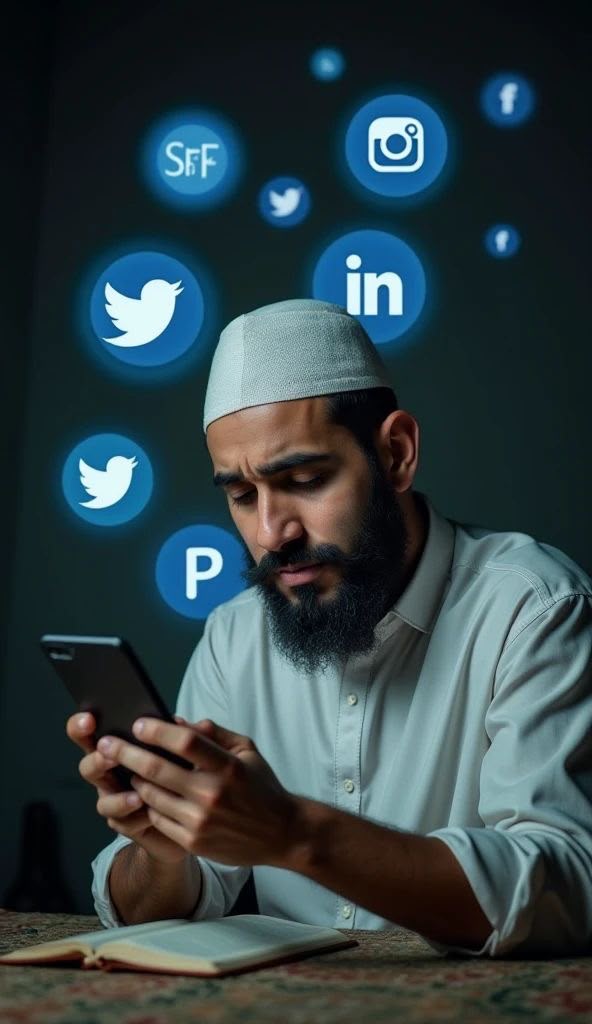
Social media was created to help people connect, communicate, learn, and share information. Platforms such as Instagram, TikTok, Facebook, Snapchat, and X have become part of our everyday lives.
We use them to keep in touch with family and friends, follow important news, promote businesses, watch educational videos, and entertain ourselves.
But somewhere along the way, something changed.
For many people, checking social media is no longer an occasional activity. It has become a habit they struggle to control.
You wake up in the morning and the first thing you reach for is your phone. Before saying your morning Adhkar, you are already scrolling through Instagram. You intend to spend five minutes watching videos, but suddenly an hour has passed.
You take your phone everywhere, even when you do not need it. You check notifications repeatedly, feel uncomfortable when you cannot access the internet, and struggle to concentrate on anything without reaching for your device.
Sometimes, you even sacrifice your sleep, responsibilities, family time, and acts of worship because you cannot stop scrolling.
This raises an important question: When does using social media for entertainment become an addiction, and how does it affect our lives as Muslims?
Social media itself is not necessarily harmful. It can be a useful tool when used responsibly. However, when it begins controlling your time, emotions, attention, and daily activities, it becomes a serious concern.
Let’s explore the hidden dangers of social media addiction and how Muslims can develop a healthier relationship with technology.
1. YOU REACH FOR YOUR PHONE BEFORE YOU EVEN REMEMBER ALLAH
<AsyncImage query=”Person lying in bed early morning checking smartphone before getting up” aspectRatio=”16:9″ width=”100%”/>
One of the first signs that social media may be taking over your life is how quickly you reach for your phone after waking up.
Instead of beginning your morning with Fajr, morning Adhkar, or gratitude to Allah, you immediately start checking notifications.
You want to know who sent you a message, who posted a new picture, what happened overnight, and whether anything interesting is trending.
Before you realise it, your morning has been consumed by other people’s activities.
As Muslims, we should reflect on how we begin our days.
Our mornings are valuable opportunities to remember Allah, make Du’a, recite the Qur’an, and prepare ourselves for the responsibilities ahead.
There is nothing inherently wrong with checking your phone in the morning, but when social media consistently takes priority over your spiritual routine, it may be time to reconsider your habits.
Ask yourself:
- Do I remember Allah before opening social media?
- Am I constantly rushing through my morning because I spend too much time online?
- Has scrolling become more important to me than beginning my day peacefully?
Your first moments of the day do not have to belong to your notifications.
2. YOU WASTE HOURS SCROLLING WITHOUT REALISING IT
One of the biggest problems with social media is how easily it consumes time.
You open TikTok to watch one video. Another video appears, followed by another, and another.
You tell yourself you will stop after five minutes, but somehow an hour disappears.
This is partly because many platforms use personalised recommendations, endless scrolling, and automatic video playback to keep users engaged.
The problem is not simply that you spend time online.
It is that you may be spending hours consuming content that adds little value to your life.
Imagine what you could accomplish with those hours.
You could:
- Read a few pages of the Qur’an.
- Learn something beneficial.
- Exercise.
- Spend quality time with family.
- Develop a professional skill.
- Work towards your personal goals.
- Get enough sleep.
Time is one of the greatest blessings Allah has given us.
The Prophet Muhammad (peace and blessings be upon him) said:
“There are two blessings which many people waste: health and free time.”
(Sahih al-Bukhari 6412)
This Hadith reminds us not to take our time for granted.
Every hour matters, and we should be mindful of how we spend it.
3. YOUR SALAH BEGINS TO SUFFER
This is one of the most concerning consequences of uncontrolled social media use.
You are scrolling through videos, replying to comments, or watching live streams, and suddenly the time for Salah arrives.
You tell yourself you will pray in a few minutes.
But a few minutes become twenty minutes.
Sometimes, you delay Salah until the final part of its prescribed time. In more serious situations, you may even miss it.
Think about that.
You have time to watch hundreds of videos, follow strangers’ conversations, and check every notification, but you struggle to make time for your five daily prayers.
This should make every Muslim reflect.
Allah says:
“Indeed, prayer has been decreed upon the believers a decree of specified times.”
(Qur’an 4:103)
Salah is not something we should continuously postpone because of entertainment.
Social media should fit around your religious obligations, not the other way around.
If you notice that your phone is interfering with your prayers, establish boundaries immediately.
Put your phone away when the Adhan is called, perform Wudu, and give Salah the attention it deserves.
No notification is more important than your relationship with Allah.
4. YOU BEGIN COMPARING YOUR LIFE WITH EVERYONE ELSE
Social media exposes us to carefully selected versions of other people’s lives.
You see people getting married, buying houses, travelling, starting businesses, graduating, having children, and celebrating achievements.
You begin to wonder why your life looks different.
You may start feeling unsuccessful because someone your age appears to be doing better.
You become unhappy with your appearance because influencers constantly display unrealistic beauty standards.
You question your marriage, career, financial situation, and personal progress.
What you often forget is that social media rarely shows the complete picture.
You see someone’s holiday pictures, but you do not know what they are struggling with privately.
You see someone’s expensive purchases, but you do not know their financial situation.
You see someone’s marriage celebrations, but you do not know what happens behind closed doors.
Constant comparison can make you ungrateful for blessings you once appreciated.
Allah says:
“And do not wish for that by which Allah has made some of you exceed others…”
(Qur’an 4:32)
Learn to appreciate your own journey.
Your life does not have to look like someone else’s to be meaningful.
5. YOU BECOME DEPENDENT ON LIKES, COMMENTS, AND VALIDATION
Another hidden danger of social media addiction is becoming emotionally dependent on other people’s reactions.
You post a picture and repeatedly check how many people have liked it.
You share something important and feel disappointed when certain people do not comment.
You upload a video and become upset because it receives fewer views than expected.
Eventually, your mood starts depending on online engagement.
You may even begin changing your appearance, opinions, lifestyle, or personality to receive more attention.
This can affect your self-esteem and emotional wellbeing.
As Muslims, we should remember that our worth is not determined by strangers on the internet.
You do not become more valuable because thousands of people like your photograph.
You do not become less important because nobody comments on your achievements.
Learn to appreciate yourself without constantly seeking approval.
6. YOUR ATTENTION SPAN AND CONCENTRATION BEGIN TO SUFFER
Have you noticed how difficult it has become to concentrate on one activity without checking your phone?
You start reading a book and suddenly feel the urge to check Instagram.
You begin studying but interrupt yourself to watch a video.
You are having a conversation with someone, yet your attention keeps returning to your notifications.
This constant switching between activities can make it harder to concentrate deeply.
Short videos, frequent notifications, and endless streams of new information encourage habits of rapid attention switching.
Over time, you may struggle to remain focused on activities that require patience, such as reading, studying, working, or listening carefully.
Try creating periods when you put your phone away completely.
Allow yourself to concentrate on one activity without interruptions.
Your mind deserves moments of quiet.
7. YOU MAY BEGIN NEGLECTING YOUR FAMILY AND REAL-LIFE RELATIONSHIPS
Imagine sitting with your family, but everyone is looking at their phones.
Your mother is speaking, but you are scrolling through TikTok.
Your spouse wants to have a conversation, but you are checking Instagram.
Your children want your attention, but you are too busy replying to messages.
You are physically present, but mentally somewhere else.
This is one of the saddest effects of excessive social media use.
We can become so connected to strangers online that we become emotionally unavailable to the people sitting right beside us.
Islam places great importance on maintaining family relationships and fulfilling the rights of others.
The people in your real life deserve your attention.
Try having phone-free family meals, spending time with loved ones without distractions, and putting your device away during meaningful conversations.
Sometimes, the most important people in your life are the ones you keep postponing for social media.
8. YOU EXPOSE YOURSELF TO GOSSIP, BACKBITING, AND UNNECESSARY ARGUMENTS
Social media is filled with discussions, controversies, celebrity gossip, relationship drama, and arguments.
Sometimes, you open an app intending to relax, but you end up spending hours watching people insult one another.
You become involved in arguments about strangers.
You begin discussing people’s private lives.
You share screenshots, laugh at embarrassing situations, or spread information you have not verified.
As Muslims, we should be careful about the content we consume and the conversations we participate in.
Allah says:
“O you who have believed, avoid much [negative] assumption. Indeed, some assumption is sin. And do not spy or backbite each other…”
(Qur’an 49:12)
This verse reminds us of the importance of protecting people’s dignity.
Social media does not remove our Islamic responsibilities.
Before commenting, sharing, or participating in online discussions, ask yourself whether your words are beneficial.
Not every controversy deserves your attention.
Not every argument needs your response.
And not every piece of information deserves to be shared.
9. YOU MAY BECOME EXPOSED TO INAPPROPRIATE CONTENT
Another danger of uncontrolled social media use is repeated exposure to content that conflicts with Islamic values.
You may initially follow educational or entertaining accounts, but your recommendations gradually begin showing content you did not intend to watch.
This may include:
- Explicit or sexually suggestive videos.
- Inappropriate photographs.
- Material that promotes immoral behaviour.
- Content that encourages arrogance and extravagance.
- Gossip and humiliation.
- Videos that normalise harmful relationships.
Repeated exposure can make inappropriate content seem ordinary.
This is why Muslims should be intentional about what they watch and follow.
Allah says:
“Tell the believing men to reduce [some] of their vision and guard their private parts…”
And He gives a similar instruction to believing women in the following verse.
(Qur’an 24:30–31)
Protecting your gaze applies online just as it does offline.
Unfollow accounts that repeatedly expose you to harmful content.
Use content filters and avoid engaging with material that encourages you towards sin.
10. YOUR SLEEP AND PHYSICAL HEALTH MAY SUFFER
Many people take their phones to bed and continue scrolling long after they intended to sleep.
You tell yourself you will watch one more video, but suddenly it is 1 a.m., 2 a.m., or even later.
The next morning, you wake up exhausted.
Your sleep schedule becomes irregular, and you may struggle to wake up for Fajr.
Excessive screen time, particularly close to bedtime, can interfere with healthy sleep routines.
It may also encourage a sedentary lifestyle when it replaces exercise and outdoor activities.
Some practical changes can help:
- Avoid scrolling in bed.
- Set a specific time to stop using social media.
- Keep your phone away from your pillow.
- Reduce screen brightness in the evening.
- Establish a consistent sleeping routine.
- Avoid using social media as your last activity before sleeping.
Your body has rights over you.
Taking care of your health is also part of being responsible with the blessings Allah has given you.
11. YOU MAY BECOME ADDICTED TO KNOWING EVERYONE ELSE’S BUSINESS
Some people cannot go a few hours without checking what other people are doing.
They want to know who got married, who separated, who travelled, who bought a new car, who had an argument, and who is having problems.
They constantly check people’s stories and profiles.
They may even create additional accounts to monitor people anonymously.
At some point, social media becomes less about communication and more about observing other people’s private lives.
Ask yourself:
Why am I so interested in knowing everything about people who have no meaningful role in my life?
Are these updates helping me become a better person?
Am I using my time to learn something beneficial, or am I simply satisfying my curiosity?
A Muslim should be careful not to allow curiosity to develop into spying, suspicion, or gossip.
Protect your own peace instead of constantly monitoring other people’s lives.
12. YOU MAY START SEEKING ATTENTION THROUGH YOUR APPEARANCE AND BEHAVIOUR
Social media can create pressure to constantly look attractive, fashionable, successful, and interesting.
You may begin posting pictures simply because you want attention.
You may feel pressured to dress or behave in ways that do not reflect your values.
Some people even begin exposing private aspects of their lives because controversial content attracts more views.
This is particularly important for Muslims to consider.
Our intention matters.
The Prophet Muhammad (peace and blessings be upon him) said:
“Actions are judged by intentions.”
(Sahih al-Bukhari 1; Sahih Muslim 1907)
Before posting something, ask yourself why you are sharing it.
Are you sharing something beneficial?
Are you promoting a legitimate business?
Are you educating people?
Or are you simply seeking admiration and validation?
Not every post is wrong, but our intentions and the content we share deserve attention.
13. YOU MAY LOSE YOUR CONNECTION WITH THE QUR’AN
This is something every Muslim should reflect on.
You can spend two hours watching videos but struggle to spend ten minutes reading the Qur’an.
You know the latest celebrity gossip but have not learned the meaning of the last Surah you recited.
You can scroll through hundreds of posts but feel too distracted to sit quietly and make Du’a.
This should encourage us to reconsider our priorities.
The Qur’an is not meant to be something we only remember during Ramadan or when life becomes difficult.
It should have a place in our everyday lives.
Allah says:
“Unquestionably, by the remembrance of Allah hearts are assured.”
(Qur’an 13:28)
Try establishing a daily Qur’an routine.
Even if you begin with a few verses, consistency matters.
Make time for recitation, reflection, and understanding.
Do not allow endless scrolling to replace the time you could spend strengthening your relationship with Allah.
14. YOU MAY FEEL ANXIOUS OR RESTLESS WHEN YOU CANNOT ACCESS YOUR PHONE
One possible sign of problematic social media use is feeling unusually uncomfortable when you are unable to check your accounts.
You may experience:
- Repeated urges to check notifications.
- Restlessness when your phone is unavailable.
- Difficulty enjoying activities without checking social media.
- Fear of missing important updates.
- Irritability when interrupted while scrolling.
- Repeated unsuccessful attempts to reduce your usage.
These experiences do not automatically mean you have a clinical addiction.
However, if social media use is interfering with your daily functioning, relationships, sleep, or emotional wellbeing, it deserves attention.
Consider speaking to a qualified mental health professional if you are struggling to regain control.
You do not have to wait until your life is seriously affected before seeking support.
15. HOW TO BREAK FREE FROM SOCIAL MEDIA ADDICTION
Recognising the problem is the first step.
The next step is making practical changes that help you regain control of your time and attention.
Here are some ways to develop a healthier relationship with social media.
1. Set daily screen-time limits
Decide how much time you genuinely need to spend on social media.
Use your phone’s built-in screen-time settings to monitor your usage and set app limits.
Do not simply guess how much time you spend online. Look at the actual numbers.
2. Stop using your phone immediately after waking up
Try beginning your morning without social media.
Perform Fajr, recite your morning Adhkar, and organise your day before opening entertainment apps.
3. Keep your phone away during Salah
When the time for prayer arrives, put your phone aside.
Avoid allowing notifications, messages, and videos to distract you during worship.
4. Unfollow accounts that negatively affect you
Review the accounts you follow.
Remove content that encourages gossip, jealousy, inappropriate behaviour, unhealthy comparison, or unnecessary arguments.
Follow accounts that provide beneficial reminders, education, and positive inspiration.
5. Turn off unnecessary notifications
Not every app needs permission to interrupt your day.
Disable notifications that constantly pull your attention away from important activities.
6. Create phone-free periods
Establish specific times when you do not use social media.
For example:
- During meals.
- During family conversations.
- While studying or working.
- During Salah.
- Before sleeping.
- While spending quality time with loved ones.
7. Replace scrolling with beneficial activities
Reducing social media becomes easier when you have something meaningful to replace it with.
Try:
- Reading the Qur’an.
- Reading beneficial books.
- Exercising.
- Learning a new skill.
- Taking walks.
- Spending time with family.
- Studying Islamic knowledge.
- Working towards personal goals.
8. Delete apps that you cannot control
If a particular platform repeatedly causes you to lose hours, consider deleting it temporarily.
You do not need every social media application on your phone.
Sometimes, removing easy access is the most practical solution.
9. Avoid taking your phone to bed
Charge your phone away from your sleeping area if possible.
Establish a bedtime routine that does not depend on scrolling.
10. Make Du’a and ask Allah for help
Ask Allah to help you manage your time, protect your heart, strengthen your discipline, and use technology in beneficial ways.
Remember that improving your habits is a process.
If you fall back into old routines, do not give up. Recognise what happened and start again.
16. A SIMPLE 7-DAY SOCIAL MEDIA RESET CHALLENGE
If you feel that social media is taking too much of your time, try this seven-day challenge.
- DAY 1: Track your usage. Check your screen-time report and identify the apps consuming most of your time.
- DAY 2: Turn off unnecessary notifications. Remove distractions that do not require your immediate attention.
- DAY 3: Protect your mornings. Do not open social media immediately after waking up.
- DAY 4: Create phone-free Salah times. Put your phone away and give your prayers your full attention.
- DAY 5: Unfollow harmful accounts. Clean up your feed and remove content that negatively affects your Deen or wellbeing.
- DAY 6: Spend more time offline. Read, exercise, visit family, or do something meaningful without your phone.
- DAY 7: Take a social media break. Try spending an entire day without entertainment-based scrolling.
At the end of the week, reflect on how your concentration, mood, sleep, worship, and relationships have changed.
You do not necessarily have to abandon social media permanently. The goal is to make sure you are controlling your phone rather than allowing it to control you.
FINAL WORDS: DO NOT ALLOW SOCIAL MEDIA TO STEAL THE LIFE YOU ARE SUPPOSED TO BE LIVING
Social media can be useful, entertaining, educational, and even a source of income.
But when it begins consuming your time, affecting your Salah, weakening your relationships, disturbing your sleep, and distracting you from your responsibilities, something needs to change.
Remember that you were not created simply to scroll through other people’s lives.
You have your own responsibilities, dreams, relationships, and purpose.
There are books you can read, skills you can develop, people you can love, prayers you can offer, and goals you can work towards.
Do not spend so much time watching other people live that you forget to live your own life.
As Muslims, we should be particularly mindful of how we spend our time because every day is an opportunity to get closer to Allah.
The hours we waste today are hours we cannot recover tomorrow.
Use social media when it benefits you. Step away when it distracts you. Protect your eyes, your heart, your time, and your Deen.
And remember:
Your phone should be a tool in your hands, not something that controls your life. Do not become so connected to the online world that you become disconnected from Allah, your family, and yourself.
May Allah help us use technology wisely, protect us from harmful distractions, bless our time, and make us among those who use their lives for what benefits them in this world and the Hereafter.
Ameen Ya Rabbal Alameen.
FREQUENTLY ASKED QUESTIONS (FAQs)
1. Is social media addiction real?
Problematic social media use is recognised as a genuine concern. Although social media addiction is not a formal standalone diagnosis in every diagnostic system, compulsive use can interfere with sleep, relationships, work, education, and emotional wellbeing.
2. Is using social media Haram in Islam?
No. Social media is not inherently Haram. Its permissibility depends on how it is used. Educational content, business promotion, communication, and beneficial reminders can be permissible, while activities involving backbiting, indecency, deception, or other prohibited behaviour should be avoided.
3. Can social media affect my Salah?
Yes. Excessive use can distract you, cause you to delay prayers, or even contribute to missing Salah. Muslims should prioritise their obligatory prayers over entertainment.
4. How do I know if I am addicted to social media?
Warning signs include repeatedly losing track of time, unsuccessful attempts to reduce usage, neglecting responsibilities, feeling restless without your phone, and continuing to scroll despite negative consequences.
5. Does social media affect mental health?
Excessive or problematic use may contribute to anxiety, unhealthy comparison, low self-esteem, sleep disruption, and emotional distress. Its effects vary between individuals and depend partly on how the platforms are used.
6. How can I stop checking my phone constantly?
Turn off unnecessary notifications, establish phone-free periods, set app limits, remove distracting applications, and replace scrolling with meaningful offline activities.
7. Should Muslims delete social media completely?
Not necessarily. Some people benefit from taking a complete break, while others can maintain healthy boundaries. The important thing is to ensure that social media does not interfere with religious obligations, responsibilities, and wellbeing.
8. Can social media distract me from the Qur’an?
Yes. Spending excessive time scrolling can leave less time and attention for Qur’an recitation, reflection, and Islamic learning. Establishing a daily Qur’an routine can help restore balance.
9. Is listening to Islamic reminders on social media beneficial?
It can be beneficial, provided the information comes from reliable sources and qualified teachers. However, watching religious videos should not replace learning the fundamentals of Islam or practising what you learn.
10. What should I do if social media addiction is affecting my daily life?
Start by identifying your triggers, setting realistic limits, and creating healthier routines. If you repeatedly struggle to control your usage or experience significant emotional distress, consider seeking help from a qualified mental health professional.
11. Can I earn money from social media without compromising my Deen?
Yes. Muslims can use social media for permissible businesses, education, marketing, and other beneficial activities, provided their content, products, conduct, and earnings comply with Islamic principles.
12. What is the Islamic reminder about wasting time?
The Prophet Muhammad (peace and blessings be upon him) reminded Muslims that health and free time are blessings many people fail to appreciate. (Sahih al-Bukhari 6412) This encourages us to use our time wisely and avoid wasting our lives on activities that bring little benefit.
