


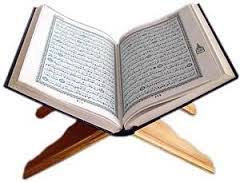
Every Friday, millions of Muslims around the world open Surah Al-Kahf.
We read about a group of young believers who sought refuge in a cave. We read about a man blessed with beautiful gardens. We follow Prophet Musa عليه السلام on a journey to learn from Khidr. And we read about Dhul-Qarnayn, a man who was given power and authority.
At first, these stories may seem completely unrelated.
What does a cave have to do with wealth?
What does wealth have to do with knowledge?
And what does knowledge have to do with power?
But when we look closely, we begin to see something beautiful.
These stories teach us how to face different tests in life.
The People of the Cave faced a test of faith.
The owner of the two gardens faced a test of wealth.
Musa عليه السلام faced a test of knowledge and patience.
Dhul-Qarnayn faced a test of power and responsibility.
And every one of these tests still exists today.
1. THE PEOPLE OF THE CAVE, THE TEST OF FAITH
The first story introduces us to young believers who stood firm in their belief in Allah despite the pressure around them.
Allah says:
“Indeed, they were youths who believed in their Lord, and We increased them in guidance.” (Qur’an 18:13)
Their test was simple but incredibly difficult:
Would they hold onto their faith when doing so became difficult?
They chose Allah.
They were willing to leave behind comfort and safety in order to protect their belief.
WHAT DOES THIS MEAN FOR US?
Today, the test of faith may not look like theirs.
It may look like being mocked for praying.
Being pressured to participate in something haram.
Feeling embarrassed about practising Islam.
Being afraid that your friends will think you are “too religious.”
Or slowly abandoning your values because you want to fit in.
The lesson of the People of the Cave is clear:
Your faith is worth protecting.
Sometimes the greatest victory isn’t being accepted by everyone.
Sometimes it is remaining faithful to Allah when everyone else is going in another direction.
2. THE TWO GARDENS, THE TEST OF WEALTH
Then the surah gives us the story of two men, one of whom had been blessed with two beautiful gardens.
He had wealth, possessions and children.
From the outside, his life looked successful.
But his blessings became a problem because they made him arrogant.
He began to boast about what he had and failed to recognise that his blessings came from Allah.
His companion reminded him to acknowledge Allah, but he remained proud.
Eventually, his gardens were destroyed.
The story reminds us that wealth itself is not the problem.
The problem is when wealth enters the heart and makes us forget the One who gave it to us.
THIS STORY IS VERY RELEVANT TO YOUNG PEOPLE
Today, success is often measured by money.
How much do you earn?
What phone do you have?
What car do you drive?
Where do you live?
How many followers do you have?
What kind of clothes do you wear?
Social media can make us believe that the person with the most expensive lifestyle is the most successful.
But Surah Al-Kahf reminds us that worldly possessions are temporary.
Allah says:
“Wealth and children are only the adornment of this worldly life. But enduring good deeds are better to your Lord for reward and better for expectation.” — Qur’an 18:46
So when Allah gives you success, don’t let success make you forget Allah.
Say Alhamdulillah.
Give charity.
Help others.
Use your wealth responsibly.
And remember that what you own today can disappear tomorrow.
3. MUSA عليه السلام AND KHIDR,THE TEST OF KNOWLEDGE
Then comes one of the most fascinating stories in Surah Al-Kahf: the journey of Musa عليه السلام and Khidr.
Musa عليه السلام travels to meet Khidr and learn from him.
During their journey, Khidr does things that Musa initially cannot understand.
A boat is damaged.
A young boy is killed.
A wall is repaired without asking for payment.
Each action seems confusing.
But later, Khidr explains the wisdom behind what he did.
Musa had only seen what was happening on the surface.
Allah knew what was hidden.
This teaches us an important lesson:
We do not know everything.
THIS MATTERS WHEN LIFE DOESN’T MAKE SENSE
Have you ever asked:
“Why did Allah allow this to happen?”
Why didn’t I get that job?
Why did that relationship end?
Why was my admission rejected?
Why did my plans fail?
Why is Allah delaying what I prayed for?
Sometimes we only see one small part of the picture.
Allah sees the entire picture.
The story of Musa and Khidr teaches us humility, patience and the limits of human knowledge.
You may not understand what Allah is doing today.
That doesn’t mean Allah has no wisdom behind it.
Sometimes you have to trust Allah before you understand the answer.
4. DHUL-QARNAYN, THE TEST OF POWER
Finally, we meet Dhul-Qarnayn.
Allah had given him power and the means to accomplish great things.
He travelled through different lands and encountered different people.
But what is striking is how he used his power.
He did not become arrogant.
He did not treat his position as proof that he was better than everyone else.
Instead, he used what Allah had given him to establish justice and help people.
When he completed the great barrier, he did not boast:
“Look what I built.”
Instead, he attributed the accomplishment to Allah’s mercy.
WHAT KIND OF POWER DO YOU HAVE?
You may think:
“I’m not a king. What does this have to do with me?”
But power doesn’t only mean ruling a country.
You may have influence over your younger siblings.
You may be a teacher.
You may manage people at work.
You may have money.
You may have thousands of followers.
You may have knowledge that others don’t have.
You may simply have the ability to help someone who needs you.
All of these are forms of influence.
The question is:
What are you doing with what Allah has given you?
Are you using it to help people or to control them?
To serve or to show off?
To build or to destroy?
To bring people closer to good or to lead them towards harm?
Dhul-Qarnayn teaches us that power is not only a privilege. It is a responsibility.
FOUR STORIES. FOUR TESTS. ONE IMPORTANT LESSON.
When we put these stories together, something becomes clear.
You will be tested.
Sometimes your faith will be tested.
Sometimes your wealth will be tested.
Sometimes your knowledge will be tested.
Sometimes your position and influence will be tested.
You cannot always choose the test that comes your way.
But you can choose how you respond to it.
The People of the Cave teach us to hold onto faith.
The owner of the gardens teaches us to remain grateful and humble.
Musa عليه السلام teaches us to remain patient and humble about what we don’t know.
Dhul-Qarnayn teaches us to use our abilities and influence responsibly.
And all four stories point us back to Allah.
WHAT IS YOUR TEST TODAY?
Maybe your test is faith.
Maybe you are struggling to remain committed to your deen.
Maybe your test is wealth.
Allah has given you blessings, but you are struggling to remain grateful.
Maybe your test is knowledge.
You know a lot, but are you humble?
Maybe your test is influence.
People listen to you, but how are you using that influence?
Whatever your test may be, don’t only ask:
“Why is Allah testing me?”
Also ask:
“What is Allah teaching me through this test?”
SURAH AL-KAHF IS MORE THAN A STORY
Surah Al-Kahf isn’t simply a collection of fascinating stories from the past.
It speaks to the human struggles we continue to face today.
The struggle to hold onto faith.
The temptation of wealth.
The limits of our knowledge.
The responsibility that comes with power.
And perhaps that is one reason these stories remain so relevant.
Different generations.
Different societies.
Different challenges.
But the human heart is still being tested.
So the next time you read Surah Al-Kahf, don’t rush through the stories.
Pause.
Think about them.
Ask yourself:
Which test am I facing right now?
And am I responding to it in a way that would please Allah?
Because the question isn’t whether life will test you.
It will.
The real question is: When your test comes, what kind of believer will you choose to be?
3SIXTYISLAM
At 3SixtyIslam, we believe Islamic knowledge should reach every generation. From Hajj and Umrah guidance to practical Islamic lessons for everyday life, our goal is to help Muslims learn, grow and strengthen their connection with Islam.
Follow 3SixtyIslam for more Islamic knowledge, guidance and inspiring stories for the whole family.
