


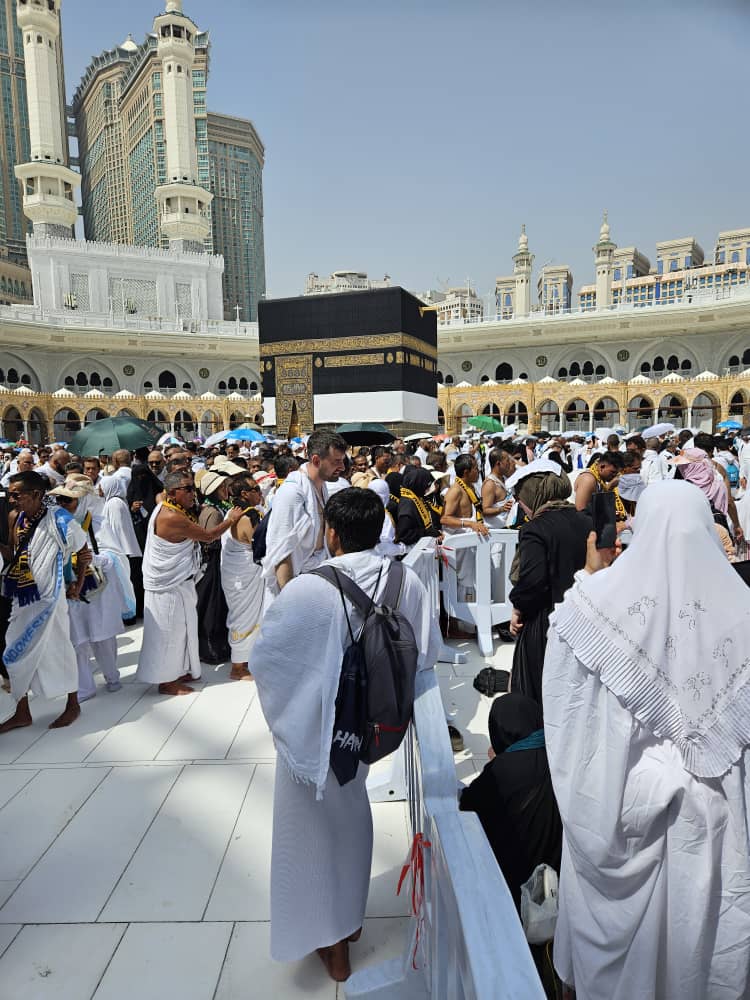
Hajj is one of the greatest journeys a Muslim can undertake. Millions of Muslims spend years saving, planning, praying and waiting for the opportunity to stand in the sacred places of Makkah and Madinah. For many, it is a dream they have carried in their hearts for a very long time.
But there is a question that deserves serious reflection: what happens after the pilgrim returns home?
Two people can travel together, perform the same Hajj, stand on the same plain of Arafah, spend nights in Mina, perform Tawaf around the Ka’bah and return on the same flight, yet their lives after Hajj can look completely different.
One person may return with a renewed commitment to Salah, better character, greater patience and a stronger awareness of Allah. Another may return with wonderful photographs, memories of the journey and stories to tell, but gradually return to exactly the same habits and priorities they had before leaving.
This does not mean that one person’s Hajj was accepted and the other’s was not. The acceptance of an act of worship ultimately belongs to Allah, and we should never claim certainty about what is inside another person’s heart. However, Hajj is meant to have an impact on the believer. A journey that demands sacrifice, patience, discipline and submission should not simply become another chapter in a travel album.
The real question is not only whether you completed Hajj. It is whether Hajj changed something within you.
HAJJ IS MORE THAN A JOURNEY TO A PLACE
It is easy to think of Hajj primarily as travelling to Saudi Arabia, visiting Makkah and Madinah and completing a series of rituals. Of course, the physical journey and the rituals are essential, but Hajj carries lessons that reach far beyond the days spent in the Haram.
A pilgrim leaves behind familiar surroundings, routines, comforts and responsibilities. They enter a state of Ihram, respond to the call of Allah, travel with people from different backgrounds and submit themselves to a demanding schedule of worship.
Hajj reminds the believer that life itself is a journey towards Allah.
The Ihram clothing reminds us of simplicity and equality. The crowds remind us that Islam is bigger than our individual lives and communities. Arafah reminds us of standing before Allah. The stoning of the Jamarat reminds us of obedience and resistance to evil. Tawaf reminds us that Allah must remain at the centre of our lives.
These lessons should not remain in Makkah.
When a pilgrim returns home, the circumstances may look the same, but the person should have gained a deeper understanding of how to live within those circumstances.
THE REAL TEST BEGINS AFTER HAJJ
For many pilgrims, the most difficult part of Hajj may not actually be Hajj itself. It may be what comes afterwards.
During pilgrimage, the environment naturally encourages worship. You wake up knowing that you are in the sacred land. You hear the Adhan. You see people praying. You walk towards the Haram. You are surrounded by people who have travelled thousands of kilometres for the same purpose.
Then you return home.
The airport becomes familiar again. Work resumes. Bills arrive. Family responsibilities return. Traffic returns. Social media returns. Old friendships and old environments return. The pressures that existed before Hajj have not disappeared simply because you completed the pilgrimage.
This is where the effect of Hajj becomes visible.
It is relatively easy to feel spiritually motivated when you are surrounded by millions of worshippers in Makkah. The greater challenge is maintaining that relationship with Allah when nobody around you is reminding you to worship.
A person who has truly reflected on Hajj should begin asking themselves how the experience can influence ordinary life.
Has Salah become more important?
Has patience improved?
Has the tongue become more controlled?
Has the treatment of family members changed?
Has the attitude towards money changed?
Has the desire for unnecessary competition and showing off reduced?
Has the heart become more conscious of Allah?
These are not questions about appearing religious. They are questions about whether the pilgrimage has produced meaningful personal growth.
HAJJ TEACHES YOU THAT YOU ARE NOT THE CENTRE OF THE WORLD
Modern life can easily make people believe that everything revolves around them.
Our phones are personalised. Our social media feeds are personalised. Advertisements are targeted towards us. We constantly see our own photographs, opinions, achievements and experiences.
Hajj breaks that mentality.
In Makkah, you are one person among millions. You may have wealth, education, influence or professional success, but none of these things make you superior to another pilgrim standing beside you.
People arrive from different countries and backgrounds, yet they stand together facing the same Qiblah and worshipping the same Lord.
That experience should affect the way a Muslim sees other people.
If Hajj teaches equality, then arrogance should become harder to justify.
If Hajj teaches humility, then looking down on others should become increasingly uncomfortable.
If Hajj teaches that honour ultimately comes from Allah, then the believer should not spend their life desperately seeking validation from people.
A pilgrim should return home understanding that their position in society is temporary, while their relationship with Allah is permanent.
HAJJ TEACHES PATIENCE
Anyone who has experienced pilgrimage understands that patience is not merely a nice Islamic quality. It is a necessity.
There are crowds. There is walking. There is waiting. There is heat. There is tiredness. There are unexpected changes. There may be moments when things do not happen according to your preferred schedule.
Hajj places the believer in situations where complaining can become easy.
Yet patience is part of the spiritual training.
The lesson should continue after returning home.
If someone becomes extremely patient during Hajj but returns home and immediately becomes harsh with their spouse, children, employees, colleagues or customers, something important has been missed.
The patience learned in pilgrimage should enter everyday life.
Perhaps the traffic that used to make you angry becomes an opportunity to practise restraint.
Perhaps an argument that would previously have become a major conflict is handled with calmness.
Perhaps you become more patient with elderly parents.
Perhaps you stop responding immediately whenever someone irritates you.
This is how spiritual lessons become practical.
THE PILGRIM SHOULD RETURN WITH A DIFFERENT ATTITUDE TOWARDS SIN
Hajj should also make the believer more conscious of disobedience to Allah.
A person who has spent days remembering Allah, making Dua, performing Tawaf, praying in the Haram and reflecting on the purpose of life should not casually return to the same sins without concern.
This does not mean that a person becomes perfect after Hajj.
Human beings make mistakes. Even sincere believers struggle. The goal is not perfection but a genuine effort to move closer to Allah.
The difference may be found in the person’s response to sin.
Before Hajj, perhaps they could commit a sin without thinking twice. Afterwards, their heart may become more uncomfortable with it.
Before Hajj, perhaps missing Salah seemed like a small matter. Afterwards, they may become more determined to protect their prayers.
Before Hajj, perhaps they were comfortable with backbiting and gossip. Afterwards, they may catch themselves and remember the importance of guarding the tongue.
That awareness is valuable.
A changed Muslim is not necessarily someone who never makes another mistake. It can be someone who becomes quicker to repent, more conscious of Allah and less comfortable with disobedience.
DO NOT TURN HAJJ INTO A MEMORY INSTEAD OF A TRANSFORMATION
One of the dangers after returning from pilgrimage is allowing Hajj to become simply a story from the past.
“I went to Hajj in 2026.”
“I stood at Arafah.”
“I prayed in the Haram.”
“I saw this.”
“I bought this.”
“I took photographs here.”
These memories may be beautiful, but the greatest memory of Hajj should not simply be where you went. It should be who you became.
Years later, people may forget the hotel you stayed in, the meals you ate and the photographs you took.
But if Hajj made you a better husband, a better wife, a more patient parent, a more honest businessperson, a more consistent worshipper or a more humble servant of Allah, then its influence continues long after the journey has ended.
THE SPIRIT OF ARAFah SHOULD FOLLOW YOU HOME
The Day of Arafah is among the most significant moments of Hajj.
The pilgrim stands before Allah, making Dua, seeking forgiveness and recognising their dependence upon their Creator.
There is something powerful about standing in such a place and realising that no worldly achievement can replace the need for Allah.
But that awareness should not disappear when the pilgrim leaves Arafah.
The same person who raised their hands in Dua on Arafah should continue making Dua at home.
The same person who asked Allah for forgiveness should continue seeking forgiveness.
The same person who recognised their weaknesses should continue working on them.
Arafah should not simply be remembered as a location. It should remind the believer of the reality of standing before Allah.
Every Muslim, whether they have performed Hajj or not, is ultimately travelling towards that meeting.
HAJJ SHOULD CHANGE HOW YOU TREAT PEOPLE
Worship is not limited to rituals.
A person’s relationship with Allah should influence their relationship with people.
After Hajj, a person should become increasingly conscious of how they speak to others, how they handle money, how they keep promises, how they treat employees, how they deal with customers and how they behave when they have power over someone else.
It is possible to perform great acts of worship while still struggling with poor character.
That is why the journey should lead to self-examination.
If someone returns from Hajj and becomes more arrogant because they have now earned the title of “Alhaji” or “Alhaja”, they should pause and reflect.
If someone uses Hajj as a reason to feel superior to Muslims who have not yet had the opportunity to go, they should pause and reflect.
If someone becomes more concerned about being recognised as a pilgrim than about becoming a better servant of Allah, they should pause and reflect.
The purpose of Hajj is not to give a person a higher social status. It is an act of worship performed for Allah.
THE BEST PROOF OF A MEANINGFUL HAJJ MAY BE FOUND AT HOME
The real impact of Hajj may not be visible in the photographs taken in Makkah.
It may be visible in the home.
A husband becomes more patient with his wife.
A wife becomes more forgiving towards her husband.
Parents become more present with their children.
Children become more respectful towards their parents.
A businessman becomes more honest.
An employer treats workers more fairly.
A wealthy person becomes more generous.
A person who used to hold grudges learns to forgive.
Someone who constantly complained learns gratitude.
Someone who was careless with Salah becomes more disciplined.
These changes may never appear on social media, but they can be among the most meaningful signs of personal growth.
BRING THE LESSONS OF HAJJ INTO YOUR ORDINARY LIFE
The greatest mistake would be to think that spiritual growth belongs only in Makkah.
Allah is not only the Lord of Makkah. He is the Lord of your home, your workplace, your business, your family and your everyday life.
The worship you performed in the Haram should influence how you worship Allah when you return to your normal environment.
The humility you experienced among millions should remain when you return to your position of authority.
The patience you learned during crowded rituals should remain when dealing with difficult people.
The generosity you witnessed should inspire you to give.
The Dua you made should continue.
The repentance you made should continue.
The connection with the Qur’an should continue.
The Salah should continue.
The consciousness of death and the Hereafter should continue.
Hajj should not be the end of your spiritual journey. It should be a turning point.
A PILGRIM’S GREATEST JOURNEY MAY BEGIN AFTER THE FLIGHT HOME
There is something important to understand about Hajj: the physical journey eventually ends.
The Ihram is removed. The Tawaf is completed. The pilgrim leaves Makkah. The plane takes off. The luggage is unpacked. Family members welcome them home.
But the spiritual journey continues.
Perhaps that is one of the greatest challenges of pilgrimage.
It is not enough to travel to the House of Allah. The believer must also allow the journey to bring them closer to the Lord of the House.
The goal is not to return home claiming to be perfect. The goal is to return with a heart that wants to become better.
A person may still struggle after Hajj. They may still make mistakes. They may still have weaknesses. But if they continue turning towards Allah, continue repenting and continue trying to improve, then the journey has not been wasted.
May Allah accept the Hajj of every pilgrim, forgive their shortcomings, accept their Dua, reward their sacrifices and allow the lessons of Hajj to remain with them long after they leave the sacred land.
And for those still waiting for their opportunity to perform Hajj, may Allah open the doors for them at the right time and grant them a journey that brings them closer to Him.
Because the greatest question after Hajj is not simply, “Did I go?”
It is, “What did the journey do to me?”
3SIXTYISLAM — YOUR TRUSTED HAJJ & UMRAH PARTNER
When it comes to Hajj and Umrah, experience and trust matter. 3SixtyIslam provides reliable packages, proper guidance, and full support from departure to return. We handle the journey so you can focus on your ibadah. Choose a travel partner that understands the responsibility of taking guests to the House of Allah.
Travel with 3SixtyIslam. DM @3SixtyIslam.
