


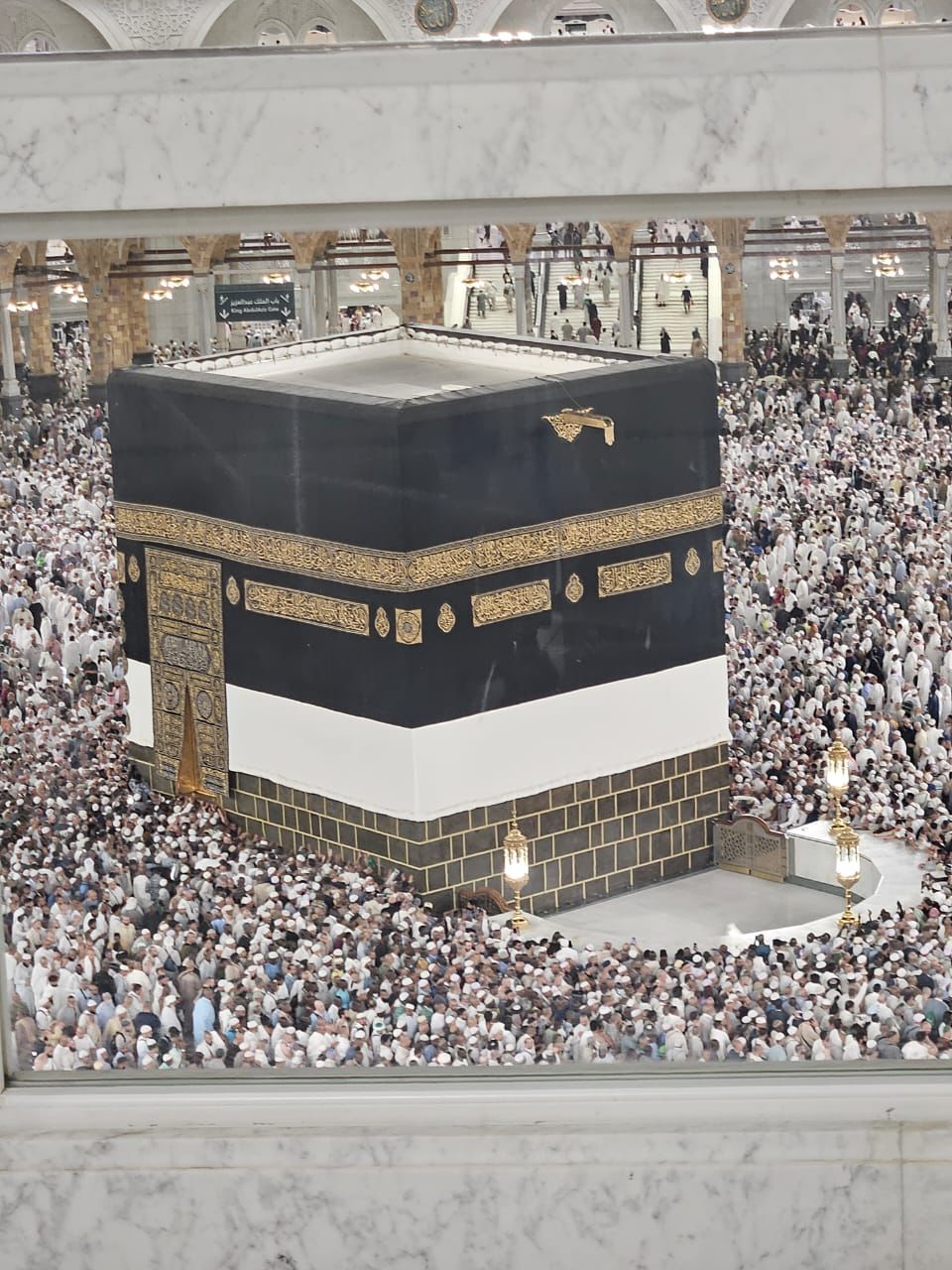
Many Muslims dream of entering the Ka’bah at least once in their lifetime. However, those who have performed Hajj or Umrah quickly discover that the door of the Ka’bah is almost always closed.
This naturally leads to an interesting question: Why is the Ka’bah rarely opened, and who is allowed to enter it?
The answer lies in both Islamic history and the practical responsibility of preserving one of the world’s most visited religious sites.
CAN PEOPLE ENTER THE KA’BAH?
Yes.
The Ka’bah can be entered, and its interior is accessible through its elevated door. However, entry is extremely limited and is not part of the rituals of Hajj or Umrah.
Many Muslims mistakenly believe that entering the Ka’bah is an essential act of worship. This is incorrect.
A person’s Hajj or Umrah is complete whether or not they ever enter the Ka’bah.
DID THE PROPHET ﷺ ENTER THE KA’BAH?
Yes.
After the conquest of Makkah, the Prophet Muhammad ﷺ entered the Ka’bah. Authentic narrations mention that he prayed inside it and spent some time making supplications.
However, he did not instruct Muslims to compete for entry or make it a regular religious practice.
This shows that while entering the Ka’bah is permissible, it is not an obligation or a recommended part of every pilgrimage.
WHY IS THE DOOR KEPT CLOSED?
The main reason is to protect the Ka’bah and manage the enormous number of visitors.
Every year, millions of Muslims visit the Grand Mosque. If the Ka’bah remained open throughout the day, large crowds would immediately gather at its entrance.
This would create serious safety concerns, increase the risk of injuries, and make it difficult for pilgrims to perform Tawaf peacefully.
Keeping the door closed helps maintain order within the Sacred Mosque.
WHO HAS THE KEY TO THE KA’BAH?
One of the most remarkable traditions in Islamic history is that the key to the Ka’bah has remained with the same family for more than fourteen centuries.
After the conquest of Makkah, the Prophet Muhammad ﷺ returned the key of the Ka’bah to Uthman ibn Talhah (RA), who belonged to the Banu Shaybah family.
He declared that the responsibility of keeping the key would remain with his family.
To this day, members of the Banu Shaybah continue to hold this honour, making it one of the oldest continuous responsibilities in Islamic history.
WHAT IS INSIDE THE KA’BAH?
The inside of the Ka’bah is much simpler than many people imagine.
Its interior contains:
- Three wooden pillars that support the roof.
- Marble flooring.
- Lamps and decorative features.
- Fragrant perfumes used to scent the interior.
- An internal staircase leading to the roof.
There are no graves, treasures, or hidden rooms inside the Ka’bah.
Its simplicity reflects its true purpose: it is a place dedicated to the worship of Allah.
HOW OFTEN IS THE KA’BAH OPENED?
The Ka’bah is opened on special occasions for cleaning and maintenance.
During these occasions, invited guests, officials, and selected individuals may be allowed to enter.
The interior is washed with scented water and high-quality fragrances, continuing a long-standing tradition of caring for the Sacred House.
These occasions are not public events, and there is no Islamic teaching that every Muslim must enter the Ka’bah at least once.
DOES ENTERING THE KA’BAH MAKE A PERSON MORE VIRTUOUS?
No.
Islam does not teach that entering the Ka’bah gives someone a higher status than other Muslims.
Many of the greatest scholars in Islamic history never entered it, yet they attained great honour through their knowledge, worship, and service to Islam.
Allah judges people by their faith and deeds, not by whether they have stepped inside a particular building.
LESSONS FROM THE HISTORY OF THE KA’BAH
The rarity of entering the Ka’bah reminds us that Islam does not place importance on exclusivity or status.
The greatest honour for any Muslim is not entering the Ka’bah but standing before Allah with sincerity, performing Salah with humility, and living according to the teachings of the Qur’an and the Sunnah.
For millions of pilgrims, simply seeing the Ka’bah for the first time is an unforgettable blessing. Whether one enters it or not, the real objective remains the same: to worship Allah alone and seek His forgiveness and mercy.
