

THE STORY OF BILAL IBN RABAH: THE MAN WHO CHOSE FAITH OVER FREEDOM, COMFORT, AND OPPRESSION

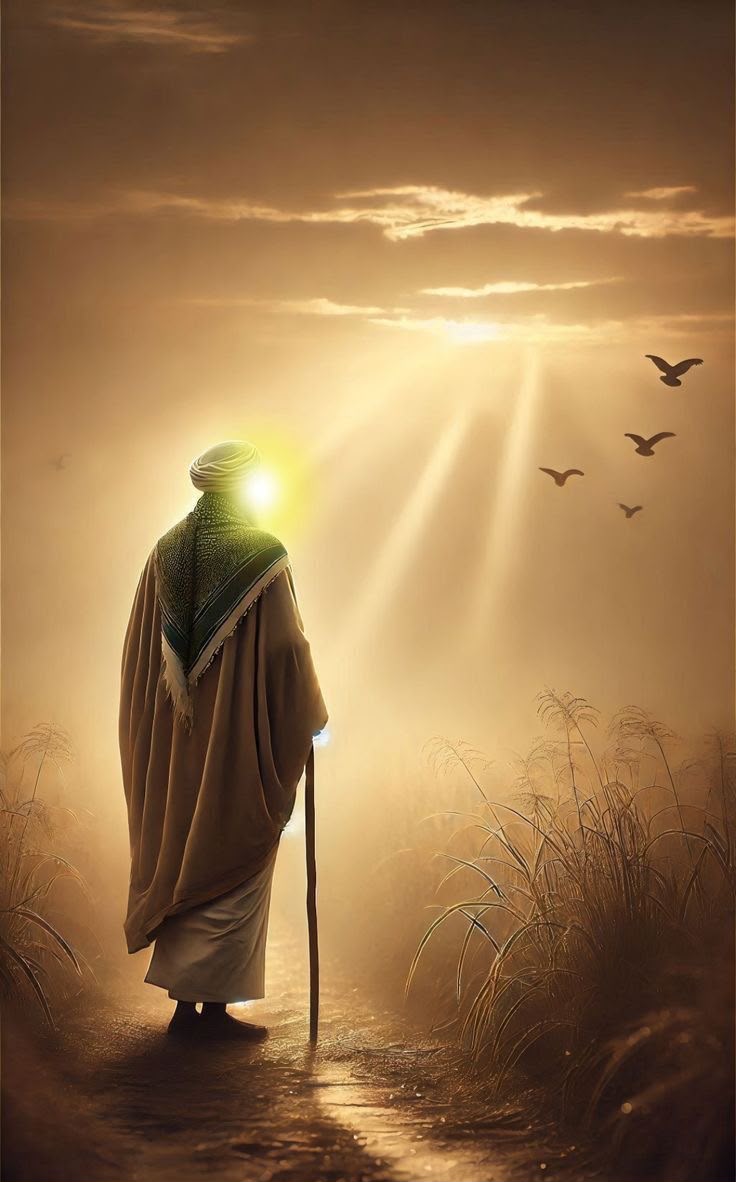
Throughout Islamic history, there have been remarkable individuals whose lives teach us powerful lessons about faith, patience, courage, and devotion to Allah. Among them is Bilal ibn Rabah (RA), one of the most beloved companions of Prophet Muhammad (peace and blessings be upon him).
His story is not simply the story of a man who embraced Islam. It is the story of a former enslaved man who endured unimaginable persecution because of his belief in Allah, yet refused to abandon his faith.
He was tortured, humiliated, and subjected to terrible suffering, but his conviction remained unshaken.
Today, his name is remembered not only because he was one of the earliest Muslims but also because he became the first and one of the most celebrated mu’adhdhins (callers to prayer) in Islamic history.
His life reminds us that true honour does not come from wealth, family background, skin colour, or social status. It comes from faith, righteousness, and one’s relationship with Allah.
Here is the inspiring story of Bilal ibn Rabah (RA).
1. HIS EARLY LIFE AND BACKGROUND
Bilal ibn Rabah (RA) was born in Makkah and was of African heritage. His father was Rabah, and his mother was Hamamah.
He lived in a society where slavery and social discrimination were widespread. As an enslaved person, Bilal had very little control over his life and was subjected to the authority of his owner.
Historical accounts identify Umayyah ibn Khalaf as his master, a wealthy and influential Quraysh leader who became one of the fiercest opponents of Islam.
Bilal was not born into a position of wealth or influence. He did not possess the social privileges enjoyed by many prominent members of Makkah.
However, what he would later demonstrate was something far more powerful than social status: an extraordinary commitment to the truth.
When the message of Islam began spreading through Makkah, Bilal encountered the teachings of Prophet Muhammad (peace and blessings be upon him).
The message of Tawheed, the belief in the oneness of Allah, deeply affected him.
He accepted Islam at a time when doing so carried serious risks, particularly for enslaved people and those without powerful tribal protection.
His decision would change his life forever.
2. HIS ACCEPTANCE OF ISLAM AND THE PERSECUTION THAT FOLLOWED
When Bilal embraced Islam, the Quraysh became furious.
The message of Islam challenged the religious practices, social hierarchy, and beliefs of the powerful leaders of Makkah.
Those who accepted Islam, particularly enslaved people and individuals without strong family protection, became targets of severe persecution.
Bilal was among those who suffered terribly.
His master, Umayyah ibn Khalaf, attempted to force him to abandon his belief in Allah and return to the religion of the Quraysh.
But Bilal refused.
He was subjected to brutal torture in the scorching heat of Makkah. Historical accounts describe how he was dragged onto the hot ground and had a heavy stone placed on his chest.
He was pressured to renounce Islam and praise the idols worshipped by the Quraysh.
Yet, despite the unbearable pain, Bilal continued repeating one powerful declaration:
“Ahadun Ahad!”
Meaning: “One, One!”
He was affirming the oneness of Allah.
Imagine the courage required to maintain such conviction while experiencing extreme physical suffering.
Bilal could have attempted to escape the torture by pretending to abandon his faith, but his heart remained firmly attached to Allah.
His story teaches us that faith is not merely something we profess when life is comfortable. Its strength is often demonstrated when remaining committed becomes difficult.
3. ABU BAKR (RA) FREES BILAL FROM SLAVERY
The suffering Bilal experienced eventually reached the attention of Abu Bakr as-Siddiq (RA), one of the closest companions of Prophet Muhammad (peace and blessings be upon him).
Abu Bakr was deeply moved by the persecution of Muslims, particularly those who were enslaved and vulnerable.
He intervened and purchased Bilal’s freedom from Umayyah ibn Khalaf.
Bilal was finally freed from slavery.
This was an important moment in his life because he was no longer subjected to the authority of the man who had tortured him.
Abu Bakr’s action also demonstrates an important Islamic principle: human dignity is not determined by social class, wealth, ethnicity, or background.
Islam teaches compassion, justice, and the liberation of those who are oppressed.
Bilal’s freedom was not the end of his story. It was the beginning of an even greater chapter in his life.
He would go on to become one of the most respected companions of the Prophet.
4. BILAL BECOMES THE FIRST MU’ADHDHIN OF ISLAM
<AsyncImage query=”Bilal ibn Rabah calling adhan from mosque in Madinah historical Islamic architectural illustration” aspectRatio=”16:9″ width=”100%”/>
One of the greatest honours Bilal received was becoming the mu’adhdhin of Prophet Muhammad (peace and blessings be upon him).
The Adhan is the Islamic call to prayer, inviting Muslims to worship Allah and reminding them of their religious obligations.
When the Muslims established their community in Madinah, there was a need for a way to announce the times of prayer.
After the call to prayer was established, Bilal was entrusted with the responsibility of calling the Adhan.
His beautiful and powerful voice became associated with the announcement of Salah.
Think about the significance of this moment.
A man who had once been tortured and treated as though he had no value in society was now entrusted with one of the most important public religious responsibilities in the Muslim community.
His voice, which his persecutors had tried to silence, became a voice that called Muslims to worship Allah.
This is one of the most inspiring aspects of his story.
The society that once looked down upon him could not take away the honour that Islam gave him.
5. HIS SPECIAL RELATIONSHIP WITH THE PROPHET MUHAMMAD (SAW)
Bilal was not simply responsible for calling the Adhan. He also enjoyed a special relationship with Prophet Muhammad (peace and blessings be upon him).
The Prophet treated him with kindness, respect, and affection.
Bilal was among the companions who remained close to the Prophet and participated in important events during the early years of the Muslim community.
One particularly beautiful account concerns a conversation between the Prophet and Bilal.
The Prophet once asked Bilal what deed he had done in Islam that gave him the greatest hope, because he had heard the sound of Bilal’s footsteps ahead of him in Paradise.
Bilal explained that whenever he performed ablution during the day or night, he would pray whatever voluntary prayers Allah had made easy for him afterwards.
This narration is recorded in Sahih al-Bukhari (1149) and Sahih Muslim (2458).
What a beautiful lesson!
Bilal’s greatness was not based only on the persecution he endured. He was also devoted to worship and consistent in performing good deeds.
His story reminds us that a strong relationship with Allah is built through sincere and consistent acts of worship.
6. BILAL’S COURAGE DURING IMPORTANT EVENTS IN ISLAMIC HISTORY
Bilal participated in several important events during the lifetime of Prophet Muhammad (peace and blessings be upon him).
He was among the Muslims who migrated to Madinah and became part of the growing Muslim community.
He also participated in the Battle of Badr, where the Muslims faced the Quraysh.
Interestingly, Umayyah ibn Khalaf, the man who had tortured Bilal, was among the Quraysh forces at Badr.
Historical accounts report that Bilal recognised him during the battle.
This moment was particularly significant because the man who had once controlled his life and subjected him to torture was now facing the consequences of his opposition to the Muslim community.
Bilal’s life had changed dramatically.
He had moved from a position of helplessness under slavery to becoming a respected member of a community built around faith and brotherhood.
His journey demonstrates how Allah can honour those who remain steadfast through hardship.
7. BILAL AND THE CONQUEST OF MAKKAH
One of the most memorable moments in Bilal’s life came during the conquest of Makkah.
After years of persecution, hostility, and conflict, Prophet Muhammad (peace and blessings be upon him) and the Muslims returned to Makkah.
The city that had once rejected and persecuted them was now under Muslim control.
Among the remarkable events of that day was Bilal’s ascent to the Ka’bah to call the Adhan.
Imagine what that moment must have meant.
Years earlier, Bilal had been tortured in that very city because he believed in Allah.
Now, he stood at the Ka’bah, calling people to worship the One God.
His voice echoed through Makkah, the same city where he had once suffered because of his faith.
It was a powerful demonstration of the dignity Islam gives to believers, regardless of their social background.
Bilal’s position also challenged the prejudices of a society that had once judged people according to ancestry, wealth, and social class.
His story remains an important reminder that honour belongs to those who are righteous, not necessarily those who possess worldly influence.
8. HIS LIFE AFTER THE DEATH OF THE PROPHET
The death of Prophet Muhammad (peace and blessings be upon him) was an extremely painful moment for Bilal.
He had shared a close relationship with the Prophet, served him faithfully, and spent years calling Muslims to prayer.
After the Prophet’s death, Bilal reportedly found it emotionally difficult to continue calling the Adhan in Madinah.
According to historical accounts, he eventually left Madinah and travelled to the region of Syria.
There are reports that he later called the Adhan during a visit to Madinah at the request of the Prophet’s family, bringing back powerful memories of the Messenger of Allah.
His voice moved those who heard it, reminding them of the days when the Prophet was alive among them.
Bilal’s life continued to be remembered for his devotion, humility, and commitment to Islam.
He eventually passed away in Syria, although historical accounts differ regarding the exact date and circumstances of his death.
His legacy, however, has remained alive in the hearts of Muslims for centuries.
9. IMPORTANT LESSONS FROM THE LIFE OF BILAL IBN RABAH
The story of Bilal is not merely an account of historical events. It contains lessons that Muslims can apply to their lives today.
1. Never compromise your faith for temporary comfort.
Bilal endured terrible suffering but remained committed to Tawheed. His example reminds us to value our relationship with Allah above worldly approval.
2. Your background does not determine your worth.
Bilal was an enslaved man of African heritage, yet Islam honoured him because of his faith and righteousness. Nobody should be judged as inferior because of their skin colour, ethnicity, or social status.
3. Patience is an important part of faith.
Life will not always be easy. There will be moments of hardship, rejection, and disappointment. Bilal’s life teaches us the importance of remaining steadfast through difficulties.
4. Use your opportunities to serve Islam.
Bilal used his voice to call Muslims to prayer. Every Muslim has something valuable to contribute, whether through knowledge, kindness, charity, service, or good character.
5. Consistency in worship matters.
His commitment to voluntary prayers after ablution demonstrates the importance of maintaining good deeds regularly.
6. True honour comes from righteousness.
Wealth, fame, family background, and social position do not determine a person’s standing before Allah.
7. Never look down on anyone.
The person society ignores today may be among those most beloved to Allah. Treat everyone with dignity and respect.
FINAL THOUGHTS
The story of Bilal ibn Rabah (RA) is one of the most beautiful examples of faith, courage, patience, and perseverance in Islamic history.
He was a man who endured oppression because he refused to abandon his belief in the oneness of Allah.
His persecutors tried to break his spirit, but they could not destroy his conviction.
A man who was once denied freedom became one of the most respected companions of Prophet Muhammad (peace and blessings be upon him). A man whose voice was once silenced through torture became the voice that called Muslims to prayer.
His story teaches us that true greatness is not determined by where we come from, what we possess, or how society treats us.
It is determined by our faith, sincerity, character, and relationship with Allah
THE STORY OF BILAL IBN RABAH: THE MAN WHO CHOSE FAITH OVER FREEDOM, COMFORT, AND OPPRESSION
Throughout Islamic history, there have been remarkable individuals whose lives teach us powerful lessons about faith, patience, courage, and devotion to Allah. Among them is Bilal ibn Rabah (RA), one of the most beloved companions of Prophet Muhammad (peace and blessings be upon him).
His story is not simply the story of a man who embraced Islam. It is the story of a former enslaved man who endured unimaginable persecution because of his belief in Allah, yet refused to abandon his faith.
He was tortured, humiliated, and subjected to terrible suffering, but his conviction remained unshaken.
Today, his name is remembered not only because he was one of the earliest Muslims but also because he became the first and one of the most celebrated mu’adhdhins (callers to prayer) in Islamic history.
His life reminds us that true honour does not come from wealth, family background, skin colour, or social status. It comes from faith, righteousness, and one’s relationship with Allah.
Here is the inspiring story of Bilal ibn Rabah (RA).
1. HIS EARLY LIFE AND BACKGROUND
Bilal ibn Rabah (RA) was born in Makkah and was of African heritage. His father was Rabah, and his mother was Hamamah.
He lived in a society where slavery and social discrimination were widespread. As an enslaved person, Bilal had very little control over his life and was subjected to the authority of his owner.
Historical accounts identify Umayyah ibn Khalaf as his master, a wealthy and influential Quraysh leader who became one of the fiercest opponents of Islam.
Bilal was not born into a position of wealth or influence. He did not possess the social privileges enjoyed by many prominent members of Makkah.
However, what he would later demonstrate was something far more powerful than social status: an extraordinary commitment to the truth.
When the message of Islam began spreading through Makkah, Bilal encountered the teachings of Prophet Muhammad (peace and blessings be upon him).
The message of Tawheed, the belief in the oneness of Allah, deeply affected him.
He accepted Islam at a time when doing so carried serious risks, particularly for enslaved people and those without powerful tribal protection.
His decision would change his life forever.
2. HIS ACCEPTANCE OF ISLAM AND THE PERSECUTION THAT FOLLOWED
When Bilal embraced Islam, the Quraysh became furious.
The message of Islam challenged the religious practices, social hierarchy, and beliefs of the powerful leaders of Makkah.
Those who accepted Islam, particularly enslaved people and individuals without strong family protection, became targets of severe persecution.
Bilal was among those who suffered terribly.
His master, Umayyah ibn Khalaf, attempted to force him to abandon his belief in Allah and return to the religion of the Quraysh.
But Bilal refused.
He was subjected to brutal torture in the scorching heat of Makkah. Historical accounts describe how he was dragged onto the hot ground and had a heavy stone placed on his chest.
He was pressured to renounce Islam and praise the idols worshipped by the Quraysh.
Yet, despite the unbearable pain, Bilal continued repeating one powerful declaration:
“Ahadun Ahad!”
Meaning: “One, One!”
He was affirming the oneness of Allah.
Imagine the courage required to maintain such conviction while experiencing extreme physical suffering.
Bilal could have attempted to escape the torture by pretending to abandon his faith, but his heart remained firmly attached to Allah.
His story teaches us that faith is not merely something we profess when life is comfortable. Its strength is often demonstrated when remaining committed becomes difficult.
3. ABU BAKR (RA) FREES BILAL FROM SLAVERY
The suffering Bilal experienced eventually reached the attention of Abu Bakr as-Siddiq (RA), one of the closest companions of Prophet Muhammad (peace and blessings be upon him).
Abu Bakr was deeply moved by the persecution of Muslims, particularly those who were enslaved and vulnerable.
He intervened and purchased Bilal’s freedom from Umayyah ibn Khalaf.
Bilal was finally freed from slavery.
This was an important moment in his life because he was no longer subjected to the authority of the man who had tortured him.
Abu Bakr’s action also demonstrates an important Islamic principle: human dignity is not determined by social class, wealth, ethnicity, or background.
Islam teaches compassion, justice, and the liberation of those who are oppressed.
Bilal’s freedom was not the end of his story. It was the beginning of an even greater chapter in his life.
He would go on to become one of the most respected companions of the Prophet.
4. BILAL BECOMES THE FIRST MU’ADHDHIN OF ISLAM
One of the greatest honours Bilal received was becoming the mu’adhdhin of Prophet Muhammad (peace and blessings be upon him).
The Adhan is the Islamic call to prayer, inviting Muslims to worship Allah and reminding them of their religious obligations.
When the Muslims established their community in Madinah, there was a need for a way to announce the times of prayer.
After the call to prayer was established, Bilal was entrusted with the responsibility of calling the Adhan.
His beautiful and powerful voice became associated with the announcement of Salah.
Think about the significance of this moment.
A man who had once been tortured and treated as though he had no value in society was now entrusted with one of the most important public religious responsibilities in the Muslim community.
His voice, which his persecutors had tried to silence, became a voice that called Muslims to worship Allah.
This is one of the most inspiring aspects of his story.
The society that once looked down upon him could not take away the honour that Islam gave him.
5. HIS SPECIAL RELATIONSHIP WITH THE PROPHET MUHAMMAD (SAW)
Bilal was not simply responsible for calling the Adhan. He also enjoyed a special relationship with Prophet Muhammad (peace and blessings be upon him).
The Prophet treated him with kindness, respect, and affection.
Bilal was among the companions who remained close to the Prophet and participated in important events during the early years of the Muslim community.
One particularly beautiful account concerns a conversation between the Prophet and Bilal.
The Prophet once asked Bilal what deed he had done in Islam that gave him the greatest hope, because he had heard the sound of Bilal’s footsteps ahead of him in Paradise.
Bilal explained that whenever he performed ablution during the day or night, he would pray whatever voluntary prayers Allah had made easy for him afterwards.
This narration is recorded in Sahih al-Bukhari (1149) and Sahih Muslim (2458).
What a beautiful lesson!
Bilal’s greatness was not based only on the persecution he endured. He was also devoted to worship and consistent in performing good deeds.
His story reminds us that a strong relationship with Allah is built through sincere and consistent acts of worship.
6. BILAL’S COURAGE DURING IMPORTANT EVENTS IN ISLAMIC HISTORY
Bilal participated in several important events during the lifetime of Prophet Muhammad (peace and blessings be upon him).
He was among the Muslims who migrated to Madinah and became part of the growing Muslim community.
He also participated in the Battle of Badr, where the Muslims faced the Quraysh.
Interestingly, Umayyah ibn Khalaf, the man who had tortured Bilal, was among the Quraysh forces at Badr.
Historical accounts report that Bilal recognised him during the battle.
This moment was particularly significant because the man who had once controlled his life and subjected him to torture was now facing the consequences of his opposition to the Muslim community.
Bilal’s life had changed dramatically.
He had moved from a position of helplessness under slavery to becoming a respected member of a community built around faith and brotherhood.
His journey demonstrates how Allah can honour those who remain steadfast through hardship.
7. BILAL AND THE CONQUEST OF MAKKAH
One of the most memorable moments in Bilal’s life came during the conquest of Makkah.
After years of persecution, hostility, and conflict, Prophet Muhammad (peace and blessings be upon him) and the Muslims returned to Makkah.
The city that had once rejected and persecuted them was now under Muslim control.
Among the remarkable events of that day was Bilal’s ascent to the Ka’bah to call the Adhan.
Imagine what that moment must have meant.
Years earlier, Bilal had been tortured in that very city because he believed in Allah.
Now, he stood at the Ka’bah, calling people to worship the One God.
His voice echoed through Makkah, the same city where he had once suffered because of his faith.
It was a powerful demonstration of the dignity Islam gives to believers, regardless of their social background.
Bilal’s position also challenged the prejudices of a society that had once judged people according to ancestry, wealth, and social class.
His story remains an important reminder that honour belongs to those who are righteous, not necessarily those who possess worldly influence.
8. HIS LIFE AFTER THE DEATH OF THE PROPHET
The death of Prophet Muhammad (peace and blessings be upon him) was an extremely painful moment for Bilal.
He had shared a close relationship with the Prophet, served him faithfully, and spent years calling Muslims to prayer.
After the Prophet’s death, Bilal reportedly found it emotionally difficult to continue calling the Adhan in Madinah.
According to historical accounts, he eventually left Madinah and travelled to the region of Syria.
There are reports that he later called the Adhan during a visit to Madinah at the request of the Prophet’s family, bringing back powerful memories of the Messenger of Allah.
His voice moved those who heard it, reminding them of the days when the Prophet was alive among them.
Bilal’s life continued to be remembered for his devotion, humility, and commitment to Islam.
He eventually passed away in Syria, although historical accounts differ regarding the exact date and circumstances of his death.
His legacy, however, has remained alive in the hearts of Muslims for centuries.
9. IMPORTANT LESSONS FROM THE LIFE OF BILAL IBN RABAH
The story of Bilal is not merely an account of historical events. It contains lessons that Muslims can apply to their lives today.
1. Never compromise your faith for temporary comfort.
Bilal endured terrible suffering but remained committed to Tawheed. His example reminds us to value our relationship with Allah above worldly approval.
2. Your background does not determine your worth.
Bilal was an enslaved man of African heritage, yet Islam honoured him because of his faith and righteousness. Nobody should be judged as inferior because of their skin colour, ethnicity, or social status.
3. Patience is an important part of faith.
Life will not always be easy. There will be moments of hardship, rejection, and disappointment. Bilal’s life teaches us the importance of remaining steadfast through difficulties.
4. Use your opportunities to serve Islam.
Bilal used his voice to call Muslims to prayer. Every Muslim has something valuable to contribute, whether through knowledge, kindness, charity, service, or good character.
5. Consistency in worship matters.
His commitment to voluntary prayers after ablution demonstrates the importance of maintaining good deeds regularly.
6. True honour comes from righteousness.
Wealth, fame, family background, and social position do not determine a person’s standing before Allah.
7. Never look down on anyone.
The person society ignores today may be among those most beloved to Allah. Treat everyone with dignity and respect.
FINAL THOUGHTS
The story of Bilal ibn Rabah (RA) is one of the most beautiful examples of faith, courage, patience, and perseverance in Islamic history.
He was a man who endured oppression because he refused to abandon his belief in the oneness of Allah.
His persecutors tried to break his spirit, but they could not destroy his conviction.
A man who was once denied freedom became one of the most respected companions of Prophet Muhammad (peace and blessings be upon him). A man whose voice was once silenced through torture became the voice that called Muslims to prayer.
His story teaches us that true greatness is not determined by where we come from, what we possess, or how society treats us.
It is determined by our faith, sincerity, character, and relationship with Allah.
Today, when Muslims hear the Adhan, they should remember the remarkable legacy of Bilal ibn Rabah (RA), whose life reminds us of the sacrifices made by the earliest believers to preserve and practise Islam.
Never allow your circumstances to make you feel that you are worthless. Never allow society to define your value, and never sacrifice your faith just to gain acceptance from people.
The same Allah who sees your struggles knows your intentions, hears your prayers, and knows the sincerity of your heart.
May Allah be pleased with Bilal ibn Rabah (RA), reward him for his sacrifices, and grant us the strength to remain steadfast in our faith. May He fill our hearts with sincerity, patience, courage, and love for His Messenger. Ameen.
