

HISTORICAL ISLAMIC SITES IN MADINAH EVERY PILGRIM SHOULD KNOW ABOUT: A COMPLETE ZIYARAH GUIDE

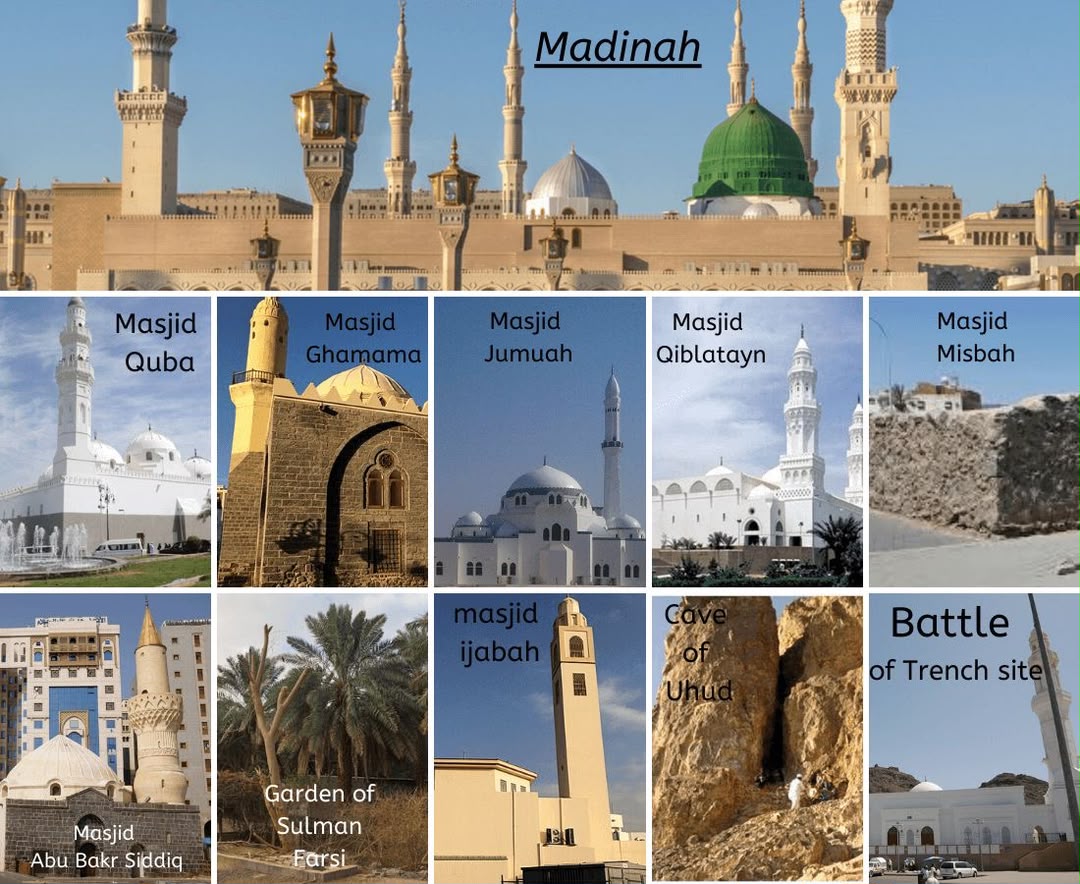
For pilgrims performing Hajj and Umrah, visiting Madinah offers a unique opportunity to learn about the life of Prophet Muhammad (peace and blessings be upon him), the sacrifices of his companions, the establishment of the first Muslim community, and the remarkable events that shaped the history of Islam.
Beyond praying in Al-Masjid an-Nabawi and sending greetings of peace upon the Prophet, visitors can explore several historical mosques, battlefields, mountains, cemeteries, wells, and museums that preserve important aspects of Islamic heritage.
These visits are commonly known as Ziyarah.
However, Ziyarah is not simply about visiting landmarks or taking photographs. It is an opportunity to reflect on Islamic history, strengthen one’s faith, appreciate the sacrifices of the early Muslims, and learn valuable lessons from the Seerah of the Prophet Muhammad (peace and blessings be upon him).
Whether you are visiting Madinah for the first time or returning for another spiritual journey, this guide highlights the historical Islamic sites every pilgrim should know about.
1. Al-Masjid an-Nabawi – The Prophet’s Mosque
No visit to Madinah is complete without visiting Al-Masjid an-Nabawi, one of the holiest mosques in Islam.
The Prophet Muhammad (peace and blessings be upon him) established this mosque after his migration from Makkah to Madinah in 622 CE. It became the spiritual, educational, social, and administrative centre of the early Muslim community.
The mosque has undergone several expansions throughout Islamic history, but it remains one of the most important destinations for Muslims worldwide.
It is also the location of the resting place of Prophet Muhammad (peace and blessings be upon him), alongside the graves of his two companions, Abu Bakr As-Siddiq and Umar ibn Al-Khattab (may Allah be pleased with them).
Important places inside Al-Masjid an-Nabawi include:
- The Green Dome: A well-known landmark associated with the chamber containing the Prophet’s resting place.
- Al-Rawdah Al-Sharifah: A specially honoured area between the Prophet’s house and his pulpit.
- The Prophet’s Pulpit (Minbar): Historically associated with the Prophet’s sermons.
- The Prophet’s Mihrab: An important feature of the mosque’s architecture.
Why every pilgrim should visit:
Visiting Al-Masjid an-Nabawi allows Muslims to pray in the Prophet’s Mosque, send blessings and peace upon the Messenger of Allah, and reflect on his teachings and sacrifices.
The Prophet Muhammad (peace and blessings be upon him) said that a prayer in his mosque is better than one thousand prayers elsewhere, except Al-Masjid al-Haram.
Etiquette: Maintain a respectful voice, avoid pushing, follow visitor arrangements, and offer greetings of peace upon the Prophet with dignity.
2. Masjid Quba – The First Mosque in Islam
Masjid Quba is one of the most significant historical mosques in Madinah.
It is widely recognised as the first mosque established in Islam. It was founded during the Prophet Muhammad’s migration from Makkah to Madinah.
When the Prophet arrived in the Quba area, he stayed there for several days and established a mosque where Muslims could gather for prayer.
The mosque represents the beginning of an important chapter in Islamic history and the establishment of the Muslim community in Madinah.
Allah mentions a mosque founded upon righteousness in Surah At-Tawbah, verse 108, which is associated with the virtues of Masjid Quba in Islamic scholarship.
Why every pilgrim should visit:
Masjid Quba provides an opportunity to reflect on the Hijrah, the Prophet’s arrival in Madinah, and the importance of establishing places of worship.
The Prophet Muhammad (peace and blessings be upon him) said that whoever purifies himself at home and then comes to Quba Mosque and prays there will have a reward like that of Umrah.
(Sunan Ibn Majah)
This makes visiting Masjid Quba particularly meaningful for pilgrims.
Etiquette: Perform Wudu, visit respectfully, and offer voluntary prayer if you wish. Do not push or inconvenience other worshippers.
3. Mount Uhud – The Site of the Historic Battle of Uhud
Mount Uhud is among the most famous historical landmarks in Madinah.
Located north of the Prophet’s Mosque, this mountain witnessed the historic Battle of Uhud, which took place in the third year after Hijrah, corresponding to 625 CE.
The battle was fought between the Muslims of Madinah and the Quraysh army from Makkah.
The Muslims initially gained an advantage, but a change in the position of some archers stationed on the nearby hill affected the course of the battle.
The Muslim community suffered significant losses, and many companions were martyred.
One of the most notable martyrs was Hamza ibn Abdul-Muttalib (may Allah be pleased with him), the uncle of Prophet Muhammad (peace and blessings be upon him), who was known as the Lion of Allah.
The Battle of Uhud teaches important lessons about obedience, discipline, patience, leadership, sacrifice, and trust in Allah.
The Prophet Muhammad (peace and blessings be upon him) said:
“Uhud is a mountain that loves us and we love it.”
(Sahih al-Bukhari and Sahih Muslim)
Why every pilgrim should visit:
Standing near Mount Uhud gives visitors an opportunity to reflect on the sacrifices made by the companions and the difficult moments experienced by the early Muslim community.
Etiquette: Respect the historical area, avoid damaging the environment, and follow official access instructions.
4. Jabal Al-Rumah – The Mountain of the Archers
Jabal Al-Rumah, also known as the Mountain of the Archers, is an important historical location associated with the Battle of Uhud.
During the battle, Prophet Muhammad (peace and blessings be upon him) positioned a group of Muslim archers on this hill under the leadership of Abdullah ibn Jubayr (may Allah be pleased with him).
Their instruction was to remain at their assigned position and protect the Muslim army from attacks from behind.
However, some archers left their positions when they believed the battle had been won.
This created an opportunity for the opposing army to launch an attack from the rear, changing the course of the battle.
The events surrounding this hill provide one of the most important lessons in Islamic military history: the importance of obedience, discipline, and following proper instructions.
Why every pilgrim should visit:
Visiting Jabal Al-Rumah helps pilgrims understand the events of the Battle of Uhud more clearly.
It also encourages reflection on the consequences of disobedience and the importance of remaining steadfast during difficult situations.
Etiquette: Observe the site from permitted areas and avoid climbing restricted or unsafe sections.
5. Jannat Al-Baqi – The Historic Cemetery of Madinah
Jannat Al-Baqi, also known as Al-Baqi Al-Gharqad, is one of the most historically significant cemeteries in Islam.
Located beside Al-Masjid an-Nabawi, this cemetery contains the graves of many companions of Prophet Muhammad (peace and blessings be upon him), members of his family, and other important figures in early Islamic history.
Among those buried there are:
- Uthman ibn Affan (may Allah be pleased with him), the third rightly guided caliph.
- Several wives of Prophet Muhammad (peace and blessings be upon him).
- Ibrahim, the son of the Prophet.
- Hasan ibn Ali (may Allah be pleased with him).
- Abbas ibn Abdul-Muttalib (may Allah be pleased with him).
- Many other companions and members of the early Muslim community.
The cemetery reminds Muslims of the temporary nature of worldly life and the certainty of death.
Why every pilgrim should visit:
Visiting Jannat Al-Baqi offers an opportunity to remember death, reflect on the Hereafter, and make Du’a for those who have passed away.
The Prophet Muhammad (peace and blessings be upon him) taught Muslims to visit graves and remember the Hereafter.
Etiquette: Offer the prescribed greetings and supplications for the deceased. Respect cemetery regulations and remember that Du’a and worship are directed to Allah alone.
6. Masjid Al-Qiblatain – The Mosque of the Two Qiblas
Masjid Al-Qiblatain is one of the most important historical mosques in Madinah.
The name means “Mosque of the Two Qiblas.”
It is associated with the historic change in the direction of prayer, known as the Qiblah, from Jerusalem towards the Holy Ka’bah in Makkah.
During the early period of Islam, Muslims prayed towards Jerusalem. Later, Allah revealed the command directing Muslims to face the Sacred Mosque in Makkah.
Allah says in Surah Al-Baqarah, verse 144:
“So turn your face towards Al-Masjid al-Haram.”
This change marked an important moment in Islamic history and established the Ka’bah as the direction towards which Muslims face during Salah.
Why every pilgrim should visit:
Masjid Al-Qiblatain provides an opportunity to learn about the development of Islamic worship and the significance of the Qiblah.
It also reminds Muslims of the importance of obedience to Allah’s commands.
Etiquette: Visit respectfully, observe mosque regulations, and avoid treating the historical mosque as merely a photography destination.
7. The Seven Mosques – Masajid Sab’ah
The Seven Mosques area is a well-known historical destination in Madinah associated with the Battle of the Trench, also known as the Battle of Al-Khandaq.
The battle took place in the fifth year after Hijrah, corresponding to 627 CE.
During this important event, the Muslims faced a large coalition of opposing forces. Following the suggestion of Salman Al-Farsi (may Allah be pleased with him), a trench was dug around vulnerable parts of Madinah to protect the city.
This defensive strategy played an important role in the outcome of the battle.
The Seven Mosques area includes several small historical mosques traditionally associated with this event.
They are commonly identified as:
- Masjid Al-Fath.
- Masjid Salman Al-Farsi.
- Masjid Abu Bakr As-Siddiq.
- Masjid Umar ibn Al-Khattab.
- Masjid Ali ibn Abi Talib.
- Masjid Fatimah.
- Masjid Sa’d ibn Mu’adh.
The historical naming and exact associations of individual mosques vary across accounts, and some descriptions of the complex include a different number of mosques.
Why every pilgrim should visit:
The area provides an opportunity to learn about the Battle of the Trench, the wisdom of consultation, strategic planning, unity, and the importance of perseverance.
Etiquette: Explore the area respectfully and follow current access arrangements. There is no requirement to perform a special prayer at each of the mosques.
8. Masjid Al-Fath – The Mosque Associated With the Battle of the Trench
Masjid Al-Fath is one of the historical mosques located on Mount Sela in the area associated with the Battle of the Trench.
The mosque is connected with the events surrounding the battle and the prayers of Prophet Muhammad (peace and blessings be upon him) during that difficult period.
It is also known by names associated with the victory and eventual relief granted to the Muslims.
The Battle of the Trench was a major test for the early Muslim community. The believers faced fear, hunger, uncertainty, and the threat of a large opposing army.
Allah eventually granted victory to the Muslims.
Why every pilgrim should visit:
Masjid Al-Fath provides a meaningful opportunity to reflect on the importance of patience, faith, unity, and reliance upon Allah during difficult times.
9. Masjid Al-Jumu’ah – The Mosque of Friday Prayer
Masjid Al-Jumu’ah is a historical mosque located in the Quba area of Madinah.
It is associated with the Prophet Muhammad’s first Friday prayer after his migration from Makkah.
According to traditional accounts, after leaving Quba and travelling towards the centre of Madinah, the Prophet and his companions stopped in the area of Banu Salim ibn Awf, where the Friday prayer was performed.
A mosque was later established at the location.
Why every pilgrim should visit:
The mosque helps visitors understand the early development of congregational worship and the importance of Friday prayer in Islam.
It also provides a connection to the Prophet’s journey from Quba to Madinah.
10. Masjid Al-Ghamamah – The Mosque of the Clouds
Masjid Al-Ghamamah is a historic mosque located a short distance southwest of Al-Masjid an-Nabawi.
It is also known as Masjid Al-Musalla.
The mosque is associated with occasions when Prophet Muhammad (peace and blessings be upon him) performed Eid prayers and the prayer for rain outside the main mosque.
The name Al-Ghamamah means “the cloud.”
It is popularly associated with a narration about a cloud providing shade for the Prophet, although visitors should distinguish the popular name from what is firmly established in historical accounts.
The mosque remains an important architectural and historical landmark in Madinah.
Why every pilgrim should visit:
It offers visitors an opportunity to learn about the Prophet’s public worship and the development of historical mosques in Madinah.
11. Masjid Abu Bakr As-Siddiq
Masjid Abu Bakr As-Siddiq is another historic mosque located near Masjid Al-Ghamamah.
It is associated with Abu Bakr As-Siddiq (may Allah be pleased with him), the closest companion of Prophet Muhammad (peace and blessings be upon him) and the first rightly guided caliph.
Historical accounts associate this location with the Prophet’s Eid prayer area and the prayer practices of Abu Bakr during his caliphate.
The mosque is a reminder of the close companionship between the Prophet and Abu Bakr.
Why every pilgrim should visit:
It provides an opportunity to learn about the character, loyalty, sacrifice, and leadership of Abu Bakr As-Siddiq (may Allah be pleased with him).
12. Masjid Umar ibn Al-Khattab
Masjid Umar ibn Al-Khattab is another historical mosque located in the area near Masjid Al-Ghamamah.
It is traditionally associated with Umar ibn Al-Khattab (may Allah be pleased with him), the second rightly guided caliph.
Umar was known for his justice, strength, humility, and commitment to Islam.
His leadership played a major role in the expansion and administration of the early Muslim state.
Why every pilgrim should visit:
The mosque offers an opportunity to remember Umar’s contributions to Islamic history and reflect on the importance of justice, responsibility, and leadership.
13. Masjid Ali ibn Abi Talib
Masjid Ali ibn Abi Talib is a historical mosque associated with Ali ibn Abi Talib (may Allah be pleased with him), the cousin and son-in-law of Prophet Muhammad (peace and blessings be upon him).
Ali was among the earliest people to accept Islam and later became the fourth rightly guided caliph.
He was recognised for his knowledge, courage, wisdom, and devotion to the Prophet.
The mosque forms part of the historic collection of mosques in the western area of the Prophet’s Mosque.
Why every pilgrim should visit:
It provides an opportunity to learn about Ali’s contributions to Islam and appreciate the sacrifices made by the Prophet’s family and companions.
14. Bir Uthman – The Well of Rumah
Bir Uthman, also known as the Well of Rumah, is an important historical water source associated with Uthman ibn Affan (may Allah be pleased with him).
During the early Muslim community’s time in Madinah, access to clean drinking water was an important concern.
According to well-known Islamic historical accounts, Uthman purchased the well and made its water available for the benefit of the Muslims.
This act became an important example of generosity, charity, and public service.
The story is particularly meaningful because it demonstrates how the companions used their wealth to support the Muslim community.
Why every pilgrim should visit:
The well reminds visitors of the importance of Sadaqah Jariyah, generosity, and providing essential services for others.
It also encourages Muslims to use their resources to benefit society.
15. Bir Ghars – The Historic Well of Ghars
Bir Ghars is another historical well in Madinah associated with the life of Prophet Muhammad (peace and blessings be upon him).
It is mentioned in Islamic historical traditions connected with the Prophet’s use of water from the well.
The site is among the historical water landmarks associated with early Madinah.
Why every pilgrim should visit:
Bir Ghars helps visitors understand how water sources, wells, and agricultural life supported the early Muslim community.
It also highlights the historical importance of water management in Madinah.
Visitors should remember that historical wells are heritage sites, not places for inventing special acts of worship.
16. Saqifah Banu Sa’idah – The Historic Meeting Place
Saqifah Banu Sa’idah is an important historical location associated with the events following the death of Prophet Muhammad (peace and blessings be upon him).
After the Prophet’s passing, members of the Muslim community gathered at this location to discuss leadership of the Muslim state.
Abu Bakr As-Siddiq (may Allah be pleased with him) was subsequently recognised as the first caliph.
This event marked the beginning of the period of the Rightly Guided Caliphs.
Why every pilgrim should visit:
Saqifah Banu Sa’idah offers an opportunity to learn about the early political history of Islam, consultation, leadership, and the challenges faced by the Muslim community after the Prophet’s death.
17. Dar Al-Madinah Museum – Discover the History of the Prophet’s City
<IMAGE: Dar Al-Madinah Museum historical exhibitions and Islamic heritage displays>
For visitors who want a deeper understanding of Madinah’s history, Dar Al-Madinah Museum is an excellent destination.
The museum presents the history of Madinah through exhibitions, historical models, artefacts, maps, photographs, and educational displays.
It covers important aspects of the Prophet’s life, the development of the city, and the expansion of Al-Masjid an-Nabawi.
Visitors can learn about:
- The Hijrah from Makkah to Madinah.
- The establishment of the first Muslim community.
- The architecture of the Prophet’s Mosque.
- Important historical events.
- The development of Madinah over the centuries.
- Islamic heritage and civilisation.
Why every pilgrim should visit:
The museum makes Islamic history easier to understand, especially for visitors who want to learn more than what can be seen during a traditional Ziyarah tour.
It is also a useful educational destination for families and younger pilgrims.
18. Hejaz Railway Museum – A Journey Through Islamic Travel History
The Hejaz Railway Museum is another interesting historical attraction in Madinah.
The museum is housed in the historic railway station associated with the Hejaz Railway, an important transportation project established during the Ottoman period.
The railway was developed to connect Damascus with Madinah and improve travel for pilgrims heading towards the holy cities.
It played an important role in the history of transportation, pilgrimage, and communication across the region.
Visitors can explore historical railway exhibits, photographs, equipment, and displays illustrating the development of the railway.
Why every pilgrim should visit:
The museum provides insight into how Muslims travelled for Hajj and other religious journeys before the development of modern transportation.
It also highlights the historical importance of Madinah as a destination for pilgrims.
19. Madinah Museum – Explore the City’s Cultural Heritage
Madinah Museum is located in the historic Hejaz Railway Station complex.
It showcases the cultural, archaeological, and historical heritage of Madinah.
The museum contains collections of historical objects, photographs, visual displays, and exhibits that help visitors understand the development of the city.
It is particularly useful for pilgrims who want to explore the wider history of Madinah beyond the events of the Prophet’s lifetime.
Why every pilgrim should visit:
The museum offers an educational experience for visitors interested in Islamic civilisation, architecture, local heritage, and the history of the Arabian Peninsula.
20. The Architecture Exhibition of the Prophet’s Mosque
The Architecture Exhibition of the Prophet’s Mosque is an educational attraction located opposite the southern side of Al-Masjid an-Nabawi.
It presents the architectural development of the Prophet’s Mosque from its original establishment to its various expansions throughout Islamic history.
Visitors can learn about:
- The original structure of the mosque.
- Its historical expansions.
- The development of its minarets.
- Its domes and architectural features.
- The history of its prayer areas.
- The preservation and maintenance of the mosque.
Why every pilgrim should visit:
The exhibition provides a deeper appreciation of the history and architectural beauty of one of Islam’s most important mosques.
21. The Battle of Badr – An Important Historical Site Near Madinah
Although Badr is located outside Madinah city, it is one of the most important historical Islamic destinations that pilgrims may wish to learn about or visit.
The Battle of Badr took place in the second year after Hijrah, corresponding to 624 CE.
It was the first major military confrontation between the early Muslim community and the Quraysh of Makkah.
Despite being considerably smaller in number and resources, the Muslims achieved victory.
The event is mentioned in the Qur’an, particularly in Surah Al-Anfal.
The Battle of Badr remains an important example of faith, sacrifice, courage, patience, and reliance upon Allah.
Among the companions associated with the battle were Hamza ibn Abdul-Muttalib, Ali ibn Abi Talib, and Abu Bakr As-Siddiq (may Allah be pleased with them).
Why every pilgrim should learn about Badr:
Understanding the Battle of Badr helps visitors appreciate the sacrifices made by the earliest Muslims and the challenges they faced while establishing Islam.
Important note: Badr is a separate excursion outside central Madinah. Check transport arrangements and travel time before including it in your itinerary.
22. Important Lessons Every Pilgrim Can Learn From Madinah’s Historical Sites
Visiting Madinah’s historical landmarks should be more than a sightseeing experience. Each location offers lessons that can strengthen a Muslim’s faith and understanding of Islamic history.
Here are some important lessons:
From Masjid Quba: Learn the importance of establishing places of worship and beginning every good action with sincerity.
From Mount Uhud: Learn patience, obedience, discipline, and perseverance during difficult situations.
From Jabal Al-Rumah: Understand the importance of following instructions and avoiding disobedience.
From Jannat Al-Baqi: Remember death and prepare for the Hereafter.
From Masjid Al-Qiblatain: Learn the importance of obedience to Allah’s commands.
From the Seven Mosques: Appreciate unity, consultation, and strategic planning.
From Bir Uthman: Understand the value of generosity and ongoing charity.
From Saqifah Banu Sa’idah: Reflect on leadership, consultation, and responsibility.
From Al-Masjid an-Nabawi: Strengthen your love for Prophet Muhammad (peace and blessings be upon him) and commitment to following his Sunnah.
23. Important Etiquette When Visiting Historical Islamic Sites in Madinah
When visiting Madinah’s historical sites, pilgrims should maintain good Islamic manners and respect the significance of these locations.
Observe the following guidelines:
- Maintain modesty: Dress appropriately when visiting mosques and other religious sites.
- Respect mosque regulations: Follow instructions provided by mosque staff and security personnel.
- Avoid unnecessary noise: Keep conversations at a reasonable volume, particularly around places of worship and cemeteries.
- Do not litter: Keep historical landmarks and public areas clean.
- Avoid pushing: Be considerate of other visitors, especially elderly people.
- Respect cemeteries: Follow the prescribed Islamic etiquette when visiting graves.
- Avoid unsupported religious practices: Do not invent special prayers, rituals, or claims of blessings associated with historical locations without authentic evidence.
- Avoid damaging historical structures: Do not write on walls, remove stones, or damage heritage properties.
- Use photography responsibly: Respect people’s privacy and follow photography restrictions.
- Learn authentic Islamic history: Use reliable Islamic sources and knowledgeable guides.
- Follow official visiting arrangements: Some places have specific opening hours, entry requirements, or access restrictions.
- Make sincere Du’a: Ask Allah for forgiveness, guidance, mercy, and steadfastness.
Remember that the purpose of visiting these locations is to learn, reflect, and strengthen your relationship with Allah.
24. Suggested One-Day Historical Ziyarah Itinerary in Madinah
If you have limited time in Madinah, planning your Ziyarah in advance can help you visit several important landmarks without unnecessary travelling.
Here is a suggested itinerary that can be adjusted according to your schedule, health, and local access arrangements.
Morning:
- Visit Masjid Quba.
- Explore Masjid Al-Jumu’ah.
- Learn about the history of the Hijrah.
Late Morning:
- Visit the Battle of Uhud area.
- Explore Jabal Al-Rumah from permitted areas.
- Reflect on the lessons of the Battle of Uhud.
Afternoon:
- Visit Masjid Al-Qiblatain.
- Explore the Seven Mosques area and Masjid Al-Fath, if accessible.
Later Afternoon:
- Return towards central Madinah.
- Visit Masjid Al-Ghamamah and the historic mosques nearby, where access permits.
Evening:
- Spend time in Al-Masjid an-Nabawi.
- Pray, recite the Qur’an, and send blessings upon Prophet Muhammad (peace and blessings be upon him).
This is only a suggested sightseeing itinerary. Allow sufficient time for transportation, prayer, meals, and rest. Some locations may be closed or have restricted access.
25. Practical Tips for Pilgrims Planning Ziyarah in Madinah
To make your visit comfortable and rewarding, consider the following recommendations:
- Research the historical significance of each destination before visiting.
- Use a knowledgeable and reliable tour guide.
- Wear comfortable walking footwear.
- Carry drinking water.
- Avoid unnecessary exposure to extreme heat.
- Keep your identification and hotel details accessible.
- Allow sufficient time for prayers.
- Avoid rushing through historical sites.
- Respect the privacy of other visitors.
- Check opening hours and access arrangements.
- Arrange suitable transport for elderly pilgrims.
- Avoid visiting too many places in one day.
If you are travelling with children or elderly family members, choose an itinerary that accommodates their physical needs.
Frequently Asked Questions (FAQs)
1. What are the most important historical Islamic sites in Madinah?
Some of the most important sites include Al-Masjid an-Nabawi, Masjid Quba, Mount Uhud, Jabal Al-Rumah, Jannat Al-Baqi, Masjid Al-Qiblatain, the Seven Mosques, and Masjid Al-Ghamamah.
2. Which mosque is considered the first mosque in Islam?
Masjid Quba is widely recognised as the first mosque established in Islam. It was founded during Prophet Muhammad’s migration from Makkah to Madinah.
3. Where did the Battle of Uhud take place?
The Battle of Uhud took place near Mount Uhud, north of Madinah, in the third year after Hijrah.
4. Who is buried in Jannat Al-Baqi?
Many companions of Prophet Muhammad (peace and blessings be upon him), members of his family, and other prominent figures in early Islamic history are buried in Jannat Al-Baqi.
5. Why is Masjid Al-Qiblatain important?
It is historically associated with the change of the Qiblah from Jerusalem towards the Holy Ka’bah in Makkah.
6. What is the significance of the Seven Mosques in Madinah?
The Seven Mosques area is associated with the Battle of the Trench, which was a major event in the early history of Islam.
7. Can pilgrims visit the historical sites without a tour guide?
Visitors can explore accessible sites independently, but a knowledgeable guide can help explain the historical background and significance of each location. Always follow local access regulations.
8. Is visiting historical sites in Madinah compulsory for Umrah?
No. Visiting historical sites in Madinah is not a compulsory part of Umrah. These visits are educational and provide an opportunity to learn about Islamic history.
9. How many days should I spend exploring Madinah?
The ideal duration depends on your schedule and interests. Two to three days can provide a comfortable opportunity to visit several major historical landmarks, although some pilgrims may prefer a shorter or longer stay.
10. Is Masjid Quba worth visiting during Umrah?
Yes. Masjid Quba has special historical and religious significance, and authentic Hadith mention the reward associated with praying there after performing Wudu at home.
11. Is the Battle of Badr site in Madinah?
No. Badr is outside Madinah and requires a separate journey. It is an important historical destination associated with the first major battle in Islamic history.
12. What is the best way to explore Madinah’s historical sites?
You can arrange a guided Ziyarah tour, use authorised transport services, or visit accessible landmarks independently. Planning ahead helps you manage time and avoid unnecessary travel.
Conclusion
Madinah is much more than a destination for pilgrims. It is a city filled with memories of the Prophet Muhammad (peace and blessings be upon him), his companions, and the remarkable events that shaped the early Muslim community.
From the spiritual atmosphere of Al-Masjid an-Nabawi to the historical significance of Masjid Quba, Mount Uhud, Jannat Al-Baqi, and Masjid Al-Qiblatain, every landmark offers an opportunity to discover an important part of Islamic history.
Visiting these places allows pilgrims to appreciate the sacrifices of the companions, understand the challenges faced by the early Muslims, and reflect on the teachings of the Prophet.
However, remember that Ziyarah is not about visiting as many places as possible. It is about learning, reflection, gratitude, and strengthening your faith.
As you explore the blessed city, maintain good manners, respect historical landmarks, follow authentic Islamic teachings, and make the most of your time in worship.
May Allah grant every Muslim the opportunity to visit Madinah, pray in Al-Masjid an-Nabawi, learn from the history of Islam, and return home with stronger faith and a purified heart.
May Allah accept our Ziyarah, forgive our shortcomings, and grant us the opportunity to visit His Sacred House and the Prophet’s Mosque again and again. Ameen.
