


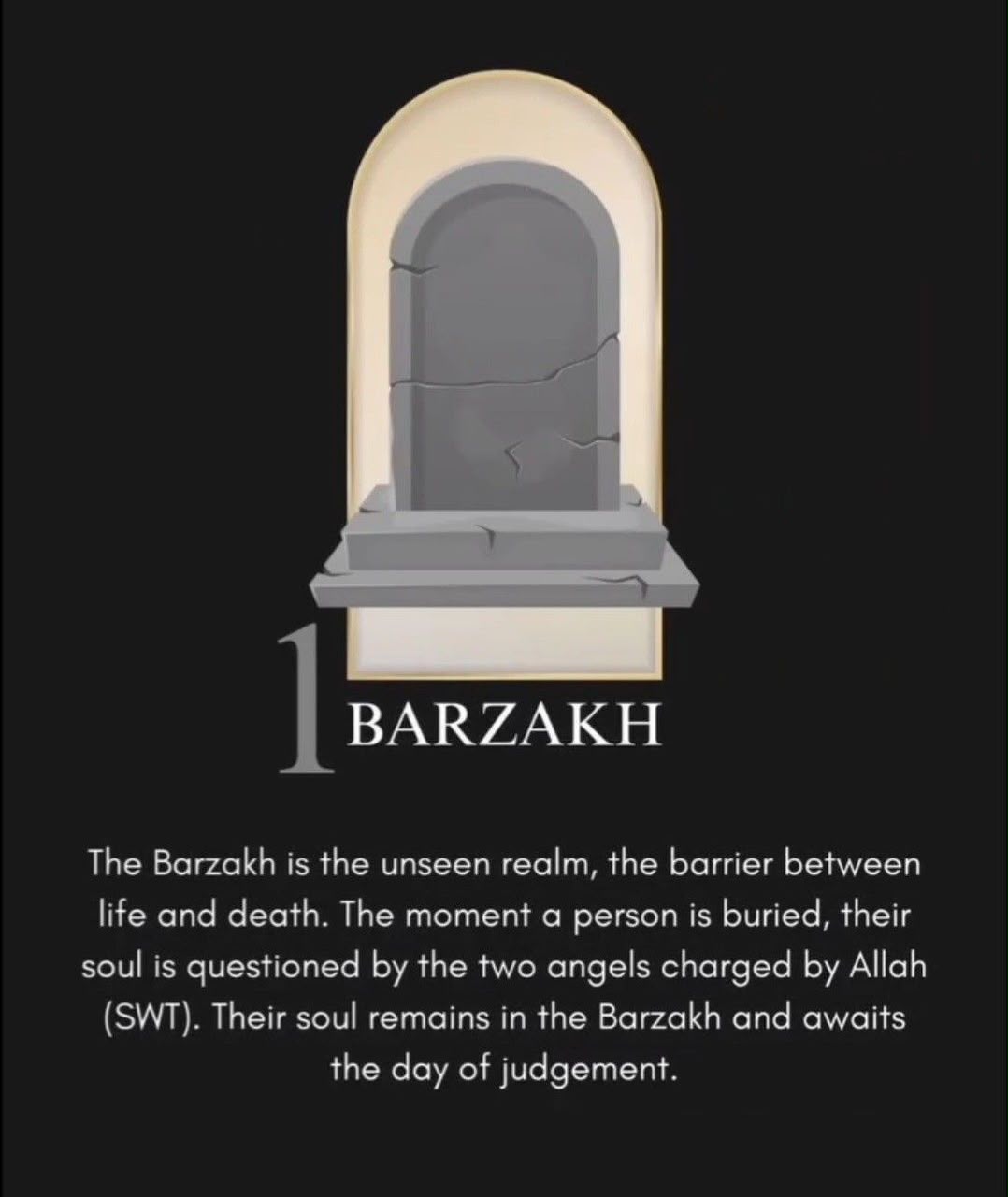
Death is not the end of existence; it is the beginning of another journey. What does Islam teach us about the unseen world between death and the Day of Resurrection?
Death is one of the few realities that every human being must face, regardless of age, wealth, status or background. Yet, despite knowing that our time in this world is limited, many of us spend our days preparing for everything except the journey that awaits us after death.
We prepare for school, careers, marriage, retirement and the future of our families. But how often do we prepare for the moment when we will leave everything behind?
In Islam, death is not considered the end of human existence. Rather, it marks the beginning of a new stage of life known as Barzakh.
What happens when a Muslim dies? What does the soul experience? What happens inside the grave? Can the deceased hear us? And what happens to the soul while waiting for the Day of Judgment?
These are important questions that Islam addresses through the Qur’an and authentic teachings of Prophet Muhammad (peace and blessings be upon him).
Let’s explore what happens after death and why understanding Barzakh should change the way we live today.
WHAT IS BARZAKH?
The word Barzakh refers to a barrier, separation or interval between two things.
In Islamic belief, Barzakh is the stage of existence between a person’s death and the Day of Resurrection.
Allah says:
“And behind them is a barrier (Barzakh) until the Day they are resurrected.”
(Qur’an 23:100)
This verse establishes that after death, human beings enter an intermediate state that continues until resurrection.
Barzakh is not the same as life in this world, nor is it the final destination of the Hereafter. It is a reality of the unseen, and our understanding of it must be guided by what Allah and His Messenger have revealed.
For the believer, Barzakh can be a place of comfort and glad tidings. For the person who rejected the truth and persisted in wrongdoing, it can be a place of distress and punishment.
This reminds us that death does not erase the consequences of how we lived.
1. THE MOMENT OF DEATH: WHEN THE SOUL LEAVES THE BODY
One of the greatest transitions in human existence occurs when the soul is taken from the body.
The Qur’an reminds us that death is inevitable and that every soul will experience it.
Allah says:
“Every soul will taste death.”
(Qur’an 3:185)
For the righteous believer, the departure of the soul is described in Islamic teachings as a moment accompanied by glad tidings and mercy from Allah.
In an authentic narration, Prophet Muhammad (peace and blessings be upon him) described how angels of mercy come to the believing servant, bringing a shroud and fragrance from Paradise.
The soul is then taken with honour and carried upwards.
For the wicked person who rejects Allah and persists in wrongdoing, the experience is described very differently in the authentic narrations concerning death.
This teaches us that the condition of our hearts and our relationship with Allah matter far more than our worldly achievements.
However, we should never claim to know the final condition of a particular deceased person. That knowledge belongs to Allah alone.
2. WHAT HAPPENS WHEN THE SOUL IS TAKEN?
Islamic teachings explain that the soul does not simply disappear after death.
The authentic narrations describe angels receiving the soul and taking it through stages that belong to the unseen world.
The Prophet (peace and blessings be upon him) described the soul of the believer being taken upwards, with the gates of heaven opened for it.
The soul is then returned in a manner known to Allah, and the questioning in the grave follows.
These details are part of the unseen, and we accept them based on authentic revelation rather than speculation.
One important lesson is that our physical bodies may be buried beneath the earth, but our existence does not simply come to an end.
Death is a transition into a reality that we cannot fully comprehend through our worldly senses.
3. THE QUESTIONING IN THE GRAVE: WHO IS YOUR LORD?
One of the most significant events associated with Barzakh is the questioning in the grave.
According to authentic Hadith, two angels come to the deceased and question them about their faith.
The central questions concern:
- Who is your Lord?
- What is your religion?
- What did you say about the Messenger who was sent to you?
For the sincere believer, Allah grants firmness in answering these questions.
Allah says:
“Allah keeps firm those who believe, with the firm word, in worldly life and in the Hereafter.”
(Qur’an 14:27)
The Prophet Muhammad (peace and blessings be upon him) explained that this verse relates to the believer’s ability to remain firm during the questioning in the grave.
For the hypocrite and disbeliever, the questioning is described as a moment of confusion and inability to provide the correct answers.
This is a powerful reminder that faith is not merely about knowing religious expressions or memorising answers.
It is about genuinely believing in Allah, worshipping Him sincerely and following the guidance of His Messenger.
The questions of the grave are not an examination that can be passed through memorisation alone. True faith must be reflected in how we live.
4. WILL THE GRAVE BE A PLACE OF COMFORT OR PUNISHMENT?
One of the most important teachings about Barzakh is that the grave can become a place of comfort or punishment.
For the righteous believer, the grave is described in authentic narrations as being expanded, illuminated and prepared as a place of comfort.
The believer is given glad tidings of Paradise and experiences a form of peace that Allah grants.
On the other hand, Islamic teachings warn about the punishment of the grave.
This punishment is associated with disbelief, hypocrisy and certain sins for which people must answer before Allah.
The Prophet Muhammad (peace and blessings be upon him) frequently sought Allah’s protection from the punishment of the grave.
This is why Muslims are encouraged to include the following supplication in their prayers:
اللَّهُمَّ إِنِّي أَعُوذُ بِكَ مِنْ عَذَابِ جَهَنَّمَ، وَمِنْ عَذَابِ الْقَبْرِ، وَمِنْ فِتْنَةِ الْمَحْيَا وَالْمَمَاتِ، وَمِنْ شَرِّ فِتْنَةِ الْمَسِيحِ الدَّجَّالِ
Allahumma inni a’udhu bika min ‘adhabi Jahannam, wa min ‘adhabil-qabr, wa min fitnatil-mahya wal-mamat, wa min sharri fitnatil-Masihid-Dajjal.
Meaning:
“O Allah, I seek refuge in You from the punishment of Hell, the punishment of the grave, the trials of life and death, and the evil trial of the False Messiah.”
(Sahih Muslim)
This supplication reminds us that seeking Allah’s protection should be part of our daily worship.
5. CAN THE DEAD HEAR US WHEN WE VISIT THEIR GRAVES?
This is a question many people ask, especially when visiting the graves of their parents, relatives and loved ones.
Islamic teachings establish that the deceased have a different state of existence, but the exact nature and extent of what they can hear are matters of the unseen.
There are authentic narrations indicating that the deceased can hear certain things in particular circumstances.
For example, Prophet Muhammad (peace and blessings be upon him) mentioned that after a person is placed in the grave and those who buried them depart, the deceased hears the sound of their footsteps.
(Sahih al-Bukhari and Sahih Muslim)
However, this does not mean that the dead can hear everything we say or that they have the ability to respond to our requests.
Muslims should avoid making unsupported assumptions about the unseen.
When visiting graves, we are encouraged to remember death, pray for the deceased and ask Allah to forgive them.
We should direct our supplications and acts of worship to Allah alone.
6. WHAT CAN BENEFIT A PERSON AFTER DEATH?
Here is one of the most hopeful aspects of Islam.
Although death ends a person’s opportunity to perform new deeds in the same way as during worldly life, certain deeds can continue to benefit them.
Prophet Muhammad (peace and blessings be upon him) said:
“When a person dies, their deeds come to an end except for three: ongoing charity, beneficial knowledge, or a righteous child who prays for them.”
(Sahih Muslim)
These three forms of continuing benefit deserve our attention.
Ongoing charity (Sadaqah Jariyah)
This includes charitable projects whose benefits continue after a person’s death, such as building a water well, supporting a mosque or contributing to beneficial educational facilities.
Beneficial knowledge
A person who teaches others something beneficial, shares authentic Islamic knowledge or contributes to knowledge that continues to guide people may continue receiving reward from Allah.
A righteous child who prays for them
Raising children upon faith and good character is a tremendous responsibility. A child who remembers their deceased parents in their supplications can be a source of continuing benefit for them.
Think about that for a moment.
The charity you give today, the knowledge you share and the children you raise with good Islamic values may become part of your legacy even after you leave this world.
7. HOW LONG WILL WE REMAIN IN BARZAKH?
Barzakh continues until the Day of Resurrection.
However, the experience of time in this intermediate state is part of the unseen and is not necessarily like our experience of time in this world.
Allah alone knows its full reality.
When the Trumpet is blown and the Day of Resurrection arrives, all human beings will be brought back to life.
Allah says:
“Then indeed, after that you are to die. Then indeed you, on the Day of Resurrection, will be resurrected.”
(Qur’an 23:15–16)
This verse reminds us that resurrection is certain.
Death is not the final chapter. There is another life awaiting us, followed by accountability before Allah.
8. WHAT DOES BARZAKH TEACH US ABOUT THE WAY WE LIVE TODAY?
Understanding Barzakh should not simply make us afraid of death. It should encourage us to live with purpose, sincerity and awareness of Allah.
Here are some lessons we should take seriously.
1. Do not postpone repentance.
Many people assume they have enough time to change their lives. But nobody knows when death will come.
Allah’s mercy is vast, and the door of repentance remains open during one’s lifetime. We should not deliberately delay returning to Him.
2. Take your salah seriously.
Prayer is one of the most important obligations in Islam. Do not allow work, entertainment, relationships or worldly responsibilities to constantly push your prayers aside.
3. Repair your relationships.
Do not allow pride to destroy relationships with family members and fellow Muslims. Apologise when you are wrong, forgive where possible and avoid violating the rights of others.
4. Give charity while you are alive.
Do not wait until you have accumulated enormous wealth before helping others. Even small acts of charity can carry tremendous reward when done sincerely.
5. Make the Qur’an part of your life.
Do not let the Qur’an become a book you only open during Ramadan or special occasions. Read it, understand its message and allow its teachings to guide your decisions.
6. Remember death without losing hope.
Remembering death should encourage us to prepare for the Hereafter, not make us despair of Allah’s mercy.
A Muslim should live between hope in Allah’s mercy and fear of falling into wrongdoing.
CONCLUSION: YOUR NEXT JOURNEY IS CLOSER THAN YOU THINK
One day, every person reading this article will leave behind their belongings, responsibilities, ambitions and worldly relationships.
The house will remain. The money will remain. The clothes, businesses, achievements and possessions will remain.
But we will return to Allah.
Barzakh reminds us that the grave is not simply a place where the body is buried. It is the beginning of an intermediate stage in our journey towards the Hereafter.
We may not know when our final day will arrive, but we have been given the opportunity to prepare.
So, before that day comes, let us return to Allah, strengthen our faith, fulfil our obligations, seek forgiveness, give generously and leave behind deeds that continue to benefit others.
Do not wait until you are in the grave to wish you had prayed more, given more charity, forgiven more people or spent more time remembering Allah.
The best time to prepare for the Hereafter is while you are still alive.
May Allah grant us a good ending, protect us from the punishment of the grave, make our graves spacious and filled with light, and grant us the highest levels of Jannatul Firdaus.
Ameen.
ABOUT 3SIXTYISLAM
At 3SixtyIslam, we believe that understanding Islam should inspire us to live better, worship sincerely and prepare for the Hereafter. May Allah make this knowledge beneficial to everyone who reads it.
