


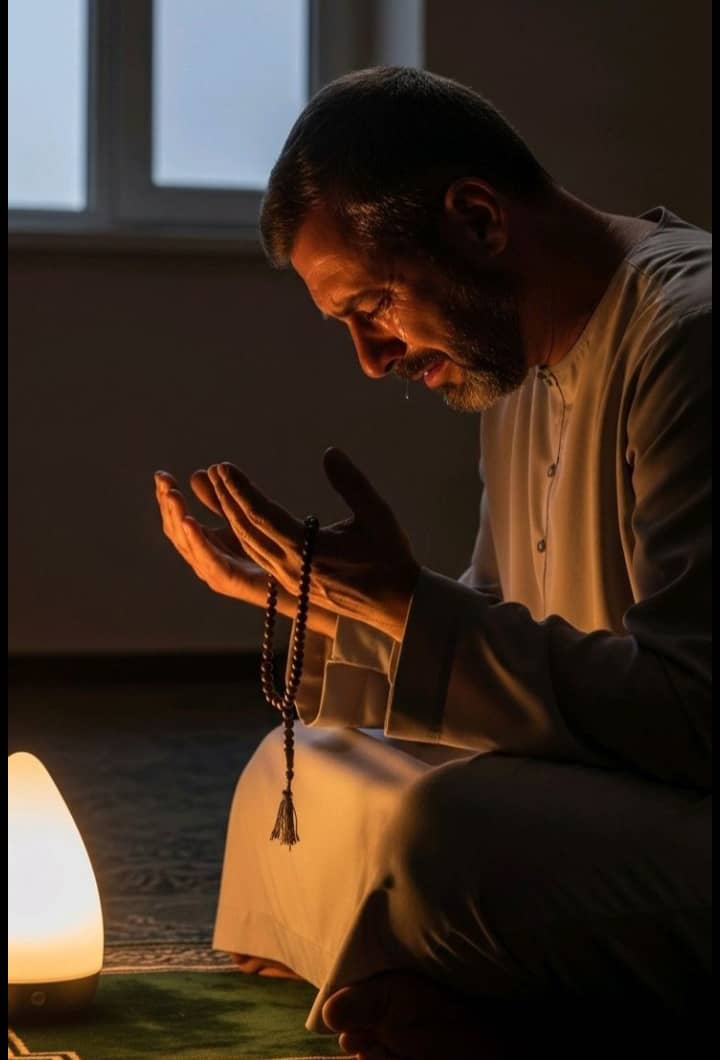
There are moments in life when a person makes duʿā with complete sincerity and expects an answer. You ask Allah for a job, a marriage, a child, financial stability, healing, an opportunity or a particular future. You keep asking, sometimes for months or even years, but what you asked for does not happen.
Eventually, a difficult thought can enter the heart: “Why is Allah not answering me?”
It is a question many believers quietly struggle with. Sometimes disappointment becomes so heavy that a person begins to wonder whether their duʿā is being heard at all. But one of the most important things a Muslim can learn is that an unanswered request is not necessarily an unanswered duʿā.
Allah knows what we do not know.
We see the moment. Allah sees the entire journey. We see what we want. Allah knows what that thing would eventually become in our lives. We see the door in front of us. Allah knows what is behind it.
This is why Allah says in the Qur’an, “Perhaps you hate a thing and it is good for you; and perhaps you love a thing and it is bad for you. Allah knows, and you do not know.” (Qur’an 2:216).
Sometimes what we desperately want is not actually good for us.
A person may spend years asking Allah for a particular marriage, only to discover later that the relationship they wanted would have brought them pain. Someone may desperately pursue a particular job, only to later realise that another opportunity suited their life far better. Someone may cry over an opportunity that disappeared, without knowing that losing it protected them from something they could not see.
At the time, it feels like rejection.
Later, it may look like protection.
This does not mean every disappointment will immediately make sense. Some things remain painful for a long time. Islam does not require a believer to pretend that disappointment does not hurt. Even righteous people experienced grief, difficulty and unanswered hopes.
What Islam teaches is that disappointment should not make us misunderstand Allah.
A delay is not proof that Allah has forgotten you.
The Prophet ﷺ taught that a person’s supplication is answered so long as they are not impatient and do not say that they supplicated but were not answered. This teaches us something important about the relationship between duʿā and patience.
We often want answers according to our timetable.
Allah’s wisdom does not operate according to our timetable.
There are things we may consider urgent because we are looking at our lives from a very limited perspective. Allah, however, knows the past, present and future. He knows what we need before we fully understand it ourselves.
This is why a believer should never reduce duʿā to simply getting what they asked for.
Duʿā is an act of worship. When you raise your hands and speak to Allah, you are not simply presenting a shopping list of things you want. You are acknowledging that you are dependent upon your Creator.
Sometimes the greatest change that takes place through duʿā is not that the situation immediately changes. It is that you change while waiting.
You become more patient. You become more conscious of Allah. You learn to surrender what you cannot control. You begin to understand yourself better. Your attachment to a particular outcome becomes weaker, while your attachment to Allah becomes stronger.
That is not nothing.
There is also a danger in assuming that getting everything we ask for would automatically make us happy.
Human beings are often poor judges of what will bring lasting contentment. We can be convinced that one particular thing will complete our lives, only to obtain it and discover that the heart still wants something else.
Allah knows the heart better than we do.
Perhaps this is why some of the most meaningful moments in a believer’s life come after plans have failed. When the path they carefully designed collapses, they are forced to trust Allah in a way they never had to before.
Sometimes Allah removes your dependence on an outcome so that you can rediscover your dependence on Him.
This does not mean we stop asking.
A Muslim should continue making duʿā. Ask Allah for what you want. Ask Him sincerely. Ask repeatedly. Ask with hope. Ask while taking the lawful means available to you.
But alongside your request, develop the ability to say: “Ya Allah, if this is good for me, make it easy for me. If it is not good for me, turn it away from me and grant me what is better.”
That is a difficult level of trust because it means accepting that Allah’s answer may look different from what we imagined.
And sometimes it will.
You may ask for a specific person and Allah gives you someone else. You may ask for a particular opportunity and Allah opens another door. You may ask for something immediately and Allah makes you wait. You may ask Allah to keep something in your life, while Allah knows that removing it is better for your future.
The believer’s challenge is to remain grateful and trusting even when the answer is not the answer they wanted.
This is where tawakkul becomes real.
It is easy to say that we trust Allah when life goes according to plan. True reliance becomes visible when the plan falls apart and we still believe that Allah’s knowledge is greater than ours.
So if there is something you have been asking Allah for and it has not happened yet, do not immediately interpret the delay as abandonment.
Keep making duʿā.
Keep doing what is right.
Keep taking the necessary steps.
And keep your heart attached to Allah rather than to a particular outcome.
Perhaps you will eventually receive exactly what you asked for. Perhaps you will receive something better. Perhaps you will understand years later why a particular door never opened.
And perhaps you will never know the full wisdom behind it in this life.
Even then, you can trust the One who knew.
Allah says, “And whoever relies upon Allah then He is sufficient for him.” (Qur’an 65:3).
Your responsibility is not to control how Allah answers your duʿā. Your responsibility is to keep turning to Him.
Sometimes the answer is “yes.”
Sometimes the answer is “not yet.”
Sometimes the answer is something completely different from what you imagined.
But for the believer, the story does not end with the thing they failed to receive. It continues with the One they never lost: Allah.
And sometimes, that is the greatest blessing of all.
