


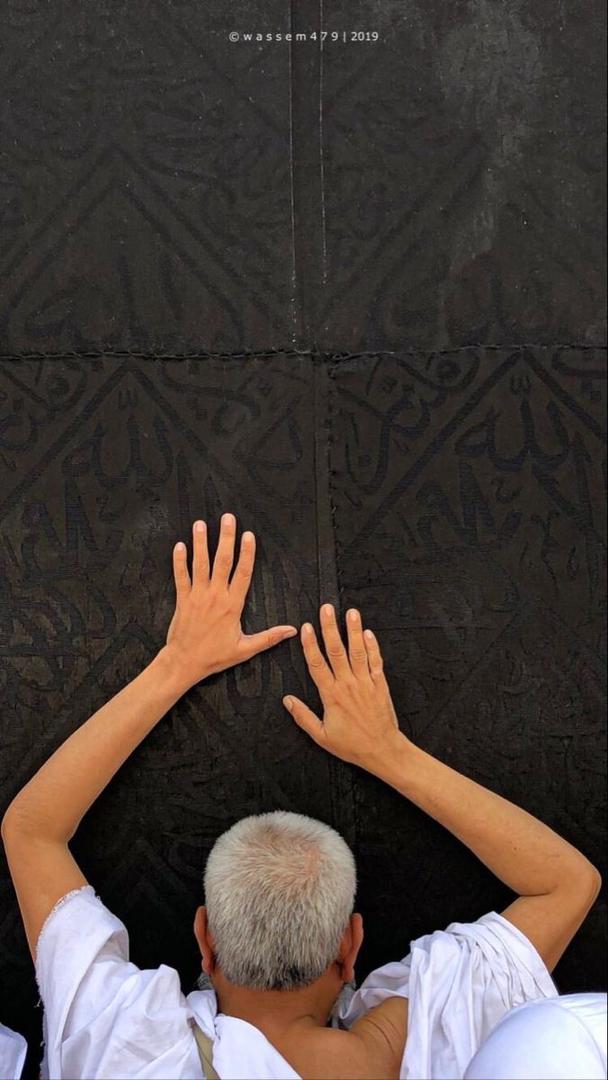
There are moments in life that are difficult to explain with words. For many Muslims, the first time they see the Ka’bah is one of them.
You may have seen it thousands of times on television, in photographs, on social media and in videos of Masjid al-Haram. You may have watched pilgrims performing Tawaf and imagined what it would feel like to be among them. You may have spent years making Dua for the opportunity to travel to Makkah.
Then one day, you are actually there.
You enter Masjid al-Haram, walk through the crowds and suddenly the Ka’bah appears in front of you.
For a moment, everything can feel different.
The building you have spent years facing during Salah is no longer an image on a screen. You are standing before it. The Qiblah that has connected Muslims around the world is physically in front of you.
For some people, tears come immediately. Others become silent. Some struggle to describe what they feel. Some may not experience a dramatic emotional reaction at all.
And that is important to understand.
There is no single correct emotional response to seeing the Ka’bah.
The significance of the moment is not measured by how many tears you shed. What matters is what the moment does to your heart and how it influences your relationship with Allah.
THE KA’BAH REMINDS YOU WHO YOU ARE
Modern life can make people feel extremely important.
We build careers. We acquire possessions. We gain titles. We become known in our communities. We collect followers and likes. We worry about how people perceive us.
Then you arrive in Makkah.
Suddenly, those things seem much smaller.
You are one person among millions.
The wealthy and the poor stand in the same direction. People from different countries worship the same Lord. The person standing beside you may have a completely different life from yours, yet you share the same Qiblah.
The experience can remind you that before you are an employee, business owner, parent, student, professional or public figure, you are a servant of Allah.
That identity matters more than all the temporary labels attached to you.
STANDING BEFORE THE KA’BAH CAN MAKE YOU THINK ABOUT YOUR JOURNEY
When a person finally reaches Makkah, they may remember everything it took to get there.
Perhaps they saved for years.
Perhaps family members contributed towards the trip.
Perhaps they made countless Dua.
Perhaps there were financial difficulties.
Perhaps there were moments when they thought the journey would never happen.
Perhaps someone who helped them reach Makkah is no longer alive.
Perhaps they remember the first time they ever dreamed of visiting.
All of those memories can come together in a single moment.
And the heart may naturally respond with gratitude.
Alhamdulillah.
Allah allowed me to come.
That thought alone can transform the experience.
You begin to realise that the journey was never guaranteed.
You could have had the money but not the health.
You could have had the health but not the opportunity.
You could have planned the trip but circumstances could have prevented it.
Being there is a blessing.
DO NOT WORRY IF YOU DO NOT CRY
There is sometimes an unrealistic expectation surrounding the first sight of the Ka’bah.
People hear stories about pilgrims who cried uncontrollably or became overwhelmed with emotion, and they begin to believe that they must experience exactly the same thing.
But people are different.
Some people cry.
Some become completely silent.
Some smile.
Some simply stare.
Some feel overwhelmed later, perhaps during Tawaf or Salah.
Others may not experience an intense emotional reaction at all.
Do not allow someone else’s experience to become a measurement of your faith.
Your heart belongs to Allah, and He knows what you feel.
The important thing is sincerity.
You do not need to manufacture tears.
You do not need to perform an emotional reaction for other people.
Worship Allah sincerely and allow your emotions to come naturally.
THE KA’BAH CAN REMIND YOU OF YOUR SINS
Standing in such a sacred place can also make a person think about their past.
You may remember sins nobody else knows about.
You may remember opportunities you wasted.
You may remember prayers you neglected.
You may remember people you hurt.
You may remember years spent far away from Allah.
And instead of allowing those memories to destroy you with despair, use them to turn towards Allah.
Ask for forgiveness.
Allah’s mercy is greater than your sins.
The journey to Makkah should not make you think, “I am too sinful to be here.”
It should make you think, “How merciful is Allah that He allowed me to come here and seek Him?”
Never underestimate the power of sincere Tawbah.
Perhaps the person standing before the Ka’bah is not the person they used to be.
Perhaps Allah brought them there at exactly the right time.
THE KA’BAH CAN CHANGE YOUR UNDERSTANDING OF SALAH
Every day, Muslims around the world face the Ka’bah during Salah.
Yet many people rarely stop to think about what that actually means.
Someone in Nigeria faces the same Qiblah as someone in Indonesia.
Someone in Britain faces the same Qiblah as someone in South Africa.
Someone in Turkey faces the same Qiblah as someone in America.
Muslims may speak different languages and live completely different lives, but the Qiblah unites them.
When you stand beside the Ka’bah, that reality becomes physical.
You can see people from around the world praying together.
It can change the way you think about the Salah when you return home.
The Ka’bah may no longer feel like a distant direction on a prayer mat.
It becomes a reminder of the unity of the Ummah and your connection to generations of Muslims who have prayed towards the same House.
THE EXPERIENCE CAN TEACH YOU HUMILITY
Makkah has a way of making people realise that they cannot control everything.
You cannot control the crowds.
You cannot control how quickly people move.
You cannot control every part of your schedule.
You cannot control every travel arrangement.
You cannot control the behaviour of everyone around you.
You have to learn to adapt.
You have to learn patience.
You have to learn to let certain things go.
This can be one of the hidden lessons of pilgrimage.
Sometimes the person who returns from Makkah with the greatest spiritual benefit is not the one who had the most comfortable journey, but the one who learned how to respond to difficulty with patience.
THE KA’BAH SHOULD NOT BECOME JUST ANOTHER PHOTOGRAPH
One of the modern challenges of pilgrimage is documentation.
People naturally want photographs and videos to remember their journey. There is nothing inherently wrong with wanting memories of an important experience.
But there is a danger when the camera becomes more important than the moment.
Imagine finally reaching the Ka’bah after years of waiting, only to spend your first few minutes trying to find the perfect angle, checking your appearance and deciding what to post.
You were physically there, but were you mentally present?
Some moments deserve your full attention.
Put the phone away sometimes.
Look at the Ka’bah.
Make Dua.
Reflect.
Remember Allah.
Allow yourself to experience the moment without immediately turning it into content.
Years later, you may find that the memory you treasure most is not the photograph you posted but the quiet moment when you stood there and spoke to Allah from your heart.
WHAT WILL YOU ASK ALLAH FOR?
Standing before the Ka’bah can also make you reconsider your priorities.
We often spend our lives asking Allah for things.
A better job.
More money.
A house.
Success.
Business growth.
Good grades.
Marriage.
Children.
Health.
These are legitimate things to ask Allah for.
But when you stand before the Ka’bah, it is worth asking for something deeper.
Ask Allah for forgiveness.
Ask Him for guidance.
Ask Him for sincerity.
Ask Him to protect your faith.
Ask Him to make you consistent in Salah.
Ask Him to purify your heart.
Ask Him to protect you from arrogance, envy and hatred.
Ask Him to make you useful to others.
Ask Him to grant you a good ending.
Ask Him to admit you into Jannah.
Ask Him to accept your worship.
Ask Him to bring you closer to Him.
The greatest gifts are not always the things we can hold in our hands.
Sometimes the greatest gift is a heart that remains connected to Allah.
WHEN YOU LEAVE MAKKAH, THE KA’BAH SHOULD STILL BE WITH YOU
Eventually, every pilgrim has to leave.
The hotel room is emptied.
The luggage is packed.
The final look at the Haram arrives.
The journey home begins.
For some pilgrims, this can be an emotional moment.
But remember something important.
You are leaving Makkah, but you are not leaving Allah.
The same Allah you worshipped in the Haram is the One you will worship at home.
The same Qur’an you read in Makkah can be read in your bedroom.
The same Dua you made in the Haram can be made in your home.
The same Salah you protected during your journey must continue after you return.
The same humility you experienced among millions can remain with you.
The real test is what happens when the sacred surroundings disappear.
Can you maintain the relationship with Allah when you return to your normal environment?
Can you protect your Salah when work becomes busy?
Can you remain patient when family problems arise?
Can you control your tongue when someone annoys you?
Can you remain generous when nobody is watching?
Can you continue making Dua when life becomes difficult?
That is where the lasting effect of your journey becomes visible.
A VISIT TO THE KA’BAH SHOULD CHANGE YOUR VIEW OF LIFE
The Ka’bah is a physical building, but standing before it can make you think about something much bigger than a building.
It can make you think about Allah.
It can make you think about your purpose.
It can make you think about death.
It can make you think about the Hereafter.
It can make you think about how quickly life is passing.
You may return home and realise that some of the things you were previously obsessed with are not as important as you thought.
You may realise that you have spent too much time worrying about people’s opinions.
You may realise that you have neglected your relationship with Allah while chasing temporary achievements.
You may realise that you need to repair relationships.
You may realise that you need to forgive.
You may realise that you need to change.
That realisation can be one of the greatest gifts of the journey.
THE KA’BAH IS NOT THE END OF YOUR JOURNEY
The day you stand before the Ka’bah may feel like the fulfilment of a dream.
But spiritually, it should not be the end.
It should be a beginning.
A beginning of stronger Salah.
A beginning of sincere Tawbah.
A beginning of better character.
A beginning of greater gratitude.
A beginning of deeper reliance upon Allah.
A beginning of a life in which Allah occupies a greater place in your priorities.
One day, the memory of Makkah may become distant.
You may forget the exact details of your first day.
You may forget the hotel.
You may forget the restaurants.
You may forget some of the places you visited.
But if the journey changed the way you live, then its greatest effect remains.
That is why standing before the Ka’bah is not simply about what you see with your eyes.
It is about what happens to your heart.
May Allah invite every Muslim who longs to see the Ka’bah, make the journey easy for them, accept the worship of every pilgrim and allow those who have already visited His Sacred House to carry the lessons of Makkah throughout the rest of their lives.
And may Allah make our hearts attached to Him long before we reach His Sacred House, while we are there, and long after we return home.
3SIXTYISLAM — YOUR TRUSTED HAJJ & UMRAH PARTNER
When it comes to Hajj and Umrah, experience and trust matter. 3SixtyIslam provides reliable packages, proper guidance, and full support from departure to return. We handle the journey so you can focus on your ibadah. Choose a travel partner that understands the responsibility of taking guests to the House of Allah.
Travel with 3SixtyIslam. DM @3SixtyIslam.
