


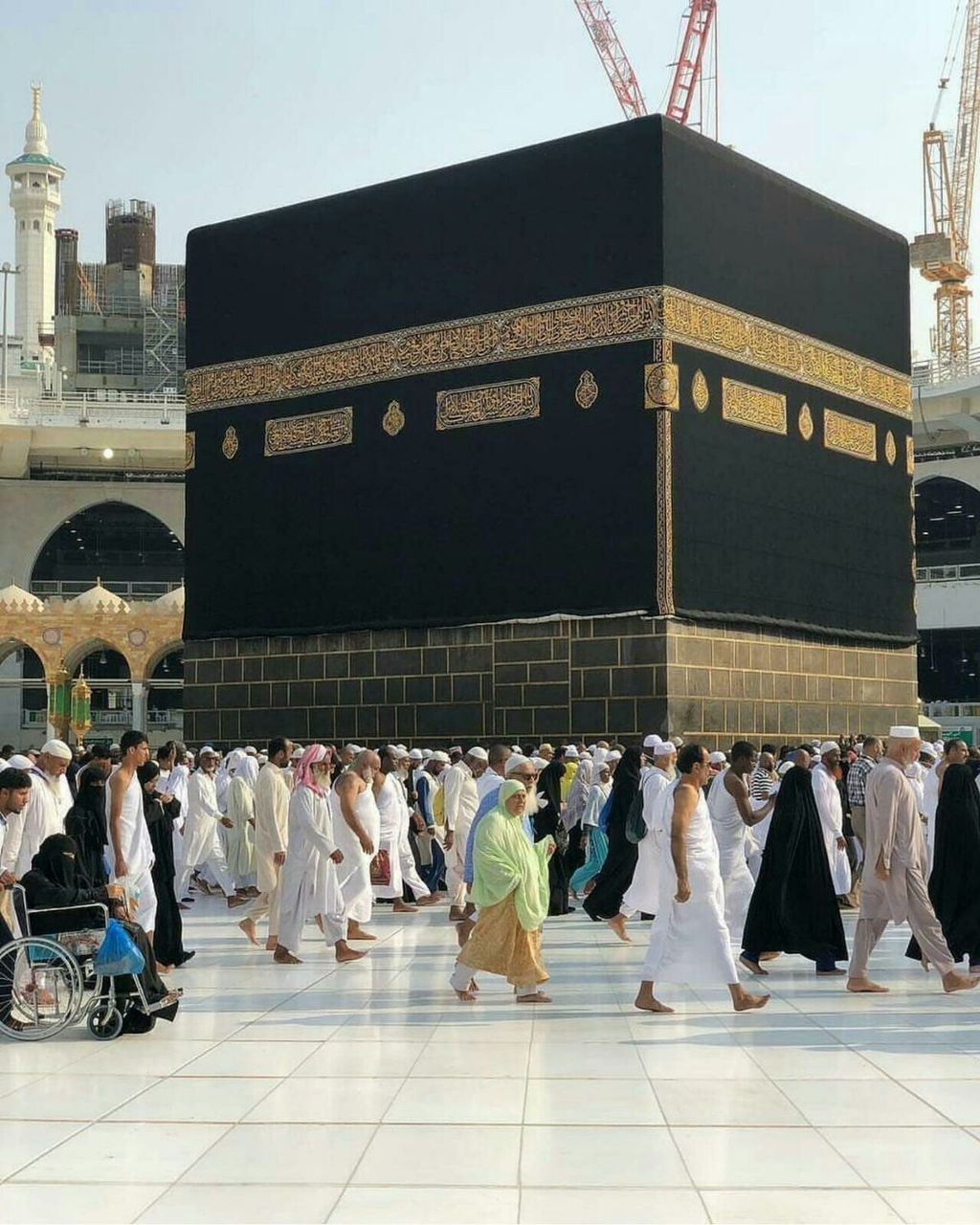
There is something incredibly special about making your first journey to Makkah. For many Muslims, Umrah is a lifelong dream. It is a journey they make Dua for, save money for, prepare their hearts for, and eagerly wait to experience.
You imagine yourself standing before the Ka’bah, making Tawaf, drinking Zamzam water, praying in Masjid al-Haram, and asking Allah to forgive your sins.
You imagine the beautiful feeling of being in the holiest city in Islam, surrounded by millions of Muslims who have travelled from different parts of the world for the same purpose: to worship Allah.
But there are certain things about your first Umrah that people do not always talk about.
Nobody really prepares you for how emotional you might become when you see the Ka’bah for the first time. Nobody tells you how physically exhausting Tawaf and Sa’i can be. Nobody tells you that you might cry unexpectedly, struggle to concentrate, feel overwhelmed by the crowds, or discover things about yourself that you never noticed before.
And perhaps most importantly, nobody tells you that your first Umrah may not look exactly like the beautiful videos you have watched online.
It can be emotional, exhausting, peaceful, overwhelming, and life-changing all at once.
If you are preparing for your first Umrah or simply dreaming of making the journey someday, here are some things worth knowing before you go.
1. SEEING THE KA’BAH FOR THE FIRST TIME MAY MAKE YOU EMOTIONAL
<escape> </escape>
<AsyncImage query=”Kaaba Masjid al Haram Makkah beautiful view pilgrims tawaf” aspectRatio=”16:9″ width=”100%”/>
You may have seen pictures and videos of the Ka’bah thousands of times.
You may have watched people performing Tawaf, listened to emotional recitations, and imagined what it would feel like to stand before the House of Allah.
But seeing it with your own eyes is a completely different experience.
For some people, tears come immediately. Others become silent and struggle to find words. Some feel an overwhelming sense of gratitude, while others simply stand there trying to take everything in.
You may remember every Dua you have ever made, every difficulty you have experienced, every sin you regret, and every blessing you have received.
But here is something important: do not pressure yourself to cry.
Some people cry, others do not. Some feel immediate peace, while others need time to process the experience.
There is no particular emotional reaction you must have for your Umrah to be meaningful.
You are there to worship Allah, not to produce a particular feeling.
2. YOUR FIRST TAWAF MAY BE MORE EXHAUSTING THAN YOU EXPECT
<AsyncImage query=”Muslim pilgrims performing Tawaf around Kaaba overhead view” aspectRatio=”16:9″ width=”100%”/>
When you watch videos of Tawaf, it can look relatively simple.
You see people walking around the Ka’bah, making Dua, and moving with the crowd.
But when you experience it yourself, you realise that there is much more to it.
Tawaf involves walking around the Ka’bah seven times, and depending on the crowd, it can take considerable time.
You may experience:
- Tiredness in your legs and feet.
- Crowded walking spaces.
- Difficulty maintaining your preferred pace.
- Physical discomfort from standing and walking for long periods.
- Moments when you need to pause and regain your strength.
Wear comfortable footwear when appropriate outside the Ihram restrictions, stay hydrated, and avoid pushing yourself unnecessarily.
If you have mobility difficulties, ask your group leader or a qualified guide about available assistance.
Remember, Umrah is an act of worship. You do not need to compete with anyone or rush through it.
3. YOU MIGHT FORGET ALL THE DUAS YOU PREPARED
This is something many first-time pilgrims experience.
Before travelling, you may prepare a long list of Dua.
You write down everything you want to ask Allah for:
- Forgiveness for your sins.
- Good health.
- Marriage.
- Children.
- Financial stability.
- Success in your career.
- Protection for your family.
- Guidance and steadfastness.
- Jannatul Firdaus.
You may even save dozens of Islamic supplications on your phone.
But when you finally stand before the Ka’bah, you might suddenly forget everything.
You may become overwhelmed and struggle to remember the words you prepared.
Do not panic.
You can make Dua in your own language. Allah knows what is in your heart, whether you express it in Arabic, English, Yoruba, Hausa, or any other language.
There is no requirement to memorise hundreds of Arabic supplications before performing Umrah.
Learn the essential words and supplications for the rituals, but remember that you can also speak to Allah sincerely.
4. YOU WILL QUICKLY REALISE THAT UMRAH IS PHYSICALLY DEMANDING
<AsyncImage query=”Muslim pilgrims walking between Safa and Marwa Masjid al Haram Sa’i” aspectRatio=”16:9″ width=”100%”/>
One thing that surprises many first-time pilgrims is how much walking is involved.
Between arriving at the mosque, performing Tawaf, completing Sa’i between Safa and Marwah, attending prayers, and moving around Makkah, your body may become very tired.
Sa’i involves seven lengths between Safa and Marwah, covering approximately 2.8 kilometres in total.
And that is not counting the walking you do throughout the day.
This is why preparing physically before your trip can make a difference.
Try taking regular walks before travelling, wear comfortable clothing, rest when necessary, and drink enough water.
Do not underestimate the importance of sleep.
You want to have enough energy to worship without unnecessarily exhausting yourself.
5. NOT EVERY MOMENT WILL FEEL SPIRITUAL
This is perhaps one of the most important things nobody tells you.
You may expect to feel spiritually connected every second of your Umrah.
You imagine yourself constantly making Dhikr, crying during Dua, feeling peaceful, and experiencing a level of spirituality you have never experienced before.
But reality can be different.
You might feel tired, distracted, hungry, frustrated, or even overwhelmed by the number of people around you.
You may struggle to concentrate during some prayers.
You might spend a few minutes worrying about your hotel, your belongings, or your next activity.
That does not automatically mean your Umrah is unsuccessful.
You are still human.
Worship is not measured only by how emotional you feel. Sincerity, obedience, intention, and following the prescribed rituals matter.
Do not compare your spiritual experience with what you see on social media.
6. THE CROWDS CAN BE OVERWHELMING
<AsyncImage query=”Masjid al Haram crowded pilgrims around Kaaba Ramadan” aspectRatio=”16:9″ width=”100%”/>
One thing that becomes very obvious during Umrah is just how many Muslims travel to Makkah.
You will meet people from different countries, cultures, languages, and backgrounds.
The experience can be beautiful, but the crowds can also be overwhelming.
You may find it difficult to walk at your preferred speed, locate your group, or move around certain areas.
Sometimes you may need to wait patiently before entering or leaving a particular section of the mosque.
Here are a few practical tips:
- Agree on a meeting point with your group.
- Keep your hotel details saved on your phone.
- Carry your group’s contact information.
- Avoid wandering away without informing your companions.
- Be patient and considerate towards other pilgrims.
- Follow the instructions of mosque officials.
Remember that everyone has travelled to worship Allah. Treat people with kindness, even when the environment becomes stressful.
7. YOU MAY CRY OVER THINGS YOU NEVER EXPECTED
<AsyncImage query=”Muslim woman praying dua in Masjid al Haram Makkah peaceful spiritual atmosphere” aspectRatio=”16:9″ width=”100%”/>
Your first Umrah may bring back memories you have not thought about in years.
You might remember your parents, especially if they are no longer alive.
You might remember difficult moments in your life, people you have lost, mistakes you have made, and prayers you have been making for years.
You may find yourself asking Allah for things you have never told anyone.
Sometimes, the tears are not even connected to one particular event.
You are simply grateful that Allah allowed you to visit His Sacred House.
Allow yourself to experience the moment without forcing anything.
Make Dua for yourself, your family, your friends, and the entire Muslim Ummah.
And remember that you do not need to cry for Allah to hear you.
8. YOU WILL LEARN THE IMPORTANCE OF PATIENCE
Umrah teaches patience in ways you may not anticipate.
You may have to wait for transport, stand in queues, deal with unexpected changes, or adjust to people whose habits are different from yours.
You may feel frustrated when someone walks slowly in front of you or when your group takes longer than expected.
There may also be moments when you become physically uncomfortable.
These situations are opportunities to practise Sabr.
Allah says:
“Indeed, Allah is with the patient.”
(Qur’an 2:153)
Remember that you are on a journey of worship.
Try not to allow small inconveniences to take away from the purpose of your visit.
Your character is also part of your worship.
Be patient with elderly pilgrims, children, fellow travellers, and people who may be struggling physically.
9. YOU DO NOT HAVE TO KISS OR TOUCH THE BLACK STONE
Many first-time pilgrims assume that kissing the Black Stone (Hajar al-Aswad) is something they must do during Tawaf.
This is not correct.
Kissing the Black Stone is Sunnah when it can be done safely and without harming or pushing others.
If the area is crowded, you can simply gesture towards it with your right hand and say Allahu Akbar when you are in line with it.
You do not have to push, shove, or hurt another Muslim to reach it.
Protecting other people’s safety is more important than forcing your way through a crowd.
Your Tawaf remains valid without touching or kissing the Black Stone.
10. YOU MIGHT SPEND MORE TIME MAKING DUA THAN TAKING PICTURES
Before travelling, you may imagine taking beautiful pictures of yourself in front of the Ka’bah.
You might plan your outfits, choose your preferred photo locations, and imagine documenting every moment.
But when you arrive, you may realise that you want to spend more time worshipping than taking photographs.
There is nothing inherently wrong with taking appropriate photographs where permitted.
However, do not allow photography, social media, or the desire to impress people to distract you from the purpose of your journey.
Not every beautiful moment needs to be posted online.
Some moments are best kept between you and Allah.
11. YOU MAY REALISE HOW MUCH YOU NEED ALLAH
This is one of the most meaningful lessons of Umrah.
When you stand before the Ka’bah, you begin to reflect on how temporary worldly life really is.
Your job, wealth, status, appearance, and possessions suddenly seem less important than the condition of your heart.
You realise that despite all your achievements, you are still a servant of Allah who needs His mercy.
You begin to appreciate the importance of Salah, repentance, gratitude, patience, and good character.
You may also realise that some of the things you spent years worrying about were not as important as you once thought.
Umrah can become an opportunity to reconsider your priorities and renew your commitment to Islam.
12. THE JOURNEY DOES NOT END WHEN YOU LEAVE MAKKAH
This is something every first-time pilgrim should understand.
Many people spend months preparing for Umrah, perform their rituals, and return home with beautiful memories.
But the real test is what happens afterwards.
Do you continue praying five times daily?
Do you continue reading the Qur’an?
Do you become more patient with people?
Do you become more careful about your words and actions?
Do you continue making Dua and seeking forgiveness?
Umrah should inspire you to strengthen your relationship with Allah beyond the journey itself.
You do not have to become a completely different person overnight, but you should try to carry the lessons of Umrah into your everyday life.
And if you struggle after returning home, do not give up.
Keep working on yourself.
13. YOU WILL MEET PEOPLE WHO WILL CHANGE YOUR EXPERIENCE
One beautiful aspect of Umrah is meeting Muslims from different parts of the world.
You may share a meal with someone you have never met before, receive help from a stranger, or make friends with people who have travelled thousands of kilometres to worship Allah.
You may see elderly pilgrims who have saved for decades to make the journey.
You may meet people who have overcome significant difficulties just to stand before the Ka’bah.
These encounters can remind you that Islam brings people together regardless of nationality, language, wealth, or social status.
Treat fellow pilgrims with kindness.
A simple smile, helping someone carry their belongings, or showing an elderly person the right direction can make a difference.
14. YOUR FIRST UMRAH MAY MAKE YOU WANT TO RETURN AGAIN
<AsyncImage query=”Kaaba at night illuminated Masjid al Haram Makkah” aspectRatio=”16:9″ width=”100%”/>
There is a feeling that many pilgrims struggle to explain after leaving Makkah.
You may return home physically, but your heart keeps remembering the Ka’bah.
You remember the sound of the Adhan, the atmosphere of Masjid al-Haram, the prayers, the Tawaf, and the moments you spent making Dua.
You may find yourself watching videos of Makkah and wishing you could return.
You might even begin saving money for another Umrah before you have fully unpacked your luggage.
This is a beautiful reminder of how meaningful the experience can become.
However, remember that you do not need to travel to Makkah every year to remain close to Allah.
You can worship Him wherever you are.
Let the love you develop during Umrah motivate you to remain consistent in your faith.
15. PRACTICAL THINGS YOU SHOULD KNOW BEFORE YOUR FIRST UMRAH
Beyond the emotional and spiritual experience, there are practical details that can make your first journey easier.
Here are some things worth preparing for.
Before travelling:
- Learn the correct steps of Umrah from a reliable Islamic teacher.
- Understand the rules of Ihram and its restrictions.
- Prepare comfortable, appropriate clothing.
- Build your walking stamina.
- Arrange your travel documents and essential medications.
- Save important hotel and group contact information.
- Learn the essential Talbiyah and supplications.
- Make a list of the people you want to remember in your Dua.
During Umrah:
- Follow the correct order of the rituals.
- Stay hydrated.
- Avoid unnecessary rushing.
- Keep your belongings secure.
- Be patient with other pilgrims.
- Follow official mosque instructions.
- Ask a knowledgeable guide when you are unsure about a ritual.
- Give yourself enough time to rest.
After Umrah:
- Continue observing your five daily prayers.
- Maintain your relationship with the Qur’an.
- Continue making Istighfar.
- Work on improving your character.
- Avoid returning to habits you sincerely repented from.
- Thank Allah for allowing you to make the journey.
16. A SIMPLE REMINDER: DO NOT TURN UMRAH INTO A COMPETITION
Sometimes, especially on social media, Umrah can appear like a competition.
People compare hotels, travel packages, photographs, shopping experiences, and how close they managed to get to the Ka’bah.
But Umrah is not a competition.
You do not need the most expensive hotel to have a meaningful experience.
You do not need to take hundreds of pictures.
You do not need to complete extra activities just to prove how religious you are.
What matters is performing the rituals correctly, maintaining sincerity, and seeking Allah’s pleasure.
Someone travelling on a modest budget may have an incredibly meaningful Umrah.
Someone who takes very few pictures may have a deeply rewarding experience.
Do not measure your journey by comparing it with another person’s.
FINAL WORDS: YOUR FIRST UMRAH IS MORE THAN A TRIP
Your first Umrah is not simply another holiday or travel experience.
It is an opportunity to worship Allah, seek forgiveness, reflect on your life, and renew your faith.
You may cry when you see the Ka’bah. You may become exhausted during Tawaf. You may forget some of the Duas you prepared. You may struggle with the crowds or experience moments when you do not feel particularly spiritual.
And that is okay.
Do not put pressure on yourself to experience Umrah exactly like someone else.
Go with a sincere heart, learn the rituals properly, treat people kindly, and ask Allah to accept your efforts.
Most importantly, remember that the greatest blessing is not simply being able to visit Makkah. It is returning home with a stronger desire to worship Allah and live according to His guidance.
May Allah invite everyone who desires to visit His Sacred House, make our Umrah easy and accepted, forgive our sins, answer our sincere Duas, and allow us to return to Makkah and Madinah again and again.
May Allah grant us Umrah Mabroor and a life filled with Iman.
Ameen Ya Rabbal Alameen.
FREQUENTLY ASKED QUESTIONS (FAQs)
1. What should I expect during my first Umrah?
Expect a beautiful but physically demanding spiritual journey. You will perform Tawaf, Sa’i, and the other required rituals. You may experience emotional moments, tiredness, crowds, and opportunities for reflection.
2. What should I learn before going for Umrah?
Learn the conditions of Ihram, the Talbiyah, how to perform Tawaf and Sa’i, and how to complete the rituals correctly. It is advisable to learn from a reliable Islamic scholar or qualified guide.
3. Will I cry when I see the Ka’bah for the first time?
You might, but not everyone does. Some people cry, while others feel quiet, grateful, or overwhelmed. There is no requirement to cry for your Umrah to be accepted.
4. Can I make Dua in English during Umrah?
Yes. You can make personal supplications in English or any language you understand. You do not have to memorise every Dua in Arabic.
5. How long does it take to complete Umrah?
The rituals themselves can take a few hours, depending on crowd levels, walking pace, and individual circumstances. The overall trip may last several days.
6. Can I perform Umrah if I am physically weak?
Yes, but you should plan appropriately. Seek guidance about mobility assistance, wheelchair arrangements, and any health precautions you may need.
7. Do I have to kiss the Black Stone during Tawaf?
No. Kissing it is Sunnah when possible without causing harm. You can gesture towards it when you reach its line if you cannot approach it safely.
8. What should I do after returning from Umrah?
Continue praying regularly, reading the Qur’an, making Dua, seeking forgiveness, and improving your character. Let the experience strengthen your everyday relationship with Allah.
9. How can I make my first Umrah meaningful?
Learn the rituals properly, renew your intention, avoid unnecessary distractions, be patient with others, and spend time worshipping Allah sincerely.
10. What does Umrah Mabroor mean?
Umrah Mabroor refers to an accepted and righteous Umrah. We ask Allah to accept our worship and reward us for our sincere efforts.
