


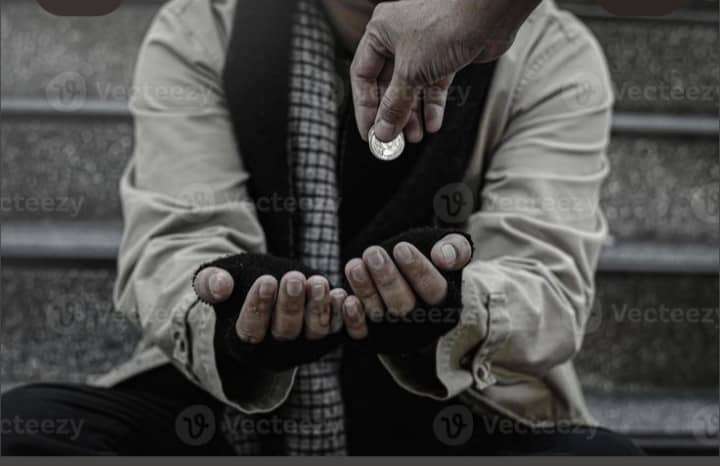
Does having more money make you more valuable than someone who has less? In a society where people are increasingly judged by their financial status, we must ask ourselves whether we have forgotten the Islamic values of humility, compassion and respect for human dignity.
Imagine walking into a gathering wearing ordinary clothes while everyone around you is dressed in expensive designer outfits.
You try to participate in conversations, but people barely acknowledge your presence. Someone makes an unnecessary comment about your appearance. Another person jokes about your financial situation. Perhaps you are deliberately excluded because you cannot afford to contribute as much as others.
Now imagine being invited to a social event but feeling embarrassed because you cannot afford the clothes, transportation or financial contributions expected of you.
For some people, these are not imaginary situations. They are everyday experiences.
Across our communities, people are sometimes treated differently simply because they are poor. Their opinions are dismissed, their contributions are undervalued and their dignity is undermined because they cannot afford the things others possess.
Some are mocked for wearing old clothes, using inexpensive phones, living in modest homes or struggling to meet basic financial responsibilities.
Others experience humiliation when they ask for financial assistance or when their inability to contribute financially becomes public knowledge.
Sadly, this behaviour can also be found among people who identify themselves as Muslims.
But how can we claim to follow a religion that teaches humility, compassion and brotherhood while looking down on people because of their financial circumstances?
Does wealth give anyone the right to humiliate another human being?
Does having a better job, a bigger house or an expensive car make someone more honourable in the sight of Allah?
Islam teaches us that a person’s worth is not determined by how much money they possess. It is therefore dangerous to allow wealth to become a reason for arrogance, discrimination and the humiliation of others.
1. POVERTY DOES NOT MAKE ANYONE LESS HUMAN
One of the most important things Muslims must understand is that poverty does not reduce a person’s dignity.
Someone who cannot afford expensive clothing is not less deserving of respect than someone wearing designer fashion.
A person living in a modest neighbourhood is not less important than someone living in an affluent estate.
Someone using an inexpensive phone is not automatically less intelligent, responsible or valuable than someone using the latest smartphone.
Unfortunately, society sometimes creates an artificial hierarchy in which people are judged according to their possessions.
People with money may receive preferential treatment, while those experiencing financial difficulties are ignored or treated with contempt.
This mentality is dangerous because it encourages people to associate human worth with material possessions.
Allah reminds us in the Qur’an:
“Indeed, the most noble of you in the sight of Allah is the most righteous of you.” (Qur’an 49:13).
This verse establishes an important Islamic principle: true honour before Allah is connected to righteousness, not wealth, social class, family background or outward appearance.
A wealthy person is not automatically better than a poor person.
A successful business owner is not inherently more honourable than someone struggling to find employment.
We must learn to respect people for who they are rather than judge them by what they can afford.
2. WEALTH IS NOT PROOF THAT ALLAH LOVES YOU MORE
One dangerous misconception in society is the belief that financial prosperity automatically indicates that someone is more favoured by Allah.
Some people become arrogant because they have acquired wealth, believing that their financial position makes them superior to others.
Others look at people experiencing poverty and assume that their circumstances reflect personal failure or divine displeasure.
However, the Qur’an challenges this understanding.
Allah says:
“As for man, when his Lord tests him and thus is generous to him and favours him, he says, ‘My Lord has honoured me.’ But when He tests him and restricts his provision, he says, ‘My Lord has humiliated me.'” (Qur’an 89:15–16).
Allah then corrects this attitude in the verses that follow.
These verses remind us that financial abundance and financial restriction should not be treated as straightforward measures of a person’s honour or humiliation before Allah.
Wealth is a responsibility and a test. Poverty and financial hardship are also circumstances in which people may be tested.
A person who enjoys financial prosperity should therefore be grateful rather than arrogant.
Someone experiencing financial difficulties should not be made to feel that they are worthless.
We do not know the full wisdom behind another person’s circumstances.
What we do know is that every human being deserves to be treated with dignity.
3. HUMILIATING THE POOR IS A FORM OF ARROGANCE
Arrogance is not limited to boasting about one’s achievements or refusing to associate with people who are considered unsuccessful.
It can also appear in the way we speak to people, the way we treat those who need assistance and the way we react when someone cannot afford what we can.
Consider someone who refuses to greet a cleaner because they believe the person’s job is beneath them.
Consider a business owner who shouts at a low-income customer because they cannot afford an expensive product.
Consider someone who deliberately embarrasses a financially struggling relative during a family gathering.
These behaviours reflect a troubling attitude towards human dignity.
The Prophet Muhammad (peace and blessings be upon him) explained that arrogance involves rejecting the truth and looking down on people.
In Sahih Muslim, the Prophet said:
“Arrogance is rejecting the truth and looking down on people.” (Sahih Muslim 91).
This Hadith should make every Muslim reflect on their behaviour.
Do we look down on people because they have less money?
Do we consider certain individuals unworthy of our attention because of their occupations?
Do we treat people differently depending on what they can offer us financially?
A Muslim should never allow financial success to become an excuse for arrogance.
The more Allah blesses us, the greater our responsibility should be to remain humble and considerate.
4. NEVER USE SOMEONE’S POVERTY AS A JOKE
There is a difference between harmless humour and making someone’s financial difficulties the subject of public ridicule.
Unfortunately, some people have become comfortable making jokes about poverty.
They mock people for wearing old clothes, struggling to pay bills, using affordable products or being unable to participate in expensive activities.
Sometimes these comments are disguised as jokes, but their impact can be deeply hurtful.
Imagine a young person attending a social gathering and being laughed at because their phone is outdated.
Imagine a student being mocked because their parents cannot afford expensive clothing or educational materials.
Imagine someone being publicly embarrassed because they cannot contribute money towards a group activity.
What makes such behaviour particularly harmful is that the person being mocked may already be struggling emotionally.
They may be dealing with financial difficulties, family responsibilities, unemployment or other personal challenges.
Instead of receiving encouragement, they are made to feel inferior.
Muslims must understand that not everything that makes people laugh is harmless.
Before making a joke about someone’s financial situation, consider how it might affect their dignity and emotional wellbeing.
A good Muslim should not derive entertainment from another person’s hardship.
5. THE DANGER OF HUMILIATING PEOPLE WHEN GIVING CHARITY
One of the most troubling forms of humiliation occurs when people use charity as an opportunity to display superiority.
Giving to people in need is an important act of worship in Islam.
However, the manner in which assistance is provided matters.
Some people give financial support but make sure everyone knows about it.
Others publicly announce the identity of beneficiaries, share their photographs without proper consent or repeatedly remind them of the assistance they received.
Some even use their generosity to control or intimidate the people they help.
This contradicts the spirit of sincere charity.
Allah says:
“O you who have believed, do not invalidate your charities with reminders or injury…” (Qur’an 2:264).
This verse provides a powerful warning against following charitable acts with behaviour that harms or humiliates recipients.
Charity should be given with sincerity, compassion and respect.
If someone needs assistance, helping them should not become an opportunity to advertise your wealth or demonstrate your superiority.
Where possible, support should be provided privately and with sensitivity.
The objective should be to relieve someone’s hardship, not make them feel indebted to you for the rest of their life.
If your charity destroys someone’s dignity, you need to reconsider the spirit in which you give.
6. HOW WE TREAT THE POOR REVEALS OUR TRUE CHARACTER
It is relatively easy to be respectful towards wealthy people.
Some individuals are polite to business owners, politicians, influential personalities and successful professionals because they believe these people may offer them opportunities.
However, the real test of character often appears in how we treat people who cannot offer us anything in return.
How do you speak to the security guard at your workplace?
How do you treat the cleaner in your office?
How do you respond when a poor person approaches you for assistance?
How do you behave towards domestic workers, street traders, labourers and people who earn modest incomes?
Do you greet them with respect?
Do you listen when they speak?
Do you recognise their dignity?
Islam teaches Muslims to demonstrate good character towards all people, regardless of their financial circumstances.
Our manners should not change simply because someone has little money or limited social influence.
A person’s occupation or income should never determine whether we consider them worthy of basic respect.
7. THE HUMILIATION OF POOR PEOPLE WITHIN MUSLIM COMMUNITIES
This issue deserves particular attention because it sometimes happens in places where Muslims should feel most protected and respected.
Consider a financially struggling family that cannot afford to contribute towards a mosque project.
Should they be treated as less important members of the congregation?
Consider a young Muslim who cannot afford expensive Islamic clothing.
Should that affect how others receive them?
Consider someone who needs financial assistance from the Muslim community.
Should their circumstances become public gossip?
Mosques, Islamic organisations and Muslim associations should be environments where people experiencing hardship can find compassion and support.
Community leaders should discourage discrimination based on financial status.
People should not be excluded from important community activities simply because they cannot afford expensive contributions.
Where financial contributions are required, there should be sensitivity towards those who genuinely cannot afford to participate.
A person’s value within the Muslim community should never be determined by the size of their financial contribution.
The mosque should be a place where people are welcomed because they are members of the Ummah, not because of their economic status.
8. NEVER FORGET THAT YOUR FINANCIAL CIRCUMSTANCES CAN CHANGE
One of the reasons people should be careful about humiliating others because of poverty is that financial circumstances are not permanent.
Someone who is financially comfortable today may experience hardship tomorrow.
A business owner may lose their business.
An employee may lose their job.
A family that once enjoyed financial stability may encounter unexpected medical expenses or other difficulties.
Likewise, someone experiencing poverty today may eventually become financially successful.
Life is unpredictable.
This should teach us humility.
The person you are mocking today may become someone whose assistance you need tomorrow.
But even if their financial circumstances never change, they still deserve respect.
We should not need the possibility of someone becoming wealthy before we recognise their humanity.
Respect should never be conditional on someone’s financial future.
9. WHAT DOES ISLAM EXPECT US TO DO FOR PEOPLE EXPERIENCING POVERTY?
Islam does not merely discourage Muslims from humiliating people experiencing poverty. It also encourages compassion, generosity and practical assistance.
Allah repeatedly reminds believers of their responsibility towards vulnerable members of society.
In Surah Al-Ma’un, Allah criticises those who neglect the orphan and fail to encourage feeding the poor (Qur’an 107:1–3).
This reminds us that our relationship with Islam should influence how we treat people experiencing hardship.
We cannot claim to care about our religion while remaining indifferent to the suffering of people around us.
Muslims should consider practical ways to support financially struggling individuals and families.
These include:
- Providing financial assistance to families facing genuine hardship.
- Supporting students who cannot afford school fees or educational materials.
- Helping unemployed people access job opportunities.
- Providing food and essential supplies to vulnerable households.
- Supporting widows, orphans and elderly people.
- Establishing community welfare programmes.
- Helping people develop skills that can improve their financial circumstances.
- Paying workers fairly and treating them with dignity.
The objective should not simply be to provide temporary assistance but also to help people regain stability and independence where possible.
10. TEACH CHILDREN NOT TO LOOK DOWN ON PEOPLE BECAUSE OF MONEY
One of the most important ways to address this problem is through proper upbringing.
Children observe how adults treat people.
If parents constantly make negative comments about poor people, children may grow up believing that wealth determines human worth.
If children see their parents disrespecting domestic workers, cleaners, street traders or people experiencing financial difficulties, they may adopt similar attitudes.
Parents should teach children that people deserve respect regardless of their financial circumstances.
They should learn to appreciate their blessings without becoming arrogant.
Children should also understand that expensive possessions do not make someone a better human being.
Schools, Islamic centres and families should reinforce these values through Islamic education and practical examples.
A generation that understands humility and compassion is more likely to build a society where people are treated with dignity.
11. DO NOT MAKE PEOPLE FEEL ASHAMED OF ASKING FOR HELP
Asking for assistance is not always easy.
Many people struggle privately before deciding to approach someone for financial support.
Pride, embarrassment and fear of rejection may prevent them from asking for help even when their situation is serious.
When someone finally gathers the courage to seek assistance, the response they receive matters.
Unfortunately, some people respond with insults, unnecessary questions, public criticism or humiliating comments.
Others make the individual feel guilty for needing support.
This can discourage people from seeking assistance in the future.
If you are unable to help someone financially, you can still respond respectfully.
You can explain your circumstances politely, offer alternative suggestions or direct them towards organisations that may be able to assist.
You are not obligated to meet every financial request, but you should never use someone’s vulnerability as an opportunity to humiliate them.
Compassion does not always require money. Sometimes, a respectful response is already meaningful.
12. REMEMBER THAT WEALTH COMES WITH RESPONSIBILITY
Financial success should encourage gratitude, generosity and responsibility.
It should not become a reason to look down on people.
If Allah has blessed you with wealth, consider how you can use it to improve the lives of others.
Support charitable causes, assist struggling families, pay your employees fairly and contribute towards community development.
Remember that wealth is a trust and that Muslims will be accountable for how they acquire and spend it.
The Prophet Muhammad (peace and blessings be upon him) taught that a person’s wealth would be among the matters they would be questioned about on the Day of Judgement, including how it was earned and spent (Jami’ at-Tirmidhi 2417).
This should encourage us to reflect on our financial responsibilities.
What is the point of accumulating wealth if it makes us arrogant, selfish and insensitive to the suffering of others?
True success should bring us closer to Allah and make us more beneficial to humanity.
CONCLUSION: NEVER ALLOW WEALTH TO MAKE YOU LOOK DOWN ON ANOTHER HUMAN BEING
The humiliation of people because they are poor is a dangerous attitude that Muslims must actively reject.
Financial prosperity does not give anyone permission to disrespect others.
Expensive clothing does not make someone more valuable. A luxury car does not make its owner more honourable. A large bank balance does not automatically make someone a better Muslim.
Islam teaches us to value righteousness, humility, compassion and good character.
We must remember that people experiencing poverty are not objects of ridicule. They are human beings with feelings, responsibilities, dreams and dignity.
If Allah has blessed you financially, let your wealth make you more compassionate, not more arrogant.
If you encounter someone struggling financially, treat them with respect.
If you are in a position to help, assist them without humiliating them.
And if you cannot help financially, do not make their situation more difficult through your words or actions.
Never forget that the circumstances of life can change, but the consequences of our actions before Allah remain important.
Do not let the money in your bank account make you feel superior to someone whose account is empty. You may have more money than them, but that does not mean you have more value in the sight of Allah.
May Allah protect us from arrogance, purify our hearts, bless those experiencing financial hardship, grant us halal provision and make us people who use their blessings to uplift others rather than humiliate them. Ameen.
