


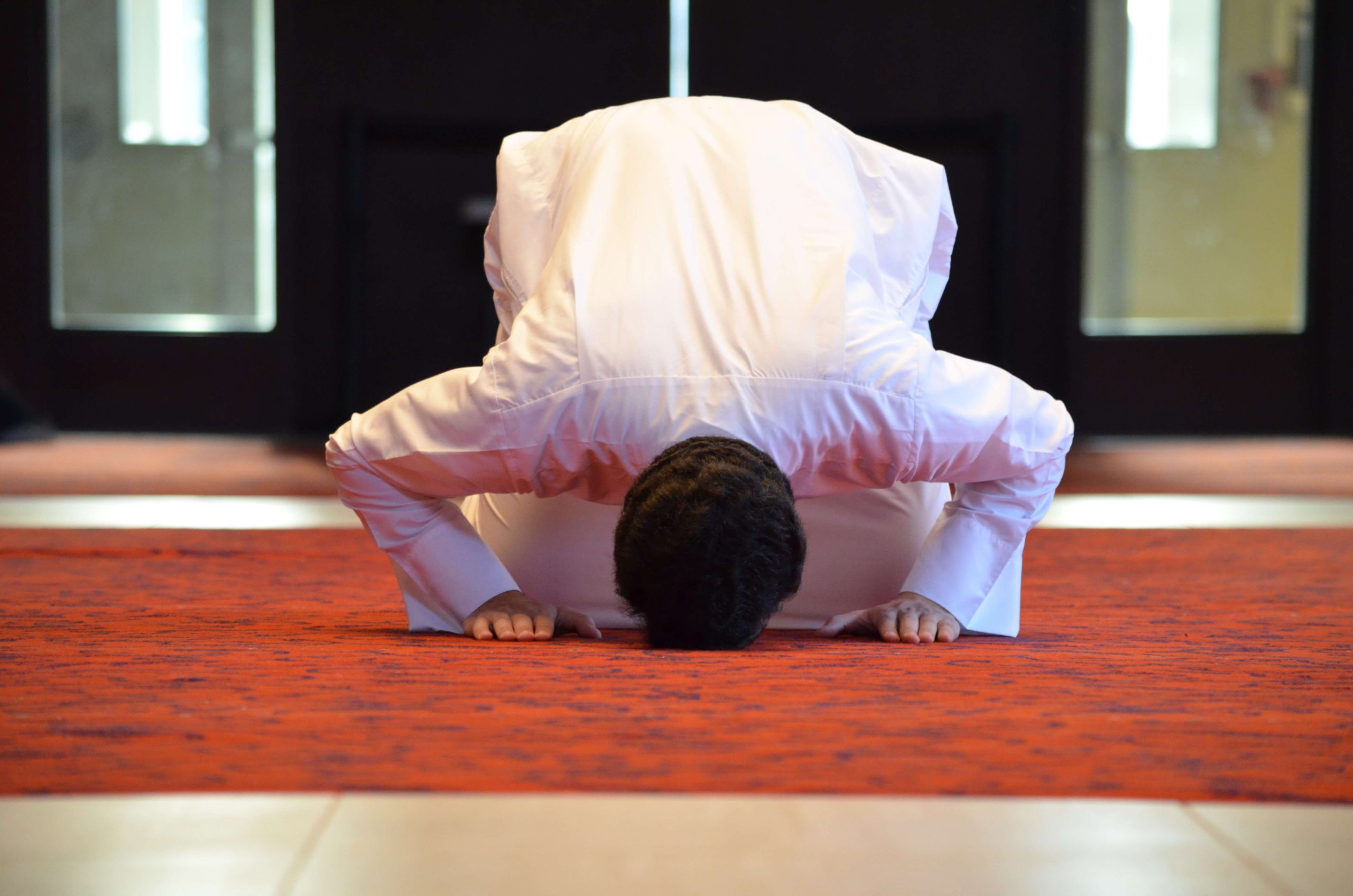
Have you stopped praying regularly, abandoned Quran recitation, become distant from Islamic activities or allowed worldly distractions to weaken your connection with Allah? Here is how to find your way back, rebuild your Iman and restore your relationship with your Creator.
There comes a time in the life of some Muslims when they begin to realise that their relationship with Allah is no longer what it used to be.
Perhaps there was a time when you never missed your five daily prayers. You regularly read the Quran, made Dua, attended Islamic lectures and found comfort in remembering Allah.
You were more conscious of your actions, more careful about your religious responsibilities and more interested in strengthening your relationship with your Creator.
But gradually, things began to change.
You started missing prayers. Quran recitation became less frequent. You stopped attending Islamic gatherings. Worldly responsibilities, entertainment, friendships, work and other distractions gradually took priority over your spiritual life.
Before you realised what was happening, the connection you once cherished had become weak.
Perhaps you still identify as a Muslim, but you no longer practise Islam with the consistency you once had.
You know that you should pray, but you keep postponing it. You know that you should read the Quran, but days sometimes turn into weeks without opening it. You want to make Dua, but you struggle to find the words.
Sometimes, you feel guilty. At other times, you become frustrated with yourself. You may even wonder whether Allah will accept you after such a long period of neglect.
If this describes your situation, there is something important you need to understand:
You have not run out of opportunities to return to Allah.
No matter how long you have been spiritually distant, you can begin rebuilding your relationship with Him today.
Islam does not teach that someone who has made mistakes should abandon hope. Rather, it encourages believers to repent, seek forgiveness and return to Allah.
The journey back may require patience, discipline and sincere effort, but it is a journey worth taking.
1. ACKNOWLEDGE THAT YOU HAVE BECOME SPIRITUALLY DISTANT
The first step towards rebuilding your relationship with Allah is recognising that something needs to change.
It is difficult to address a problem we refuse to acknowledge.
Some Muslims gradually become comfortable with neglecting their religious responsibilities. Missing prayers becomes normal. Quran recitation becomes something reserved for Ramadan. Islamic reminders are consumed occasionally but rarely translated into action.
Over time, a person may stop recognising how far they have drifted.
This is why honest self-reflection is important.
Ask yourself:
- When was the last time I prayed all five daily prayers consistently?
- How often do I read or reflect upon the Quran?
- Have I become comfortable committing sins that I previously avoided?
- Do I remember Allah throughout my day?
- Have I allowed worldly ambitions to take priority over my relationship with my Creator?
- Am I genuinely making an effort to become a better Muslim?
These questions are not meant to make you hate yourself. They are intended to help you recognise where you are spiritually.
You cannot begin a meaningful journey of improvement without acknowledging your current situation.
Do not make excuses for your neglect, but do not allow guilt to convince you that change is impossible.
Recognise your shortcomings, accept responsibility and make a sincere decision to return to Allah.
2. NEVER LOSE HOPE IN ALLAH’S MERCY
One of the biggest obstacles preventing people from returning to Allah is the belief that they have committed too many sins or stayed away for too long.
Some feel so ashamed of their past that they struggle to approach Allah again.
They remember the prayers they abandoned, the sins they committed and the opportunities they wasted.
They may even think they are no longer worthy of forgiveness.
But this is not the message Islam teaches.
Allah says in the Quran:
“Say, ‘O My servants who have transgressed against themselves [by sinning], do not despair of the mercy of Allah. Indeed, Allah forgives all sins. Indeed, it is He who is the Forgiving, the Merciful.'” (Qur’an 39:53).
Think carefully about this verse.
Allah is addressing people who have wronged themselves through sin. Rather than instructing them to abandon hope, He reminds them of His immense mercy.
This means that no matter how long you have been away, you should never convince yourself that returning to Allah is pointless.
Perhaps you have missed years of prayers. Perhaps you have committed sins you deeply regret. Perhaps you have neglected your religious responsibilities for a considerable period.
The solution is not to continue drifting away.
The solution is to turn back to Allah with sincere repentance.
Do not let your past become an excuse for abandoning your future.
3. MAKE SINCERE TAUBAH AND ASK ALLAH FOR FORGIVENESS
If you genuinely want to rebuild your relationship with Allah, begin with Taubah (repentance).
Taubah involves recognising your wrongdoing, feeling genuine remorse, seeking Allah’s forgiveness and making a sincere commitment to stop the sin.
Where another person’s rights have been violated, repentance also requires addressing those rights as appropriately as possible.
Allah loves those who turn to Him in repentance.
In Qur’an 2:222, Allah says:
“Indeed, Allah loves those who are constantly repentant and loves those who purify themselves.”
This is a powerful reminder that returning to Allah is not something to be embarrassed about.
You do not need to wait until you become a perfect Muslim before making Taubah.
You do not need to have everything figured out before asking Allah for forgiveness.
Find a quiet moment, acknowledge your shortcomings and sincerely ask Allah to forgive you.
You can say:
Astaghfirullah wa atubu ilayh.
Meaning: I seek forgiveness from Allah and repent to Him.
Make this a regular part of your daily routine.
If there are particular sins you are struggling with, make a conscious effort to avoid the situations, environments and influences that encourage them.
Remember that sincere repentance is not simply saying the words of forgiveness while deliberately planning to continue the same wrongdoing.
It involves a genuine desire to change.
And if you stumble again, do not surrender to despair. Renew your repentance and continue striving.
4. MAKE YOUR FIVE DAILY PRAYERS THE FOUNDATION OF YOUR RETURN
One of the most important steps towards rebuilding your relationship with Allah is restoring your Salah.
Prayer is not simply another religious activity. It is one of the central obligations of Islam and a direct expression of our submission to Allah.
When a Muslim consistently neglects Salah, an important part of their daily spiritual routine is affected.
The five daily prayers provide regular opportunities to remember Allah, seek His guidance, express gratitude and reconnect with Him.
If you have been neglecting your prayers, make restoring them your immediate priority.
Do not wait until you feel spiritually motivated.
Start by observing the next prayer.
Then make a sincere effort to maintain the remaining prayers.
Practical steps include:
- Set reminders for every prayer time.
- Arrange your daily activities around Salah rather than constantly postponing it.
- Keep your prayer clothes and mat accessible.
- Find a nearby mosque where possible.
- Encourage a family member or trusted friend to remind you.
- Learn the meanings of the words you recite during prayer.
- Avoid unnecessary activities that repeatedly cause you to miss prayer times.
If you have missed prayers over a long period, seek guidance from a knowledgeable scholar about how to address those missed obligations according to the Islamic school of thought you follow.
Most importantly, do not allow the number of prayers you have missed in the past to prevent you from observing the prayer that is due now.
Your return begins with the next Salah.
5. RECONNECT WITH THE QURAN, EVEN IF YOU HAVE NOT READ IT FOR YEARS
Another important step is rebuilding your relationship with the Quran.
For some Muslims, there was a time when reading the Quran was part of their everyday routine.
But as life became busier, recitation gradually became less frequent.
Eventually, they may go weeks or months without opening the Quran.
If this describes you, start again.
You do not need to begin by reading several chapters every day.
Start with a manageable amount.
Read a few verses after Fajr. Alternatively, dedicate ten minutes before sleeping to Quran recitation.
If you struggle with Arabic, use a reliable translation alongside your recitation so that you can understand what Allah is teaching you.
Try to reflect on the meaning rather than simply rushing through the pages.
The objective is to develop a consistent relationship with the Quran.
Allah describes the Quran as guidance for humanity (Qur’an 2:185).
It contains reminders, lessons, instructions and guidance that can help us navigate different aspects of life.
Make an effort to read it regularly, understand its message and apply its teachings.
A few sincere minutes every day can help you rebuild a habit that has been neglected for years.
6. IDENTIFY THE DISTRACTIONS THAT HAVE WEAKENED YOUR RELATIONSHIP WITH ALLAH
Sometimes, spiritual neglect does not happen suddenly.
It develops through repeated habits and choices.
Perhaps you spend several hours scrolling through social media but struggle to dedicate ten minutes to Quran recitation.
Perhaps entertainment, unnecessary conversations and social activities consume most of your free time.
Maybe certain friendships encourage behaviour that makes it difficult to maintain your religious responsibilities.
You may also be so occupied with pursuing financial success that worship gradually becomes secondary.
This is why rebuilding your relationship with Allah requires an honest examination of your lifestyle.
Ask yourself what has contributed to your spiritual decline.
Is it excessive social media consumption?
Is it spending time with people who discourage religious commitment?
Is it an unhealthy relationship?
Is it the pursuit of wealth and material possessions?
Is it a lack of discipline and poor time management?
Once you identify these influences, begin making changes.
You do not necessarily need to abandon every form of entertainment or withdraw from society.
Rather, you need to establish boundaries that protect your religious commitments.
Reduce activities that consistently take you away from Allah.
Be intentional about the people you associate with, the content you consume and the habits you develop.
Your environment can either support your spiritual growth or make it more difficult.
7. SURROUND YOURSELF WITH PEOPLE WHO REMIND YOU OF ALLAH
The people we spend time with can significantly influence our behaviour, priorities and outlook on life.
If most of your social interactions revolve around gossip, materialism, inappropriate entertainment and activities that encourage disobedience to Allah, maintaining strong religious habits may become more difficult.
On the other hand, spending time with people who value Salah, Quran recitation, good character and Islamic knowledge can encourage positive changes.
The Prophet Muhammad (peace and blessings be upon him) explained the influence of good and bad companionship through the example of a perfume seller and a blacksmith.
The companion who sells perfume may give you some perfume, allow you to purchase it or at least leave you with a pleasant fragrance. The blacksmith, by contrast, may expose you to unpleasant smoke or burn your clothing. (Sahih al-Bukhari and Sahih Muslim).
The lesson is that companionship has an influence on us.
Consider reconnecting with friends who encourage you to become a better Muslim.
Attend Islamic lectures, join beneficial study circles and participate in activities organised by your local mosque.
If you have been away from Islamic gatherings for a long time, do not feel embarrassed about returning.
You do not have to explain your entire spiritual journey to everyone.
Simply begin again.
8. MAKE DUA EVEN WHEN YOU DO NOT KNOW WHAT TO SAY
One of the most beautiful ways to rebuild your relationship with Allah is through Dua.
Sometimes, people who have become spiritually distant struggle to know how to approach Allah.
They may feel ashamed or believe that their prayers will not be accepted because of their past behaviour.
But Dua is not reserved for people who consider themselves spiritually perfect.
It is an opportunity for every believer to call upon Allah, seek guidance, express their needs and ask for forgiveness.
Speak to Allah about your struggles.
Ask Him to strengthen your Iman.
Ask Him to help you maintain your prayers.
Ask Him to protect you from sins that have become difficult to abandon.
Ask Him to make obedience easier and disobedience difficult.
One beautiful supplication taught by the Prophet Muhammad (peace and blessings be upon him) is:
Ya Muqallibal-qulub, thabbit qalbi ‘ala dinik.
Meaning: O Turner of the hearts, keep my heart firm upon Your religion. (Jami’ at-Tirmidhi 2140).
Make this Dua regularly.
You can also ask Allah in your own words, in any language you understand.
Never underestimate the importance of consistently asking Allah for guidance.
9. DO NOT WAIT UNTIL YOU FEEL SPIRITUALLY MOTIVATED
A common mistake people make when trying to rebuild their relationship with Allah is waiting for the perfect spiritual feeling before taking action.
They tell themselves:
“I will start praying regularly when I feel closer to Allah.”
“I will read the Quran when I become more religious.”
“I will stop committing this sin when my Iman becomes stronger.”
“I will attend Islamic lectures when I feel motivated.”
But spiritual improvement does not always begin with motivation.
Sometimes, it begins with discipline.
You may not feel particularly enthusiastic about waking up for Fajr, but you should still make the effort.
You may not immediately experience the emotional connection you once felt during Salah, but you should continue praying.
You may struggle to concentrate when reading the Quran, but you should continue trying.
Do not measure the value of your worship exclusively by how emotional or spiritually uplifted you feel afterwards.
Consistency matters.
As recorded in Sahih al-Bukhari and Sahih Muslim, the Prophet Muhammad (peace and blessings be upon him) taught that the deeds most beloved to Allah are those done consistently, even if they are small.
Start with achievable habits and build upon them.
10. MAKE YOUR REPENTANCE VISIBLE THROUGH CHANGES IN YOUR CHARACTER
Rebuilding your relationship with Allah should not be limited to personal acts of worship.
It should also influence how you treat other people.
Are you becoming more patient?
Are you more honest in your dealings?
Are you treating your parents with respect?
Are you becoming more considerate towards your spouse, children, relatives and neighbours?
Are you becoming more careful about gossip, backbiting, dishonesty and hurting people’s feelings?
Islam teaches that good character is an important part of religious commitment.
A person should not become more regular in prayer while continuing to deliberately mistreat others.
If you have hurt someone, make an effort to put things right where possible.
If you have taken someone’s property unjustly, return it.
If you have spread false information about someone, correct the wrongdoing as appropriately as you can.
If you have been neglecting your family responsibilities, make a conscious effort to improve.
Your relationship with Allah should encourage you to become a better human being.
11. DEVELOP A DAILY ROUTINE THAT PROTECTS YOUR IMAN
One reason people struggle to maintain religious consistency is that they have no structured routine for spiritual development.
They depend entirely on how they feel each day.
A better approach is to create a realistic routine that accommodates worship alongside work, education, family responsibilities and other legitimate activities.
For example:
After Fajr:
- Observe Fajr prayer.
- Read a few verses of the Quran.
- Engage in morning Adhkar.
- Make Dua for guidance and protection.
During the day:
- Observe Dhuhr and Asr on time.
- Avoid unnecessary gossip and harmful conversations.
- Remember Allah through Dhikr.
- Be conscious of your behaviour and interactions.
After Maghrib:
- Read or listen to a short Islamic lesson.
- Spend time with family.
- Reflect on what you have learned.
Before sleeping:
- Observe Isha.
- Make Istighfar.
- Reflect on your actions throughout the day.
- Ask Allah for forgiveness and guidance.
This is simply an example. Your routine can be adjusted to your circumstances.
The important thing is to establish consistent habits that help you remain conscious of Allah throughout the day.
12. BE PATIENT WITH YOUR SPIRITUAL RECOVERY
If you have neglected your relationship with Allah for several years, do not expect every aspect of your spiritual life to transform overnight.
You may experience periods of enthusiasm followed by moments of weakness.
Some days, you may find it easier to observe your religious obligations. On other days, you may struggle with concentration, motivation or consistency.
What matters is that you do not surrender.
Spiritual growth is a journey that requires continuous effort.
When you make a mistake, repent.
When you miss an opportunity, try again.
When you feel spiritually weak, ask Allah for strength.
When you experience progress, thank Him.
Do not allow one bad day to destroy the progress you have made over several weeks.
And never compare your spiritual journey with someone else’s.
Your responsibility is to make sincere efforts to improve your own relationship with Allah.
13. REMEMBER THAT THIS WORLD SHOULD NOT BECOME YOUR ULTIMATE PRIORITY
Sometimes, people become so occupied with worldly ambitions that their relationship with Allah gradually deteriorates.
They spend their time pursuing money, professional recognition, business opportunities, academic achievements and social status.
There is nothing inherently wrong with pursuing these things through permissible means.
Islam encourages productivity, lawful earnings and responsible participation in society.
However, worldly ambitions should not make us forget the purpose of our existence.
Allah says:
“And I did not create the jinn and mankind except to worship Me.” (Qur’an 51:56).
This verse reminds us of the importance of worship in our lives.
Our education, careers, businesses and family responsibilities should be pursued within a framework of obedience to Allah.
Do not become so occupied with building a comfortable life in this world that you neglect preparing for the Hereafter.
Financial success is important, but it should not replace your spiritual responsibilities.
Career advancement is valuable, but it should not become more important than your relationship with your Creator.
Learn to balance your worldly responsibilities with your obligations to Allah.
14. NEVER THINK YOU HAVE BECOME TOO SINFUL TO RETURN TO ALLAH
Perhaps the most important message for anyone reading this article is that you should never allow shame to become a permanent barrier between you and Allah.
Some people have committed sins they deeply regret.
Others have spent years neglecting their religious obligations.
Some may feel that their spiritual condition is beyond repair.
But Allah’s mercy should never be underestimated.
The Prophet Muhammad (peace and blessings be upon him) narrated that Allah is more pleased with the repentance of His servant than a person who finds their lost camel in a desert after losing hope of recovering it. (Sahih Muslim 2747).
Think about that example.
A person who had almost lost everything suddenly discovers that what they desperately needed has been restored.
The Hadith illustrates the immense joy associated with sincere repentance.
If you are reading this and genuinely want to return to Allah, do not postpone it.
You do not need to wait for Ramadan.
You do not need to wait until Friday.
You do not need to wait until you become older or your circumstances improve.
You can begin today.
Allah’s door of repentance is open.
A PRACTICAL 30-DAY PLAN TO REBUILD YOUR RELATIONSHIP WITH ALLAH
If you genuinely want to make a change, here is a simple plan you can use to begin rebuilding your spiritual routine.
Week 1: Return to the foundations
- Make sincere Taubah.
- Establish your five daily prayers.
- Set reminders for prayer times.
- Begin daily Istighfar.
- Make Dua for guidance and consistency.
Week 2: Reconnect with the Quran
- Read the Quran every day, even if only a few verses.
- Read the translation.
- Reflect on what you have read.
- Learn one short Surah or supplication.
- Make time for morning and evening Adhkar.
Week 3: Improve your environment
- Identify habits that weaken your Iman.
- Reduce unnecessary social media consumption.
- Distance yourself from harmful influences.
- Attend an Islamic lecture or study circle.
- Reconnect with friends who encourage goodness.
Week 4: Strengthen consistency
- Review your daily worship routine.
- Improve your understanding of Salah.
- Work on your character and relationships.
- Give charity according to your ability.
- Continue learning about Islam.
- Reflect on your progress and identify areas requiring further improvement.
This plan is a starting point, not a replacement for your religious obligations or a guarantee of spiritual transformation within 30 days.
Do not treat it as a competition.
The objective is to develop habits that continue long after the 30 days have ended.
CONCLUSION: IT IS NEVER TOO LATE TO FIND YOUR WAY BACK TO ALLAH
Perhaps you have spent months or years neglecting your prayers.
Perhaps the Quran has remained unopened for a long time.
Perhaps you have become so occupied with worldly responsibilities that you rarely remember Allah.
Maybe you have committed sins that continue to trouble your conscience.
Whatever your situation, do not allow your past to convince you that your future cannot be different.
Allah invites His servants to repent, seek forgiveness and return to Him.
The journey back begins with a sincere decision.
Start praying again.
Open the Quran.
Make Dua.
Seek forgiveness.
Surround yourself with people who encourage righteousness.
Make changes to the habits that have weakened your relationship with Allah.
And when you stumble, do not give up.
Remember that you do not have to become perfect before returning to Allah. You return to Allah because you need His guidance, mercy and forgiveness.
Do not wait until you feel worthy of returning to Allah. Return to Him because you need Him.
The prayers you begin observing today may become the foundation of a stronger spiritual life. The Quran you open today may become a source of guidance you have been missing. The sincere Dua you make today may mark the beginning of a new chapter in your relationship with your Creator.
Your past may explain how you became distant, but it does not have to determine how you live from today onwards.
May Allah forgive our shortcomings, strengthen our Iman, soften our hearts, make us consistent in our worship and grant us the opportunity to live and die as sincere believers. Ameen.
