


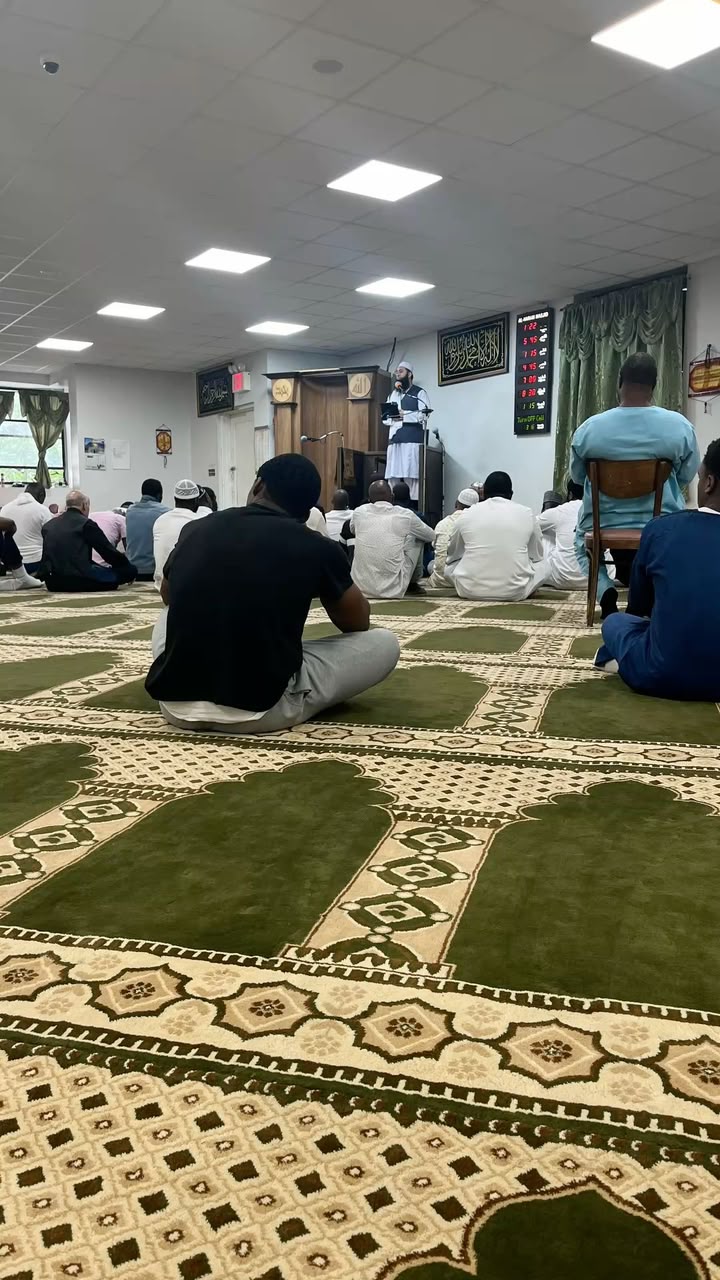
Friday comes every week, and for many Muslims, Jumuʿah is one of the most important gatherings of the week. But sometimes, despite our intentions, we arrive late.
Traffic may delay us. Work may take longer than expected. We may leave home too late. We may struggle to find transport or simply misjudge the time.
Then we enter the mosque and discover that the khutbah has already started, or perhaps the imam is already leading the prayer.
At that moment, an important question arises: what should you do?
Knowing the basic rulings concerning arriving late for Jumuʿah can prevent confusion and help a Muslim handle the situation correctly and calmly.
THE FIRST THING TO UNDERSTAND: DO NOT PANIC
If you arrive late, do not allow embarrassment or panic to make you behave carelessly.
Enter the mosque calmly and respectfully.
The Prophet Muhammad ﷺ instructed those coming to the prayer not to rush. He said:
“When you hear the call to prayer, walk to it with tranquility and dignity.”
This applies to arriving at the mosque for prayer. Even if you know that the imam has already started, do not run through the mosque or disturb the congregation simply because you are late.
Come with calmness and join whatever part of the prayer you are able to catch.
IF THE KHUTBAH HAS STARTED
Suppose you arrive at the mosque while the imam is delivering the khutbah.
You should enter quietly and sit down to listen.
The khutbah is not a time for conversations, greetings with people around you or unnecessary activity.
The Prophet ﷺ emphasized the importance of remaining silent while the imam is delivering the khutbah. Even telling another person to be quiet was described as idle speech.
This means that arriving late does not give a person permission to disturb the congregation.
Find a place, sit down and listen.
But there is another issue.
WHAT IF YOU ARRIVE DURING THE KHUTBAH AND THERE IS STILL SPACE IN FRONT?
The general principle is that you should not push your way through people or disturb those already sitting.
If there is a reasonable open space that you can reach without causing disruption, you may move into it appropriately. But if getting there requires stepping over people, squeezing through tightly packed rows or disturbing worshippers, it is better to sit where you are.
Jumuʿah is about worship, and worship should be accompanied by good manners.
WHAT IF THE IMAM HAS ALREADY STARTED THE PRAYER?
This is where the ruling becomes particularly important.
If you enter while the imam is praying Jumuʿah, join him immediately in whatever position you find him.
Do not stand at the back waiting for the next rakʿah.
If he is standing, join him standing.
If he is in rukūʿ, join him in rukūʿ.
If he is in sujūd, join him in sujūd.
The Prophet ﷺ said:
“Whatever you catch, pray, and whatever you miss, complete.”
This principle is important for congregational prayer.
But with Jumuʿah, there is an additional question: how much of the prayer must you catch for it to count as Jumuʿah?
CATCHING ONE RAKʿAH OF JUMUʿAH
The well-known position of the majority of scholars is that if a person catches one complete rakʿah of Jumuʿah with the imam, then he has caught Jumuʿah.
The key point is catching the rukūʿ of the second rakʿah before the imam rises from it.
If you enter while the imam is performing the rukūʿ of the second rakʿah and you join the rukūʿ with him properly, then you have caught the second rakʿah.
When the imam finishes the prayer with salam, you stand and complete one additional rakʿah.
Your Jumuʿah is therefore completed as two rakʿahs.
This is based on the hadith of Abu Hurayrah رضي الله عنه in which the Prophet ﷺ said:
“Whoever catches one rakʿah of the prayer has caught the prayer.”
The narration is recorded in Sahih al-Bukhari and Sahih Muslim.
This is one of the most important rulings to understand if you regularly find yourself arriving late.
WHAT IF YOU ARRIVE AFTER THE IMAM HAS RISEN FROM RUKŪʿ?
Suppose you enter during the second rakʿah, but the imam has already risen from rukūʿ.
You join the congregation, but you did not catch the rukūʿ of that rakʿah.
In this situation, according to the majority position, you have not caught a rakʿah of Jumuʿah.
After the imam completes the prayer, you should pray Dhuhr as four rakʿahs rather than attempting to complete Jumuʿah as two.
This distinction is important because catching the congregation is not automatically the same as catching a rakʿah of Jumuʿah.
THE IMPORTANCE OF THE RUKŪʿ
Why is the rukūʿ so important?
Because the Prophet ﷺ said:
“Whoever catches one rakʿah of the prayer has caught the prayer.”
The scholars therefore discuss whether the person joined the imam in the rukūʿ of the relevant rakʿah.
Simply joining the imam while he is in sujūd does not mean that you caught that rakʿah.
For example, imagine you enter the mosque and the imam is already in the final sujūd of the second rakʿah.
You join the imam and perform that sujūd with him.
When the imam finishes the prayer, you cannot simply stand and pray one more rakʿah and consider it Jumuʿah.
You did not catch a rakʿah.
In that situation, you pray Dhuhr.
WHAT IF YOU ARRIVE DURING THE FIRST RAKʿAH?
If you arrive while the imam is still in the first rakʿah and you join him properly, then you have caught Jumuʿah.
You continue praying with the imam.
When he completes the prayer, you have completed your two rakʿahs.
The same applies if you join him during the rukūʿ of the first rakʿah and successfully catch the rukūʿ with him.
WHAT IF THE IMAM IS IN THE SECOND RAKʿAH?
If the imam is in the second rakʿah, the situation depends on whether you catch the rukūʿ.
If you catch the rukūʿ of the second rakʿah, you have caught Jumuʿah according to the majority position. After the imam says salam, you stand and complete one rakʿah.
If you arrive after the imam has already risen from rukūʿ, then you have not caught a rakʿah of Jumuʿah. After the imam finishes, you pray Dhuhr.
This is why someone who arrives late should not simply assume that being physically present before the imam says salam means they have caught Jumuʿah.
WHAT IF YOU ARRIVE AFTER THE PRAYER HAS FINISHED?
If you arrive after the imam has completed the Jumuʿah prayer, you cannot pray Jumuʿah by yourself.
Jumuʿah is a congregational prayer.
If you missed it, you pray Dhuhr.
This is an important distinction because Jumuʿah is not simply Dhuhr reduced from four rakʿahs to two. It has its own conditions and structure.
So if you arrive at the mosque and find that the Jumuʿah prayer has already ended, pray four rakʿahs of Dhuhr.
WHAT IF YOU ARRIVE FOR THE KHUTBAH BUT MISS THE PRAYER?
If you arrive while the khutbah is taking place but, for some reason, fail to catch the actual prayer, you have missed Jumuʿah.
Listening to the khutbah alone does not mean that you have performed Jumuʿah.
In that situation, you pray Dhuhr.
This is another reason why Muslims should make every effort to arrive on time rather than deliberately cutting things close.
DO NOT MAKE A HABIT OF ARRIVING AT THE LAST MINUTE
Islam provides rulings for latecomers because people sometimes genuinely encounter difficulties.
But having a ruling for arriving late does not mean arriving late should become normal.
The better approach is to prepare for Jumuʿah early.
Friday is supposed to be approached with preparation.
Perform ghusl.
Clean yourself.
Wear suitable clothing.
Leave enough time for the journey.
Account for traffic.
Arrive at the mosque early enough to settle down and listen to the khutbah without rushing.
This is especially important in busy cities where traffic can turn a short journey into a long one.
A person who knows that the journey usually takes thirty minutes should not leave home ten minutes before Jumuʿah begins and then blame traffic for missing the prayer.
Preparation is part of taking worship seriously.
WHAT IF YOU ARE LATE BECAUSE OF WORK?
This is a situation many Muslims face.
Work is important, and earning a halal livelihood is something Islam encourages. But when Jumuʿah becomes obligatory upon a person, worldly business should not be allowed to permanently take priority over it.
Allah says:
“O you who believe! When the call is proclaimed for the prayer on Friday, then hasten to the remembrance of Allah and leave off business.”
(Qur’an 62:9)
The verse specifically mentions business because worldly activity can become a distraction from obedience.
Muslims who work on Fridays should therefore make reasonable arrangements to attend Jumuʿah when it is obligatory upon them.
Employers and employees can plan around the prayer where possible.
The goal should be to fulfil both responsibilities without neglecting an obligation to Allah.
WHAT IF YOU ARE GENUINELY UNABLE TO ATTEND?
Islam does not ignore genuine hardship.
There are circumstances in which a person is excused from Jumuʿah, including illness and other legitimate reasons recognized in Islamic law.
A traveller also has different rulings concerning Jumuʿah.
In such cases, the person prays Dhuhr instead.
This is important because Islam is a religion of obligation and mercy. We should neither take Jumuʿah lightly when it is obligatory nor burden people with what Allah has not required from them.
WHEN YOU ARE LATE, JOIN THE IMAM WHEREVER HE IS
One common mistake is standing at the back and waiting for the next rakʿah.
Do not do this.
If the imam is already praying, join him.
The Prophet ﷺ instructed Muslims to pray whatever they catch with the imam and complete what they missed.
You should therefore enter the prayer rather than waiting unnecessarily.
If you catch the required portion of Jumuʿah, complete your prayer accordingly.
If you do not catch a rakʿah of Jumuʿah, then complete the prayer as Dhuhr.
WHEN IN DOUBT, ASK A QUALIFIED SCHOLAR
The basic principles are straightforward, but individual situations can become complicated.
What if you joined the imam in rukūʿ but are unsure whether you actually caught it?
What if you arrived during the final sitting?
What if you missed part of the prayer because of another circumstance?
What if you are following a particular madhhab with a different detailed ruling?
These are situations where it is better to ask a qualified local scholar rather than make a ruling based on guesswork.
Fiqh contains detailed discussions about Jumuʿah, and Muslims should respect the legitimate differences that exist among qualified scholars.
THE BEST SOLUTION IS STILL TO ARRIVE ON TIME
Islam gives us guidance for what to do when we arrive late, but the better solution is not to put ourselves in that situation unnecessarily.
Jumuʿah should be something we prepare for.
It should not be squeezed between errands.
It should not be treated as something we attend only if there is nothing else to do.
It should not be something we rush into at the final minute every week.
Friday is a weekly appointment with Allah.
Make it a priority.
Leave early.
Prepare yourself.
Arrive before the khutbah.
Find your place.
Listen attentively.
Pray with the congregation.
And leave the mosque with the intention of carrying the reminder into the rest of your week.
If you do arrive late, however, do not panic. Enter calmly, join the imam immediately and follow the appropriate ruling based on what part of the prayer you caught.
The important thing is to know what to do rather than allowing confusion to cause you to miss even more of the prayer.
Jumuʿah comes every week, but every Friday is another opportunity to worship Allah, listen to His reminders, strengthen your connection with the Muslim community and renew your commitment to obedience.
May Allah help us to honour Jumuʿah, arrive on time, listen attentively to the khutbah, pray correctly and never allow our worldly responsibilities to make us careless about our obligations to Him.
Ameen.
3SixtyIslam — your trusted partner for Hajj and Umrah travel. For reliable packages, proper guidance and full support throughout your sacred journey, DM @3SixtyIslam.
