


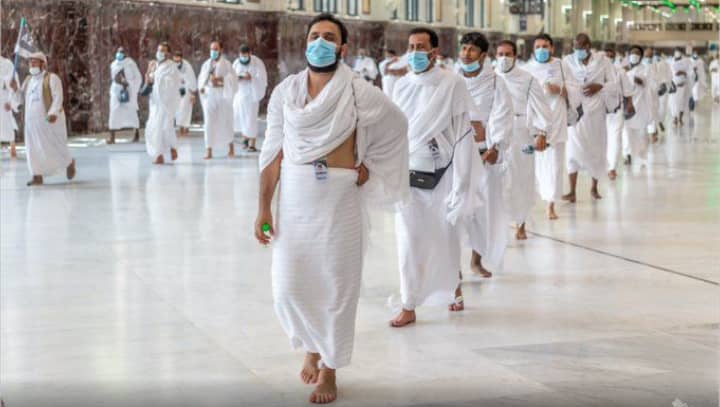
Hajj can seem overwhelming at first, especially with the number of rituals involved. But in reality, when broken down properly, it is simple and structured. This guide explains the rites of Hajj in the clearest way so you can perform them with confidence and ease.
At its core, Hajj revolves around a few key actions performed over specific days. Once you understand the sequence, everything becomes manageable.
THE FOUNDATION OF HAJJ
There are four main pillars you must complete for your Hajj to be valid:
Ihram
Standing at Arafah
Tawaf al-Ifadah
Sa’i between Safa and Marwah
Everything else supports these core acts.
IHRAM: THE STATE OF DEVOTION
Ihram is not just clothing. It is a sacred state you enter before reaching Makkah.
You make your intention for Hajj and begin reciting the Talbiyah. From that moment, certain actions become prohibited, such as cutting hair, using perfume, or engaging in marital relations.
Ihram teaches discipline, humility, and focus.
MINA: THE STARTING POINT
On the 8th of Dhul Hijjah, you go to Mina.
This day is mainly for preparation. You pray, rest, and mentally prepare for the most important day ahead. There are no major rituals here besides the prayers.
ARAFah: THE HEART OF HAJJ
On the 9th of Dhul Hijjah, you move to Arafah.
This is the most important part of Hajj. Missing Arafah means missing Hajj.
You stand, sit, or raise your hands in du’a from noon until sunset, asking Allah for forgiveness, mercy, and guidance.
This moment is the peak of your entire journey.
MUZDALIFAH: SIMPLICITY AND REFLECTION
After sunset, you travel to Muzdalifah.
Here, you pray Maghrib and Isha, rest under the open sky, and collect pebbles for the next rites.
This night reminds you of simplicity and reliance on Allah.
THE DAY OF SACRIFICE (10TH DHUL HIJJAH)
This day includes several important actions:
First, you stone the largest pillar (Jamrah al-Aqabah) using seven pebbles.
Then, you perform the animal sacrifice.
After that, men shave or trim their hair, while women cut a small portion.
Next, you go to Makkah to perform Tawaf al-Ifadah and Sa’i.
After completing these, most restrictions of Ihram are lifted.
DAYS OF TASHREEQ: CONTINUING THE RITUALS
On the 11th, 12th, and optionally the 13th of Dhul Hijjah, you stay in Mina.
Each day, you stone three pillars:
The small Jamrah
The middle Jamrah
The large Jamrah
Each with seven pebbles.
These days are also for remembering Allah, making dhikr, and reflecting on your journey.
FAREWELL TAWAF
Before leaving Makkah, you perform Tawaf al-Wada.
This is your final goodbye to the Kaaba and your last act of Hajj.
No Sa’i is required after this Tawaf.
WHY THESE RITUALS MATTER
Every action in Hajj has deep meaning.
Ihram teaches equality and humility.
Arafah represents the Day of Judgment.
Stoning the Jamarat symbolizes rejecting Shaytan.
Sacrifice reminds us of the obedience of Prophet Ibrahim.
Hajj is not just physical movement, it is spiritual transformation.
FINAL WORD
Do not let the number of rituals intimidate you. Millions perform Hajj every year, and with the right understanding, you can too.
Take it step by step. Stay calm. Keep your heart connected to Allah.
A simple, sincere Hajj is better than a perfect one done without presence of heart.
May Allah make your Hajj easy, accept it from you, and return you purified from sins. Ameen.
