


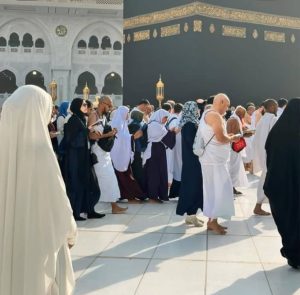
Tawaf is one of the most moving acts of Umrah. It places the believer in direct physical devotion around the House built for the worship of Allah alone. Every step, every supplication, every glance at the Kaaba carries meaning. When done with understanding, Tawaf becomes more than a ritual it becomes a conversation between the heart and its Creator.
Here is a clear, step-by-step guide to performing Tawaf correctly and calmly.
You begin Tawaf after entering Masjid al-Haram in a state of ihram. Before starting, ensure your intention is firm in your heart that you are performing Tawaf for Umrah, seeking closeness to Allah. Intention does not need to be spoken aloud.
Stand facing the Black Stone (Hajar al-Aswad). This is your starting point. If possible, touch or kiss it gently. If the area is crowded, simply raise your right hand towards it and say “Bismillah, Allahu Akbar,” then begin.
You will walk around the Kaaba seven times, keeping the Kaaba on your left side at all times. Each complete circle counts as one round. The first three rounds are traditionally done at a slightly brisk pace for men (known as raml), while women walk normally throughout.
There is no fixed du‘a that must be recited during Tawaf. This is a mercy. You may recite Qur’an, make personal supplications, seek forgiveness, or remain silent in reflection. Between the Yemeni Corner and the Black Stone, it is Sunnah to say:
“Rabbana atina fid-dunya hasanah wa fil-akhirati hasanah wa qina ‘adhab an-nar.”
As you complete each round and reach the Black Stone again, that marks the end of one circuit. Continue until all seven are completed.
After finishing Tawaf, cover both shoulders if you had uncovered the right one. Then proceed to pray two rak‘ahs behind Maqam Ibrahim, if possible. If the area is crowded, pray anywhere within the mosque. In these rak‘ahs, it is recommended to recite Surah Al-Kafirun in the first and Surah Al-Ikhlas in the second, though any portion of the Qur’an is acceptable.
After prayer, drink Zamzam water, facing the Kaaba, making du‘a with gratitude and hope. Zamzam is not just water—it is a response to trust in Allah.
Throughout Tawaf, maintain humility and patience. Crowds, movement, and heat are part of the test. Every moment of restraint is rewarded. Tawaf teaches the soul that life, like worship, revolves around obedience to Allah.
Performed with sincerity, Tawaf washes the heart before the journey continues to Sa‘i and beyond. It is a reminder that no matter where we come from, we all circle the same center.
May Allah accept every step, every whisper, and every tear shed around His Sacred House.
