


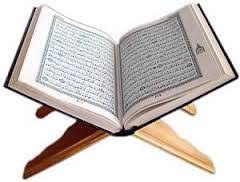
Have you ever wondered how the Qur’an, the Book recited by millions of Muslims around the world, first came to be revealed?
Today, Muslims open the Qur’an to seek guidance, recite it in their daily prayers, memorise its verses, and find comfort in its message. But the Qur’an did not descend all at once. Its revelation began with a remarkable encounter between Prophet Muhammad ﷺ and the Angel Jibreel (Gabriel), in a cave near Makkah.
It was an event that marked the beginning of his prophethood and the start of a revelation that would guide humanity for generations to come.
The story of the first revelation is more than an account of an event in Islamic history. It introduces us to the importance of seeking knowledge, the responsibility of prophethood, the comfort of family support, and the profound mercy of Allah in guiding His creation.
So, how did it all begin?
1. LIFE IN MAKKAH BEFORE THE FIRST REVELATION
Before the first revelation, Makkah was an important religious and commercial centre in the Arabian Peninsula. The Kaaba stood at its heart, but many of the people had turned to the worship of idols.
Prophet Muhammad ﷺ was born in Makkah around 570 CE. He was known among his people for his honesty and trustworthy character, earning the titles As-Sadiq (the Truthful) and Al-Amin (the Trustworthy).
As he approached the age of forty, he increasingly sought solitude. He would withdraw from the activities of Makkah to spend time in worship and reflection.
According to the narration of Aisha (may Allah be pleased with her), the beginning of revelation was preceded by truthful dreams. Whatever the Prophet ﷺ saw in his dreams would come to pass as clearly as the break of dawn.
He then developed a love for seclusion and would retreat to the Cave of Hira, taking provisions with him and returning to his family when he needed more.
This account is recorded in Sahih al-Bukhari, Hadith 3, in the Book of Revelation.
2. THE CAVE OF HIRA: WHERE THE REVELATION BEGAN
The Cave of Hira is located on Jabal an-Nur, the Mountain of Light, near Makkah.
It was in this cave that Prophet Muhammad ﷺ was engaged in worship when an extraordinary event took place.
The Angel Jibreel appeared to him and commanded him:
“Read!”
The Prophet ﷺ replied that he could not read.
The angel then embraced or pressed him firmly and repeated the command. The Prophet ﷺ gave the same response. This happened three times.
Then the angel delivered the opening verses of Surah Al-Alaq.
Allah says:
“Read in the name of your Lord who created — created man from a clinging substance. Read, and your Lord is the most Generous — Who taught by the pen — taught man that which he knew not.”
— Qur’an 96:1–5
These five verses are recognised as the first verses of the Qur’an revealed to Prophet Muhammad ﷺ.
Imagine the significance of that moment. The final revelation from Allah to humanity had begun, and its opening command was to read or recite in the name of the Creator.
The first revelation established that knowledge, creation, and the recognition of Allah are deeply connected.
The experience was overwhelming for the Prophet ﷺ. He had encountered something entirely beyond an ordinary human experience, and he returned home deeply shaken.
3. WHY DID ALLAH BEGIN THE REVELATION WITH “READ”?
One remarkable feature of the first revelation is its opening command: Iqra — commonly translated as “Read” or “Recite.”
Why would the revelation begin this way?
The opening verses direct attention to Allah as the Creator, the One who created humanity and taught human beings what they did not know.
They also mention the pen, an instrument associated with writing, learning, and the preservation of knowledge.
These verses remind Muslims that knowledge is a blessing from Allah and that learning should begin with recognition of Him.
Islam encourages the pursuit of beneficial knowledge, reflection on creation, and an understanding of the guidance Allah has revealed.
The command is especially significant because the Prophet ﷺ replied that he could not read. Nevertheless, Allah chose him to receive and convey the Qur’an.
The message did not depend on worldly status, wealth, or conventional education. It came through Allah’s revelation and was entrusted to His Messenger ﷺ.
The opening of Surah Al-Alaq therefore invites us to reflect on the source of our knowledge and the importance of using what we learn in ways that are beneficial and pleasing to Allah.
4. KHADIJAH: THE WOMAN WHO COMFORTED THE PROPHET ﷺ
After the encounter in the cave, Prophet Muhammad ﷺ returned home and asked to be covered, saying that he feared for himself.
This was a deeply human moment in the story of revelation. The Prophet ﷺ had experienced something extraordinary, and he sought comfort and reassurance from his wife, Khadijah bint Khuwaylid (may Allah be pleased with her).
Rather than dismissing his fear or making him feel ashamed, Khadijah comforted him.
She reminded him of his good character and the ways he cared for others. She pointed out that Allah would not disgrace a person who maintained family ties, helped the poor and needy, honoured guests, and supported people facing hardship.
Her response is a beautiful example of compassion and emotional support.
Khadijah did not respond to his fear with harshness. She reassured him by recalling the goodness she had witnessed in him throughout their life together.
She later accompanied him to her relative Waraqah ibn Nawfal, who had knowledge of earlier scriptures. After hearing the account, Waraqah identified the visitor as the angel who had come to Musa (Moses), peace be upon him, and expressed his belief that Muhammad ﷺ had received the same kind of divine messenger.
This account is narrated in Sahih al-Bukhari, Hadith 3.
Khadijah’s role in this moment remains an important part of the story of early Islam. Her support reminds us of the value of kindness, reassurance, and standing beside loved ones during frightening or uncertain experiences.
5. WHO WAS THE ANGEL JIBREEL?
Jibreel, known as Gabriel in English, is one of the great angels in Islamic belief.
He was entrusted with delivering Allah’s revelations to His chosen messengers. His appearance in the Cave of Hira marked the beginning of his role in conveying the Qur’an to Prophet Muhammad ﷺ.
The Qur’an describes Jibreel as the one who brought the revelation down by Allah’s permission.
Allah says:
“Say, ‘Whoever is an enemy to Gabriel — it is [none but] he who has brought it [the Qur’an] down upon your heart, [O Muhammad], by permission of Allah…'”
— Qur’an 2:97
Jibreel’s role was not limited to the first revelation. He continued to bring portions of the Qur’an to the Prophet ﷺ over the course of his prophethood.
Through this process, the Qur’an was revealed gradually rather than all at once.
This allowed its message to guide the Muslim community as it developed, addressing matters of faith, worship, character, family life, justice, and social responsibility.
6. HOW THE REVELATION CONTINUED AFTER THE FIRST ENCOUNTER
The first revelation did not mean that the entire Qur’an was delivered in a single night.
The opening five verses of Surah Al-Alaq marked the beginning. Revelation then paused for a period before resuming.
In another narration recorded in Sahih al-Bukhari, Hadith 4, the Prophet ﷺ described seeing the same angel again. He returned home and asked to be covered, and Allah revealed the opening verses of Surah Al-Muddaththir:
“O you who covers himself [with a garment], arise and warn.”
— Qur’an 74:1–2
These verses directed the Prophet ﷺ towards the responsibility of warning and calling people to Allah.
It is helpful to distinguish between two related points:
- The first verses revealed: The opening five verses of Surah Al-Alaq (Qur’an 96:1–5), according to the well-known narration of Aisha in Sahih al-Bukhari.
- The revelation that resumed after the pause: The opening verses of Surah Al-Muddaththir, which instructed the Prophet ﷺ to arise and warn.
The Qur’an continued to be revealed over approximately twenty-three years, during the Prophet’s time in Makkah and later in Madinah.
Its gradual revelation guided the early Muslim community and established the foundations of Islamic belief, worship, ethics, and law.
7. HOW THE QUR’AN WAS PRESERVED
The revelation of the Qur’an was followed by its careful preservation.
Prophet Muhammad ﷺ recited the revealed verses to his Companions, who memorised them and wrote them down using the writing materials available to them.
Memorisation played a significant role in preserving the Qur’an, and written records were also maintained during the Prophet’s lifetime.
After his death, the Qur’an was collected into a single compilation during the caliphate of Abu Bakr (may Allah be pleased with him), following the deaths of a number of those who had memorised it in battle.
Later, during the caliphate of Uthman ibn Affan (may Allah be pleased with him), standardised copies were prepared and distributed to help maintain uniformity in the recitation and written text across the Muslim community.
These events are described in narrations in Sahih al-Bukhari concerning the collection of the Qur’an.
Today, Muslims across the world recite the same Qur’anic text in Arabic, while translations help readers understand its meaning in different languages.
The Qur’an remains central to Islamic worship and daily life, connecting Muslims across generations to the revelation that began in the Cave of Hira.
8. LESSONS WE CAN LEARN FROM THE FIRST REVELATION
The first revelation offers lessons that remain relevant to Muslims today.
The importance of knowledge
The first revealed verses command the Prophet ﷺ to read or recite in the name of his Lord. They remind us that knowledge is a blessing from Allah and that learning is an important part of the human experience.
The importance of seeking Allah
Before the revelation, the Prophet ﷺ sought solitude for worship and reflection. His example encourages us to make room in our busy lives for prayer, remembrance, and reflection.
The value of kindness and support
Khadijah’s response demonstrates how comforting words and a reminder of someone’s good qualities can help them through a frightening experience.
The responsibility that comes with guidance
The revelation marked the beginning of the Prophet’s responsibility to convey Allah’s message. Knowledge and guidance are not merely things to possess; they also call us to act with sincerity and good character.
The importance of patience
The Qur’an was revealed over many years. Its gradual revelation reminds us that meaningful change and learning can unfold over time, according to Allah’s wisdom.
CONCLUSION
The first revelation of the Qur’an was a turning point in human history.
In the Cave of Hira, near Makkah, Prophet Muhammad ﷺ received the opening verses of Surah Al-Alaq through the Angel Jibreel. What began with the command to read became the start of a revelation that would guide generations of Muslims in their worship, beliefs, conduct, and relationship with Allah.
The story also reminds us of the importance of knowledge, the comfort of a supportive family, and the responsibility of sharing guidance with wisdom and sincerity.
Today, whenever we open the Qur’an, recite its verses in salah, or turn to it for guidance, we are engaging with the same revelation whose beginning was marked by those first five verses.
May Allah make us among those who recite the Qur’an, understand its message, act upon its guidance, and remain sincere in our worship. May He grant us beneficial knowledge and make the Qur’an a source of guidance and mercy in our lives.
Ameen.
