


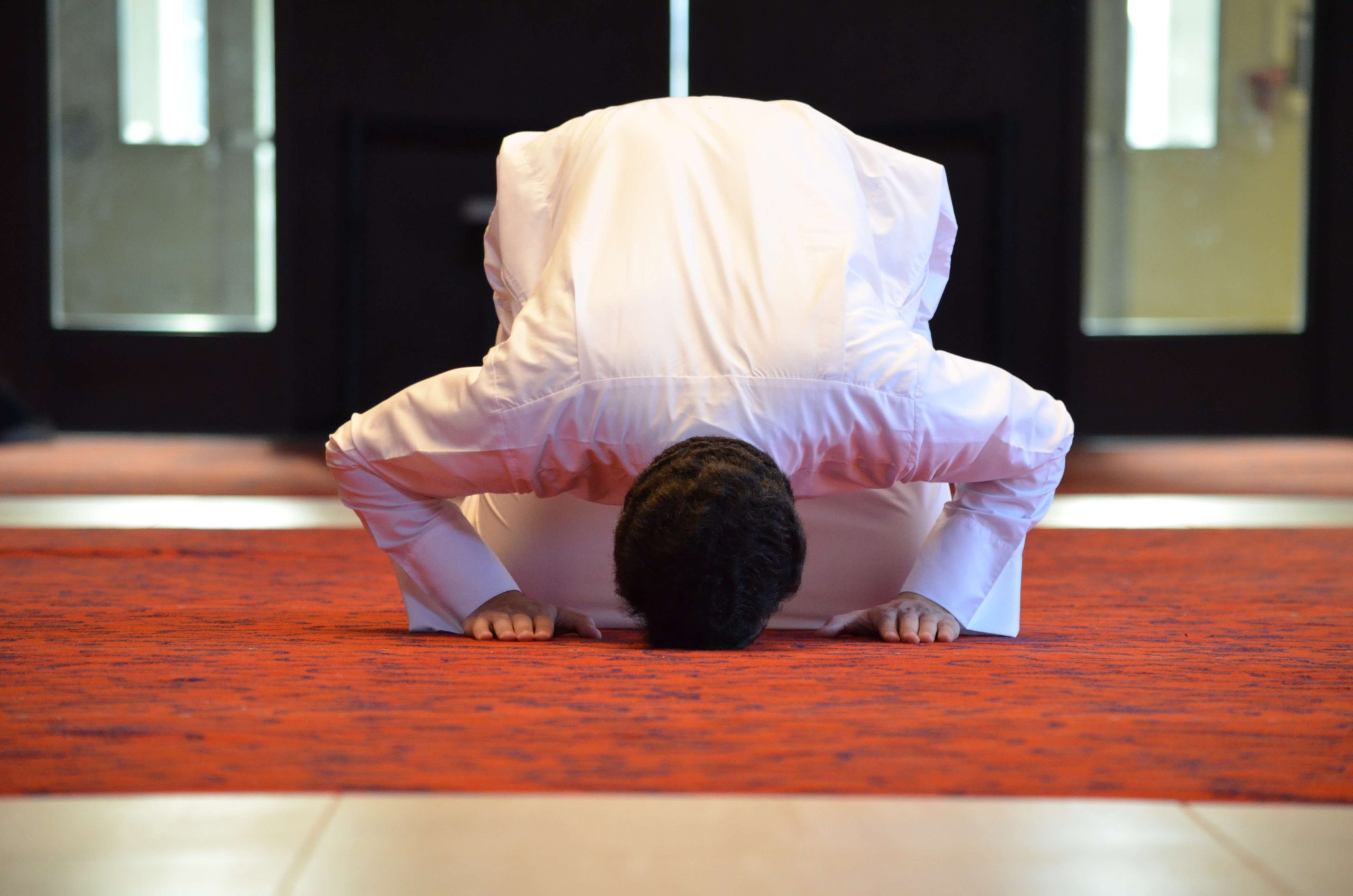
Salah is one of the most important acts of worship in Islam. It is the second pillar of Islam after the Shahadah and a daily obligation that connects a Muslim to Allah.
Five times every day, Muslims are called to leave their worldly activities temporarily and stand before their Creator in prayer. Whether a person is rich or poor, young or old, living through ease or hardship, Salah remains central to a Muslim’s life, subject to the rulings and concessions Allah has provided.
Yet many Muslims struggle with consistency, concentration, correct recitation, or understanding the importance of prayer. Some pray without understanding what they are saying, while others delay their prayers until they become difficult to maintain.
Every Muslim should therefore learn the importance of Salah, its conditions, how to perform it correctly, what invalidates it, and how to develop a stronger connection with Allah through prayer.
WHAT IS SALAH?
Salah is the prescribed act of worship performed through specific words and actions, beginning with the opening Takbir and ending with the Taslim.
It includes standing, reciting the Qur’an, bowing, prostrating, and sitting in prescribed positions, according to the person’s ability and the applicable rulings.
Salah is not simply a physical routine. It is an expression of submission, gratitude, humility, and devotion to Allah.
Allah says:
“Indeed, I am Allah. There is no deity except Me, so worship Me and establish prayer for My remembrance.”
— Surah Taha 20:14
This verse reminds us that prayer is established to worship Allah and remember Him.
When a Muslim performs Salah, they acknowledge their dependence upon Allah, seek His guidance, ask for His forgiveness, and renew their commitment to living according to His commands.
WHY IS SALAH SO IMPORTANT IN ISLAM?
1. SALAH IS A PILLAR OF ISLAM
The Prophet Muhammad ﷺ explained that Islam is built upon five pillars, including the establishment of prayer.
This shows that Salah is not an optional spiritual activity. The five obligatory daily prayers are a fundamental responsibility of Muslims who are accountable under Islamic law.
A Muslim should therefore make prayer a priority rather than allowing work, entertainment, social activities, or other worldly responsibilities to continually push it aside.
2. SALAH HELPS US REMEMBER ALLAH
Daily life can easily distract us from our purpose. Responsibilities, financial concerns, family matters, and personal ambitions can occupy our minds for hours.
Salah gives us regular opportunities to pause and remember Allah.
Each prayer reminds us that, regardless of what is happening in our lives, Allah remains our Creator and that our ultimate purpose is to worship Him.
3. SALAH ENCOURAGES GOOD CHARACTER
Allah says:
“Indeed, prayer prohibits immorality and wrongdoing.”
— Surah Al-Ankabut 29:45
Prayer should influence how we behave outside the mosque or prayer room.
A person who regularly stands before Allah should strive to become more truthful, patient, humble, trustworthy, and respectful towards others.
Although performing Salah does not mean that a person will never make mistakes, sincere prayer should encourage a Muslim to repent, improve their character, and avoid wrongdoing.
4. SALAH PROVIDES SPIRITUAL COMFORT
When we experience sadness, anxiety about life’s difficulties, or uncertainty about the future, prayer gives us an opportunity to turn to Allah.
Through recitation, remembrance, and supplication, we acknowledge our weaknesses and seek the help of the One who knows our circumstances completely.
This does not mean that prayer replaces practical solutions or professional support when needed. Rather, Salah strengthens our spiritual lives while we continue taking appropriate steps to address our difficulties.
5. SALAH IS AN ACT OF OBEDIENCE
Ultimately, Muslims pray because Allah has commanded them to do so.
We do not establish prayer only when we feel motivated or when life is going well. Worship requires consistency, even when we feel tired, distracted, or spiritually weak.
Learning to pray consistently teaches discipline and reminds us that our relationship with Allah should not depend entirely on our changing emotions.
WHAT ARE THE FIVE DAILY PRAYERS?
Every accountable Muslim is required to perform five obligatory prayers each day, subject to the rulings and concessions recognised in Islam.
The five prayers are:
1. FAJR: The dawn prayer, performed from the beginning of true dawn until sunrise.
2. DHUHR: The midday prayer, beginning after the sun passes its highest point.
3. ASR: The afternoon prayer, performed within its prescribed time before sunset.
4. MAGHRIB: The prayer performed after sunset.
5. ISHA: The night prayer, performed within its prescribed time.
The precise times depend on location, season, and the relevant calculation method. Muslims should consult a reliable local prayer timetable.
The obligatory number of rak’ahs is:
- Fajr: 2 rak’ahs.
- Dhuhr: 4 rak’ahs.
- Asr: 4 rak’ahs.
- Maghrib: 3 rak’ahs.
- Isha: 4 rak’ahs.
A rak’ah is one unit of prayer consisting of prescribed recitations and movements.
In addition to these obligatory prayers, Muslims may perform voluntary prayers, including the regular Sunnah prayers and Tahajjud.
However, learning and maintaining the obligatory prayers should come first.
WHAT MUST A MUSLIM DO BEFORE PRAYING?
Before beginning Salah, a Muslim must fulfil its relevant conditions.
1. PURIFICATION
A person must have the required ritual purity. Wudu is generally required unless a valid alternative or applicable concession exists.
Ghusl is necessary in circumstances that require major ritual purification, while Tayammum may be permitted when its conditions are met.
2. CLEANLINESS
The body, clothing, and place of prayer must meet the applicable requirements concerning physical impurities.
Muslims should learn the relevant rulings without falling into excessive doubts or repeatedly checking things without a valid reason.
3. COVERING THE AWRAH
A Muslim must cover the parts of the body that Islamic law requires to be covered during prayer.
The details differ according to sex and certain jurisprudential considerations, so beginners should learn the requirements from a reliable teacher.
4. PRAYING WITHIN THE PRESCRIBED TIME
Each obligatory prayer has a prescribed time. A Muslim should strive to perform every prayer within its time rather than delaying it without a valid reason.
5. FACING THE QIBLAH
Muslims face the direction of the Ka’bah in Makkah when performing Salah, subject to recognised concessions in circumstances such as certain travel or emergencies.
6. INTENTION
The intention to perform the particular prayer must be present in the heart. It does not ordinarily need to be spoken aloud.
These conditions help a Muslim prepare for prayer with care and understanding.
HOW TO PERFORM SALAH STEP BY STEP
The following is a general introduction to a common method of performing Salah. Some details differ among the recognised schools of Islamic jurisprudence.
STEP 1: MAKE THE INTENTION
Know in your heart which prayer you are about to perform, such as Fajr or Dhuhr.
The intention is an act of the heart; a spoken formula is not generally required.
STEP 2: BEGIN WITH TAKBIR
Stand facing the Qiblah, if able, and say:
اللَّهُ أَكْبَرُ
Allahu Akbar
Meaning: Allah is the Greatest.
This opening Takbir marks the beginning of Salah.
STEP 3: RECITE AL-FATIHAH
Recite Surah Al-Fatihah, the opening chapter of the Qur’an.
It contains praise of Allah, acknowledgement of His mercy and sovereignty, and a supplication asking Him to guide us to the straight path.
Every Muslim should learn to recite Al-Fatihah correctly because of its central role in Salah.
The rulings concerning recitation behind an imam differ in some details among the schools of jurisprudence.
STEP 4: RECITE ADDITIONAL QUR’AN
In the first two rak’ahs, an additional passage or surah from the Qur’an is commonly recited after Al-Fatihah.
A beginner may start by learning short surahs such as Al-Ikhlas, Al-Falaq, and An-Nas.
STEP 5: PERFORM RUKU’
Say Allahu Akbar and bow in Ruku’.
Place your hands on your knees and maintain a composed posture. A commonly recited remembrance is:
سُبْحَانَ رَبِّيَ الْعَظِيمِ
Subhana Rabbiyal-‘Azim
Meaning: Glory be to my Lord, the Magnificent.
STEP 6: STAND UPRIGHT
Rise from bowing and praise Allah using the prescribed words.
A commonly taught wording includes:
سَمِعَ اللَّهُ لِمَنْ حَمِدَهُ
Sami’Allahu liman hamidah
Meaning: Allah hears the one who praises Him.
The worshipper then praises Allah, using the wording appropriate to their role in the prayer.
STEP 7: PERFORM SUJUD
Prostrate by placing the prescribed parts of the body on the ground.
A commonly recited remembrance is:
سُبْحَانَ رَبِّيَ الْأَعْلَى
Subhana Rabbiyal-A’la
Meaning: Glory be to my Lord, the Most High.
Sujud is a particularly important position of humility and devotion in Salah.
STEP 8: SIT BETWEEN THE TWO PROSTRATIONS
Rise into a sitting position, pause with composure, and make the prescribed supplication.
Then perform the second prostration.
This completes one rak’ah.
STEP 9: COMPLETE THE REMAINING RAK’AHS
Stand for the next rak’ah and continue the prescribed recitations and movements.
In a three- or four-rak’ah prayer, there are additional sitting positions and recitations. The exact details depend on the prayer and the school of jurisprudence being followed.
STEP 10: RECITE THE FINAL TASHahHUD AND END THE PRAYER
In the final sitting, recite the Tashahhud and the prescribed blessings upon the Prophet ﷺ, along with any other required supplications.
Conclude the prayer with the Taslim, commonly beginning:
السَّلَامُ عَلَيْكُمْ وَرَحْمَةُ اللَّهِ
As-salamu ‘alaykum wa rahmatullah
Meaning: Peace and the mercy of Allah be upon you.
Because Salah contains details that cannot all be covered in one article, beginners should learn the complete method from a reliable teacher or a trustworthy step-by-step guide.
WHAT CAN INVALIDATE SALAH?
The rulings concerning what invalidates prayer depend on the circumstances and, in some cases, the school of jurisprudence.
Examples that commonly invalidate Salah include:
- Deliberately speaking ordinary conversation during prayer.
- Deliberately eating or drinking.
- Losing the required ritual purity.
- Deliberately abandoning an essential part of the prayer without a valid excuse.
- Performing certain excessive actions that are incompatible with prayer.
Other matters have more detailed rulings. For example, certain movements, mistakes in recitation, or doubts about the number of rak’ahs may be addressed through specific rules.
Not every mistake automatically invalidates Salah. Some errors can be corrected, and certain mistakes may require Sujud as-Sahw, the prostrations of forgetfulness.
Muslims should learn these rulings rather than abandoning their prayers because they fear making mistakes.
WHY DO SOME MUSLIMS STRUGGLE WITH SALAH?
Many Muslims understand that prayer is obligatory but still find it difficult to remain consistent.
Some struggle because of busy schedules. Others experience low motivation, distractions, unfamiliarity with the Arabic recitations, or difficulties maintaining a regular routine.
The solution is not to give up. Instead, identify the obstacle and take practical steps to address it.
If you struggle with time management, organise your schedule around prayer times.
If you struggle with recitation, learn a small portion each day and practise regularly.
If you become distracted during prayer, reduce unnecessary distractions and remind yourself that you are standing before Allah.
If you have neglected Salah for a long time, begin by returning sincerely to Allah and establishing the current obligatory prayers. Seek qualified guidance about missed prayers and the relevant rulings.
Never allow shame about past shortcomings to prevent you from improving your worship today.
HOW CAN YOU DEVELOP KHUSHU’ IN SALAH?
Khushu’ refers to humility, attentiveness, and a sense of reverence during prayer.
It helps a Muslim pray with greater awareness of Allah rather than treating Salah as a series of movements.
Here are practical ways to improve it.
1. Understand what you recite. Learn the meanings of Al-Fatihah, the common remembrances, and the supplications you say during prayer.
2. Prepare before Salah. Avoid rushing into prayer at the last possible moment when you can reasonably prepare earlier.
3. Pray with composure. Perform each movement calmly rather than rushing through the rak’ahs.
4. Remember whom you are worshipping. Remind yourself that Allah knows your circumstances and hears your supplications.
5. Reduce distractions. Put away your phone and choose a suitable place to pray.
6. Reflect on the meaning of Sujud. Remember that prostration expresses humility and submission to Allah.
7. Keep practising. Concentration may fluctuate. When your attention wanders, gently bring it back to your prayer rather than becoming discouraged.
Khushu’ develops through knowledge, practice, and sincere effort. Do not expect perfection overnight.
WHAT SHOULD A MUSLIM DO AFTER SALAH?
After completing the obligatory prayer, Muslims may engage in the remembrances and supplications taught by the Prophet ﷺ.
These commonly include seeking Allah’s forgiveness, praising Him, glorifying Him, and reciting established supplications.
Many Muslims also perform the regular Sunnah prayers associated with the obligatory prayers.
After Salah, you can also make personal du’a, asking Allah for forgiveness, guidance, beneficial knowledge, protection from harm, and steadfastness in faith.
Remember that the purpose of prayer extends beyond the moment you finish it. Its lessons should continue to influence your speech, decisions, relationships, and conduct.
COMMON MISTAKES MUSLIMS SHOULD AVOID
1. DELAYING PRAYER WITHOUT A VALID REASON
A Muslim should strive to perform each prayer within its prescribed time instead of repeatedly postponing it because of distractions.
2. RUSHING THROUGH THE MOVEMENTS
Ruku’, standing, and Sujud should be performed with the required composure. Prayer is not a race to finish.
3. NEGLECTING TO LEARN AL-FATIHAH
Because Al-Fatihah has a central role in Salah, every Muslim should make a serious effort to learn its recitation correctly.
4. THINKING THAT ONE MISTAKE MAKES THE WHOLE PRAYER INVALID
Some mistakes have remedies or do not invalidate the prayer. Learn the relevant rules before concluding that you must repeat Salah.
5. PRAYING ONLY WHEN YOU FEEL SPIRITUALLY MOTIVATED
Obligatory worship should remain part of a Muslim’s routine even when motivation fluctuates.
6. JUDGING OTHER PEOPLE’S PRAYERS WITHOUT KNOWLEDGE
Some differences in prayer practice arise from recognised scholarly interpretations. Muslims should learn the evidence, show respect, and avoid unnecessary arguments.
A SIMPLE PLAN TO IMPROVE YOUR SALAH
If you want to strengthen your prayer, start with a practical plan.
- Week 1: Focus on performing the five obligatory prayers within their prescribed times.
- Week 2: Learn the meanings of Al-Fatihah and the basic remembrances in Salah.
- Week 3: Study the conditions, essential actions, and common mistakes in prayer.
- Week 4: Work on khushu’, learn the post-prayer remembrances, and maintain consistency.
If you already perform Salah regularly, use this plan to identify areas where your knowledge or practice could improve.
The goal is steady progress, not perfection in a single day.
CONCLUSION
Salah is one of the greatest obligations in Islam and an essential part of a Muslim’s daily life.
It reminds us of our purpose, strengthens our relationship with Allah, encourages good character, and gives us regular opportunities to seek His guidance and forgiveness.
Every Muslim should learn how to perform Salah correctly, understand its meanings, protect its prescribed times, and strive to improve concentration and sincerity.
If you have been neglecting prayer, do not despair of Allah’s mercy. Repent sincerely, return to Salah, and seek the knowledge and support you need to remain consistent.
Let prayer become a priority in your life rather than an obligation continually postponed.
May Allah help us establish our five daily prayers, grant us khushu’ in our worship, forgive our shortcomings, and make Salah a source of guidance, peace, and closeness to Him. Amin.
