


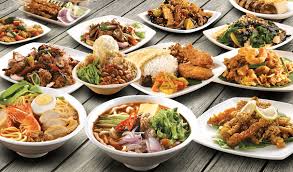
Imagine a classmate offers you food.
Or perhaps your neighbour, who is not Muslim, sends you a plate of rice.
You may wonder: “Am I allowed to eat it? Is food prepared by a non-Muslim halal?”
This is an important question because Muslims interact with people of different religions every day.
The answer is not simply that food prepared by a non-Muslim is automatically haram.
What matters is the type of food, its ingredients and any relevant Islamic requirements.
DOES ISLAM ALLOW MUSLIMS TO EAT WITH OTHERS?
Yes. Islam permits Muslims to interact with people of different faiths and, in appropriate circumstances, share food with them.
Allah says: “This day [all] good foods have been made lawful, and the food of those who were given the Scripture is lawful for you, and your food is lawful for them.” Qur’an 5:5
This verse specifically addresses the food of the People of the Scripture, and scholars discuss its application to different types of food and circumstances.
It does not mean that every item of food prepared by anyone is automatically permissible.
WHAT ABOUT RICE, BEANS, BREAD AND FRUITS?
Foods such as plain rice, beans, bread, fruits and vegetables are generally permissible in themselves, provided they do not contain prohibited ingredients or become contaminated with something that makes them impermissible.
For example, if your non-Muslim neighbour prepares plain rice with permissible ingredients, the fact that the neighbour is not Muslim does not automatically make the rice haram.
You should not reject permissible food simply because the person who prepared it follows another religion.
WHAT ABOUT MEAT?
Meat requires more careful consideration.
Islam has specific requirements concerning animals that may be eaten and the way they are slaughtered.
The ruling can depend on the animal, the slaughter method and the circumstances.
The rules concerning meat slaughtered by non-Muslims are discussed in detail by Islamic scholars, particularly regarding the People of the Scripture.
If you are uncertain about the source of meat, seek reliable information or choose a trustworthy halal source.
WHAT IF THE FOOD CONTAINS HARAM INGREDIENTS?
If a dish contains a clearly prohibited ingredient, such as pork, you should not eat it.
Other ingredients, including certain animal-derived additives and alcohol-containing ingredients, may require further investigation because their rulings can depend on the substance and circumstances.
Do not assume that all food prepared by a non-Muslim is haram, and do not assume that every dish is halal simply because it looks harmless.
BE KIND WITHOUT COMPROMISING YOUR FAITH
You can respectfully explain your dietary requirements when someone offers you food you cannot eat.
For example, you might say:
“Thank you for offering me food. I have certain dietary requirements because of my religion. I hope you understand.”
You do not need to insult another person’s beliefs or make them feel inferior.
Islam teaches Muslims to maintain good manners while observing their religious obligations.
HEART CHECK
A Muslim can show kindness to people of different faiths while remaining committed to halal food.
Check the ingredients, understand the rules and avoid making assumptions based only on the religion of the person who prepared the meal.
Knowledge helps you practise your faith with both confidence and good character.
3SIXTYISLAM
At 3SixtyIslam, we believe Islamic knowledge should reach every generation. From Hajj and Umrah guidance to practical Islamic lessons for everyday life, our goal is to help Muslims learn, grow and strengthen their connection with Islam.
Follow 3SixtyIslam for more Islamic knowledge, guidance and inspiring stories for the whole family.
