


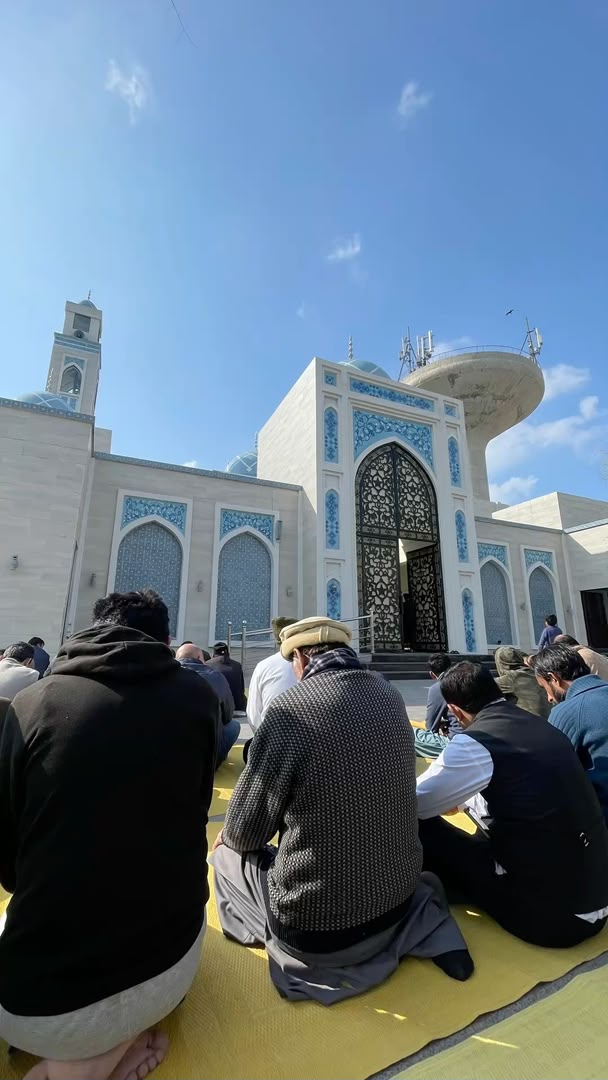
Many Muslims know that arriving early for Jumu’ah is encouraged, but fewer people know just how specifically the Prophet Muhammad ﷺ described the reward for those who make the effort to arrive early.
For some people, Jumu’ah begins when they hear the khutbah. For others, it begins when they enter the mosque. But the Sunnah shows that the preparation and arrival before the khutbah are themselves part of the opportunity.
The Prophet ﷺ gave a remarkable description of the different levels of reward for those who arrive at different times.
THE EARLIER YOU ARRIVE, THE GREATER THE REWARD
Abu Hurayrah (RA) narrated that the Messenger of Allah ﷺ said:
“When Friday comes, the angels stand at the doors of the mosque and record the people according to their order of arrival.”
The Prophet ﷺ then described the reward in a striking way. The person who arrives earliest is likened to one who offers a camel in sacrifice. The next is like one who offers a cow. The next is like one who offers a horned ram. The next is like one who offers a chicken. The next is like one who offers an egg.
Then, when the imam comes out, the angels close their records and listen to the khutbah.
This hadith is recorded in Sahih al-Bukhari and Sahih Muslim.
There is a lot contained in these few words.
THE ANGELS ARE RECORDING WHO ARRIVES
One of the most interesting details is that the Prophet ﷺ did not merely say that people who arrive early receive a reward.
He described the angels as recording their arrival.
This gives Jumu’ah an aspect that we may not physically see.
People entering the mosque may simply see other worshippers sitting down. But according to the hadith, something else is happening: the angels are recording the order in which people arrive.
The person who arrives very early is not receiving the same opportunity as the person who walks in moments before the khutbah.
There is a distinction.
WHY DID THE PROPHET ﷺ USE A CAMEL, COW AND RAM?
The examples in the hadith may sound unusual to a modern reader, but they were extremely meaningful to the people who first heard the Prophet ﷺ.
A camel was a valuable possession. A cow was also valuable, followed by a horned ram, a chicken and an egg.
The Prophet ﷺ was therefore giving the companions a clear picture of different levels of reward.
The earlier you arrive, the greater the reward described.
It was a way of encouraging Muslims not to treat early arrival as an insignificant detail.
THEN THE RECORDS ARE CLOSED
There is another fascinating part of the hadith.
Once the imam comes out for the khutbah, the angels close their records and listen to the reminder.
This means that there is a particular window of opportunity before the khutbah begins.
Once the khutbah starts, the nature of the gathering changes. The congregation is expected to listen attentively.
This is one reason why arriving early can be so valuable. You have already secured the reward associated with early arrival before the khutbah begins.
JUMU’AH IS NOT A “LAST-MINUTE” IBADAH
In many places, people treat Jumu’ah as something to squeeze into their schedule.
They leave work late, deal with traffic, search for parking and arrive just as the imam is beginning the khutbah.
Sometimes circumstances genuinely make early arrival difficult. Work schedules, transport problems and other responsibilities can affect a person’s ability to arrive early.
But when someone has the freedom to plan differently, the hadith gives them a reason to reconsider their routine.
Instead of asking, “What is the latest time I can leave and still catch Jumu’ah?” a believer can ask:
“How early can I realistically arrive?”
That is a completely different mindset.
THERE IS ALSO A LESSON ABOUT COMPETITION
Islam does not encourage Muslims to compete with one another for worldly status in a way that creates arrogance and resentment.
But there are areas where competing in goodness is encouraged.
Allah says:
“So for this let the competitors compete.”
Qur’an 83:26
Arriving early for Jumu’ah is one of those simple opportunities where a person can quietly compete in worship.
You do not need anyone to know that you were the first person in the mosque.
You do not need recognition.
You simply arrive early because you know Allah rewards the effort.
WHAT SHOULD YOU DO AFTER ARRIVING EARLY?
Arriving early does not mean sitting around talking until the khutbah starts.
Use the time well.
You can pray voluntary prayers according to what is appropriate, read Qur’an, make dhikr, make du’a or simply sit quietly and prepare yourself for the khutbah.
The point is to arrive with a worshipful mindset rather than treating the mosque as a waiting room.
It can also give you something many people rarely have during the week: uninterrupted time away from work, phones, traffic and daily responsibilities.
WHAT IF YOU CANNOT ARRIVE EARLY?
This hadith should encourage us, not make us despair.
If your circumstances prevent you from arriving early, attend Jumu’ah when you are able.
Do not think that because you missed the earliest period, there is no reward in attending.
The important thing is to fulfil the obligation properly and listen attentively to the khutbah.
And if you have the ability to improve your arrival time in the future, then gradually make that change.
Perhaps this Friday you arrive ten minutes earlier than usual. The following Friday, you arrive twenty minutes earlier. Eventually, arriving early can become part of your Jumu’ah routine.
A SMALL CHANGE THAT CAN MAKE FRIDAY FEEL DIFFERENT
The remarkable thing about this Sunnah is that it does not necessarily require more money, special knowledge or extraordinary effort.
It requires planning.
You leave home earlier.
You organise your work around the prayer.
You prepare yourself before leaving.
You arrive while the mosque is still relatively quiet.
And according to the hadith, your arrival is being recorded.
That is something worth thinking about the next time you prepare for Jumu’ah.
Most people focus on the prayer itself. The Prophet ﷺ also drew our attention to what happens before the prayer begins.
So this Friday, instead of aiming simply to “make it for Jumu’ah,” try something different.
Aim to be one of the people the angels are already recording before the khutbah begins.
