

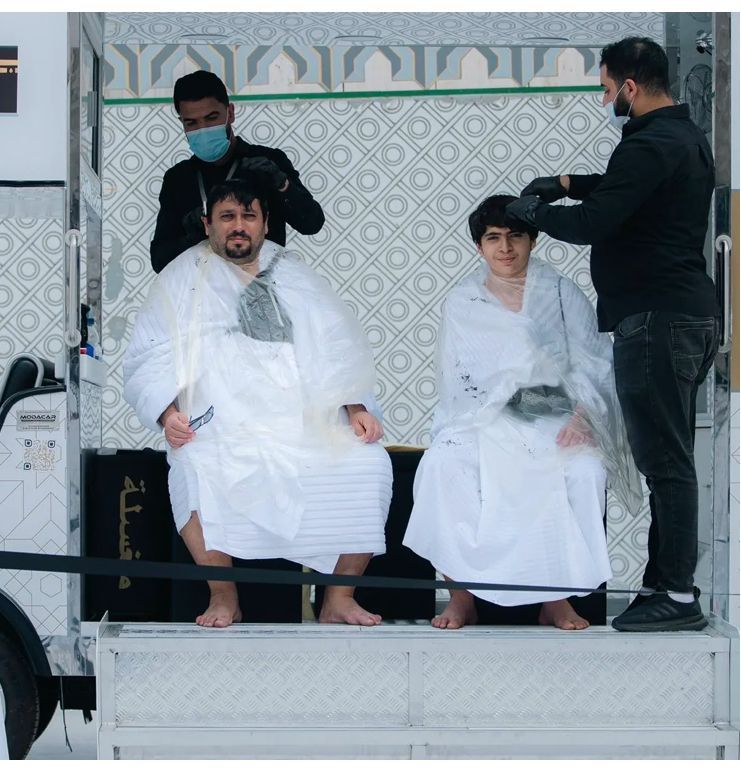
As the rites of Umrah draw to a close, pilgrims perform what may appear to be a simple act: shaving or trimming their hair. For many first-time pilgrims, this may seem like nothing more than the final requirement before leaving the state of Ihram.
However, like every rite of Umrah, this act carries profound spiritual significance. It is a symbol of humility, obedience, renewal, and gratitude to Allah.
The haircut is not simply about changing one’s appearance. It represents the completion of a sacred journey and the hope of beginning a new chapter in one’s relationship with Allah.
THE FINAL RITE OF UMRAH
After completing Tawaf and Sa’i, men either shave their entire heads (Halq) or trim their hair (Taqsir). Women, on the other hand, trim only a small portion of their hair, usually the length of a fingertip.
Once this is done, the pilgrim exits the state of Ihram, and the restrictions associated with it come to an end.
Although this marks the completion of Umrah outwardly, the greater question is whether the heart has also been transformed.
WHY SHAVING IS PREFERRED FOR MEN
The Prophet ﷺ made a special supplication for those who shave their heads.
It is narrated that he prayed:
“O Allah, have mercy on those who shave their heads.”
The Companions asked, “And those who trim their hair?”
Again he said:
“O Allah, have mercy on those who shave their heads.”
After repeating this supplication three times, he finally included those who trim their hair.
This hadith shows the special virtue of shaving the head completely, although trimming is also valid and fulfils the obligation of Umrah.
Many scholars explain that shaving demonstrates a greater level of submission and sacrifice, as it involves giving up one’s hair entirely for the sake of Allah.
A SYMBOL OF COMPLETE HUMILITY
Hair is often associated with beauty, style, and personal appearance.
By willingly removing it, the pilgrim demonstrates that pleasing Allah is more important than personal vanity.
This simple act reminds us that worship requires humility.
No believer should become overly attached to outward appearance while neglecting the condition of the heart.
Allah does not look at our hairstyles, clothing, or wealth. Rather, He looks at our faith, sincerity, and deeds.
LEAVING SINS BEHIND
Although shaving or trimming the hair does not literally remove sins, it symbolises a fresh beginning.
Throughout Umrah, the pilgrim has sought Allah’s forgiveness through Tawaf, Sa’i, du’a, and remembrance.
Completing the pilgrimage with Halq or Taqsir represents the desire to leave behind old habits, past mistakes, and disobedience.
A pilgrim should return home with a sincere determination to become a better Muslim than they were before travelling to Makkah.
The greatest achievement is not simply completing Umrah but allowing Umrah to change one’s character.
OBEDIENCE EVEN WHEN WE DO NOT FULLY UNDERSTAND
Some people ask, “Why must hair be shaved or trimmed?”
The answer teaches one of Islam’s greatest principles: a believer obeys Allah because He has commanded it.
Not every act of worship is based on human reasoning alone.
Just as we pray five times a day because Allah instructed us to do so, we complete Umrah by shaving or trimming the hair because it is part of the Sunnah of the Prophet ﷺ.
True worship means submitting to Allah with trust, even when we do not fully grasp every wisdom behind His commands.
A NEW BEGINNING
For many pilgrims, leaving the Haram after completing Umrah feels different from when they first entered.
The journey has softened the heart.
The constant remembrance of Allah has strengthened faith.
The tears shed before the Ka’bah have brought peace to the soul.
Shaving or trimming the hair marks the beginning of this new chapter.
It is an opportunity to renew one’s commitment to:
- Pray more consistently.
- Read the Qur’an regularly.
- Speak with kindness.
- Earn a lawful livelihood.
- Stay away from sins.
- Increase acts of charity.
- Strengthen ties with family and neighbours.
An accepted Umrah should leave lasting changes in a person’s daily life.
DON’T RETURN TO OLD HABITS
One of the greatest mistakes a pilgrim can make is to return home only to resume the same sinful habits they left behind.
If Umrah has truly touched the heart, its effects should continue long after the journey ends.
The discipline learned in Ihram…
The patience developed during Tawaf…
The perseverance remembered in Sa’i…
The humility shown through shaving or trimming…
All of these lessons should remain with the believer.
Umrah is not meant to be a temporary spiritual experience. It is meant to inspire lifelong obedience to Allah.
THE TRUE COMPLETION OF UMRAH
Many people believe Umrah ends when they cut their hair.
In reality, that is only the beginning.
The true completion of Umrah is seen months later.
It is seen in a believer who still prays on time.
Who continues making du’a.
Who guards their tongue.
Who remains honest in business.
Who treats others with mercy.
Who remembers Allah in times of ease and hardship.
The haircut marks the end of the rites, but the journey of faith continues until we meet Allah.
May Allah accept the Umrah of every pilgrim, forgive their sins, renew their hearts, and grant them steadfastness upon His religion.
Ameen.
Travel with Confidence Travel with 3SixtyIslam
When it comes to Hajj and Umrah, experience and trust matter. 3SixtyIslam provides reliable Umrah packages, proper guidance, and dedicated support from departure to return.
We are committed to ensuring that your pilgrimage is organised, comfortable, and spiritually enriching, allowing you to focus entirely on your worship.
Travel with 3SixtyIslam. Let us accompany you on your journey to the Sacred House of Allah.
