

THE ISLAMIC CONCEPT OF WAQF: HOW CHARITABLE ENDOWMENTS BENEFIT GENERATIONS AND BUILD LASTING LEGACIES

Charity occupies a central position in Islam. Muslims are encouraged to help the poor, support the needy, care for vulnerable members of society, and contribute to the development of their communities. One of the most remarkable Islamic institutions established to achieve these objectives is Waqf (Islamic charitable endowment).
Waqf is a form of voluntary charitable giving in which a person dedicates an asset, such as land, a building, a farm, or money, for a religious, educational, humanitarian, or other recognised charitable purpose. The original asset is preserved, while its benefits or income are used to support the intended beneficiaries.
Unlike ordinary charity, which may provide immediate assistance and end once the donation is spent, Waqf is designed to create lasting benefits that can continue for generations.
For example, a Muslim who donates land for the construction of a school may establish an institution that educates thousands of children over several decades. Similarly, someone who dedicates a building to generate rental income for an orphanage can create a continuous source of financial support for vulnerable children.
The concept of Waqf demonstrates how Islamic teachings encourage Muslims to think beyond immediate needs and invest in the welfare of future generations.
But what exactly is Waqf? Where did it originate? How does it work? And how can it contribute to education, healthcare, poverty reduction, and community development in modern societies such as Nigeria?
This article explores the meaning, history, principles, benefits, and modern applications of Waqf in Islam.
1. What Is Waqf in Islam?
The Arabic word Waqf comes from a root meaning to stop, hold, or preserve.
In Islamic jurisprudence, Waqf refers to dedicating an asset and preserving its underlying value while making its benefits available for a specified charitable or socially beneficial purpose.
In simple terms, Waqf means giving something valuable for the benefit of others while ensuring that the original asset remains dedicated to its intended purpose.
For example:
- A Muslim donates land for the construction of a mosque.
- A wealthy individual establishes a school and dedicates it to providing free education.
- A family dedicates rental properties, with the income supporting an orphanage.
- A farmer dedicates agricultural land, with its produce distributed among poor families.
- An individual establishes a fund whose properly managed returns support medical treatment for disadvantaged people.
The important feature of Waqf is the preservation of the endowed asset and the continuation of its benefits.
Once a valid Waqf is established, the property is generally treated as dedicated to its specified purpose and cannot simply be reclaimed or distributed as ordinary personal property.
Waqf is therefore different from an ordinary donation because it seeks to create a continuing source of benefit.
2. The Islamic Foundation of Waqf
The concept of Waqf is deeply connected to Islamic teachings about charity, generosity, and supporting humanity.
Although the Quran does not explicitly use the technical legal term Waqf, several Quranic verses establish the principles upon which charitable endowments are based.
A. Giving from What You Love
Allah says in the Quran:
“You will never attain righteousness until you spend from that which you love. And whatever you spend, indeed Allah knows it.”
Quran 3:92
This verse highlights the importance of giving something valuable rather than offering only what is unwanted or insignificant.
Waqf reflects this teaching because a person dedicates a valuable asset for the benefit of others and seeks the pleasure of Allah through that contribution.
B. Competing in Good Deeds
Allah also says:
“So race to all that is good.”
Quran 2:148
Islam encourages believers to compete in righteousness through charity, kindness, service, and other beneficial actions.
Establishing a Waqf is one way of contributing to good deeds whose benefits may continue long after the founder has passed away.
C. The Reward of Charity
Allah says:
“The example of those who spend their wealth in the way of Allah is like a seed of grain which grows seven spikes; in each spike is a hundred grains.”
Quran 2:261
This verse illustrates the multiplied reward associated with spending in the cause of Allah.
A Waqf can become an opportunity for continuous reward when its benefits continue reaching people over time.
3. The Hadith That Established the Foundation of Waqf
One of the most important foundations of Waqf comes from a famous narration concerning Umar ibn al-Khattab (RA).
According to Sahih al-Bukhari and Sahih Muslim, Umar acquired valuable land in Khaybar and approached Prophet Muhammad (peace be upon him) to seek advice on what to do with it.
He said that he had obtained property more valuable to him than anything he had previously owned and wanted to know how best to use it.
The Prophet (peace be upon him) advised him:
“If you wish, you may retain the property itself and give its produce in charity.”
Umar subsequently dedicated the land as a charitable endowment.
The property was not to be sold, given away, or inherited. Its benefits were to be used for charitable purposes, including the poor, relatives, travellers, and other specified beneficiaries.
This narration is regarded as one of the fundamental legal foundations of Waqf in Islamic jurisprudence.
It establishes two important principles:
- The original property should be preserved.
- The income or benefits generated from that property should be used for charitable purposes.
This model became the foundation for numerous Islamic endowments throughout history.
4. The Difference Between Waqf, Zakat, and Sadaqah
Although Waqf, Zakat, and Sadaqah all involve giving in Islam, they have different purposes and legal characteristics.
Zakat is an obligatory act of worship involving the payment of a prescribed portion of qualifying wealth to eligible recipients under Islamic law.
Sadaqah refers to voluntary charity given to help others and support good causes. It may be financial or non-financial.
Waqf involves dedicating an asset for a specified purpose while preserving its underlying value and directing its benefits towards designated beneficiaries.
The following comparison explains the differences:
| Feature | Zakat | Sadaqah | Waqf |
|---|---|---|---|
| Nature | Obligatory | Voluntary | Voluntary endowment |
| Purpose | Support eligible recipients | General charitable support | Long-term charitable benefit |
| Asset preservation | Not required | Not required | Central principle |
| Duration | Periodic obligation | May be one-time or recurring | Intended to be ongoing |
| Beneficiaries | Specified in Islamic law | Broad charitable purposes | Defined by the founder, subject to Shariah |
| Example | Annual Zakat payment | Giving food to the poor | Donating a building for a school |
All three forms of giving contribute to the Islamic vision of a compassionate and supportive society.
5. The Different Types of Waqf
Waqf can take different forms depending on the purpose of the endowment and the beneficiaries involved.
A. Religious Waqf
Religious Waqf involves dedicating property or resources to support religious activities.
Examples include:
- Building mosques.
- Establishing Islamic schools.
- Providing Quranic education.
- Supporting Islamic libraries.
- Maintaining religious institutions.
- Providing facilities for Islamic learning.
Mosques established through Waqf can serve communities for generations by providing places of worship, education, and social interaction.
B. Educational Waqf
Educational Waqf is dedicated to supporting learning and intellectual development.
Historically, Islamic societies established schools, libraries, universities, and scholarship programmes through charitable endowments.
Modern examples include:
- Funding scholarships for disadvantaged students.
- Building classrooms and educational facilities.
- Providing textbooks and learning materials.
- Supporting teachers and educational researchers.
- Establishing vocational training centres.
- Funding Islamic and general educational institutions.
Educational Waqf is particularly valuable because its benefits extend beyond the immediate beneficiaries.
An educated student may eventually become a teacher, doctor, engineer, entrepreneur, or community leader who contributes positively to society.
C. Healthcare Waqf
Healthcare Waqf involves dedicating resources to medical services and public health.
Throughout Islamic history, charitable endowments supported hospitals, medical facilities, physicians, and medical education.
Today, healthcare Waqf can support:
- Hospitals and community clinics.
- Free medical treatment for poor families.
- Maternal and child healthcare.
- Medical equipment.
- Ambulance services.
- Medical research.
- Healthcare scholarships.
A properly managed healthcare endowment can help provide medical assistance to thousands of people over many years.
D. Family Waqf (Waqf Ahli)
Family Waqf is an endowment established to benefit the founder’s relatives or descendants, sometimes alongside charitable beneficiaries.
It provides a structured way of dedicating property to support family members while preserving the asset.
The rules governing family Waqf differ among Islamic legal schools and jurisdictions.
E. Public or Charitable Waqf (Waqf Khayri)
Public Waqf is established for the general benefit of society.
Its beneficiaries may include poor families, orphans, students, patients, travellers, and other vulnerable groups.
Examples include:
- Public water facilities.
- Schools.
- Hospitals.
- Community centres.
- Agricultural projects.
- Housing for disadvantaged families.
This form of Waqf is particularly important for sustainable community development.
F. Cash Waqf
Cash Waqf involves dedicating money as an endowment rather than donating physical property.
The funds are managed through Shariah-compliant investment arrangements, and the returns are used to support the intended beneficiaries.
For example, a community may establish a cash Waqf fund to finance scholarships, medical treatment, or small community development projects.
The original capital should be protected in accordance with the applicable Waqf rules and investment arrangements.
6. The History of Waqf in Islamic Civilisation
The institution of Waqf developed during the early period of Islam and became an important part of Muslim social and economic life.
Following the example of Umar ibn al-Khattab (RA), Muslim communities increasingly established charitable endowments to support mosques, schools, hospitals, public facilities, and vulnerable populations.
During the Umayyad and Abbasid periods, Waqf became increasingly institutionalised.
Muslim rulers, wealthy merchants, scholars, and ordinary individuals established endowments to provide long-term support for religious and public services.
During the Ottoman period, Waqf institutions became particularly widespread.
They supported:
- Mosques and religious complexes.
- Schools and universities.
- Hospitals and medical services.
- Public fountains and water systems.
- Roads and bridges.
- Soup kitchens.
- Accommodation for travellers.
- Support for widows and orphans.
In several Muslim societies, Waqf income helped finance important public services that might otherwise have depended entirely on government resources.
The institution became one of the most important mechanisms through which private wealth was converted into long-term public benefit.
7. How Waqf Benefits Generations
The greatest strength of Waqf is its ability to provide benefits over an extended period.
Unlike a donation that may be consumed immediately, a properly structured endowment can continue generating resources for future beneficiaries.
Here are some of the most important ways Waqf benefits generations.
A. It Promotes Sustainable Education
Education is one of the most powerful tools for improving society.
When land, buildings, or investment funds are dedicated to educational purposes, they can provide continuous support for students and teachers.
For instance, a Waqf-funded school may educate hundreds of students every year.
Over several decades, thousands of children may benefit from the same original endowment.
This creates a lasting educational legacy.
B. It Supports Healthcare for the Poor
Access to affordable healthcare remains a challenge in many developing countries.
Waqf can help address this problem by providing sustainable funding for hospitals, clinics, medical equipment, and treatment programmes.
A hospital established through an endowment may continue serving patients long after its founder has died.
C. It Helps Reduce Poverty
Waqf can support poverty reduction through several approaches.
For example, an endowment may fund vocational training, agricultural development, affordable housing, or income-generating programmes.
Instead of simply giving someone money for immediate consumption, a Waqf project can help provide opportunities for long-term economic improvement.
D. It Supports Orphans and Vulnerable Children
Orphans and disadvantaged children require continuous support, including education, accommodation, nutrition, and healthcare.
A Waqf established for their welfare can generate income to finance these needs.
This provides a more sustainable approach to child welfare than depending entirely on occasional donations.
E. It Encourages Economic Development
Waqf assets can contribute to economic development when managed responsibly.
Commercial buildings, agricultural land, and other productive assets may generate income that finances charitable programmes.
This creates a connection between productive economic activity and social welfare.
F. It Creates a Lasting Legacy
One of the most meaningful aspects of Waqf is that it allows people to contribute to society beyond their lifetime.
A person may establish a Waqf today and leave behind an institution that continues helping others for decades or even centuries.
The founder may no longer be physically present, but the benefits of the original contribution continue.
8. Waqf and the Concept of Sadaqah Jariyah
Waqf is closely associated with the Islamic concept of Sadaqah Jariyah, meaning ongoing charity.
Prophet Muhammad (peace be upon him) said:
“When a person dies, their deeds come to an end except for three: ongoing charity, beneficial knowledge, or a righteous child who prays for them.”
Sahih Muslim 1631
This hadith identifies three sources of continuing benefit after death.
Waqf is one of the clearest examples of ongoing charity because an endowed asset can continue benefiting people long after its founder has passed away.
For example:
- A mosque continues providing a place for prayer.
- A school continues educating children.
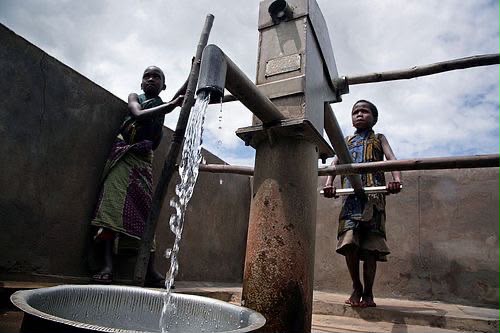
- A water well continues supplying drinking water.
- A hospital continues treating patients.
- A library continues providing access to knowledge.
The reward associated with such charitable activities is a major motivation for Muslims who establish Waqf.
However, the actual reward belongs to Allah’s judgement, and the endowment must be established and managed according to Islamic principles.
9. How Waqf Can Transform Communities in Nigeria
Nigeria has a large Muslim population and significant social development needs.
Challenges involving poverty, unemployment, educational inequality, inadequate healthcare, and access to clean water affect communities across the country.
Waqf offers an opportunity to mobilise private wealth for sustainable social development.
Rather than depending entirely on government intervention or occasional fundraising, communities can establish endowments that generate continuous income for essential services.
Some practical applications include:
A. Establishing Waqf Schools
Muslim individuals, families, organisations, and philanthropists can dedicate land or buildings to establish schools that provide affordable or free education.
The schools may use their endowment income to pay teachers, purchase learning materials, and support disadvantaged students.
B. Supporting Islamic and University Education
Cash Waqf funds can provide scholarships for students studying Islamic sciences, medicine, engineering, agriculture, technology, and other disciplines.
This would strengthen human capital and create opportunities for young Nigerians.
C. Establishing Community Healthcare Centres
Waqf-funded clinics can provide affordable medical services to people who cannot easily access private healthcare.
The income from dedicated properties or investment funds may support medical supplies, equipment, and healthcare workers.
D. Providing Clean Water
Communities can establish Waqf projects involving boreholes, water facilities, and maintenance programmes.
This is especially important in rural communities where access to safe drinking water remains a challenge.
E. Supporting Widows and Orphans
A dedicated Waqf fund can provide educational assistance, healthcare, food support, and vocational training for widows and vulnerable children.
F. Supporting Small Businesses
Shariah-compliant Waqf programmes can support entrepreneurship and economic empowerment through appropriate financing and investment structures.
For example, an endowment may generate income that supports vocational training or provides productive equipment for disadvantaged entrepreneurs.
10. How to Establish a Waqf
Establishing a Waqf requires careful planning to ensure that the endowment is valid, sustainable, and managed responsibly.
The following steps provide a general guide.
Step 1: Identify the Purpose
The founder should determine the objective of the Waqf.
Will it support education, healthcare, religious activities, poverty reduction, or another charitable purpose?
A clearly defined objective makes administration easier.
Step 2: Choose the Asset
The founder must identify an asset that can be validly dedicated as Waqf.
Examples include:
- Land.
- Residential or commercial buildings.
- Agricultural property.
- Cash.
- Other permissible income-generating assets.
The asset should be lawfully owned and suitable for the intended purpose.
Step 3: Define the Beneficiaries
The founder should specify who will benefit from the endowment.
Beneficiaries may include students, patients, orphans, poor families, religious institutions, or the general public.
Step 4: Prepare the Waqf Deed
A Waqf deed is an important document that records the founder’s intentions and the conditions governing the endowment.
It should clearly explain:
- The identity of the founder.
- The asset being dedicated.
- The purpose of the endowment.
- The intended beneficiaries.
- The management arrangements.
- The responsibilities of the trustees or administrators.
- The rules for using income generated by the asset.
Professional legal and Islamic guidance should be obtained when preparing the document.
Step 5: Appoint Responsible Trustees
The endowment should be managed by trustworthy and competent individuals or an appropriate institution.
These administrators are often referred to as Mutawallis.
Their responsibilities may include managing the property, collecting income, maintaining assets, keeping financial records, and ensuring that the endowment serves its intended purpose.
Step 6: Establish Proper Financial Management
Waqf assets should be managed carefully to protect their value.
Where investment is involved, all investment activities must comply with applicable Shariah principles and relevant laws.
Step 7: Monitor and Report Performance
Regular financial reporting, independent audits, and transparent administration help protect the endowment against misuse.
A Waqf should be managed with the understanding that it represents a responsibility entrusted to its administrators.
11. The Role of Technology in Modern Waqf Management
Technology has created new opportunities for improving the administration and effectiveness of Waqf institutions.
In the past, some endowments relied heavily on manual records and traditional property management.
Today, digital systems can improve transparency, accessibility, and accountability.
Some modern applications include:
Digital Waqf platforms: These platforms can allow donors to contribute to approved endowment projects and monitor their progress.
Online financial reporting: Digital records can help trustees provide regular information about income, expenditure, and project performance.
Property management systems: Technology can assist in tracking Waqf properties, rental income, maintenance costs, and legal documentation.
Cash Waqf management: Digital payment systems can make it easier for people to contribute small amounts towards collective endowment projects.
Data-driven social investment: Waqf administrators can use reliable data to identify communities with urgent educational, healthcare, and social welfare needs.
Technology cannot replace responsible governance, but it can strengthen the systems through which Waqf institutions operate.
12. Challenges Facing Waqf Institutions Today
Despite its enormous potential, Waqf faces several challenges in different parts of the Muslim world.
Understanding these challenges is essential for developing stronger institutions.
A. Poor Management
Some Waqf properties have suffered from weak administration, inadequate maintenance, and poor financial planning.
Without competent management, valuable assets may become unproductive.
B. Lack of Transparency
When financial records are not properly maintained, donors and beneficiaries may lose confidence in Waqf institutions.
Transparency is therefore essential.
C. Legal and Regulatory Challenges
In some countries, Waqf properties face difficulties involving land ownership, registration, inheritance disputes, and government regulation.
Clear legal frameworks can help protect endowed assets.
D. Inadequate Awareness
Many Muslims understand ordinary charity but may not fully appreciate the long-term possibilities of Waqf.
Public education is needed to encourage individuals, families, businesses, and organisations to consider charitable endowments.
E. Underutilisation of Assets
Some Waqf properties remain vacant, poorly maintained, or economically unproductive.
Professional property management and responsible investment strategies can help improve their performance.
F. Limited Professional Expertise
Modern Waqf institutions require knowledge of Islamic jurisprudence, accounting, property management, investment, law, and social development.
Building professional capacity is therefore important for long-term success.
13. Waqf and the United Nations Sustainable Development Goals
The objectives of Waqf are closely connected to several United Nations Sustainable Development Goals (SDGs).
Although Waqf is an Islamic institution, its social and economic benefits can contribute to development priorities shared by societies around the world.
| Sustainable Development Goal | How Waqf Can Contribute |
|---|---|
| SDG 1: No Poverty | Supporting vulnerable families and income-generating programmes |
| SDG 2: Zero Hunger | Funding food assistance and agricultural development |
| SDG 3: Good Health and Well-being | Supporting hospitals and healthcare services |
| SDG 4: Quality Education | Establishing schools and scholarships |
| SDG 6: Clean Water and Sanitation | Providing water facilities and sanitation infrastructure |
| SDG 8: Decent Work and Economic Growth | Supporting vocational training and entrepreneurship |
| SDG 10: Reduced Inequalities | Improving access to essential services for disadvantaged communities |
| SDG 11: Sustainable Cities and Communities | Supporting community facilities and affordable housing |
This demonstrates that Waqf can serve as an important instrument for sustainable development while remaining grounded in Islamic values.
14. The Responsibility of Muslims in Reviving the Institution of Waqf
The revival of Waqf requires collective commitment from individuals, religious scholars, wealthy philanthropists, businesses, Islamic organisations, and governments.
Muslims should understand that charitable endowments are not exclusively for the wealthy.
Depending on the applicable Waqf structure, people can participate through collective contributions, cash endowments, property donations, and other permissible assets.
Islamic scholars can help educate communities about the legal principles of Waqf.
Financial professionals can contribute expertise in investment and asset management.
Governments can establish appropriate legal and regulatory frameworks to protect endowments.
Religious institutions can encourage Muslims to consider Waqf as part of their long-term charitable plans.
The objective should be to build trustworthy institutions capable of delivering measurable social benefits.
15. Why Waqf Matters for Future Generations
The world continues to face major social and economic challenges.
Millions of people need access to education, healthcare, clean water, affordable housing, and economic opportunities.
Governments, private businesses, and charitable organisations all have important roles to play in addressing these needs.
Waqf provides another approach by transforming privately owned assets into lasting sources of public benefit.
A piece of land can become a school. A commercial building can finance an orphanage. An agricultural property can support food production. A charitable fund can finance medical treatment for disadvantaged families.
The same original asset can continue providing benefits long after the person who established it has passed away.
This is what makes Waqf such a powerful institution in Islamic social and economic history.
It encourages Muslims to think not only about what they can give today but also about the kind of society they want to leave behind tomorrow.
Conclusion
Waqf is one of the most remarkable charitable institutions in Islamic civilisation.
Rooted in the teachings of the Quran and the Sunnah of Prophet Muhammad (peace be upon him), it provides a framework for preserving valuable assets and using their benefits to support humanity.
Throughout Islamic history, Waqf has contributed to the establishment of mosques, schools, universities, hospitals, public facilities, and welfare programmes.
Its significance goes beyond religious charity. It represents a practical approach to sustainable development, economic empowerment, educational advancement, and social responsibility.
For countries such as Nigeria, where communities continue to face challenges involving poverty, unemployment, healthcare, and education, a well-governed Waqf system could provide an additional source of sustainable support.
However, its success depends on transparency, accountability, professional management, legal protection, and genuine commitment to the welfare of beneficiaries.
Ultimately, Waqf teaches an important lesson: wealth can serve a purpose greater than personal ownership and immediate consumption.
A person may leave behind money, buildings, or land, but through Waqf, those assets can become a lasting source of knowledge, healthcare, opportunity, and hope for generations to come.
In Islam, this is the beauty of ongoing charity: giving today so that humanity can continue benefiting tomorrow.
