

HOW ISLAM REACHED WEST AFRICA: THE UNTOLD HISTORY OF ISLAM IN NIGERIA AND NEIGHBOURING COUNTRIES

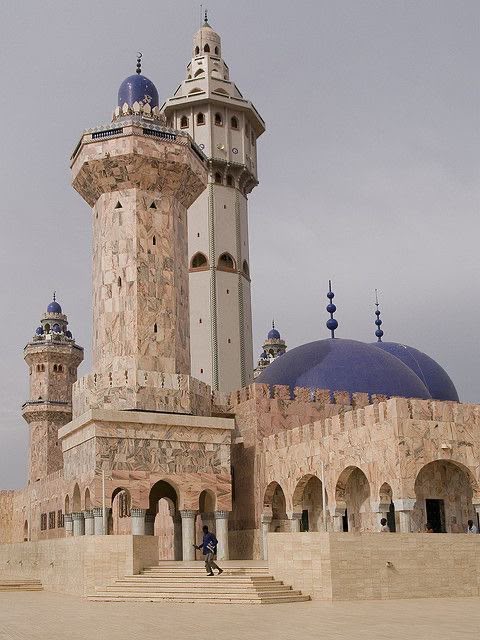
Islam is one of the major religions in West Africa, with millions of followers across Nigeria, Niger, Mali, Senegal, Ghana, Guinea, Burkina Faso, and other neighbouring countries. Today, mosques, Islamic schools, religious festivals, and Muslim communities are an important part of the region’s cultural and social life.
However, Islam did not arrive in West Africa overnight, nor did it spread through a single person or event. Its introduction and expansion took place over several centuries through trade, scholarship, migration, diplomacy, religious movements, and, in some periods, military campaigns.
The history of Islam in West Africa is closely connected to the trans-Saharan trade routes, the ancient empires of Ghana, Mali, and Songhai, and the development of Islamic centres of learning. In Nigeria, the story is particularly significant because Islam became deeply established in the northern regions before gradually expanding into other parts of the country.
This article explores how Islam reached West Africa, how it spread across Nigeria and neighbouring countries, the influential figures who contributed to its growth, and the lasting impact of Islam on African society.
1. The Early Arrival of Islam in West Africa
Islam began in Arabia in the seventh century following the teachings of Prophet Muhammad (peace be upon him). After his death in 632 CE, Islam expanded beyond the Arabian Peninsula into North Africa.
By the seventh and eighth centuries, Muslim communities had become established across parts of North Africa, particularly in Egypt and areas of present-day Libya, Tunisia, Algeria, and Morocco.
From North Africa, Islam gradually reached West Africa through commercial connections across the Sahara Desert.
Arab and Berber Muslim merchants travelled across the desert carrying goods such as salt, textiles, horses, copper, and other valuable commodities. In return, they obtained gold, ivory, leather, and other products from West African communities.
These commercial relationships created opportunities for cultural and religious exchange. Muslim traders introduced Islamic beliefs, Arabic literacy, religious practices, and new systems of education to the communities with which they interacted.
Initially, Islam was concentrated among merchants, rulers, scholars, and trading communities. Over time, its influence expanded into different parts of West African society.
2. The Role of Trans-Saharan Trade in Spreading Islam
One of the most important factors behind the spread of Islam in West Africa was the trans-Saharan trade.
For centuries, trade routes connected North African cities such as Sijilmasa, Tripoli, and Tunis with important West African commercial centres.
The Sahara Desert, despite its difficult conditions, became a major channel of economic and cultural exchange.
Muslim merchants did more than exchange goods. They also introduced Islamic religious teachings, Arabic writing, commercial practices, and connections with the wider Muslim world.
West African rulers increasingly recognised the economic and diplomatic advantages of maintaining relationships with Muslim traders and scholars.
As a result, some rulers adopted Islam, while others welcomed Muslim communities into their kingdoms.
The spread of Islam through trade was generally gradual and varied from one region to another. In many communities, Islamic practices existed alongside established African religious and cultural traditions for generations.
3. Islam and the Ancient Ghana Empire
The ancient Ghana Empire, which flourished between approximately the sixth and thirteenth centuries, was one of the earliest major West African states to develop strong commercial relationships with Muslim North Africa.
The empire was located mainly in areas of present-day southeastern Mauritania and western Mali, rather than in the territory of modern Ghana.
Its wealth was closely connected to the trans-Saharan gold and salt trade.
Muslim merchants settled in commercial centres within the empire, particularly in the town of Kumbi Saleh, which became associated with a Muslim trading community.
Although the rulers of ancient Ghana largely maintained their traditional religious beliefs, they permitted Muslim merchants to practise Islam and establish communities.
These relationships helped introduce Islamic learning and Arabic literacy into the region.
The Ghana Empire therefore played an important role in the early history of Islam in West Africa, even though its rulers did not immediately make Islam the official religion of the state.
4. The Mali Empire and the Growth of Islamic Scholarship
<escape> </escape> One of the most important developments in the history of Islam in West Africa occurred during the rise of the Mali Empire in the thirteenth century.
The Mali Empire became a major centre of trade, political power, and Islamic scholarship. Its influence extended across large parts of present-day Mali and neighbouring territories.
One of its most famous rulers was Mansa Musa, who ruled during the fourteenth century.
Mansa Musa is particularly remembered for his pilgrimage to Mecca in 1324. His journey attracted international attention because of the enormous wealth and resources associated with his empire.
During his pilgrimage, he passed through important North African cities and strengthened Mali’s connections with the wider Islamic world.
Following his return, he supported Islamic education and encouraged the development of mosques and centres of learning.
The city of Timbuktu became especially important as a centre of Islamic scholarship.
Scholars, students, traders, and religious teachers travelled to Timbuktu to study Islamic theology, law, mathematics, astronomy, and literature.
The city’s famous Sankore learning centre became part of a wider intellectual tradition that established West Africa as an important region of Islamic scholarship.
5. The Songhai Empire and the Expansion of Islam
Following the decline of the Mali Empire, the Songhai Empire emerged as another major West African power.
The empire reached its height during the fifteenth and sixteenth centuries, particularly under rulers such as Sunni Ali and Askia Muhammad.
Askia Muhammad, who ruled from 1493 to 1528, played a significant role in strengthening Islam within the empire.
He supported Muslim scholars, promoted Islamic education, and established stronger connections with Islamic centres in North Africa and the Middle East.
He also undertook a pilgrimage to Mecca in 1496–1497, further strengthening Songhai’s religious and diplomatic relationships.
Under his leadership, Timbuktu and other cities became important centres of Islamic learning and administration.
The Songhai Empire helped spread Islam across a wider geographical area and reinforced the importance of Islamic scholarship in West African political and cultural life.
6. How Islam Reached Nigeria
The history of Islam in Nigeria is closely connected to two major historical regions: Kanem-Borno in the northeast and the Hausa city-states in the northwest.
Islam entered the territories that make up modern-day Nigeria through different routes and at different periods.
A. The Arrival of Islam in Kanem-Borno
Kanem-Borno was one of the earliest major Islamic kingdoms in the region.
Historical accounts associate the conversion of the Kanem ruler, Mai Humai, with the late eleventh century, around 1085–1087 CE.
The conversion helped establish Islam within the ruling dynasty and strengthened connections with Muslim communities in North Africa.
Muslim scholars, merchants, and religious teachers travelled through the trans-Saharan routes connecting Lake Chad with North Africa.
Over time, Islam became firmly established among the Kanuri people and the ruling families of Kanem-Borno.
When political changes forced the ruling Sayfawa dynasty to relocate from Kanem to Borno in the fourteenth century, Islamic traditions continued to develop.
Borno eventually became an important centre of Islamic scholarship, administration, and religious learning.
Its rulers maintained diplomatic and commercial relationships with North African states, including those in the wider Maghreb.
The influence of Kanem-Borno extended into parts of present-day Nigeria, Niger, Chad, and Cameroon.
B. The Spread of Islam to Hausaland
Islam also entered the Hausa city-states through merchants and scholars arriving from Mali, Songhai, North Africa, and other Muslim communities.
The Hausa city-states included Kano, Katsina, Zazzau (Zaria), Gobir, Daura, Rano, and Biram.
From approximately the fourteenth century, Muslim traders and religious teachers became increasingly influential in these communities.
One important historical figure was Muhammad Yaji, the ruler of Kano, whose reign is associated with the establishment of Islam among Kano’s ruling elite in the fourteenth century.
Islam gradually gained acceptance among other Hausa rulers and influential families.
By the fifteenth and sixteenth centuries, Islam had become increasingly important in the political and commercial life of several Hausa states.
Kano and Katsina developed into important centres of Islamic education, trade, and scholarship.
However, the conversion of rulers did not mean that the entire population immediately became Muslim. The wider process of Islamisation continued over several generations.
7. The Role of the Fulani and the Sokoto Jihad
One of the most significant events in Nigerian Islamic history was the nineteenth-century Islamic reform movement led by Sheikh Uthman dan Fodio.
Uthman dan Fodio was born in 1754 in Gobir, in present-day northwestern Nigeria. He was a respected Islamic scholar, teacher, writer, and religious reformer.
He criticised corruption, injustice, and practices he considered inconsistent with Islamic teachings among the ruling authorities of the Hausa states.
In 1804, he launched a reform movement that developed into a major jihad across Hausaland.
His followers included Fulani and Hausa Muslims, scholars, students, and other supporters.
The movement resulted in the establishment of the Sokoto Caliphate, which became one of the most influential Islamic political systems in nineteenth-century West Africa.
The caliphate was organised through an extensive system of emirates, with Sokoto serving as its political and religious centre.
Uthman dan Fodio was supported by important figures, including his brother Abdullahi dan Fodio and his son Muhammad Bello.
His daughter, Nana Asma’u, also became a respected scholar, poet, and educator who contributed significantly to Islamic learning, particularly among women.
The Sokoto Caliphate strengthened Islamic education, scholarship, administration, and religious institutions across much of northern Nigeria and neighbouring territories.
It is important to understand that Islam was already established in northern Nigeria long before the Sokoto Jihad. The movement transformed and expanded an existing Islamic society rather than introducing Islam to the region for the first time.
8. How Islam Spread to Southwestern Nigeria
Although Islam became firmly established in northern Nigeria centuries earlier, its expansion into the southwest followed different historical routes.
Muslim traders, scholars, migrants, and travelling teachers contributed to the introduction of Islam into Yoruba communities.
Trade connections between northern Nigeria, the Niger region, and Yoruba towns helped facilitate religious and cultural exchange.
Some Yoruba individuals encountered Islam through commercial relationships with Muslim merchants and through contact with Muslim communities in neighbouring regions.
Islam gradually developed in towns such as Oyo, Ibadan, Iseyin, Ilorin, Lagos, Abeokuta, and other parts of Yorubaland.
Ilorin became particularly important because of its connections with the Sokoto-era political and religious transformations of the nineteenth century.
Lagos also developed a significant Muslim community through trade, migration, religious scholarship, and connections with other West African Muslim societies.
By the nineteenth and twentieth centuries, Islam had become an established religion among many Yoruba communities.
Islamic teachers, local scholars, and Muslim organisations helped establish mosques, Quranic schools, and other religious institutions.
The growth of Islam in southwestern Nigeria demonstrates how the religion spread through a combination of trade, education, migration, family relationships, and local religious leadership.
9. The Spread of Islam to Senegal and Gambia
Islam also spread into the western parts of West Africa, particularly present-day Senegal and Gambia.
The Senegambia region became connected to North African Muslim communities through trans-Saharan trade and the movement of religious scholars.
One early Islamic centre was Takrur, a historical state in the Senegal River valley.
By the eleventh century, Islam had gained considerable influence among some ruling families and commercial communities in the region.
Over the following centuries, Islamic scholars and religious movements helped strengthen the religion’s presence.
During the nineteenth century, Muslim reform movements and Sufi brotherhoods became particularly influential.
One of the most important religious figures was Sheikh Amadou Bamba, the founder of the Mouride brotherhood in Senegal.
Another influential figure was El Hadj Umar Tall, who led a major Islamic reform movement and established a state that extended across parts of present-day Senegal, Mali, and neighbouring territories.
Today, Senegal is home to several influential Sufi brotherhoods, including the Mouride and Tijaniyya communities.
In Gambia, Islam also became deeply established through trade, migration, religious teaching, and connections with neighbouring Senegal.
10. The Spread of Islam to Niger, Mali, Ghana, and Guinea
Islam expanded into several other West African countries through similar historical processes.
Niger: Islam reached the territories of present-day Niger through trans-Saharan trade and its connections with Kanem-Borno, Hausaland, and North African Muslim communities. Religious scholars and traders helped establish Islam among different communities, including Hausa, Zarma, and Tuareg populations.
Mali: Mali became one of the most important centres of Islamic civilisation in West Africa through the ancient Mali and Songhai empires. Cities such as Timbuktu, Gao, and Djenné became internationally recognised centres of Islamic scholarship.
Ghana: Islam spread into present-day Ghana through Muslim traders and scholars, particularly through connections with the northern savanna and trans-Saharan commercial networks. Hausa and Mande-speaking Muslim communities also contributed to its expansion.
Guinea: Islam became established through trade, scholarship, migration, and the influence of Muslim religious leaders. The nineteenth-century reform movement associated with Al-Hajj Umar Tall also played an important role in the region.
Burkina Faso: Islam spread through commercial exchanges, migration, and religious teaching from neighbouring Mali, Niger, and other parts of the Sahel.
Although the timing and circumstances differed from one country to another, these developments demonstrate the interconnected nature of West African Islamic history.
11. The Role of Islamic Scholars and Missionaries
Islamic scholars played a central role in spreading the religion across West Africa.
Unlike trade, which primarily established contact between different communities, religious scholarship helped explain Islamic beliefs, teachings, and practices.
Scholars travelled from one community to another, teaching the Quran, Islamic jurisprudence, Arabic language, theology, and moral principles.
Some established Quranic schools, while others became advisers to kings, rulers, and political authorities.
Among the important historical personalities associated with Islamic scholarship in West Africa were:
- Mansa Musa: The Mali emperor who strengthened the empire’s connections with the wider Muslim world.
- Askia Muhammad: The Songhai ruler who supported Islamic institutions and scholarship.
- Uthman dan Fodio: The Nigerian Islamic scholar and reformer who established the Sokoto Caliphate.
- Abdullahi dan Fodio: A prominent scholar and contributor to the Sokoto reform movement.
- Muhammad Bello: A scholar and ruler who helped consolidate the Sokoto Caliphate.
- Nana Asma’u: A distinguished Islamic scholar and educator who promoted women’s education.
- Al-Hajj Umar Tall: A nineteenth-century Islamic scholar and reform leader in the western Sahel.
- Amadou Bamba: The Senegalese religious leader who founded the Mouride brotherhood.
Their contributions helped establish a lasting tradition of Islamic education and scholarship across West Africa.
12. The Influence of Sufi Brotherhoods in West Africa
Another important factor in the development of Islam in West Africa was the growth of Sufi brotherhoods.
Sufism emphasises spiritual development, religious discipline, remembrance of Allah, and the purification of the heart.
Several Sufi traditions became influential throughout the region.
The Qadiriyya and Tijaniyya brotherhoods developed extensive networks of followers, scholars, and religious teachers.
The Tijaniyya became particularly influential in Senegal, Nigeria, Niger, Mali, and other West African countries.
The Qadiriyya also gained a strong following, especially in northern Nigeria and neighbouring regions.
These brotherhoods helped establish religious communities, promote Islamic education, and connect Muslims across geographical and cultural boundaries.
Their influence remains visible in religious gatherings, Quranic recitations, spiritual teachings, and Islamic festivals across West Africa.
13. The Impact of Colonialism on Islam in West Africa
European colonialism significantly changed the political and social structures of West Africa.
During the nineteenth and twentieth centuries, European powers established colonial administrations across much of the region.
Britain colonised Nigeria and Ghana, while France controlled territories including Senegal, Mali, Niger, Guinea, and Burkina Faso.
Colonial rule affected existing Islamic institutions, political authorities, educational systems, and commercial networks.
In northern Nigeria, the British administration incorporated the existing emirate system into its system of indirect rule.
In French-controlled territories, colonial authorities introduced different administrative and educational policies that affected Muslim institutions and religious leadership.
Despite these changes, Islam continued to grow.
Muslim scholars maintained Quranic education, established religious communities, and adapted to the new political environment.
In Nigeria, Islamic education remained particularly important, with Quranic schools and traditional centres of learning continuing alongside the development of modern educational institutions.
14. Islam in Modern-Day Nigeria and West Africa
Today, Islam is one of the most influential religions in West Africa.
Nigeria has one of the largest Muslim populations in Africa, with significant Muslim communities in the northern and southwestern parts of the country.
Muslims in Nigeria belong to different ethnic groups, including Hausa, Fulani, Kanuri, Yoruba, Nupe, and many others.
The religion is also practised across neighbouring countries, including Niger, Senegal, Mali, Gambia, Guinea, and Burkina Faso.
Modern Islamic institutions include:
- Mosques and Islamic centres.
- Quranic and Arabic schools.
- Islamic universities and research institutions.
- Muslim charitable organisations.
- Islamic banks and financial institutions.
- Religious associations and scholarly councils.
- Organisations promoting Islamic education and community development.
Islamic celebrations such as Eid al-Fitr and Eid al-Adha are observed across the region.
Ramadan also remains an important period of fasting, prayer, charity, and spiritual reflection for Muslim communities.
In Nigeria, cities such as Kano, Sokoto, Maiduguri, Ilorin, Lagos, and Kaduna have significant Islamic historical and cultural importance.
15. The Cultural and Educational Contributions of Islam
The arrival of Islam brought significant changes to different aspects of West African society.
Education and literacy: Arabic literacy became an important tool for religious instruction, scholarship, record keeping, and administration. Quranic schools helped spread reading and writing among Muslim communities.
Architecture: Islamic influence contributed to the development of distinctive architectural styles, including mud-brick mosques and traditional Islamic buildings. The Great Mosque of Djenné in Mali is one of the most famous examples.
Trade and commerce: Muslim merchants helped establish commercial networks connecting West Africa with North Africa and other parts of the Muslim world.
Literature and scholarship: Islamic scholars produced manuscripts on religion, law, history, mathematics, astronomy, and other subjects. Timbuktu became particularly famous for its manuscript collections.
Social development: Islamic teachings influenced charitable giving, community organisation, family life, religious celebrations, and social responsibilities.
Language and communication: Arabic introduced new vocabulary and writing traditions into several West African societies. Islamic scholarship also encouraged the development of Ajami, the use of Arabic script to write African languages such as Hausa and Fulfulde.
These contributions helped shape the intellectual, cultural, and social development of the region.
16. Important Historical Lessons from the Spread of Islam in West Africa
The history of Islam in West Africa teaches us several important lessons.
First, the spread of religion can take place through peaceful interaction, trade, education, migration, and cultural exchange.
Second, African societies were not simply passive recipients of foreign religious influences. West African rulers, merchants, scholars, and ordinary people actively shaped the way Islam developed in their communities.
Third, African Islamic civilisation produced influential scholars, educational institutions, manuscripts, architectural achievements, and political systems that contributed to world history.
Finally, the history of Islam in West Africa cannot be understood by focusing on Nigeria alone. The region’s Islamic development was interconnected, with ideas, people, and knowledge moving between Mali, Songhai, Kanem-Borno, Hausaland, Senegambia, and other territories.
Conclusion
The history of Islam in West Africa is a remarkable story of faith, trade, scholarship, migration, and cultural transformation.
From its early introduction through North African Muslim traders to the rise of powerful Islamic centres such as Timbuktu, Kano, Katsina, and Sokoto, Islam gradually became an important part of West African civilisation.
In Nigeria, the development of Islam was particularly influenced by the Kanem-Borno kingdom, the Hausa city-states, Muslim scholars, Fulani religious leaders, and the establishment of the Sokoto Caliphate in the nineteenth century.
In neighbouring countries such as Mali, Senegal, Niger, Gambia, Guinea, and Ghana, trade networks, Islamic scholarship, and religious movements also contributed to the growth of Muslim communities.
Today, Islam remains an important part of West Africa’s identity, history, education, and cultural heritage.
Understanding how Islam reached the region helps us appreciate not only the history of religion but also the achievements of African scholars, rulers, traders, and communities who helped shape one of the most significant religious traditions on the continent.
The story of Islam in West Africa is not simply the story of a religion arriving in a new land; it is also the story of how African societies embraced, interpreted, developed, and contributed to a global civilisation.
