


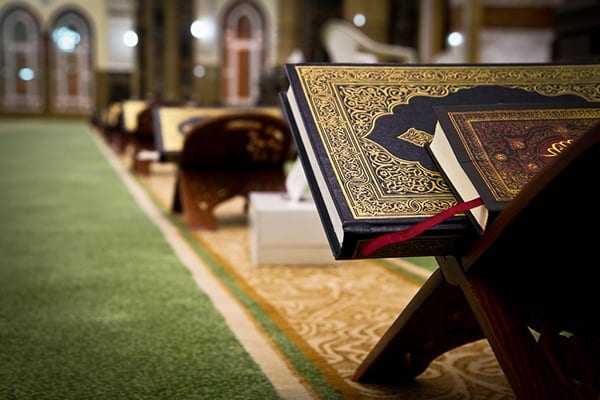
An important reminder about faith, blind following, seeking the truth, and returning to the authentic teachings of Islam.
One of the most important questions every Muslim should ask themselves is this:
Am I following the Qur’an and the authentic Sunnah of Prophet Muhammad (peace and blessings be upon him), or am Isimply following what I was taught, what my family practises, what my community believes, or what a particularscholar says?
This is not a question intended to disrespect scholars, parents, teachers, or Islamic institutions. Rather, it is a question ofsincerity, knowledge, accountability, and our relationship with Allah.
Islam is not a religion of inherited assumptions. It is a religion built upon revelation, knowledge, evidence, and sinceresubmission to Allah.
Unfortunately, many people grow up practising certain religious traditions without ever asking where those practicesoriginated. They may defend a particular opinion simply because their parents followed it, their local imam teaches it,or their community has practised it for generations.
But should that be enough?
1. The Qur’an Must Be Our Ultimate Reference
Allah has given us the Qur’an as guidance for humanity. It is not merely a book to be recited during Ramadan,displayed in our homes, or read without understanding.
It is a book we are commanded to reflect upon, understand, and follow.
Allah says:
“And this is a blessed Book which We have revealed to you, that they might reflect upon its verses and thatthose of understanding would be reminded.”
Qur’an 38:29
Notice the importance of reflection.
A Muslim should not be satisfied with simply repeating what others say without seeking knowledge of what Allah hasactually revealed.
When an opinion, tradition, or religious practice is presented to you, ask:
-
Is there evidence for it in the Qur’an?
-
Is it supported by the authentic Sunnah?
-
How did the early generations of Muslims understand it?
-
Is this an established teaching of Islam or simply a cultural practice?
Our loyalty must ultimately be to Allah and His revelation.
2. The Sunnah of Prophet Muhammad (SAW) Is Not Optional
Some people speak about following the Qur’an but give little attention to the authentic Sunnah.
However, the Qur’an itself commands Muslims to obey the Messenger of Allah.
Allah says:
“And whatever the Messenger has given you – take; and what he has forbidden you – refrain from.”
Qur’an 59:7
Allah also says:
“He who obeys the Messenger has obeyed Allah.”
Qur’an 4:80
The Sunnah explains, demonstrates, and practically teaches us how to live according to the Qur’an.
The Prophet Muhammad (peace and blessings be upon him) showed us how to pray, fast, give charity, treat ourneighbours, conduct business, raise families, and worship Allah.
Therefore, following Islam requires more than personal interpretation of the Qur’an. It requires taking the authenticteachings of the Messenger seriously.
3. Do Not Follow Something Simply Because Your Parents Did It
Respecting our parents is an important obligation in Islam. However, respecting parents does not mean accepting everyreligious belief or practice without examination.
Allah reminds us of people who rejected guidance because they preferred the traditions of their ancestors.
He says:
“And when it is said to them, ‘Follow what Allah has revealed,’ they say, ‘Rather, we will follow that whichwe found our fathers doing.'”
Qur’an 2:170
This verse presents an important lesson.
Something does not become religiously correct simply because it has existed for generations.
A practice may be deeply rooted in a community, widely accepted, and emotionally important to people. Yet itspopularity does not automatically make it part of Islam.
We must learn to distinguish between:
-
Islam and culture.
-
Revelation and tradition.
-
Authentic Sunnah and unsupported religious practices.
-
Established Islamic teachings and personal opinions.
We can respect our heritage without treating every inherited practice as an act of worship prescribed by Allah.
4. Respect Scholars, But Do Not Treat Them as Infallible
Islam encourages seeking knowledge from qualified scholars.
Not everyone has the knowledge or ability to independently interpret the Qur’an and Sunnah. Matters of Islamicjurisprudence can be complex and require years of study.
Therefore, consulting knowledgeable scholars is essential.
However, we must also remember that scholars are human beings. They can make mistakes, disagree, misunderstandevidence, or change their opinions when stronger evidence becomes clear.
No scholar is infallible.
Allah says:
“Ask the people of knowledge if you do not know.”
Qur’an 16:43
This verse teaches us to seek knowledge from those qualified to provide it.
It does not mean that we should turn any scholar into someone whose every statement must be accepted withoutquestion.
The proper approach is to respect scholars, benefit from their knowledge, understand their evidence, and avoid treatingtheir personal opinions as though they were revelation.
The Qur’an and authentic Sunnah remain the ultimate standards.
5. Allah Warns Against Speaking About Religion Without Knowledge
One of the most dangerous things a Muslim can do is confidently declare something halal or haram without properknowledge.
Sometimes people argue aggressively about religious matters without understanding the evidence.
Others spread religious statements through social media without verifying their authenticity.
Some attribute statements to the Prophet Muhammad (SAW) without checking whether the hadith is authentic.
This is a serious responsibility.
Allah says:
“And do not pursue that of which you have no knowledge. Indeed, the hearing, the sight and the heart –about all those [one] will be questioned.”
Qur’an 17:36
Think about this carefully.
Our words, actions, and beliefs matter.
Before sharing a religious quotation, verify it. Before accusing another Muslim of wrongdoing, understand the matter.Before declaring a practice forbidden, establish the evidence.
Sincerity is important, but sincerity must be accompanied by knowledge.
6. Do Not Turn Differences of Opinion Into Hatred
Another problem within the Muslim community is the way some people handle disagreements.
Instead of discussing evidence with wisdom, some resort to insults, accusations, division, and hostility.
A Muslim may follow a recognised school of Islamic jurisprudence, while another follows a different recognisedschool.
There are legitimate differences among qualified scholars concerning certain matters.
Not every disagreement means that one person has abandoned Islam or rejected the Sunnah.
Allah says:
“And hold firmly to the rope of Allah all together and do not become divided.”
Qur’an 3:103
This does not mean that we should abandon the pursuit of truth or pretend that all religious opinions are equally correct.
It means that disagreements should be approached with knowledge, justice, humility, and good character.
Our objective should be to understand and follow the truth, not to win arguments or humiliate others.
7. Are You Worshipping Allah or Defending a Group?
This is another question worth reflecting upon.
Sometimes people become so attached to a particular movement, organisation, teacher, school, or religious personalitythat they begin defending everything associated with that group.
When evidence is presented, they reject it simply because it challenges what they have always believed.
When a scholar from another background explains an issue, they refuse to listen.
When someone questions a traditional practice, they become offended.
But Islam is not about protecting the reputation of a group or personality.
Our purpose is to worship Allah sincerely.
Allah says:
“And they were not commanded except to worship Allah, [being] sincere to Him in religion.”
Qur’an 98:5
Ask yourself:
If clear and authentic evidence contradicts something you have always believed, are you willing to reconsider yourposition?
Or will you reject the evidence simply because accepting it would mean admitting that you were mistaken?
A sincere believer should always be willing to learn.
8. Following the Qur’an and Sunnah Requires Knowledge, Not Arrogance
There is something equally important that must be understood.
Claiming to follow the Qur’an and Sunnah does not automatically make someone knowledgeable.
A person cannot simply read a translation of one verse, interpret it according to personal feelings, and then declareeveryone else misguided.
The Qur’an must be understood in its proper context.
Hadith must be examined according to the principles of hadith scholarship.
Islamic rulings require knowledge of relevant texts, their interpretation, and the principles of Islamic jurisprudence.
This is why we need qualified scholars and reliable teachers.
The goal is not to become someone who argues with everybody in the name of following evidence.
The goal is to become a Muslim who seeks knowledge, accepts correction, practises humility, and submits sincerely toAllah.
The Prophet Muhammad (SAW) said:
“Whoever Allah wishes good for, He gives him understanding of the religion.”
Sahih al-Bukhari 71; Sahih Muslim 1037
Understanding the religion is a blessing. We should continually ask Allah to increase us in beneficial knowledge.
9. Remember That You Will Stand Before Allah Alone
At the end of our lives, we will not be able to escape personal accountability by saying:
-
My parents taught me this.
-
My community practised this.
-
My imam told me this.
-
My organisation believed this.
-
Everybody around me was doing it.
Seeking guidance from others is necessary, but we must also take our responsibility before Allah seriously.
Allah says:
“Every soul, for what it has earned, will be retained.”
Qur’an 74:38
We should therefore make a sincere effort to learn what Allah has commanded, follow the authentic teachings of His Messenger, and correct ourselves whenever we discover that we have made a mistake.
The question is not whether we inherited a particular religious identity.
The question is whether we are sincerely seeking the pleasure of Allah.
10. Let Us Return to the Qur’an and Authentic Sunnah
Returning to the Qur’an and Sunnah does not mean disrespecting our parents, abandoning scholars, or creating unnecessary divisions within the Muslim community.
It means putting revelation above personal preferences.
It means learning Islam from reliable sources.
It means verifying religious claims.
It means distinguishing cultural traditions from religious obligations.
It means accepting that we can be wrong and that learning is a lifelong responsibility.
It also means recognising that following the Sunnah requires understanding the Prophet’s teachings as they were transmitted and understood, rather than using isolated quotations to justify personal opinions.
We should constantly ask Allah to guide us towards what is correct and protect us from ignorance, arrogance, and blind attachment.
Final Reflection: Ask Yourself These Questions
Before you defend a religious practice, reject another Muslim’s opinion, or insist that something is part of Islam, take a moment to reflect:
-
Do I know the evidence for what I am practising?
-
Have I verified whether the hadith I quote is authentic?
-
Am I following the Qur’an and Sunnah or simply repeating what I inherited?
-
Do I respect qualified scholars while recognising that they can make mistakes?
-
Am I willing to correct myself when stronger evidence becomes clear?
-
Do I seek the truth, or do I simply want my group to be right?
-
Am I learning Islam to please Allah or to win arguments against other Muslims?
These are questions every Muslim should consider, regardless of their background, school of thought, or community.
Never allow your attachment to a person, group, culture, or tradition to become greater than your commitment to Allah.
Respect your parents. Honour your teachers. Learn from qualified scholars. But never forget that Allah’s revelation is the ultimate authority in Islam.
May Allah grant us beneficial knowledge, sincere hearts, correct understanding of the Qur’an and authentic Sunnah, and the courage to accept the truth even when it challenges what we have always believed.
May He protect us from ignorance, arrogance, blind following, religious extremism, and division.
Ameen.
Share this reminder with someone who may benefit from it. Let us encourage one another to seek knowledge, verify what we practise, and sincerely follow the Qur’an and authentic Sunnah.
And remember: The purpose of seeking the truth is not to prove that everyone else is wrong. It is to ensure that we are doing our best to please Allah.
