


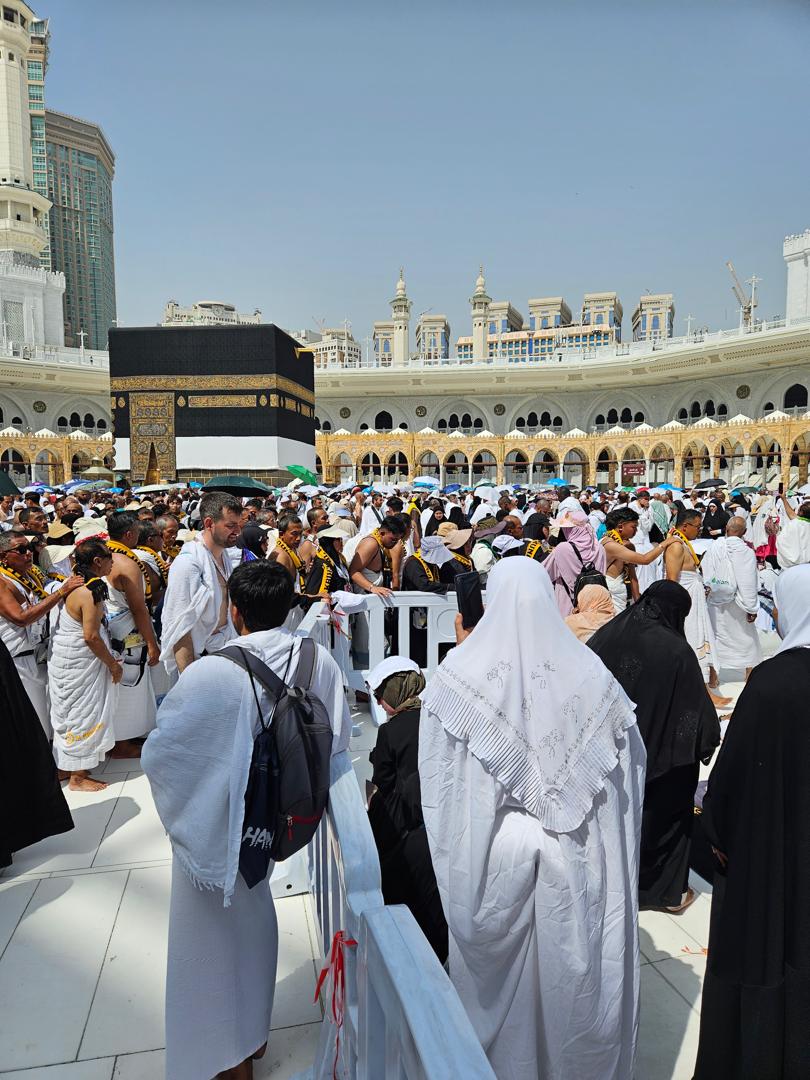
Makkah is home to the Ka’bah and Masjid al-Haram, where Muslims gather from every corner of the world to perform Hajj, Umrah, pray, and seek the mercy of Allah. Madinah, the beloved city of the Prophet Muhammad (peace and blessings be upon him), is home to Al-Masjid an-Nabawi, where Muslims visit to pray, send blessings upon the Prophet, and reflect on his beautiful legacy.
Visiting these sacred cities is more than an ordinary journey. It is an opportunity to renew one’s faith, seek forgiveness, strengthen one’s relationship with Allah, and learn the importance of patience, humility, kindness, and good character.
However, every Muslim visiting Makkah and Madinah should understand that these holy places deserve special respect. Observing Islamic etiquette helps preserve their sanctity and ensures that fellow pilgrims can worship peacefully.
Whether you are visiting for Hajj, Umrah, or Ziyarah, this guide explores the essential Islamic etiquette to observe in Makkah and Madinah.
1. Renew Your Intention Before Travelling
One of the most important Islamic etiquettes begins before arriving in the holy cities: having a sincere intention.
A Muslim should travel to Makkah and Madinah primarily to seek the pleasure of Allah, perform acts of worship, follow the Sunnah of Prophet Muhammad (peace and blessings be upon him), and strengthen their faith.
Avoid making the journey solely about sightseeing, shopping, social media content, or taking photographs.
Before travelling:
- Make sincere repentance for past mistakes.
- Seek forgiveness from Allah.
- Settle outstanding debts where possible.
- Ask forgiveness from anyone you may have wronged.
- Learn the essential rules of Hajj or Umrah.
- Prepare yourself spiritually, physically, and mentally.
- Make sincere supplications for yourself, your family, and the Muslim Ummah.
Remember that a successful spiritual journey is not measured by the number of photographs taken but by the sincerity of your worship and the positive changes you make in your life.
2. Observe Modesty and Dress Appropriately
Modesty is an important part of Islamic character, especially when visiting the Two Holy Mosques.
Both men and women should dress respectfully and ensure that their clothing meets Islamic requirements.
For men:
- Wear clean, modest, and appropriate clothing.
- Observe the rules of Ihram when performing Hajj or Umrah.
- Avoid clothing that exposes the body unnecessarily.
- Keep yourself clean and presentable.
For women:
- Wear loose-fitting, modest clothing that covers the body appropriately.
- Observe Islamic guidelines for Hijab.
- Avoid transparent, tight-fitting, or excessively decorated clothing.
- Maintain cleanliness and dignity.
When in the state of Ihram, remember that there are specific restrictions governing clothing, perfume, grooming, and other activities. Learn these rules before beginning your pilgrimage.
Modesty is not simply about clothing; it also includes speech, behaviour, interactions, and respect for others.
3. Maintain Cleanliness and Personal Hygiene
Islam places great importance on cleanliness. The Prophet Muhammad (peace and blessings be upon him) taught Muslims to maintain personal hygiene and cleanliness in their surroundings.
When visiting Makkah and Madinah, cleanliness should be a priority.
Good practices include:
- Perform Wudu before prayers.
- Keep your body and clothing clean.
- Use appropriate facilities for ablution.
- Dispose of rubbish in designated bins.
- Avoid spitting or littering in public spaces.
- Keep mosque prayer areas clean.
- Maintain good personal hygiene.
During busy Hajj and Umrah seasons, thousands of people share the same facilities. Maintaining cleanliness protects everyone’s comfort and health.
Remember that keeping the sacred mosques clean is an expression of respect for the places of worship.
4. Show Respect Inside Masjid al-Haram in Makkah
Masjid al-Haram is the holiest mosque in Islam and the location of the Holy Ka’bah.
Muslims from different countries, cultures, and backgrounds gather here to worship Allah. Every visitor should contribute to an atmosphere of peace, humility, and devotion.
Some important etiquettes include:
Lower your voice: Avoid shouting, unnecessary conversations, and disturbing others who are praying or reciting the Qur’an.
Avoid pushing: Never push other pilgrims to reach the Ka’bah, touch the Black Stone, or obtain a preferred prayer position.
Respect prayer areas: Avoid walking directly in front of people performing Salah where possible.
Keep the mosque clean: Do not leave food wrappers, tissues, water cups, or other rubbish behind.
Follow instructions: Cooperate with security personnel and mosque staff, especially during crowded periods.
Avoid unnecessary photography: Do not allow photographs and videos to distract you from worship or inconvenience others.
Make room for others: Share available space and avoid occupying prayer areas unnecessarily.
The greatness of Masjid al-Haram should remind every Muslim that humility and good character are essential parts of worship.
5. Observe Proper Etiquette During Tawaf
Tawaf is one of the central acts of Umrah and Hajj. It involves walking around the Holy Ka’bah seven times in an anticlockwise direction, keeping the Ka’bah on one’s left.
Every pilgrim should perform Tawaf with concentration, patience, and humility.
Important etiquette includes:
- Begin Tawaf in alignment with the Black Stone.
- Keep the Ka’bah on your left.
- Complete all seven circuits.
- Recite supplications and remember Allah.
- Avoid shouting or disturbing other pilgrims.
- Walk calmly and follow the movement of the crowd.
- Do not push people to kiss or touch the Black Stone.
- Follow the designated routes and instructions.
It is important to understand that kissing the Black Stone is not compulsory. If reaching it requires pushing, hurting, or inconveniencing others, simply gesture towards it from a distance.
The worship and safety of other Muslims should never be sacrificed for a recommended act.
6. Maintain Patience During Sa’i Between Safa and Marwah
Sa’i is another important act of Umrah and Hajj. It commemorates the struggle and devotion of Hajar (may Allah be pleased with her) as she searched for water for her son, Prophet Ismail (peace be upon him).
Pilgrims walk seven times between the hills of Safa and Marwah.
During Sa’i:
- Begin at Safa and finish at Marwah.
- Follow the designated walking routes.
- Avoid rushing unnecessarily.
- Make Dhikr and personal supplications.
- Be considerate towards elderly pilgrims and people with disabilities.
- Avoid blocking walkways.
- Follow official instructions.
Men observe the prescribed brisk walking between the designated green markers where applicable, while women walk normally.
Sa’i teaches Muslims the importance of patience, trust in Allah, perseverance, and sincere effort.
7. Respect the Holy City of Makkah
Respect for Makkah should extend beyond the walls of Masjid al-Haram.
Visitors should demonstrate good Islamic manners throughout the city.
Some important practices include:
- Avoid arguments, fighting, and unnecessary disputes.
- Speak politely to residents, workers, and fellow pilgrims.
- Respect public property.
- Avoid littering and damaging the environment.
- Do not disturb people in hotels or residential areas.
- Be patient with traffic and crowded transport.
- Avoid wasting food and water.
- Help elderly people and those who need assistance.
Remember that your behaviour outside the mosque is also a reflection of your Islamic character.
A Muslim should strive to display kindness and good manners wherever they go.
8. Observe Proper Etiquette When Visiting Masjid an-Nabawi in Madinah
Madinah is the beloved city of Prophet Muhammad (peace and blessings be upon him). It is home to Al-Masjid an-Nabawi, one of the most important mosques in Islam.
Visiting this mosque is a special spiritual experience for Muslims.
When entering Masjid an-Nabawi:
- Enter with your right foot.
- Recite the appropriate supplication for entering a mosque.
- Maintain cleanliness and personal hygiene.
- Pray Tahiyyat al-Masjid when appropriate.
- Speak softly and respectfully.
- Avoid unnecessary conversations.
- Give other worshippers enough space.
- Spend time in Salah, Qur’an recitation, Dhikr, and supplication.
The Prophet’s Mosque is a place of worship and reflection. Visitors should avoid turning their visit into a social event or allowing mobile phones to distract them from remembrance of Allah.
Always follow the mosque authorities’ instructions regarding entrances, exits, prayer spaces, and movement within the mosque.
9. Send Salawat Upon Prophet Muhammad (Peace Be Upon Him)
One of the beautiful acts of worship for Muslims visiting Madinah is sending blessings and peace upon Prophet Muhammad (peace and blessings be upon him).
Allah says in Surah Al-Ahzab, verse 56:
“Indeed, Allah and His angels send blessings upon the Prophet. O you who believe, invoke blessings upon him and salute him with worthy greetings of peace.”
Muslims should increase their Salawat upon the Prophet throughout their visit.
One commonly recited form is:
Allahumma salli wa sallim ‘ala Nabiyyina Muhammad.
Meaning: O Allah, send Your blessings and peace upon our Prophet Muhammad.
Sending Salawat is an expression of love, respect, and obedience to the Messenger of Allah.
10. Observe Proper Etiquette When Greeting the Prophet Muhammad (PBUH)
Many Muslims look forward to visiting the area near the resting place of Prophet Muhammad (peace and blessings be upon him).
This visit should be conducted with dignity, respect, and calmness.
Recommended manners include:
- Approach calmly and respectfully.
- Lower your voice.
- Offer greetings of peace upon the Prophet.
- Avoid pushing or crowding other visitors.
- Keep your greeting brief to allow others their turn.
- Follow the designated visitor routes.
- Do not obstruct the movement of other worshippers.
- Avoid taking photographs or livestreaming in a way that distracts others.
A visitor may say:
As-salamu ‘alayka ya Rasulallah wa rahmatullahi wa barakatuh.
Meaning: Peace be upon you, O Messenger of Allah, and the mercy and blessings of Allah.
Visitors may also greet Abu Bakr As-Siddiq and Umar ibn Al-Khattab (may Allah be pleased with them).
It is important to remember that worship and supplication are directed to Allah alone. Visiting the Prophet’s Mosque and offering greetings should be done in accordance with Islamic teachings.
11. Respect Al-Rawdah Al-Sharifah
Al-Rawdah Al-Sharifah, also known as the Rawdah, is a particularly honoured area inside Masjid an-Nabawi.
The Prophet Muhammad (peace and blessings be upon him) said:
“Between my house and my pulpit is a garden from the gardens of Paradise.”
(Sahih al-Bukhari and Sahih Muslim)
Many Muslims hope to pray in this blessed area during their visit to Madinah.
However, visiting the Rawdah requires patience and consideration for others.
Observe the following etiquette:
- Check the current official entry and permit requirements.
- Follow your assigned entry time and instructions.
- Avoid pushing or rushing.
- Do not step over other worshippers.
- Keep your prayer brief if the area is crowded.
- Avoid arguing with mosque staff.
- Make sincere supplications.
- Leave promptly when your allotted time is over.
Never harm another Muslim while trying to obtain a place to pray in the Rawdah.
A voluntary act of worship should not become an excuse for mistreating others.
12. Avoid Excessive Photography and Social Media
Modern technology has made it easy to photograph and record every part of a journey. While taking personal photographs may be permitted in designated circumstances, visitors should understand that the Two Holy Mosques are primarily places of worship.
Avoid:
- Taking photographs during Salah.
- Blocking walkways for selfies.
- Photographing strangers without permission.
- Recording people who are praying.
- Broadcasting live during sensitive moments.
- Spending more time creating content than worshipping.
It is understandable that visitors want to preserve memories of their spiritual journey. However, the best memories are those that strengthen faith and remain in the heart.
Use your time wisely and give priority to worship, reflection, and remembrance of Allah.
13. Practise Patience and Kindness Towards Other Pilgrims
One of the most important Islamic etiquettes in Makkah and Madinah is showing kindness to other Muslims.
Pilgrims come from different countries and speak different languages. Some are elderly, some are physically challenged, and others may be visiting the holy cities for the first time.
You may encounter delays, crowded prayer areas, long queues, and transportation challenges.
In such situations:
- Be patient.
- Avoid unnecessary arguments.
- Do not insult or shout at others.
- Help elderly pilgrims where possible.
- Give priority to people who genuinely need assistance.
- Respect different nationalities and cultures.
- Avoid taking advantage of vulnerable visitors.
- Forgive minor mistakes.
The Prophet Muhammad (peace and blessings be upon him) taught Muslims that true believers should wish for their fellow Muslims what they wish for themselves.
Your patience may become one of the most meaningful acts of worship during your journey.
14. Respect the Rights of Women, Children, and Elderly Visitors
The Two Holy Mosques welcome Muslims of all ages and backgrounds.
Every visitor deserves dignity, safety, and consideration.
When visiting with children, parents should supervise them and ensure that they do not disturb worshippers.
Men and women should respect designated prayer areas and the privacy of others.
Elderly visitors and people with disabilities should be treated with kindness and offered assistance whenever possible.
Avoid occupying accessible spaces unnecessarily or blocking routes used by wheelchair users.
Islam teaches compassion, and this should be reflected in how we treat everyone around us.
15. Make the Most of Your Time Through Worship
A visit to Makkah and Madinah is a valuable opportunity to increase acts of worship.
Rather than spending the entire day shopping, sightseeing, or using social media, dedicate sufficient time to connecting with Allah.
Recommended acts include:
- Performing the five daily prayers.
- Reciting the Noble Qur’an.
- Making sincere Du’a.
- Engaging in Dhikr.
- Sending Salawat upon Prophet Muhammad (peace and blessings be upon him).
- Giving charity.
- Seeking forgiveness.
- Attending beneficial Islamic lessons.
- Reflecting on the life and teachings of the Prophet.
In Makkah, take advantage of your time in Masjid al-Haram. In Madinah, make the most of the opportunity to pray in Masjid an-Nabawi.
Remember that sincerity is more important than the number of activities you complete.
16. Respect Other Sacred and Historical Sites in Madinah
Madinah contains several important Islamic historical sites that many visitors wish to explore.
These include:
Quba Mosque: The first mosque established in Islam. Visitors can pray there and learn about its significance.
Mount Uhud: A historic location associated with the Battle of Uhud.
Al-Masjid al-Qiblatayn: A mosque associated with the change of the direction of prayer from Jerusalem towards the Ka’bah.
Jannat al-Baqi: The historic cemetery where many companions and members of the Prophet’s family are buried.
When visiting these places:
- Maintain respectful behaviour.
- Avoid disturbing people who are praying.
- Do not damage historical structures.
- Follow visiting regulations.
- Avoid unsupported religious practices.
- Learn the authentic history of each location.
Historical visits should increase knowledge, gratitude, and appreciation of the sacrifices made by the early Muslims.
17. Avoid Arguments, Gossip, and Bad Language
A sacred journey should be an opportunity to improve one’s character.
Unfortunately, crowded environments can sometimes lead to frustration, disagreements, and impatience.
Muslims should make a conscious effort to avoid:
- Backbiting and gossip.
- Insulting other pilgrims.
- Shouting and fighting.
- Spreading rumours.
- Mocking people because of their nationality or appearance.
- Unnecessary disputes over accommodation or transport.
- Complaining excessively.
Allah says in Surah Al-Hujurat, verse 12, that believers should avoid suspicion, spying, and backbiting.
Let your words reflect the peaceful teachings of Islam.
18. Be Environmentally Responsible
Protecting the environment is also part of responsible Islamic conduct.
Makkah and Madinah receive enormous numbers of visitors throughout the year. Small actions by individual pilgrims can make a significant difference.
You can help by:
- Avoiding food waste.
- Using water responsibly during Wudu.
- Disposing of rubbish properly.
- Reusing water cups where appropriate and hygienic.
- Avoiding unnecessary plastic.
- Keeping public spaces clean.
- Respecting plants and public property.
Do not waste Zamzam water or leave used cups scattered around the mosque.
A clean environment benefits everyone and demonstrates consideration for the next visitor.
19. Follow Local Laws and Official Instructions
Every pilgrim and visitor has a responsibility to follow the regulations established by the Saudi authorities.
These regulations help protect the safety, comfort, and well-being of millions of worshippers.
Before and during your journey:
- Check the latest Hajj and Umrah requirements.
- Obtain the necessary permits where applicable.
- Follow Rawdah booking and entry arrangements.
- Respect designated entry and exit routes.
- Follow crowd-control instructions.
- Use authorised transport services.
- Keep important identification documents secure.
- Seek assistance from official staff when necessary.
Regulations and procedures may change depending on the season and crowd levels. Always consult official sources for the latest information.
20. Return Home With a Better Character and Stronger Faith
The true beauty of visiting Makkah and Madinah should continue long after returning home.
A successful spiritual journey should inspire positive changes in your daily life.
After returning:
- Maintain your five daily prayers.
- Continue reciting the Qur’an.
- Practise patience and forgiveness.
- Avoid sinful habits.
- Maintain good relationships with family and neighbours.
- Give charity regularly.
- Follow the Sunnah of Prophet Muhammad (peace and blessings be upon him).
- Remain humble and grateful to Allah.
Do not allow the beautiful experience of the holy cities to become only a memory. Let it become the beginning of a stronger relationship with Allah.
Essential Islamic Etiquette Checklist for Makkah and Madinah
Before visiting the Two Holy Mosques, remember these important points:
- Have a sincere intention.
- Dress modestly and appropriately.
- Maintain personal cleanliness.
- Enter the mosques calmly and respectfully.
- Lower your voice.
- Avoid pushing and crowding.
- Follow the rules of Tawaf and Sa’i.
- Respect the Prophet’s Mosque.
- Send Salawat upon the Prophet.
- Greet the Prophet with dignity.
- Follow Rawdah entry arrangements.
- Avoid disturbing other worshippers.
- Keep the mosques clean.
- Be patient and kind to fellow pilgrims.
- Follow official instructions.
- Spend quality time in worship and remembrance of Allah.
Conclusion
Makkah and Madinah are two extraordinary cities that hold an everlasting place in the hearts of Muslims. Visiting these blessed places is a privilege and an opportunity to renew our faith, seek Allah’s forgiveness, and strengthen our commitment to Islam.
However, the beauty of this journey is not limited to performing rituals or visiting historical landmarks. It is also reflected in our behaviour, humility, patience, kindness, and respect for others.
Whether you are performing Hajj, Umrah, or visiting Madinah, remember that good manners are an essential part of Islamic life.
Respect the sanctity of the Two Holy Mosques, protect the comfort of fellow worshippers, follow the teachings of Prophet Muhammad (peace and blessings be upon him), and make every moment an opportunity to remember Allah.
May Allah accept the worship of every pilgrim, forgive our shortcomings, grant us the opportunity to visit Makkah and Madinah, and allow us to return home with purified hearts and stronger faith.
Ameen.
Frequently Asked Questions (FAQs)
1. What is the most important etiquette when visiting Makkah?
The most important etiquette is to respect the sanctity of Makkah, maintain humility, avoid harming others, and perform acts of worship sincerely for the sake of Allah.
2. What should Muslims avoid inside Masjid al-Haram?
Muslims should avoid shouting, pushing, littering, arguing, disturbing worshippers, and unnecessarily blocking walkways or prayer areas.
3. What should I do when visiting Masjid an-Nabawi?
Enter with dignity, pray when appropriate, maintain silence and cleanliness, send blessings upon Prophet Muhammad (peace and blessings be upon him), and respect the mosque’s regulations.
4. Is it compulsory to kiss the Black Stone during Tawaf?
No. Kissing the Black Stone is not compulsory. If it is difficult to approach without pushing or harming others, pointing towards it is sufficient.
5. How should I behave when visiting the Prophet’s resting place?
Approach calmly, lower your voice, offer greetings of peace, avoid crowding, and follow the designated visiting arrangements.
6. Do I need a permit to pray in Al-Rawdah?
Entry arrangements and permit requirements are managed by the Saudi authorities and may change. Check the official Nusuk platform for the latest instructions.
7. Can I take photographs in the Two Holy Mosques?
Visitors should respect current mosque regulations and the privacy of other worshippers. Photography should never obstruct movement or distract people from worship.
8. How can I make my visit to Makkah and Madinah more spiritually rewarding?
Maintain sincere intentions, perform your prayers, recite the Qur’an, make Du’a, practise Dhikr, send Salawat upon the Prophet, give charity, and demonstrate excellent character.
