


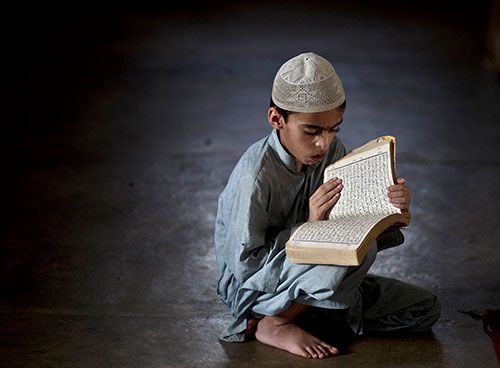
Every Friday, you may see the same reminder:
“Don’t forget to read Surah Al-Kahf.”
You may have grown up hearing it from your parents, teachers, friends or Islamic pages online.
Perhaps you read it every Friday because it has become a routine.
But have you ever stopped to ask:
Why Surah Al-Kahf?
Why Friday?
And what does this beautiful surah have to do with the challenges we face as Muslims today?
There is much more to Surah Al-Kahf than simply completing its 110 verses every week.
A FRIDAY REMINDER THAT CAN CHANGE YOUR WEEK
There is a reported virtue concerning the recitation of Surah Al-Kahf on Friday: a hadith reports that whoever recites it on Friday will have a light between the two Fridays. The report has been graded as sound by scholars.
Think about that.
Friday comes every week.
We go through another seven days filled with work, school, social media, friendships, temptations, disappointments and decisions.
Then Friday comes and gives us an opportunity to pause.
To open the Qur’an.
To remember Allah.
To reflect.
And to reset our hearts.
Surah Al-Kahf can become more than something we rush through every Friday.
It can become a weekly spiritual reset.
SURAH AL-KAHF TEACHES US HOW TO FACE TRIALS
One of the beautiful ways to understand Surah Al-Kahf is through the different trials presented throughout the surah.
The People of the Cave faced a test of faith.
The man with the two gardens faced a test of wealth.
Musa عليه السلام faced a test involving knowledge and patience.
Dhul-Qarnayn faced a test of power and responsibility.
These are not problems that disappeared centuries ago.
They are still around us.
A young Muslim may be tested by peer pressure.
Another may be tested by money.
Someone else may struggle with knowledge, pride or impatience.
Another may suddenly gain influence and forget where that blessing came from.
Surah Al-Kahf reminds us that life is full of tests—and we need Allah’s guidance to pass them.
WHY IS THE DAJJAL CONNECTED TO SURAH AL-KAHF?
There is another important reason Surah Al-Kahf is especially significant.
The Prophet Muhammad (SAW) taught that memorising the first ten verses of Surah Al-Kahf is a means of protection from the trial of the Dajjal. This is authentically reported in Sahih Muslim.
There is also a narration in which the Prophet (SAW) instructed that whoever encounters the Dajjal should recite the opening verses of Surah Al-Kahf.
This should make us stop and think.
Why would these verses be connected to protection from such a tremendous trial?
Because the Dajjal represents an enormous test of deception.
He will present falsehood in a way that can confuse people.
And Surah Al-Kahf repeatedly teaches us something we desperately need in a world full of distractions:
Don’t judge everything by what appears on the surface.
Look deeper.
Hold onto revelation.
Trust Allah.
Know what you believe.
Don’t allow appearances, wealth, power or worldly attraction to control your heart.
WE ARE ALREADY LIVING IN A WORLD OF DISTRACTION
We don’t have to wait for the greatest trials to begin preparing our hearts.
Every day, young Muslims face smaller forms of temptation.
Social media tells us what to desire.
Advertisements tell us what we need.
Influencers tell us what is fashionable.
Friends tell us what is acceptable.
The internet can make falsehood look attractive and make obedience look strange.
Sometimes, we don’t even realise that our hearts are being influenced.
That is why we need regular reminders from the Qur’an.
SURAH AL-KAHF TEACHES YOU TO LOOK BEYOND THE SURFACE
The story of the two gardens teaches us that wealth doesn’t guarantee lasting success.
The story of Musa and Khidr teaches us that what we see is not always the whole story.
The story of Dhul-Qarnayn teaches us that power should be used responsibly.
And the story of the People of the Cave teaches us that protecting your faith can require courage and sacrifice.
These stories train the believer to look beyond appearances.
A person may look successful but be spiritually empty.
A situation may look painful but contain hidden wisdom.
A person may have influence but be using it wrongly.
A young person may look ordinary but have extraordinary faith.
Surah Al-Kahf teaches us to see life through the guidance of Allah, not merely through what our eyes see.
DON’T JUST READ IT—LET IT SPEAK TO YOU
One of the biggest mistakes we can make is turning Qur’an recitation into a weekly routine without reflection.
We finish the surah and immediately return to our phones.
We recite the words but don’t ask what they are teaching us.
This Friday, try something different.
Read Surah Al-Kahf slowly.
If you don’t understand Arabic, read a reliable translation.
Stop at the stories.
Ask yourself:
What is Allah teaching me here?
Which test am I facing in my own life?
Am I becoming too attached to wealth?
Am I impatient with Allah’s timing?
Am I using my influence responsibly?
Am I protecting my faith?
Now the surah is no longer just something you read.
It becomes something you live.
WHEN SHOULD YOU READ SURAH AL-KAHF?
The time for reciting Surah Al-Kahf extends from sunset on Thursday evening until sunset on Friday, according to the commonly cited scholarly explanation of the Friday period. So you don’t have to wait until a particular hour on Friday.
You can make it part of your weekly routine in whatever way helps you read it with attention and understanding.
The important thing is not simply finishing quickly.
Connect with the Qur’an.
MAKE IT A FAMILY AND YOUTH ROUTINE
If you are a parent, teacher, older sibling or someone who influences young Muslims, don’t only tell them:
“Read Surah Al-Kahf.”
Explain why.
Talk about the stories.
Ask them what they learned.
Ask a teenager:
“If you were one of the People of the Cave, would you have had the courage to stand firm?”
Ask another:
“If Allah gave you wealth, would it bring you closer to Him or make you forget Him?”
Ask:
“What would you do if something happened that you didn’t understand?”
These conversations can make the Qur’an feel alive and relevant.
YOUR FRIDAY CAN BE MORE THAN A ROUTINE
Friday is not just another day on the calendar.
It is an opportunity to slow down and reconnect with Allah.
So when Friday comes again, don’t simply think:
“I need to finish Surah Al-Kahf.”
Think:
“What does Allah want me to learn from this today?”
Maybe you need the courage of the People of the Cave.
Maybe you need the humility taught through Musa’s journey.
Maybe you need to remember that wealth is temporary.
Maybe you need to learn how to use your influence responsibly.
Maybe your heart simply needs a reminder that this world is not your final destination.
DON’T LET THE ROUTINE BECOME EMPTY
It is beautiful to have a weekly Qur’an routine.
But the greatest benefit comes when the words move beyond our tongues and into our hearts and actions.
Read Surah Al-Kahf.
Understand it.
Reflect on it.
Memorise what you can.
Teach it to others.
And allow its lessons to shape the way you face your own tests.
Because every week, life gives you another set of challenges.
And every Friday, you have another opportunity to return to the guidance of Allah.
So don’t just read Surah Al-Kahf because Friday has arrived.
Read it because you need its reminder.
Read it because your faith needs protection.
Read it because your heart needs guidance.
FRIDAY HEART CHECK
Read the Qur’an knowing that it’s not revealed merely for us to recite. It was revealed for us to live by.
3SIXTYISLAM
At 3SixtyIslam, we believe Islamic knowledge should reach every generation. From Hajj and Umrah guidance to practical Islamic lessons for everyday life, our goal is to help Muslims learn, grow and strengthen their connection with Islam.
Follow 3SixtyIslam for more Islamic knowledge, guidance and inspiring stories for the whole family.
