


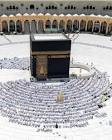
Among the countless memories a pilgrim gathers during Hajj, there is one moment that often remains in the heart long after the journey ends: the final visit to Masjid al-Haram and the last look at the Kaaba before departure.
For days and weeks, pilgrims organize their lives around the Haram. They pray there, perform Tawaf, make dua, recite Qur’an, and spend hours in worship within sight of the Sacred House. The Kaaba becomes part of their daily routine.
Then suddenly, the realization comes that it is time to leave.
For many pilgrims, this moment is far more emotional than they expected.
A PLACE THAT QUICKLY FEELS LIKE HOME
One of the remarkable things about Makkah is how quickly a pilgrim develops an attachment to it.
Before arriving, the Kaaba may have existed mainly in photographs, videos, and imagination.
After arriving, it becomes real.
Pilgrims see it every day.
They pray facing it from close proximity.
They walk around it during Tawaf.
They make some of their most heartfelt duas in its presence.
As the days pass, a relationship develops between the believer and the Sacred House.
What once felt distant begins to feel familiar.
This is why leaving can feel surprisingly difficult.
THE FINAL TAWAF FEELS DIFFERENT
For many pilgrims, the Farewell Tawaf carries emotions unlike any previous Tawaf.
The physical action remains the same, but the awareness is different.
Every circuit around the Kaaba may feel more meaningful because the pilgrim knows the visit is ending.
People often find themselves reflecting on the days that have passed.
They remember:
- their first sight of the Kaaba
- their first Tawaf
- their first prayer in the Haram
- the moments of dua and reflection
- the challenges they overcame during Hajj
The Farewell Tawaf becomes a moment of gratitude as much as a ritual.
THINGS LEFT UNSAID
As departure approaches, many pilgrims begin making duas that come from deep reflection.
They ask Allah to accept their Hajj.
They ask Allah to forgive their shortcomings.
They ask Allah to allow them to return again.
They ask Allah to preserve the spiritual benefits of the journey.
Some pilgrims also think about mistakes they made during their lives and hope that this journey marks a new beginning.
The awareness of leaving often creates a greater sense of sincerity.
A DIFFERENT KIND OF SADNESS
The sadness of leaving Makkah is different from ordinary sadness.
It is not necessarily sadness caused by loss.
Rather, it comes from leaving a place where the heart felt close to Allah.
Many pilgrims wish they had spent more time in worship.
Others wish they had made more dua.
Some wish they had appreciated certain moments more fully.
These reflections can be beneficial because they encourage gratitude and self-improvement.
THE REAL QUESTION BEFORE LEAVING
As pilgrims prepare to return home, there is one question that deserves serious thought:
What am I taking back with me?
The answer should involve more than gifts, Zamzam water, or photographs.
A pilgrim should leave with:
- stronger faith
- greater gratitude
- increased patience
- renewed commitment to prayer
- deeper love for the Qur’an
- a stronger connection with Allah
These are the things that truly matter.
LEAVING THE KAABA DOES NOT MEAN LEAVING ALLAH
Some pilgrims worry that the spiritual feelings experienced in Makkah will disappear once they return home.
While life will certainly become different, the connection with Allah does not depend on location alone.
The same Allah who listened to your dua beside the Kaaba hears your dua at home.
The same Allah who guided you during Hajj remains with you after Hajj.
The challenge is preserving the habits and lessons developed during the journey.
FINAL THOUGHTS
The last look at the Kaaba is often one of the most emotional moments of Hajj.
Many pilgrims do not know when, or if, they will see it again.
That uncertainty makes the moment especially meaningful.
As pilgrims turn away and begin their journey home, they leave behind the Sacred House physically.
But the hope of every believer is that the lessons, memories, and spiritual growth gained there will remain long after the final glance at the Kaaba has passed from view.
