


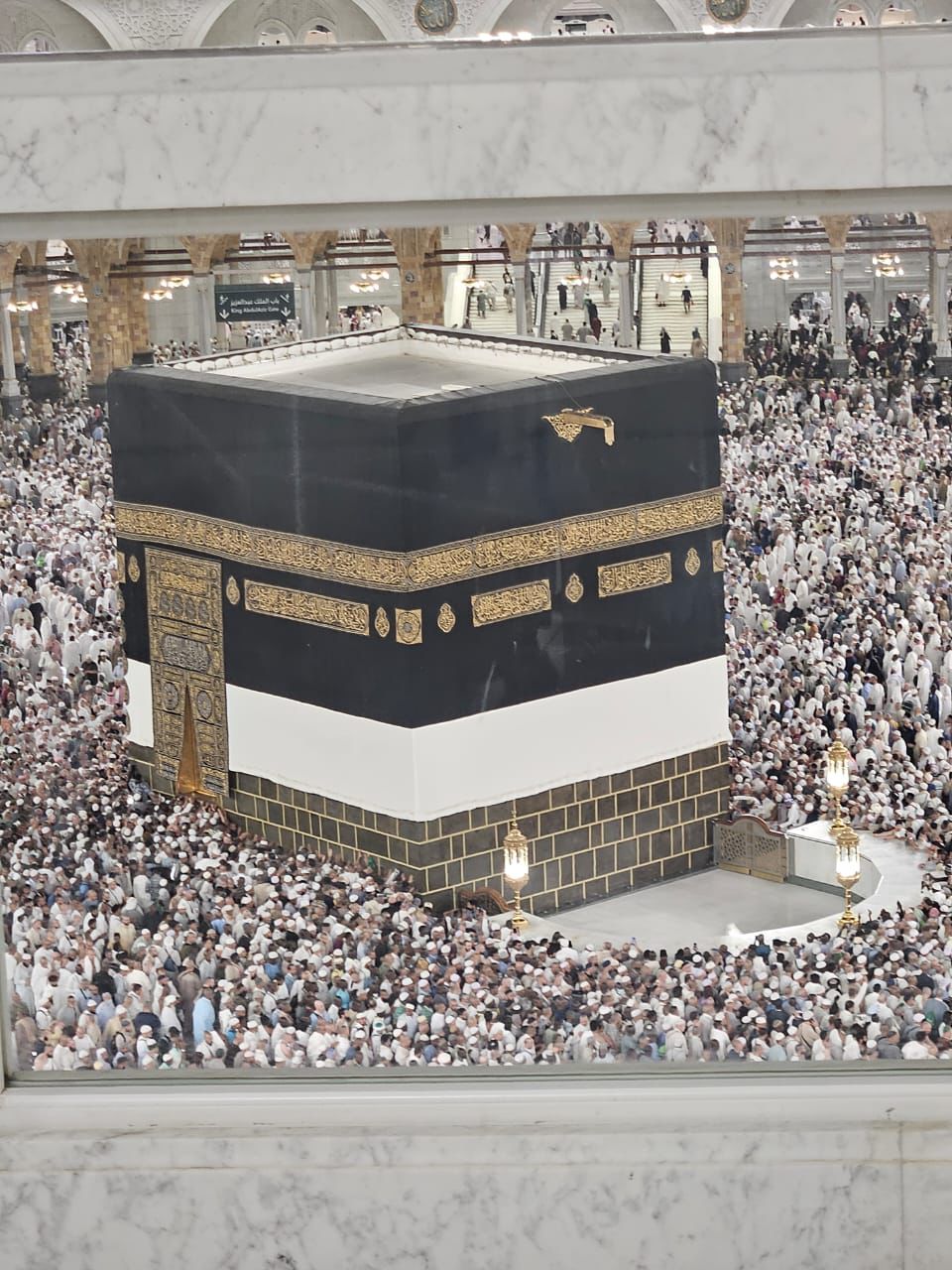
As Hajj comes to an end, pilgrims perform one of the final rites of their journey: Tawaf al-Wida, the Farewell Tawaf. For many, this is one of the most emotional moments of the entire pilgrimage.
After days spent in Mina, Arafah, Muzdalifah, and around the Kaaba, the pilgrim returns to Masjid al-Haram to perform a final act of worship before leaving Makkah. It is called the Farewell Tawaf because it marks the pilgrim’s last official encounter with the Sacred House before departure.
Unlike the excitement that accompanies a pilgrim’s first Tawaf upon arrival, Tawaf al-Wida carries a different feeling. It is filled with reflection, gratitude, hope, and often sadness.
THE PURPOSE OF TAWAF AL-WIDA
The Prophet Muhammad (peace be upon him) instructed pilgrims not to leave Makkah until their final act was centered around the Kaaba.
This farewell Tawaf serves as a fitting conclusion to the pilgrimage.
It reminds pilgrims that their journey began with devotion to Allah and should also end with devotion to Allah.
The rite teaches an important lesson: no matter how many experiences, memories, or emotions a pilgrim gathers during Hajj, worship remains at the center of the journey.
A MOMENT OF DEEP REFLECTION
As pilgrims circle the Kaaba for what may be the final time in their lives, many find themselves reflecting on everything they have experienced.
They remember the anticipation before departure.
They remember their first sight of the Kaaba.
They remember the crowds of Tawaf.
They remember standing on the plains of Arafah.
They remember nights spent in Mina and Muzdalifah.
They remember the countless duas they made throughout the journey.
During Tawaf al-Wida, all of these memories often come together.
A pilgrim realizes that what seemed so far away only days earlier is now coming to an end.
GRATITUDE FILLS THE HEART
One of the strongest feelings during the Farewell Tawaf is gratitude.
Not everyone who wishes to perform Hajj is able to do so.
Many people spend years hoping for the opportunity.
Others prepare but encounter obstacles.
Some pass away before ever reaching Makkah.
Standing before the Kaaba at the conclusion of Hajj reminds pilgrims of the immense blessing Allah has granted them.
Completing Hajj is not merely an accomplishment; it is a favor from Allah that deserves constant gratitude.
THE FEAR OF ACCEPTANCE
Many sincere pilgrims leave the Haram asking themselves an important question:
“Has my Hajj been accepted?”
This concern is not a sign of weakness. Rather, it is a sign of sincerity.
The righteous people throughout Islamic history combined hope with humility. They worked hard in worship but never became arrogant about their deeds.
During Tawaf al-Wida, many pilgrims ask Allah repeatedly:
- to accept their Hajj
- to forgive their shortcomings
- to overlook their mistakes
- to reward their efforts
- to grant them the opportunity to return again
These prayers often become some of the most heartfelt supplications of the entire journey.
A FAREWELL, NOT A GOODBYE
Although pilgrims leave the Kaaba physically, the spiritual connection should remain.
The purpose of Hajj is not only to visit sacred places.
The purpose is to strengthen the relationship with Allah.
The lessons learned during Hajj should continue long after the journey ends.
The patience learned in Mina should remain.
The sincerity developed in Arafah should remain.
The humility experienced before the Kaaba should remain.
A successful Hajj continues influencing a person’s life long after departure.
WHAT SHOULD A PILGRIM DO AFTER TAWAF AL-WIDA?
After completing the Farewell Tawaf, pilgrims should spend their remaining moments in Makkah wisely.
This is a time for:
- gratitude to Allah
- sincere dua
- seeking forgiveness
- reflecting on the journey
- making intentions for positive change after returning home
Many pilgrims also spend these moments asking Allah to bring them back to His Sacred House again in the future.
FINAL THOUGHTS
Tawaf al-Wida is much more than seven final circuits around the Kaaba.
It is a farewell filled with reflection, gratitude, and hope.
It reminds pilgrims that while the rituals of Hajj may be ending, the lessons of Hajj must continue.
As pilgrims take their final steps around the Sacred House, they leave with a prayer in their hearts: that Allah accepts their Hajj, forgives their sins, and allows the blessings of this journey to remain with them for the rest of their lives.
