


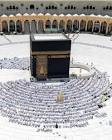
One of the greatest sights a person can witness during Hajj is the gathering of Muslims from every part of the world. Languages differ. Clothing styles differ. Cultures differ. Skin colors differ. Yet when the call to prayer is heard, millions respond to one command and turn toward one direction.
Jumu’ah during the Hajj season is more than a weekly prayer. It is a living lesson about the reality of Islam and the unity of the Muslim Ummah.
In many parts of the world, Muslims often live within communities that look similar to them. People become accustomed to hearing their own language and seeing familiar traditions around them. But Hajj removes those boundaries.
A pilgrim may stand beside someone from Nigeria, then beside another person from Indonesia, another from Turkey, another from Pakistan, another from the United States, and another from a small village somewhere they have never even heard of.
Despite these differences, the prayer remains the same.
The takbir is the same.
The Qur’an is the same.
The qiblah is the same.
The worship is the same.
The Lord being worshipped is the same.
This is one of the most powerful messages of Islam.
The world often creates divisions among people. Society separates individuals according to wealth, nationality, tribe, status, race, and social position. People sometimes begin to think that these worldly labels make them greater than others.
Hajj quietly removes all of these illusions.
The simple white garments of ihram remind pilgrims that every person ultimately returns to Allah with very little of what the world considers important.
Titles disappear.
Social status disappears.
Luxury disappears.
Worldly competition disappears.
A person is left standing before Allah as nothing more than His servant.
This lesson is important because many of the problems affecting Muslims today come from division. Sometimes people argue over differences and forget the larger bond that connects them.
Jumu’ah during Hajj reminds believers that before we belong to tribes, countries, cultures, or social groups, we belong to one Ummah.
The Prophet ﷺ taught that believers are like one body. When one part suffers, the rest of the body feels the pain.
This means that the struggles of Muslims in one place should concern Muslims elsewhere.
It means we should make du’a for one another.
It means we should support one another.
It means we should avoid hatred, jealousy, and unnecessary divisions.
For our pilgrims attending Jumu’ah during this blessed journey, this gathering is not only an opportunity to pray; it is an opportunity to learn.
Learn humility.
Learn patience.
Learn unity.
Learn gratitude.
Learn sincerity.
And for those following their journey from home, the lesson remains the same.
Islam was never meant to create isolated hearts. It was meant to build a united Ummah connected by faith and worship.
May Allah strengthen the bond among Muslims everywhere, accept the worship of our pilgrims, and allow us to carry the lessons of Hajj long after the journey itself ends.
