
Time is not neutral in Islam. It is a trust, a sign from Allah, and a framework through which faith is lived. While many Muslims organise their daily lives around the Gregorian calendar, the Islamic calendar quietly shapes our worship, our history, and our spiritual rhythm in ways that are far deeper than we often realise.
The Islamic calendar is not just about dates. It is about direction.
A CALENDAR ROOTED IN WORSHIP
The Islamic calendar is lunar, guided by the sighting of the moon. This immediately anchors time to the natural signs of Allah, not human design alone. Each new moon is a reminder that time renews by Allah’s command, not by our control.
Major acts of worship are inseparable from this calendar. Ramadan, Hajj, Umrah seasons, the days of ‘Ashura, the sacred months, and the beginning of a new Islamic year all depend on it. Without the Islamic calendar, the structure of Islamic life collapses.
This calendar trains the believer to move through the year with awareness of Allah, not just deadlines and routines.
IT SHAPES SPIRITUAL RHYTHM
Unlike the fixed seasons of the Gregorian calendar, the Islamic months rotate through the year. Ramadan can arrive in summer or winter. Hajj can fall in intense heat or gentle cold. This rotation removes comfort-based worship.
By shifting through seasons, the Islamic calendar teaches adaptability, sincerity, and equality. No group of Muslims is permanently advantaged or disadvantaged. Everyone experiences ease and hardship in different years. Worship becomes an act of devotion, not convenience.
IDENTITY BEYOND NUMBERS
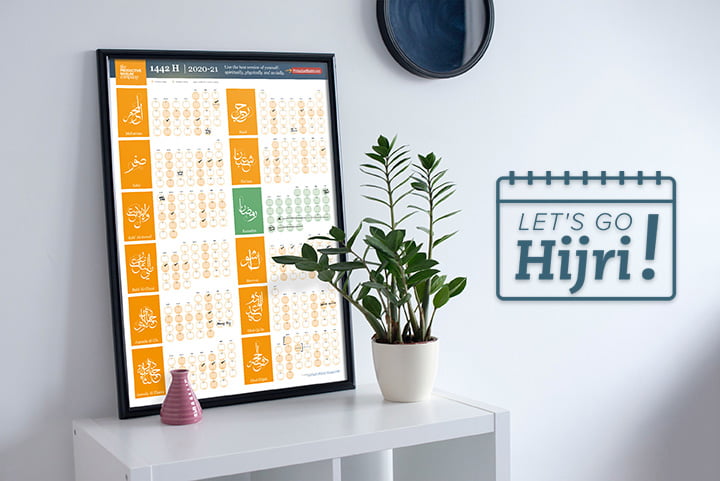
The Islamic calendar is a declaration of identity. It marks time from the Hijrah of the Prophet ﷺ, a moment of sacrifice, migration, and trust in Allah. Every Islamic date quietly remembers that Islam was built through struggle, patience, and divine reliance.
When Muslims lose touch with the Islamic calendar, they lose touch with this identity. Dates become numbers instead of reminders. History becomes distant instead of lived.
Knowing the Islamic months reconnects the believer to the story of Islam and their place within it.
TIME AS A MORAL TRUST
Islam teaches that time will testify for or against us. The Islamic calendar reinforces this by attaching meaning to certain days and months. The sacred months remind us to restrain wrongdoing. Dhul Hijjah teaches sacrifice and obedience. Muharram invites reflection and renewal.
Time is no longer empty. It becomes charged with responsibility.
A believer who is aware of the Islamic calendar approaches days differently. They plan worship. They protect their actions. They recognise opportunities for reward before they pass.
WHY IT STILL MATTERS TODAY
In modern life, time is treated as a productivity tool. Islam treats it as an amanah. The Islamic calendar resists the idea that time exists only to be filled. It reminds us that time is meant to be honoured.
For Muslims raising families, running businesses, or managing communities, aligning with the Islamic calendar helps anchor priorities. Children learn that Ramadan matters more than holidays. Sacred days matter more than sales seasons. Faith sets the rhythm, not culture.
A QUIET RETURN TO MEANING
You do not need to abandon the Gregorian calendar to honour the Islamic one. But ignoring the Islamic calendar entirely leaves a spiritual gap.
Knowing what month you are in. Anticipating sacred times. Teaching children their significance. Planning worship around them. These small acts restore meaning to time.
The Islamic calendar matters because it reminds us who we are, why we worship, and where we are going.
Time is passing whether we pay attention or not. The Islamic calendar invites us to pass through time with awareness, intention, and faith so that when days are counted, they are counted with purpose.
