


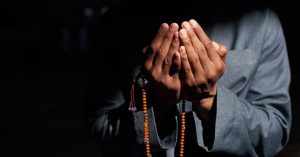
Du’a is one of the greatest gifts Allah has placed in the hands and hearts of His servants. It is not simply a request list, nor a ritual we whisper only when life becomes heavy. Du’a is a direct conversation with the Lord of the Worlds—available at any moment, in any language, in any condition. It is the bridge between a fragile human heart and the One who never breaks, never forgets, never disappoints.
Du’a is where a believer discovers what true closeness to Allah feels like.
Du’a Is an Act of Worship
The Prophet ﷺ said, “Du’a is worship.” It is not merely a tool for achieving outcomes; it is a declaration of humility, trust, and need. When a person raises their hands to Allah, they acknowledge that no one else can give, protect, heal, or guide like He can. Even before the du’a is answered, the act itself is rewarded and beloved to Allah.
A Conversation That Doesn’t Require Perfection
Unlike conversations with people, du’a demands no polish, no perfect structure, no strong voice. You can whisper it in the dark, cry it silently in your heart, or speak it out loud while walking. Allah hears it all.
He hears the du’a you don’t have words for.
He hears the du’a hidden beneath your confusion.
He hears the du’a pressed tightly beneath your patience.
Every sincere cry has already reached Him long before your lips move.
Du’a Builds Tawakkul
Tawakkul trusting Allah completely is strengthened each time you turn to Him instead of the world. When you make du’a consistently, you begin to understand that outcomes are not in your hands. Your job is to ask, strive, and rely, while the result is always shaped by Allah’s wisdom.
The more you make du’a, the deeper your trust grows.
Du’a Softens the Heart
There are days when the heart feels heavy, distant, or spiritually dry. Du’a is the rain that softens it. Speaking to Allah brings clarity and calmness. It reminds you that your hardships are not random, and your loneliness is not unnoticed.
A heart engaged in du’a cannot remain as hard as it was before.
Du’a Is Accepted in Different Ways
Allah responds to every du’a, but not always in the way we imagine. A du’a can be answered in three forms:
• You receive what you ask for.
• Allah delays it for a time that is better for you.
• Allah replaces it with something far greater, or removes a harm you never saw coming.
Every response is a mercy. Every delay holds wisdom. Every “no” hides a bigger “yes” written somewhere in your future.
Du’a Strengthens Gratitude
When a believer makes du’a regularly, they start noticing how often Allah answers in small and subtle ways. Gratitude grows because the heart learns to see blessings that were once ignored. Even the strength to raise your hands and call upon Him is a gift.
Du’a Makes You a Companion of the Night
Some of the most intimate moments with Allah happen in the quiet hours before dawn. When the world sleeps, the heart wakes. The Prophet ﷺ taught us that Allah descends to the lowest heaven in the last third of the night, calling out to His servants:
“Who is asking Me so I may give to him? Who is seeking forgiveness so I may forgive him?”
These moments change a believer. They nurture sincerity, hope, and resilience.
Du’a Shapes Who You Become
You are shaped by the things you ask for. When you ask Allah for guidance, humility, a pure heart, or a blessed life, you are aligning your soul with goodness. Du’a is not only about receiving it is about becoming.
A Personal Lifeline
In a world filled with noise, expectations, and disappointments, du’a remains a quiet refuge. It is the place where you can be fully honest, fully vulnerable, fully seen. Making du’a regularly transforms your relationship with Allah from something distant into something deeply personal and comforting.
The more you speak to Allah, the more your heart understands that He was always near.
A Final Reminder
Every du’a you make is written. Every tear is counted. Every yearning is witnessed. Nothing is lost. Nothing is ignored. Allah is closer than your jugular vein, and He loves when you call upon Him.
May our tongues never tire of du’a, and may our hearts always remain connected to the One who hears us before we even speak.
