

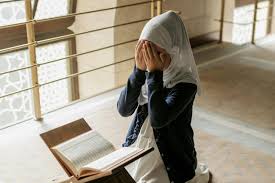
From the very first revelation “Read in the name of your Lord…” (Surah Al-‘Alaq 96:1) Islam placed knowledge at the core of faith. Learning is not optional; it is an obligation. The Prophet Muhammad ﷺ said:
“Seeking knowledge is an obligation upon every Muslim.” (Ibn Majah)
For early Muslims, knowledge was more than information it was a sacred trust, preserved and passed down for the benefit of future generations.
HOW EARLY MUSLIMS PRESERVED KNOWLEDGE
Oral Transmission Scholars memorized Qur’an and Hadith with precision, passing them from teacher to student through chains of narration (isnad).
Writing & Compilation Early Muslims documented Qur’an, Hadith, fiqh (jurisprudence), and sciences in written form. Collections like Sahih Bukhari were preserved through strict authentication methods.
Translation Movement
Muslims translated works of philosophy, medicine, mathematics, and astronomy from Greek, Persian, and Indian sources into Arabic, ensuring their survival.
Chain of Teachers (Ijazah System) Knowledge was passed through personal authorization from a qualified teacher to a student, preserving accuracy and authenticity.
THE VALUE OF LEARNING
Spiritual Growth Knowledge deepens faith and brings us closer to Allah.
Community Strength Educated societies build justice, compassion, and progress.
Preservation of Identity Through learning, Muslims preserved their deen, culture, and values across centuries.
Advancement of Civilization Muslim scholars contributed to medicine, mathematics, astronomy, architecture, and more laying foundations for modern sciences.
FINAL REFLECTION
Early Muslims understood that preserving knowledge was preserving faith. Their efforts ensured that the Qur’an, Hadith, and scholarly works reached us intact today. As heirs of this legacy, every Muslim has a responsibility to seek, preserve, and share knowledge because in Islam, learning is worship.
