


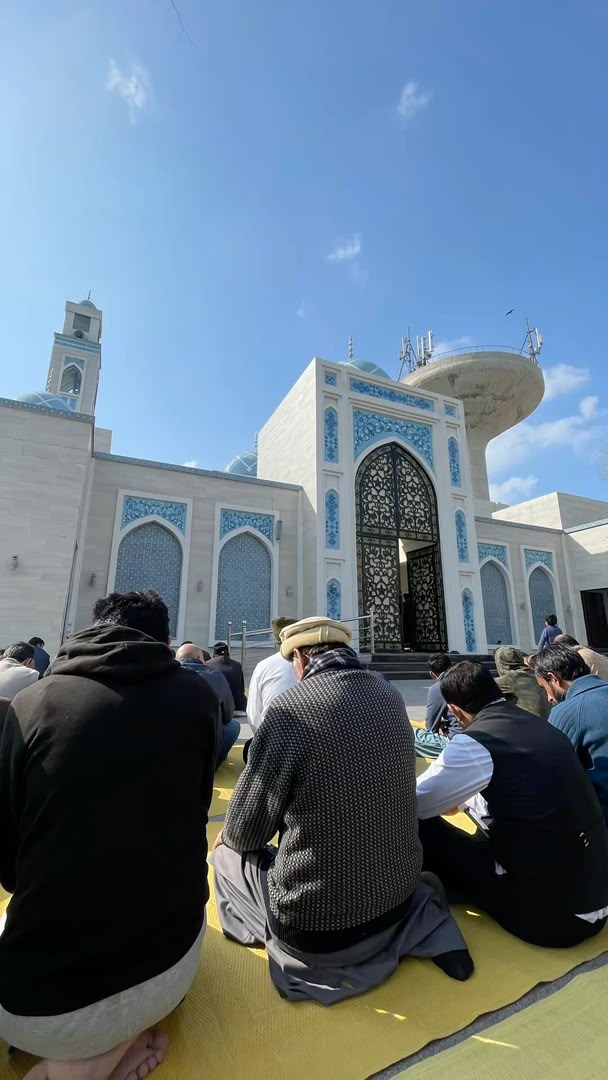
The khutbah has started. The imam is already leading the prayer, or perhaps you have just entered the mosque as the congregation rises from sujud. What should you do? Do you still pray Jumu’ah, or must you perform Dhuhr instead? Understanding what Islam teaches about arriving late for Friday prayer can help you avoid confusion and fulfil your obligation correctly.
Friday is one of the most important days in the life of a Muslim. It is the day of Jumu’ah, when Muslims leave their daily activities to gather in the mosque, listen to the khutbah and perform the congregational Friday prayer.
However, not everyone arrives on time.
Some people are delayed by work. Others struggle with traffic, transportation, unexpected responsibilities or simply poor time management. Before they realise it, the khutbah has started, and the congregation is already preparing for Salah.
This raises an important question: What happens when you arrive late for Jumu’ah?
Can you still join the prayer? What if you miss the first rak’ah? What if you arrive when the imam is in the final sitting? And when should you pray Dhuhr instead?
Islam provides guidance on these situations, and understanding it is essential for every Muslim.
WHY ARRIVING EARLY FOR JUMU’AH MATTERS
Allah gives Friday a special status and commands believers to respond to the call for congregational prayer.
In Surah Al-Jumu’ah, Allah says:
“O you who believe! When the call to prayer is made on Friday, then proceed to the remembrance of Allah and leave trade. That is better for you, if you only knew.”
(Qur’an 62:9)
This verse reminds Muslims that Jumu’ah should not be treated as an ordinary appointment that can be attended whenever convenient.
It is an act of worship that deserves preparation, commitment and punctuality.
The Prophet Muhammad ﷺ also encouraged Muslims to arrive early for Friday prayer.
In a hadith narrated by Abu Hurayrah (RA), the Prophet ﷺ explained the great reward associated with arriving early at the mosque on Friday. Those who arrive earlier receive greater rewards, with the angels recording the people as they arrive. When the imam comes out, the angels close their records and listen to the khutbah.
(Sahih al-Bukhari 929; Sahih Muslim 850)
Arriving early therefore gives a Muslim the opportunity to earn additional rewards, perform voluntary prayers, recite the Qur’an and prepare mentally for the khutbah.
But what if you arrive late despite your intentions?
1. WHAT IF YOU ARRIVE WHILE THE KHUTBAH IS IN PROGRESS?
Imagine entering the mosque while the imam is already delivering the Friday sermon.
The congregation is seated, everyone is listening, and the khutbah is underway.
Should you immediately sit down, or should you perform two rak’ahs of Tahiyyatul Masjid?
There is an authentic narration that provides guidance on this situation.
A companion named Sulaik al-Ghatafani (RA) entered the mosque while Prophet Muhammad ﷺ was delivering the Friday sermon. He sat down without praying.
The Prophet ﷺ asked him whether he had prayed. When he answered that he had not, the Prophet ﷺ instructed him to stand and pray two brief rak’ahs.
This narration is recorded in Sahih al-Bukhari and Sahih Muslim.
The incident demonstrates the importance of Tahiyyatul Masjid, the two rak’ahs offered upon entering the mosque.
However, scholars have differed on how this instruction should be applied alongside the general command to listen attentively to the khutbah.
Some scholars maintain that a person entering during the sermon should perform two brief rak’ahs, while others hold that the person should sit and listen.
The important thing is to follow reliable scholarly guidance and avoid unnecessary disturbance during the sermon.
2. WHAT IF YOU MISS THE FIRST RAK’AH?
This is one of the most common situations during Jumu’ah.
Perhaps you arrive when the imam has already completed the first rak’ah and is standing for the second.
Can you still join the Friday prayer?
Yes.
If you catch the imam in the second rak’ah before he rises from the bowing position (ruku’), you have caught Jumu’ah according to the established majority scholarly position.
Join the imam immediately and complete the prayer with him.
When the imam finishes with the taslim, stand up and perform one additional rak’ah to complete your Jumu’ah prayer.
For example:
- You arrive while the imam is performing ruku’ in the second rak’ah.
- You join the congregation and perform the remaining part of the prayer.
- The imam completes the prayer with taslim.
- You stand up and perform one additional rak’ah.
- You complete your prayer with the final sitting and taslim.
You have completed the two rak’ahs of Jumu’ah.
This is why understanding the importance of catching the imam in ruku’ is so valuable.
3. WHAT IF YOU ARRIVE AFTER THE IMAM HAS RISEN FROM RUKU’ IN THE SECOND RAK’AH?
Now consider another situation.
You enter the mosque when the imam is already standing after ruku’ in the second rak’ah.
You join the congregation, but you have missed the opportunity to catch the second rak’ah.
What should you do?
According to the majority of Islamic scholars, if you do not catch at least one complete rak’ah with the imam, you have not caught Jumu’ah.
In this situation, you should join the imam and complete the prayer, intending Dhuhr rather than treating it as two rak’ahs of Jumu’ah.
After the imam completes the prayer, you stand and perform four rak’ahs of Dhuhr.
The distinction is important because Jumu’ah consists of two obligatory rak’ahs, while Dhuhr consists of four.
4. WHAT IF YOU ARRIVE WHEN THE IMAM IS IN THE FINAL SITTING?
Imagine arriving at the mosque when the imam is already sitting for the final tashahhud.
The prayer is almost over.
Should you join the imam?
Yes. Join the congregation, even if the imam is in the final sitting.
However, joining at this point does not mean you have caught Jumu’ah.
According to the majority scholarly position, you must complete four rak’ahs of Dhuhr after the imam finishes the prayer.
This is an important distinction: joining the congregation is not the same as catching the Jumu’ah prayer.
A Muslim should therefore understand the difference between joining the imam and catching at least one rak’ah.
5. WHAT IF YOU MISS JUMU’AH COMPLETELY?
Sometimes, despite our best efforts, we may miss the entire Friday prayer.
Perhaps someone was travelling, became seriously ill, was unexpectedly delayed or had another legitimate reason.
What should such a person do?
If Jumu’ah has been missed, the person should perform the obligatory Dhuhr prayer of four rak’ahs.
Jumu’ah does not need to be repeated as two rak’ahs individually.
The four rak’ahs of Dhuhr fulfil the daily obligatory prayer.
However, deliberately neglecting Jumu’ah without a valid excuse is a serious matter.
The Prophet ﷺ warned against repeatedly abandoning Friday prayer.
In a hadith narrated by Abdullah ibn Umar and Abu Hurayrah (RA), the Prophet ﷺ said that people must stop neglecting Friday prayers, otherwise Allah may seal their hearts, after which they will become among the heedless.
(Sahih Muslim 865)
This warning reminds us that Jumu’ah is not an obligation to take lightly.
6. ARE THERE PEOPLE WHO ARE EXEMPT FROM JUMU’AH?
Islam is a religion of mercy and does not impose obligations without considering genuine circumstances.
Jumu’ah is obligatory upon Muslim men who meet its conditions, while women are not individually obligated to attend it, although they may attend and pray with the congregation.
There are also recognised exemptions, including circumstances such as illness and travel, subject to the relevant Islamic rulings.
The Prophet ﷺ said that Friday prayer in congregation is a duty upon every Muslim, with exceptions mentioned for certain categories, including women, children, enslaved persons and the sick.
(Sunan Abi Dawud 1067)
Scholars also discuss the conditions relating to travel and other legitimate excuses.
Anyone who is unsure whether their circumstances exempt them from Jumu’ah should consult a knowledgeable scholar.
The important lesson is that genuine hardship is treated differently from deliberately neglecting an obligation.
7. HOW CAN YOU AVOID ARRIVING LATE FOR JUMU’AH?
Knowing what to do when you arrive late is important, but making an effort to arrive early is even better.
Jumu’ah should be part of our weekly spiritual preparation, not something squeezed into the final minutes of the day.
Here are some practical steps:
1. Plan your Friday morning.
Consider your work schedule, transportation and other responsibilities. Make arrangements that allow you to leave early.
2. Prepare before the time of prayer.
Perform the recommended Friday purification, wear clean clothes and get ready without unnecessary delays.
3. Avoid last-minute errands.
Where possible, do not schedule activities that could interfere with attending Jumu’ah on time.
4. Arrive before the khutbah.
This gives you time for voluntary prayers, Qur’an recitation, remembrance of Allah and quiet reflection.
5. Take the khutbah seriously.
Once the sermon begins, put away your phone, stop unnecessary conversations and listen attentively.
6. Develop consistency.
Do not wait until you have missed Jumu’ah several times before taking punctuality seriously. Make arriving early a regular habit.
JUMU’AH IS AN OBLIGATION, NOT AN AFTERTHOUGHT
It is easy to become comfortable with arriving late.
One Friday, you miss the first few minutes of the khutbah. Another Friday, you arrive just before the prayer. Eventually, arriving late becomes part of your routine.
But should this be the way we approach one of the most important weekly acts of worship?
Allah calls believers to leave their worldly activities and proceed towards His remembrance.
This is an invitation that deserves our attention.
Jumu’ah is not simply about completing two rak’ahs and returning to our daily responsibilities. It is an opportunity to strengthen our faith, listen to reminders, seek forgiveness and renew our relationship with Allah.
If you have been arriving late regularly, let this Friday be an opportunity to change that habit.
Make an effort to leave earlier. Prepare properly. Give yourself enough time to enter the mosque without rushing.
And if you do arrive late, remember the guidance of the Prophet ﷺ and complete your prayer correctly.
May Allah make us among those who honour Jumu’ah, respond to His call and never take the blessings of Friday for granted. Ameen.
FREQUENTLY ASKED QUESTIONS ABOUT ARRIVING LATE FOR JUMU’AH
1. If I arrive during the second rak’ah of Jumu’ah, do I pray two or four rak’ahs?
If you catch the imam in ruku’ of the second rak’ah before he rises from it, you complete one additional rak’ah after his taslim. Your Jumu’ah prayer is complete.
2. What if I arrive after the imam has risen from ruku’ in the second rak’ah?
According to the majority of scholars, you have not caught Jumu’ah. Join the imam and complete four rak’ahs of Dhuhr after he finishes.
3. Can I still join the imam if he is in the final tashahhud?
Yes. Join the congregation, but after the imam finishes, pray four rak’ahs of Dhuhr.
4. If I miss the entire Jumu’ah prayer, should I pray two or four rak’ahs?
You should perform four rak’ahs of Dhuhr.
5. Is it permissible to arrive after the khutbah has started?
You may still attend and join the prayer. There is an authentic narration concerning a person who entered during the khutbah and was instructed to perform two brief rak’ahs. Scholars differ on its application, so follow reliable guidance.
6. Does arriving late invalidate my Jumu’ah?
Not necessarily. What matters for catching Jumu’ah, according to the majority position, is catching at least one complete rak’ah with the imam.
7. Can women attend Jumu’ah?
Yes. Women may attend Friday congregational prayer, although Jumu’ah is not individually obligatory upon them. If they attend and pray with the imam, they do not need to repeat Dhuhr.
