


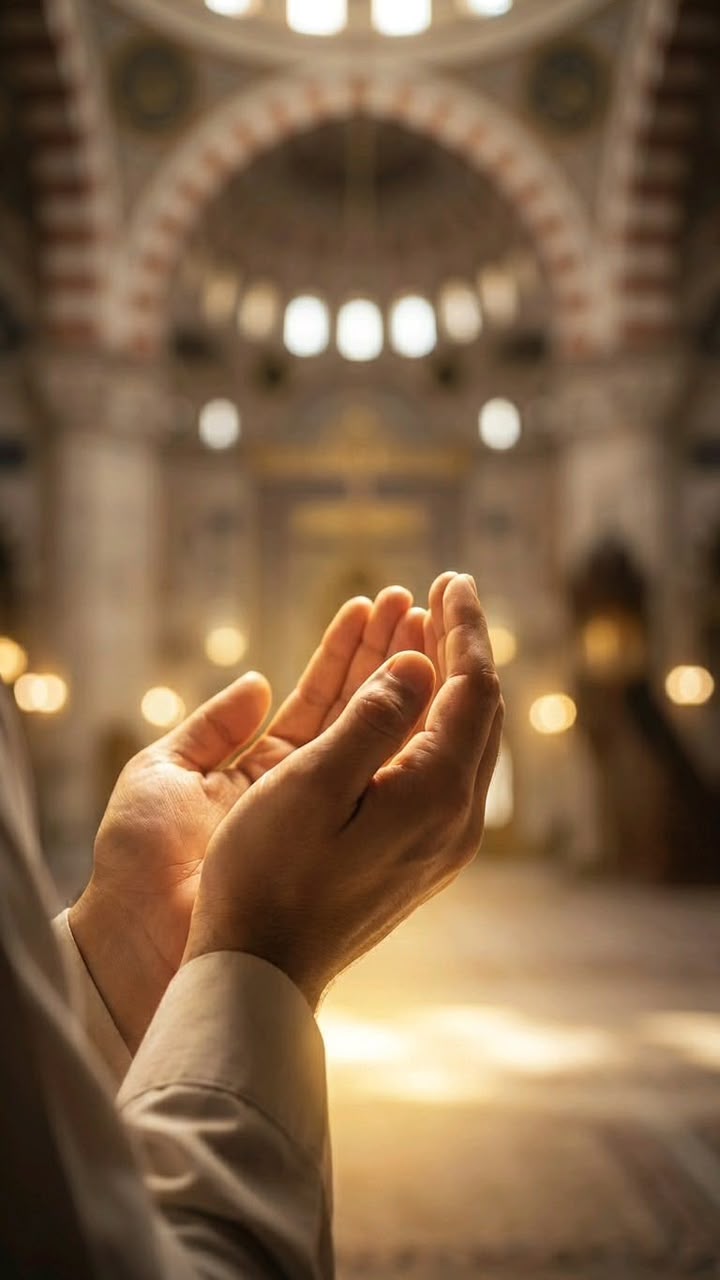
When was the last time you sincerely made du’a to Allah when everything in your life was going well?
Not because you were sick. Not because you were struggling financially. Not because you had lost your job, experienced disappointment or faced a difficult situation.
But simply because you wanted to thank Allah, remember Him and express your gratitude for the blessings He had given you.
Think about it.
When life becomes difficult, many of us suddenly become more conscious of Allah. We pray more, make longer supplications, wake up during the night, seek forgiveness and promise to change our ways.
When illness strikes, we remember Allah.
When business struggles, we remember Allah.
When our children face difficulties, we remember Allah.
When we lose our jobs, experience financial hardship or face uncertainty about the future, our hands rise towards the heavens as we desperately call upon our Creator.
We ask Allah to rescue us, provide for us, heal us, protect us and remove our difficulties.
But what happens when the problem disappears?
What happens when the business begins to prosper again, the illness is cured, the job is secured, the debts are paid and the family is doing well?
Do we continue remembering Allah with the same sincerity?
Or do our prayers gradually become rushed, our Qur’an recitation becomes less frequent, our supplications become shorter and our attention returns almost entirely to worldly affairs?
This is an important question every Muslim should ask.
Are we building a relationship with Allah, or are we only turning to Him when we need something?
Islam teaches us that our relationship with Allah should not be based solely on our immediate needs. We should worship Him because He is our Creator, Provider and Lord, whether life is comfortable or difficult.
Allah deserves our gratitude in times of abundance and our patience in times of hardship.
1. Do Not Remember Allah Only When Life Becomes Difficult
One of the characteristics of human beings is that we sometimes become more conscious of our dependence on Allah when our circumstances become uncomfortable.
A person who has enjoyed years of financial stability may suddenly begin praying consistently when their business experiences serious losses.
Someone who has neglected their prayers may begin making du’a every night when a family member becomes seriously ill.
A person who has rarely opened the Qur’an may suddenly become devoted to recitation when faced with a frightening situation.
There is nothing wrong with turning to Allah during difficulties. In fact, seeking His help is an important part of faith.
The problem arises when we remember Allah only during those difficult moments and forget Him when our circumstances improve.
Allah describes this behaviour in the Qur’an:
“And when adversity touches man, he calls upon Us, whether lying on his side or sitting or standing; but when We remove from him his adversity, he continues [in disobedience] as if he had never called upon Us to remove an adversity that touched him.”
Surah Yunus 10:12
This verse describes a tendency that should make every believer reflect.
When hardship comes, a person desperately seeks Allah’s help. But when the hardship disappears, that same person may return to heedlessness as though the experience never happened.
How many people have made promises to Allah during difficult moments, only to forget those promises when their situations improve?
How many have promised to become more consistent with Salah after receiving a blessing, only to return to their previous habits?
How many have begged Allah for financial relief but become careless about their worship once their income improves?
We must be careful not to allow our relationship with Allah to become something we activate only during emergencies.
Allah is not only the One we call upon when we need rescue. He is the One we should remember, worship and thank every day.
2. Allah Deserves Our Gratitude When Everything Is Going Well
Sometimes, we become so focused on asking Allah for what we do not have that we forget to appreciate what He has already given us.
We ask for more money without appreciating the income we currently receive.
We ask for good health without thanking Allah for the health we enjoy.
We ask for a better home while forgetting that some people are struggling to find shelter.
We ask for more opportunities while overlooking the opportunities already available to us.
We become so occupied with what is missing from our lives that we fail to recognise the blessings surrounding us.
Allah says:
“And [remember] when your Lord proclaimed, ‘If you are grateful, I will surely increase you [in favor]…'”
Surah Ibrahim 14:7
This verse reminds us of the importance of gratitude.
Gratitude is not simply saying Alhamdulillah occasionally. It involves recognising Allah’s blessings, appreciating them sincerely and using them in ways that please Him.
If Allah has blessed you with wealth, express gratitude by earning and spending it lawfully.
If Allah has blessed you with good health, use your strength in worship and beneficial activities.
If Allah has blessed you with children, raise them with love and Islamic values.
If Allah has given you knowledge, use it to benefit others.
If Allah has provided you with opportunities, do not use them to disobey Him.
A grateful Muslim does not merely appreciate blessings through words. Their actions also demonstrate gratitude.
Perhaps one of the greatest mistakes we make is treating blessings as though they are permanent possessions rather than gifts entrusted to us by Allah.
3. Remember Allah During Times of Ease, and He Will Be There for You During Hardship
One of the most beautiful teachings of the Prophet Muhammad (peace and blessings be upon him) concerns remembering Allah during both comfortable and difficult circumstances.
Abdullah ibn Abbas (may Allah be pleased with him) reported that the Prophet said:
“Be mindful of Allah, and He will protect you. Be mindful of Allah, and you will find Him before you. Remember Him in times of ease, and He will remember you in times of hardship.”
Jami’ at-Tirmidhi 2516
This Hadith contains an important lesson about consistency in worship.
Do not wait until you are desperate before remembering Allah.
Remember Him when your business is thriving.
Remember Him when your family is healthy.
Remember Him when you receive good news.
Remember Him when you are enjoying the blessings of employment, marriage, children and financial stability.
Remember Him when you have enough food, a comfortable home and peace of mind.
Do not make hardship the only reason you develop a relationship with your Creator.
The person who remembers Allah during comfortable times is cultivating a connection with Him that is not dependent on changing circumstances.
This is the kind of relationship every believer should strive to build.
4. Do Not Allow Worldly Success to Make You Forget Allah
Sometimes, hardship is not the only thing that tests our faith. Success can be an equally important test.
When people become financially successful, receive promotions, establish profitable businesses or acquire material possessions, they may gradually become distracted from their religious responsibilities.
Their schedules become busier.
Their businesses demand more attention.
Their social activities increase.
Their desire for comfort grows.
Before long, Salah becomes something they fit into their schedules rather than something around which they organise their lives.
Some people who once prayed consistently begin missing prayers because of business commitments.
Others become too occupied with making money to attend to their spiritual responsibilities.
Some become so proud of their achievements that they forget the One who made those achievements possible.
Allah reminds us of this danger:
“Competition in [worldly] increase diverts you, until you visit the graveyards.”
Surah At-Takathur 102:1–2
These verses describe how the pursuit of worldly increase can distract people until death arrives.
There is nothing wrong with being successful, building businesses, earning money or enjoying lawful blessings.
Islam does not demand that Muslims abandon worldly responsibilities.
However, our pursuit of success must never make us forget our purpose.
A successful Muslim should become more grateful, more generous and more conscious of Allah, not less.
If wealth makes you neglect Salah, arrogance has replaced gratitude.
If business success makes you dishonest, you have lost sight of what truly matters.
If material comfort makes you forget the Hereafter, you need to reconsider your priorities.
5. Remembering Allah Is More Than Making Du’a When You Need Something
For some people, their relationship with Allah revolves almost entirely around asking for things.
They ask for money, employment, marriage, children, good health, business opportunities, protection and relief from difficulties.
These are legitimate things to ask Allah for.
The Qur’an and Sunnah encourage believers to make du’a and seek Allah’s help in all matters.
However, remembrance of Allah is much broader than asking for what we need.
It includes Salah, Qur’an recitation, gratitude, repentance, seeking forgiveness, glorifying Allah and maintaining obedience to His commands.
Allah says:
“So remember Me; I will remember you. And be grateful to Me and do not deny Me.”
Surah Al-Baqarah 2:152
This verse connects remembrance of Allah with gratitude.
A Muslim should develop a life in which remembering Allah becomes part of everyday activities.
Remember Allah when you wake up.
Remember Him before eating.
Remember Him when you leave your home.
Remember Him when you begin your work.
Remember Him when you receive good news.
Remember Him when you experience disappointment.
Remember Him before sleeping.
Do not allow remembrance of Allah to become something reserved for the mosque, Ramadan or moments of desperation.
A heart that regularly remembers Allah is less likely to become completely absorbed in worldly distractions.
6. The Danger of Being Grateful Only When You Receive What You Want
Another important issue is how we respond when Allah does not give us what we ask for immediately.
Sometimes, we make du’a for something and become disappointed when the outcome is different from what we expected.
We ask Allah for a particular job but do not get it.
We pray for a particular marriage but the relationship ends.
We ask for business success but encounter unexpected losses.
We make du’a for something for years without seeing the result we hoped for.
In such moments, some people begin to question why they should continue making du’a.
Others become less consistent in worship because they feel that their prayers have not produced the outcome they wanted.
But our relationship with Allah should not be conditional upon receiving everything we desire.
We worship Allah because He is worthy of worship.
We trust His knowledge even when we do not understand His decree.
Allah says:
“But perhaps you hate a thing and it is good for you; and perhaps you love a thing and it is bad for you. And Allah knows, while you know not.”
Surah Al-Baqarah 2:216
This verse teaches us that our understanding is limited.
Something we desperately desire may not be good for us, while something we dislike may contain wisdom and benefit that we cannot immediately recognise.
This does not mean we should stop making du’a or abandon our ambitions.
It means that we should ask Allah for what is good while trusting His knowledge and wisdom.
Do not worship Allah only because you expect a particular outcome.
Worship Him because He is your Lord, and trust Him with the things you cannot control.
7. The Prophet Muhammad Demonstrated Gratitude Even When His Life Was Difficult
One of the most beautiful examples of gratitude is found in the life of the Prophet Muhammad (peace and blessings be upon him).
Despite the enormous responsibilities he carried, the hostility he faced and the difficulties he experienced, he remained deeply devoted to Allah.
Aishah (may Allah be pleased with her) reported that the Prophet would stand in prayer at night until his feet became swollen.
She asked him why he did this when Allah had already forgiven his past and future shortcomings.
He replied:
“Should I not be a grateful servant?”
Sahih al-Bukhari 4837; Sahih Muslim 2820
Think about the significance of this response.
The Prophet did not worship Allah only because he needed something.
He did not pray at night only when life became difficult.
His worship was also an expression of gratitude and love for Allah.
He recognised that the blessings of Allah deserved continuous appreciation.
This is an important lesson for us.
How often do we allow our comfort to reduce our worship?
How often do we become too busy to thank Allah for the very blessings we spent years asking Him to grant us?
If the Prophet, whose status before Allah was so elevated, demonstrated such gratitude, how much more should we strive to become grateful servants?
8. Do Not Forget Allah When Your Du’a Is Answered
There is something particularly troubling about asking Allah for help, receiving what we wanted and then behaving as though we no longer need Him.
Imagine someone who spends months praying for employment.
They wake up during the night, make du’a after Salah and repeatedly ask Allah to open a door of opportunity.
Eventually, they secure a good job.
But after settling into the new position, they become too busy to pray on time.
Another person struggles financially and constantly asks Allah to provide a profitable business.
Allah grants them an opportunity, and their business begins to flourish.
But rather than becoming more grateful, they become arrogant, dishonest and increasingly attached to wealth.
Someone else desperately asks Allah for a righteous spouse.
After getting married, they gradually neglect the religious values they once prayed to build their marriage upon.
These examples remind us that receiving a blessing should be the beginning of greater gratitude, not the end of our dependence on Allah.
Allah says:
“And when We bestow favor upon man, he turns away and distances himself…”
Surah Al-Isra 17:83
This verse describes a troubling human tendency.
Some people turn away when blessings come and become increasingly distant.
We must not allow ourselves to become like this.
When Allah answers your du’a, thank Him.
When He provides for you, obey Him.
When He grants you success, remain humble.
When He removes your difficulties, continue worshipping Him.
Do not allow the blessing you prayed for to become the reason you forget the One who granted it.
9. How Can We Maintain a Strong Relationship With Allah in Good Times and Bad?
Building a consistent relationship with Allah requires deliberate effort.
We cannot depend entirely on emotions, difficult circumstances or moments of inspiration.
We need habits that keep us connected to our Creator.
Here are some practical steps every Muslim can take.
1. Protect your five daily prayers.
Do not make Salah something you remember only when you are worried or distressed.
Your five daily prayers should remain a priority whether you are experiencing success or difficulty.
2. Make time for the Qur’an every day.
Even if you can only read a small portion, remain consistent.
The Qur’an is not only for Ramadan or moments of hardship. It should remain part of your everyday life.
3. Develop a habit of thanking Allah.
Every day, consciously recognise some of the blessings Allah has given you.
Thank Him for your health, family, provision, safety, opportunities and the countless blessings you may overlook.
4. Remember Allah when life is comfortable.
Make dhikr when you are relaxed, not only when you are frightened.
Let remembrance of Allah become a regular part of your daily routine.
5. Continue making du’a after receiving what you asked for.
Do not disappear from the place of worship simply because your immediate problem has been resolved.
Continue asking Allah for forgiveness, guidance, protection and steadfastness.
6. Do not allow wealth and success to distract you.
Whatever Allah gives you should bring you closer to Him.
Use your blessings in ways that please Him.
7. Examine your relationship with Allah regularly.
Ask yourself whether your worship is becoming more consistent or whether you are gradually drifting away.
Do not wait until another difficulty forces you to return to Allah.
10. The Greatest Blessing Is Not Getting Everything You Ask For, but Remaining Connected to Allah
Many people measure the success of their lives by what they have acquired.
They count their money, celebrate their achievements, measure their progress and compare their circumstances with those of others.
But there is a blessing that is far greater than material possessions: remaining steadfast upon the religion of Allah.
A person may possess enormous wealth but have a heart that is distant from Allah.
Another may live modestly, face daily challenges and still maintain a beautiful relationship with their Creator.
The Prophet Muhammad (peace and blessings be upon him) taught that true richness is not simply having many possessions.
He said:
“Richness is not having many possessions. Rather, true richness is the richness of the soul.”
Sahih al-Bukhari 6446; Sahih Muslim 1051
This Hadith reminds us that contentment and inner richness are important blessings.
Do not allow your pursuit of worldly possessions to make you spiritually poor.
Do not allow your desire for more to make you ungrateful for what you already have.
And do not allow the challenges of life to convince you that Allah is only worthy of remembrance when you need His help.
The greatest achievement is to remain a grateful and obedient servant of Allah in every circumstance.
Conclusion: Do Not Make Allah a Last Resort
Dear brothers and sisters, we must be honest with ourselves.
How many times have we remembered Allah only when life became difficult?
How many times have we made promises during hardship but forgotten them when relief came?
How many times have we asked Allah for blessings without showing enough gratitude for the blessings already in our possession?
We should never allow our relationship with Allah to become an emergency arrangement.
Allah is not only the One we call upon when we are sick, unemployed, financially distressed or afraid.
He is the One we should remember when we are healthy, successful, comfortable and happy.
When your business is doing well, remember Allah.
When your family is healthy, thank Allah.
When you receive good news, praise Allah.
When you have enough money to meet your needs, show gratitude to Allah.
When life becomes difficult, remain patient and continue seeking His help.
Do not allow success to make you forget the One who granted it.
Do not allow hardship to make you lose hope in His mercy.
And do not wait until something goes wrong before you remember the One who has been blessing you all along.
The question is not simply whether you remember Allah when you need Him.
The real question is whether you remember Him when you have everything you once prayed for.
May Allah make us among those who remember Him consistently, thank Him for His blessings, remain patient during difficulties and worship Him sincerely in every circumstance.
May He protect our hearts from heedlessness, grant us steadfastness in our worship and never allow worldly success to distance us from Him.
Ameen.
