


Sometimes, Allah places certain people in our path not to stay in our lives forever, but to teach us lessons we will remember for a lifetime.
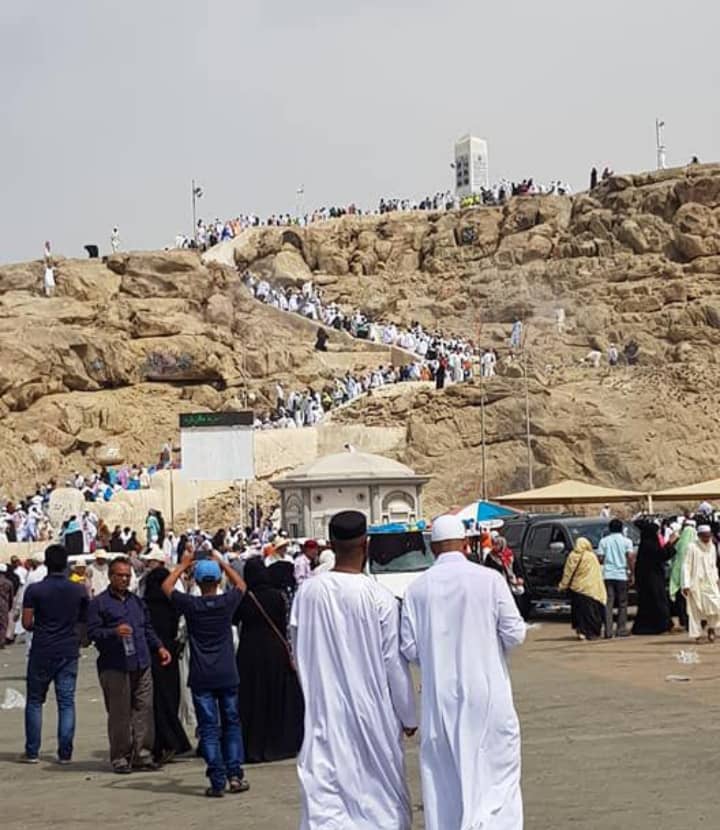
I never thought a stranger could change the way I understood forgiveness until I met an elderly man on the plains of Arafat.
My name is Maryam, and that year was my first Hajj.
I had spent years praying for the opportunity to visit the sacred land. When my Hajj approval finally came, I could hardly believe it. I packed my belongings with excitement, made endless duas, and promised myself that I would return home as a better Muslim.
But beneath my excitement was a secret burden.
For almost five years, I had been struggling to forgive someone who had deeply hurt me. I prayed regularly, attended Islamic gatherings, and tried to move forward, but whenever I remembered what happened, the pain returned.
I wanted Allah to forgive me, yet I found it difficult to forgive another person.
Little did I know that Arafat would teach me a lesson I desperately needed.
THE MORNING OF ARAFAT
The morning arrived with an atmosphere I could hardly describe.
Pilgrims were everywhere. Some were making dhikr, others were reading the Qur’an, while many raised their hands in heartfelt supplication.
I sat quietly, holding my dua book.
Around me were people from different countries, speaking different languages, yet sharing the same hope: to receive Allah’s mercy and forgiveness.
I found a quiet place to sit and began making dua.
After some time, I noticed an elderly man sitting a short distance away. He wore simple white ihram garments and held a small bottle of water.
He looked peaceful, but there was something about his expression that suggested he had been through many difficult seasons of life.
He noticed me looking in his direction and greeted me warmly.
“Assalamu alaikum, my daughter.”
“Wa alaikum salam,” I replied.
“Is this your first Hajj?”
I smiled. “Yes, Alhamdulillah. What about you?”
He smiled gently.
“My third. But every time I come here, I feel like a student learning the same lesson again.”
I laughed softly.
“What lesson is that?”
He looked towards the pilgrims and said, “That we are all in need of Allah’s mercy.”
His words stayed with me.
THE STRANGER’S STORY
We introduced ourselves. His name was Ibrahim, and he had travelled from Senegal.
He told me about his family, his late wife, and the difficulties he had experienced after losing her.
For several minutes, he spoke about how difficult it had been to continue life without the woman who had shared almost forty years of marriage with him.
Then he said something that caught my attention.
“Do you know, my daughter, the hardest part of losing someone is not always their absence. Sometimes, it is remembering the things you wish you had done differently.”
I looked at him.
He continued.
“When my wife was alive, we sometimes argued over little things. There were days I allowed pride to stop me from apologising. I always thought there would be another opportunity to make things right.”
His voice became softer.
“But life does not always give us another opportunity.”
I lowered my eyes.
He looked at me kindly.
“That is why I ask Allah to forgive me and help me become a better person. I cannot change yesterday, but I can make better choices today.”
I felt a strange heaviness in my chest.
His words reminded me of someone I had refused to forgive.
A QUESTION THAT TOUCHED MY HEART
After a moment of silence, Ibrahim asked me:
“My daughter, what are you asking Allah for today?”
I looked at my dua book.
“Many things,” I replied. “Forgiveness, guidance, protection for my family, and peace in my heart.”
He nodded.
“That is beautiful. But have you also asked Allah to help you release the pain you are carrying?”
I was silent.
He continued gently.
“Sometimes we ask Allah to remove our burdens, but we keep holding tightly to the things that hurt us.”
I could not answer.
Then I told him about the person who had hurt me years earlier. I explained how difficult it had been to forgive and how the experience had affected my peace of mind.
He listened without interrupting.
When I finished, he said:
“Forgiveness does not mean pretending that someone did not hurt you. It does not mean accepting injustice or returning to a situation that harms you. But you can ask Allah to free your heart from bitterness while still maintaining healthy boundaries.”
I felt tears gathering in my eyes.
For the first time, I began to understand that forgiveness was not necessarily about the other person.
It was also about finding peace within myself.
THE DUA WE MADE TOGETHER
The sun was shining brightly, and the plains of Arafat were filled with pilgrims making supplications.
Ibrahim raised his hands.
“Let us make dua,” he said.
We both raised our hands and began asking Allah for forgiveness, mercy, guidance, and goodness in this life and the next.
I prayed for my parents, my siblings, my future, and the people who had hurt me.
I also prayed for the ability to forgive without allowing pain to destroy my heart.
That afternoon, I cried more than I had cried in years.
Not because all my problems had suddenly disappeared, but because I finally felt ready to surrender what I could not control to Allah.
WHEN THE STRANGER DISAPPEARED
Later, as pilgrims began moving around, I turned to look for Ibrahim.
He was no longer sitting beside me.
I looked around, hoping to see him among the crowds, but I could not find him.
I never saw him again.
I did not even get the opportunity to thank him properly.
But I remembered his words.
For the rest of my Hajj journey, I thought about our conversation. I realised that sometimes the most meaningful lessons come through ordinary conversations with people we may never meet again.
Perhaps Ibrahim had come to Arafat with his own prayers and burdens, just as I had.
Yet Allah allowed our paths to cross.
THE JOURNEY BACK HOME
When I returned home, I began looking at life differently.
I became more intentional about my prayers. I tried to be patient with people and stopped allowing every disagreement to steal my peace.
I also made a decision.
I would no longer allow the pain of yesterday to control the person I wanted to become tomorrow.
I did not forget what had happened, but I stopped feeding the bitterness.
Months later, whenever I remembered Arafat, I remembered the elderly stranger from Senegal.
I wondered whether he had returned safely to his family. I wondered whether he still remembered our conversation.
Most importantly, I wondered how many other people had experienced similar moments of unexpected kindness during Hajj.
And I finally understood something:
Sometimes, a stranger can remind you of a truth you have heard a thousand times but never truly understood.
THE LESSON ARAFAT TAUGHT ME
Arafat was more than a place I visited during Hajj. It became a reminder of my humanity, my weaknesses, and my constant need for Allah.
I arrived carrying resentment. I left determined to seek peace.
I arrived thinking forgiveness was something I owed another person. I left understanding that releasing bitterness could also be an act of mercy towards myself.
And although I never saw Ibrahim again, a part of his wisdom travelled home with me.
May Allah forgive our shortcomings, soften our hearts, heal our hidden wounds, and grant us the opportunity to witness another Hajj.
May He accept the duas of every pilgrim standing on the plains of Arafat.
Ameen Ya Rabbal Alameen.
Some encounters last only a few hours, but their lessons remain in the heart for a lifetime.
Suggested blog tags: Hajj Stories, Islamic Fiction, Day of Arafat, Forgiveness in Islam, Spiritual Growth, Muslim LifeLessons.
Note: This is an imaginative fictional story, not a true account or a religious ruling.
