


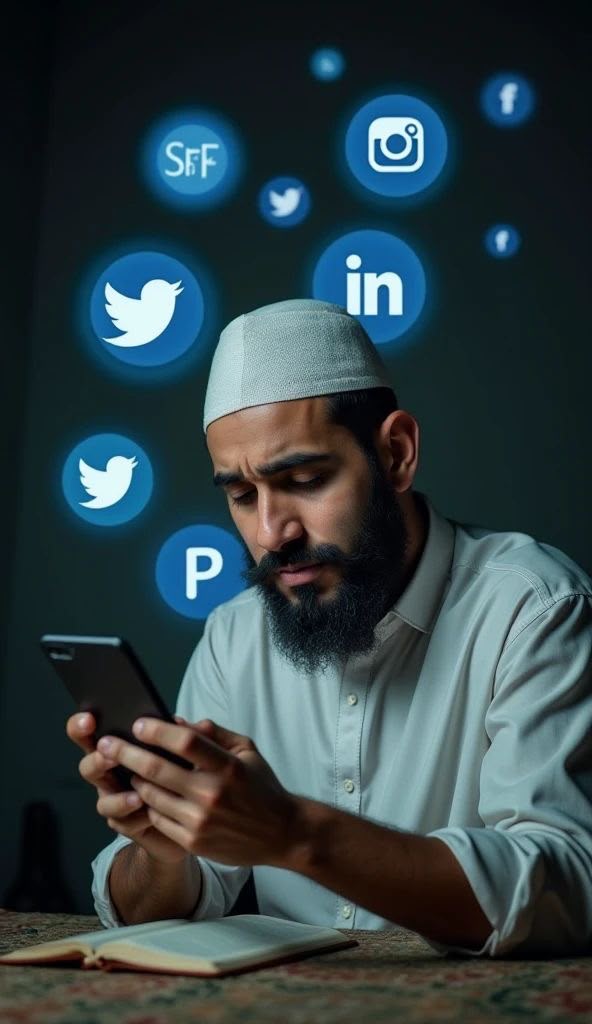
Artificial intelligence is changing how people learn, work, communicate, and create content. Today, AI tools can help users write articles, generate images, edit videos, imitate voices, and produce realistic-looking scenes.
These developments offer many opportunities. Students can use AI to understand difficult concepts, businesses can improve their work processes, and content creators can develop educational materials more efficiently.
However, the same technology can also be used to spread misinformation, imitate people without their consent, and create convincing false evidence.
For Muslims, the question is not simply whether AI is useful. It is how we can use it responsibly while remaining committed to honesty, justice, and accountability.
WHAT ARE DEEPFAKES?
A deepfake is synthetic or manipulated media that uses artificial intelligence to make someone appear to say or do something they did not actually say or do.
For example, a video might show a public figure appearing to make a statement they never made. A generated voice might imitate someone’s speech. A manipulated image might falsely suggest that a person was present at an event.
Because some of these creations look and sound realistic, viewers may struggle to distinguish them from authentic material.
This creates a serious responsibility for anyone who creates, publishes, or forwards digital information.
1. DO NOT SPREAD INFORMATION WITHOUT VERIFYING IT
Imagine receiving a video in a group chat showing someone making a shocking statement. The video appears genuine, and several people are already sharing it.
You may feel tempted to forward it immediately.
However, an impressive-looking video is not automatically reliable evidence.
Check whether the video comes from a trustworthy source. Look for credible reporting or an original statement. Consider whether the clip could have been edited, taken out of context, or generated using AI.
Allah instructs believers to verify information before acting upon it. Qur’an 49:6
This guidance is especially important when a claim could damage someone’s reputation, create fear, or influence an important decision.
If you cannot establish that the information is reliable, do not present it as fact.
2. NEVER USE AI TO DECEIVE PEOPLE
AI can help people create impressive content, but it can also make dishonesty easier.
Someone might use an AI-generated image to pretend to have attended an event, create a fake testimonial to promote a product, or imitate another person’s voice to mislead their family or friends.
These actions can violate trust and cause real harm.
If you create synthetic content that viewers could reasonably mistake for authentic footage, be transparent about its nature when that distinction matters.
For example, if you produce an AI-generated educational scene, you can clearly identify it as a dramatization rather than presenting it as a real event.
Technology should help us communicate more effectively, not make deception easier.
3. PROTECT PEOPLE’S IMAGES AND VOICES
A person’s face, voice, or personal photographs should not be treated as materials that can be used however someone wishes.
Creating a fake video of a classmate, using someone’s voice to make them appear to say something offensive, or producing humiliating images without consent can seriously harm that person.
Never use AI to create deceptive, abusive, or sexually explicit images of someone.
If you encounter such material, avoid forwarding it. Report it through the appropriate platform or authority when necessary, and seek support if someone is being targeted.
4. BE CAREFUL WHEN USING AI FOR ISLAMIC CONTENT
AI tools can assist with brainstorming, drafting articles, organizing ideas, and preparing educational material.
However, they can also produce inaccurate Qur’anic quotations, incorrect hadith references, or misleading explanations of Islamic rulings.
This is particularly important for Muslims who create Islamic videos, articles, social media posts, or educational resources.
Before publishing religious content:
* Verify Qur’anic quotations against a reliable copy of the Qur’an.
* Check hadith wording and references using trustworthy sources.
* Confirm that explanations accurately reflect the intended meaning.
* Seek qualified scholarly guidance for complex religious questions.
* Correct mistakes when you discover them.
Do not assume that a statement is correct simply because an AI tool presents it confidently.
5. USE AI TO SUPPORT LEARNING, NOT REPLACE HONEST EFFORT
Students may use AI to explain difficult topics, generate practice questions, or help organize their notes.
These can be useful applications when permitted by their school or teacher.
However, submitting AI-generated work in violation of academic rules or presenting someone else’s work as entirely your own can be dishonest.
Use AI to strengthen your understanding rather than avoid learning altogether.
If your teacher requires independent work, follow those instructions. If disclosure of AI assistance is required, be transparent about it.
6. REMEMBER THAT FALSE INFORMATION CAN HARM REAL PEOPLE
A fabricated accusation may appear to be only a digital post, but it can affect someone’s family, education, employment, safety, and reputation.
Before sharing a dramatic claim, ask yourself whether you have reliable evidence.
Do not assume that deleting a post will automatically undo the harm after others have copied or forwarded it.
If you discover that you have spread false information, correct it as openly as reasonably necessary and take steps to limit further harm.
7. LEARN TO RECOGNIZE YOUR OWN LIMITATIONS
Not every manipulated image has obvious signs. Not every AI-generated voice sounds artificial. Even careful viewers can be deceived by convincing content.
When a claim is important, do not rely on appearance alone. Look for independent confirmation from reliable sources.
It is also acceptable to say, “I cannot verify whether this is genuine.”
Acknowledging uncertainty is better than spreading an unsupported claim.
HEART CHECK
Dear young Muslim, artificial intelligence is a powerful tool, but its value depends greatly on how people choose to use it.
Use it to learn, create, solve problems, and develop beneficial projects. Do not use it to impersonate others, spread falsehood, violate privacy, or mislead your audience.
When sharing information, remember your responsibility to verify what you know and consider how your actions may affect others.
In a world where technology can make falsehood look real, honesty and verification are responsibilities every Muslim should take seriously.
May Allah guide us to use modern technology wisely, protect us from spreading falsehood, and make our knowledge a means of benefit. Ameen.
3SIXTYISLAM
At 3SixtyIslam, we believe Islamic knowledge should reach every generation. From Hajj and Umrah guidance to practical Islamic lessons for everyday life, our goal is to help Muslims learn, grow and strengthen their connection with Islam.
Follow 3SixtyIslam for more Islamic knowledge, guidance and inspiring stories for the whole family.
