


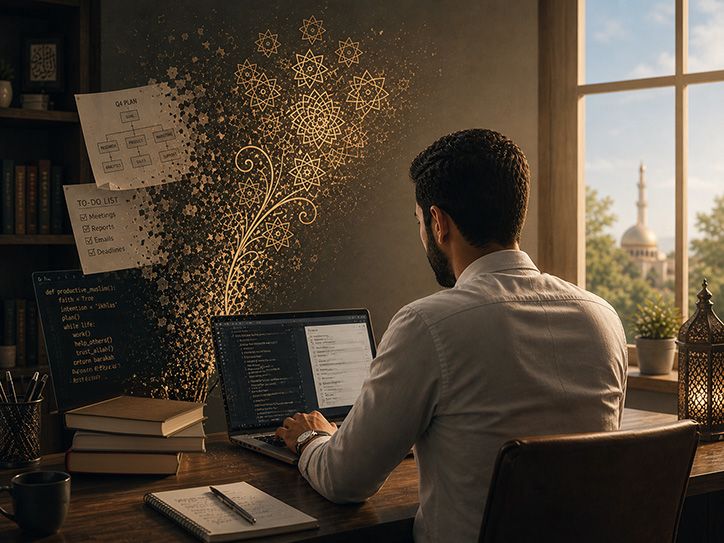
Have you ever wanted to download a paid book, course, film or software without paying for it?
Perhaps someone told you, “Everybody does it,” or “It is already online, so it cannot be wrong.”
But as Muslims, we should not judge an action only by how common it is. We must also consider honesty, rights and the responsibilities we owe to others.
WHAT DOES ISLAM TEACH?
Allah says: “And do not consume one another’s wealth unjustly…” — Qur’an 2:188
Islam teaches Muslims to respect people’s property and avoid taking what belongs to others without a valid right.
Digital products may not be physical objects, but they can still involve the rights of creators, publishers and businesses.
IS EVERY FREE DOWNLOAD WRONG?
No. Not all free downloads are unlawful or impermissible.
A creator may offer a book, course or software for free. A website may provide authorised downloads, or the copyright may have expired. Some products are released under licences that permit free copying and sharing.
The important question is whether the download or sharing is authorised.
1. WHAT IF THE OWNER ALLOWS FREE SHARING?
If the owner permits people to download and share the content, you may use it within the terms of that permission.
2. WHAT IF SOMEONE UPLOADS A PAID COURSE WITHOUT PERMISSION?
The fact that a course is available in a WhatsApp group, Telegram channel or another website does not automatically mean you have the right to download or distribute it.
Respect the creator’s rights and look for an authorised version.
3. WHAT IF YOU CANNOT AFFORD IT?
Not being able to afford something does not automatically give you permission to take it without authorisation.
Instead, look for scholarships, discounts, free trials, library copies, open educational resources or free alternatives.
4. WHAT ABOUT SHARING WITH FRIENDS?
Before forwarding paid content, check whether the creator or licence permits sharing. Do not assume that purchasing one copy gives you permission to distribute unlimited copies.
Questions involving copyright and digital rights can differ according to the licence, the law and the circumstances, so seek reliable guidance when the situation is unclear.
WHAT SHOULD A YOUNG MUSLIM REMEMBER?
* Do not assume that everything online is free to take.
* Respect the work and rights of creators.
* Use authorised platforms and downloads.
* Seek legitimate free alternatives when money is a challenge.
* Do not justify wrongdoing simply because other people are doing it.
HEART CHECK
Being a Muslim means striving to be honest even when nobody is watching. Respecting other people’s rights is part of building an online life that reflects your faith.
3SIXTYISLAM
At 3SixtyIslam, we believe Islamic knowledge should reach every generation. From Hajj and Umrah guidance to practical Islamic lessons for everyday life, our goal is to help Muslims learn, grow and strengthen their connection with Islam.
Follow 3SixtyIslam for more Islamic knowledge, guidance and inspiring stories for the whole family.
