


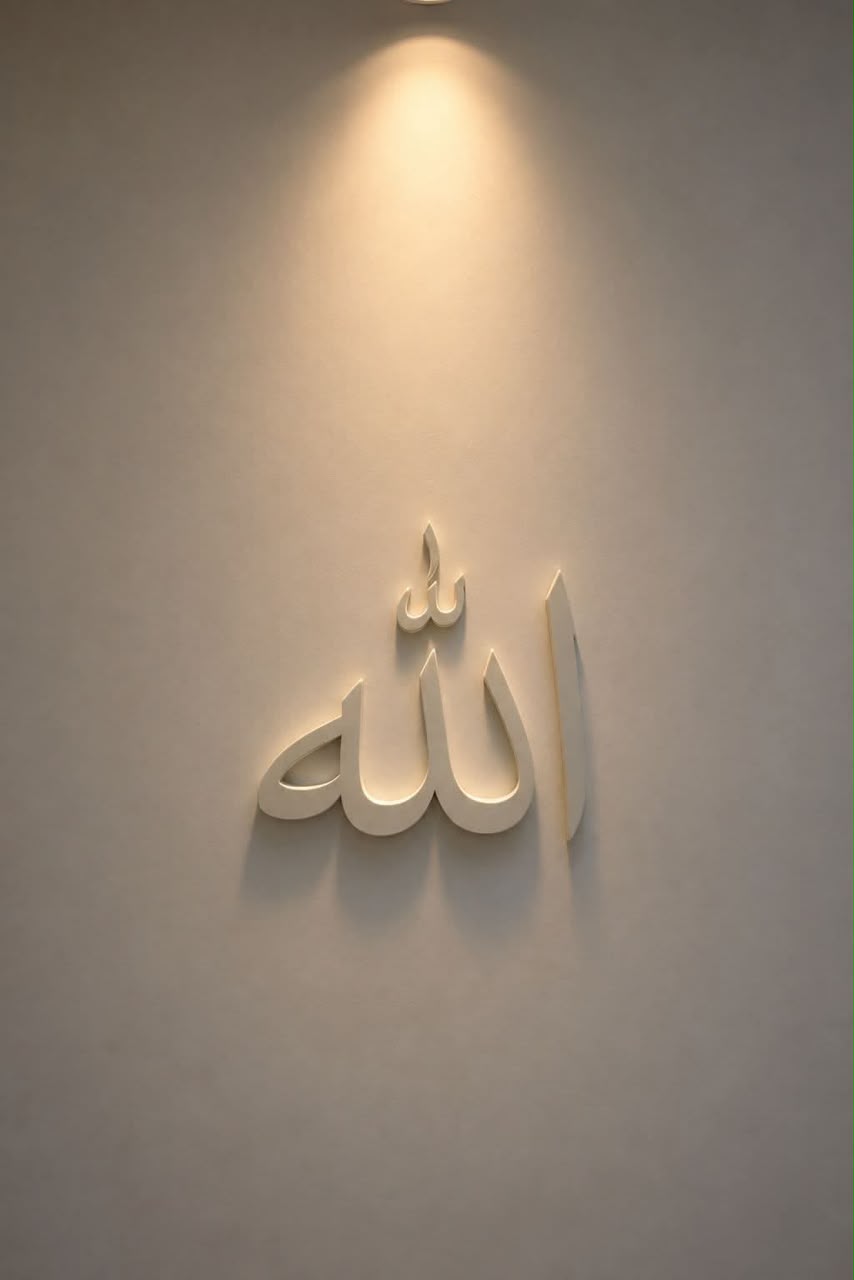
Who is Allah? What do we truly know about Him? What are His beautiful names, and what do they teach us about His greatness, mercy, power, and wisdom?
These are fundamental questions every Muslim should seek to understand. Knowing Allah is not simply about memorising His names or learning religious facts; it is about building a sincere relationship with our Creator, worshipping Him correctly, and living in a way that pleases Him.
The more we learn about Allah, the more we understand why He alone deserves our worship, why we should place our trust in Him, and why we should never lose hope in His mercy.
WHO IS ALLAH?
Allah is the one true God, the Creator, Sustainer, and Owner of everything in existence. He created the heavens and the earth, gives life and causes death, provides for His creation, and has complete knowledge and power over all things.
Allah has no partner, no equal, no parents, and no children. He was not created, and He does not depend on anyone or anything. Everything in creation depends on Him.
Allah says in the Qur’an:
“Say, He is Allah, the One. Allah, the Eternal Refuge. He neither begets nor is born, nor is there to Him any equivalent.”
— Surah Al-Ikhlas 112:1–4
These four verses provide one of the clearest descriptions of who Allah is.
Allah is One, and He alone deserves to be worshipped. He is independent of all creation, while every created being depends on Him. He is not born, does not give birth, and has no equal or rival.
Muslims believe that all the Prophets, from Adam to Muhammad (peace be upon them all), called their people to worship Allah alone and turn away from false gods.
Understanding this is the foundation of Tawheed, the Islamic belief in the absolute oneness of Allah.
WHY IS IT IMPORTANT TO KNOW ALLAH?
Knowing Allah is one of the most important aspects of a Muslim’s faith. It helps us understand whom we worship, why we pray, why we make du’a, and why we should remain steadfast during both hardship and ease.
When we understand Allah’s mercy, we learn not to despair when we make mistakes. When we understand His knowledge, we become mindful of our actions, even when nobody is watching. When we understand His power, we realise that no difficulty is beyond His ability to overcome.
Knowing Allah also helps us develop sincerity, patience, gratitude, humility, and reliance upon Him.
Allah says:
“And to Allah belong the best names, so invoke Him by them.”
— Surah Al-A’raf 7:180
This verse teaches us that learning Allah’s names should influence our worship and supplications. We should call upon Him using His beautiful names and seek to understand the meanings they convey.
WHAT ARE THE 99 BEAUTIFUL NAMES OF ALLAH?
Allah has beautiful names known as Asma’ul Husna, meaning the Most Beautiful Names.
The Prophet Muhammad (peace and blessings be upon him) said that Allah has ninety-nine names and that whoever enumerates them will enter Paradise. This narration is recorded in Sahih al-Bukhari and Sahih Muslim.
Learning these names helps us understand Allah’s perfection and recognise His greatness. However, knowing the names involves more than memorising a list; it also means understanding their meanings and allowing that knowledge to improve our worship.
Here are some of Allah’s beautiful names and what they teach us.
1. AR-RAHMAN — THE MOST MERCIFUL
Ar-Rahman refers to Allah’s vast and all-encompassing mercy.
His mercy is among the greatest reasons we continue to turn to Him, even after making mistakes. A Muslim should never believe that their sins are greater than Allah’s mercy, provided they sincerely repent and seek His forgiveness.
Knowing Allah as Ar-Rahman should also encourage us to show kindness, compassion, and mercy to other people.
2. AR-RAHEEM — THE ESPECIALLY MERCIFUL
Ar-Raheem is another of Allah’s beautiful names associated with mercy.
It reminds us that Allah’s mercy is perfect and that we should always seek His guidance and forgiveness.
A believer should balance hope in Allah’s mercy with sincere repentance and a genuine effort to avoid wrongdoing.
3. AL-MALIK — THE KING AND SOVEREIGN
Allah is the true King and absolute Sovereign over everything that exists.
Human power, wealth, authority, and possessions are temporary. Everything belongs to Allah, and every human being will ultimately return to Him.
Understanding this name helps us become humble and reminds us not to become arrogant because of our worldly achievements.
4. AL-QUDDUS — THE MOST HOLY AND PURE
Allah is free from every imperfection and every deficiency.
Nothing about His perfection resembles the limitations of created beings. He is not subject to weakness, ignorance, or the needs that affect human beings.
This name reminds us that Allah is worthy of the highest reverence and worship.
5. AS-SALAM — THE SOURCE OF PEACE AND PERFECTION
As-Salam means that Allah is free from imperfection and deficiency.
A Muslim can seek peace, safety, and protection from Allah while remembering that true tranquillity comes through faith, remembrance, and obedience to Him.
6. AL-AZIZ — THE ALMIGHTY
Allah possesses complete might and power. Nobody can overpower Him, and nothing can prevent His will from being fulfilled.
This name reminds believers that they should not allow fear of people or worldly circumstances to become greater than their trust in Allah.
7. AL-GHAFUR — THE MOST FORGIVING
Allah is the Most Forgiving.
Human beings make mistakes, fall into sin, and sometimes become distant from their Creator. However, the door of sincere repentance remains open during one’s lifetime.
A Muslim should not allow guilt to lead to despair. Instead, they should acknowledge their mistakes, repent sincerely, correct their behaviour, and seek Allah’s forgiveness.
8. AT-TAWWAB — THE ACCEPTER OF REPENTANCE
At-Tawwab reminds us that Allah accepts the sincere repentance of His servants.
True repentance involves abandoning the sin, regretting it, resolving not to return to it, and restoring the rights of others when those rights have been violated.
This name encourages us to keep returning to Allah rather than allowing repeated mistakes to make us give up.
9. AR-RAZZAQ — THE GREAT PROVIDER
Allah is the Provider of sustenance.
Our provision includes food, wealth, opportunities, and other blessings that Allah grants to His creation.
Knowing Allah as Ar-Razzaq encourages us to seek lawful income, work honestly, avoid prohibited financial dealings, and trust Allah while making responsible efforts.
10. AL-ALIM — THE ALL-KNOWING
Allah’s knowledge encompasses everything, including the past, present, and future. He knows what is visible and hidden, what we say aloud, and what we conceal in our hearts.
Nothing escapes His knowledge.
This understanding should encourage us to be sincere in our intentions and mindful of our actions, whether we are alone or surrounded by people.
11. AS-SAMI’ — THE ALL-HEARING
Allah hears everything.
He hears our spoken words, our quiet supplications, and our pleas for help, even when we cannot find the words to explain what we are feeling.
This name encourages us to make du’a sincerely and to remember that we can turn to Allah at any time.
12. AL-BASIR — THE ALL-SEEING
Allah sees everything. Nothing is hidden from Him, regardless of how private or secret an action may appear to human beings.
Knowing this should encourage us to avoid wrongdoing in private as well as in public and to strive for sincerity in all our affairs.
13. AL-HAKIM — THE ALL-WISE
Allah possesses perfect wisdom.
There are times when we do not understand why certain events occur or why our supplications are answered in ways different from what we expected.
Recognising Allah as Al-Hakim reminds us that our knowledge is limited, while His wisdom is perfect. This should encourage patience without preventing us from seeking solutions or taking appropriate action.
14. AL-WADUD — THE MOST LOVING
Allah is the Most Loving.
His love is perfect and befitting His majesty. He loves those who turn to Him in repentance and strive to do what is right.
This name encourages believers to seek Allah’s pleasure, strengthen their faith, and cultivate love and kindness in their relationships with others.
15. AL-HAFIZ — THE PRESERVER AND GUARDIAN
Allah preserves and guards His creation as He wills.
A Muslim can seek His protection from harm, temptation, and difficulties while also taking sensible steps to protect themselves and their families.
This name reminds us to place our trust in Allah without neglecting our responsibilities.
These fifteen names are only a selection. Muslims should continue learning the beautiful names established in the Qur’an and authentic Sunnah, together with their meanings and lessons.
WHAT ARE ALLAH’S ATTRIBUTES?
Allah’s attributes describe His perfection and majesty. We learn about them through what Allah has revealed in the Qur’an and what is authentically reported from the Prophet Muhammad (peace and blessings be upon him).
Some of the essential attributes Muslims should understand include the following:
Life: Allah is eternally living and never dies.
Knowledge: His knowledge encompasses everything.
Power: Allah has complete power over all things.
Will: Nothing occurs outside His will.
Hearing: Allah hears everything.
Sight: Allah sees everything.
Speech: Allah speaks in a manner befitting His majesty, and the Qur’an is His revealed speech.
Wisdom: His wisdom is perfect.
Mercy: His mercy is real, perfect, and befitting Him.
Self-sufficiency: Allah needs nothing, while all creation depends on Him.
An essential principle in understanding Allah’s attributes is that nothing resembles Allah.
Allah says:
“There is nothing like unto Him, and He is the Hearing, the Seeing.”
— Surah Ash-Shura 42:11
This verse teaches us to affirm what Allah has revealed about Himself without comparing Him to His creation or claiming to know exactly how His attributes are.
Allah hears, but His hearing is not like human hearing. He sees, but His sight is not like human sight. His perfection is unlike anything we can imagine.
HOW SHOULD KNOWING ALLAH CHANGE OUR LIVES?
Learning about Allah should have a positive effect on our faith, worship, and character.
If we know Allah as Ar-Rahman, we should strive to show mercy to others.
If we know Him as Al-Alim, we should remember that He knows our intentions and private actions.
If we know Him as Ar-Razzaq, we should seek lawful provision and avoid dishonest dealings.
If we know Him as Al-Ghafur, we should repent when we sin rather than surrendering to despair.
If we know Him as As-Sami’, we should make du’a with confidence that Allah hears us.
If we know Him as Al-Hakim, we should remain patient when we do not understand everything that happens in our lives.
If we know Him as Al-Adl, the Utterly Just, we should remember that Allah does not wrong anyone and that every person will be held accountable for their deeds.
In this way, learning Allah’s names becomes more than a theoretical exercise. It becomes a means of strengthening our relationship with our Creator and improving the way we live.
HOW CAN WE CALL UPON ALLAH USING HIS BEAUTIFUL NAMES?
Allah encourages us to call upon Him by His beautiful names. We can do this in our daily supplications by asking Him for what we need and invoking Him through names that relate to our requests.
For example:
- When seeking forgiveness, we can say, “O Most Forgiving, forgive me.”
- When seeking mercy, we can say, “O Most Merciful, have mercy on me.”
- When seeking provision, we can ask Allah, the Provider, to grant us lawful and blessed sustenance.
- When seeking knowledge, we can ask Allah to increase us in beneficial knowledge.
- When seeking guidance, we can ask Allah to guide us to the truth and help us follow it.
- When facing hardship, we can ask Allah for patience, strength, relief, and a good outcome.
These are examples of personal supplication, not fixed formulas that must be repeated a particular number of times.
The important thing is to call upon Allah sincerely, with humility, hope, and trust in Him.
PRACTICAL WAYS TO LEARN MORE ABOUT ALLAH
If you want to deepen your understanding of Allah, begin with simple, consistent steps.
1. Read the Qur’an with understanding. Pay attention to the verses in which Allah describes Himself, His mercy, His power, His wisdom, and His relationship with His creation.
2. Learn one name at a time. Study its meaning, where it appears in the Qur’an or authentic Sunnah, and how it should influence your life.
3. Reflect on Allah’s creation. The heavens, the earth, the alternation of night and day, and the signs of life all invite us to reflect on the greatness of the Creator.
4. Make du’a regularly. Call upon Allah sincerely, ask for His guidance, and seek His help in both your worldly affairs and your preparation for the Hereafter.
5. Learn from reliable Islamic teachers. Study Tawheed and the names and attributes of Allah through sound Islamic sources rather than relying solely on short social media clips or unverified quotations.
6. Put your knowledge into practice. Let your understanding of Allah increase your sincerity, gratitude, patience, humility, and obedience.
CONCLUSION
Knowing Allah is at the heart of a Muslim’s faith. The more we learn about His oneness, His beautiful names, and His perfect attributes, the better we understand why He alone deserves our worship and why we should turn to Him in every aspect of our lives.
We learn that He is the Most Merciful, the Most Forgiving, the All-Knowing, the Almighty, and the Most Wise. We learn to fear Him without despairing of His mercy, to love Him through worship and obedience, and to trust Him while fulfilling our responsibilities.
Let us therefore make it a lifelong goal to know Allah through the Qur’an and authentic Sunnah, call upon Him by His beautiful names, and allow our knowledge of Him to transform our hearts and actions.
May Allah grant us beneficial knowledge, sincere faith, a sound understanding of His beautiful names and attributes, and the ability to worship Him as He deserves. Amin.
