


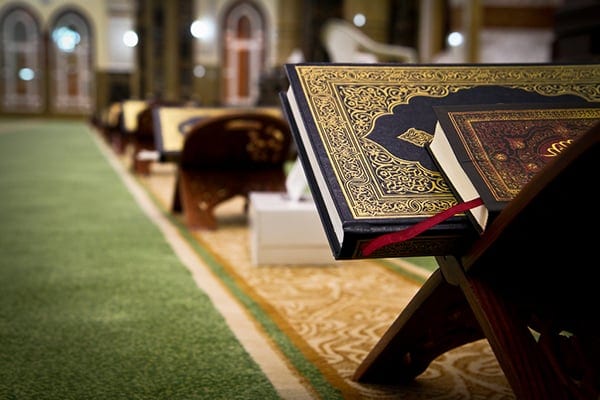
The Quran is the most important book in the life of a Muslim. It is not simply a book that Muslims recite during Salah, listen to during Ramadan, or keep respectfully in their homes. It is the speech of Allah, revealed as guidance for humanity and as a source of direction for those who believe.
Allah says, “Indeed, this Quran guides to that which is most suitable.” (Quran 17:9)
This means that the Quran was not revealed merely for Muslims to admire. It was revealed to guide the way we believe, worship, think, behave and live.
Yet one of the greatest challenges facing many Muslims today is that the Quran can become familiar without becoming transformative. A person may recite it regularly but rarely reflect upon its meaning. Someone may listen to beautiful recitations but make little effort to understand what Allah is saying. Others may only return to the Quran during Ramadan or when they are facing a difficult situation.
The Quran deserves a much deeper relationship.
THE QURAN IS THE WORD OF ALLAH
At the heart of a Muslim’s relationship with the Quran is the belief that it is the speech of Allah. It was not written by the Prophet Muhammad ﷺ, nor was it composed by human beings.
Allah revealed it to Prophet Muhammad ﷺ through Jibril عليه السلام over a period of approximately twenty-three years. The revelation began in Makkah and continued through the Prophet’s mission until shortly before his death.
The Quran therefore came to humanity through revelation, not human authorship.
Allah says:
“Indeed, it is We who sent down the Quran and indeed, We will be its guardian.” (Quran 15:9)
This is one of the reasons Muslims have treated the preservation of the Quran with extraordinary seriousness throughout history. Its words have been memorised, recited, taught and transmitted from generation to generation.
THE QURAN WAS REVEALED AS GUIDANCE
The Quran contains stories, commands, warnings, promises, laws, reminders and descriptions of the Hereafter. But underneath all of these is one central purpose: guidance.
Allah says:
“This is the Book about which there is no doubt, a guidance for those conscious of Allah.” (Quran 2:2)
The Quran teaches Muslims who Allah is and how He should be worshipped. It teaches us about faith, repentance, patience, gratitude, justice, family relationships, wealth, morality and accountability.
It also teaches us how to understand this world.
A Muslim who reads the Quran properly should gradually begin to see life differently. Success is no longer measured only by money or status. Difficulties are understood through patience and trust in Allah. Wealth is seen as a responsibility. Other people are treated as individuals whose rights matter. The Hereafter becomes more important than temporary worldly achievements.
That is what guidance does. It changes the way a person sees and responds to life.
RECITING THE QURAN IS NOT THE END
There is enormous reward in reciting the Quran, and Muslims should never underestimate the virtue of recitation.
The Prophet ﷺ said that whoever recites a letter from the Book of Allah receives a reward for it, and that each good deed is multiplied by ten.
But the purpose of the Quran goes beyond simply completing pages.
Allah asks:
“Then do they not reflect upon the Quran, or are there locks upon their hearts?” (Quran 47:24)
This verse calls us to reflection.
A Muslim should therefore ask questions while reading the Quran. What is Allah teaching me here? What does this verse tell me about Him? Is there a command I need to follow? Is there a behaviour I need to change? Is there a warning I should take seriously? Is there a quality Allah is encouraging me to develop?
The Quran becomes much more powerful when a person moves from simply reading its words to engaging with its message.
UNDERSTANDING THE QURAN MATTERS
A Muslim should make an effort to understand what they recite.
This does not mean that every Muslim must become a scholar before benefiting from the Quran. It means we should not be satisfied with reciting words whose meanings we never attempt to learn.
If you regularly recite Surah Al-Fatihah, for example, you should know what you are asking Allah for. If you recite verses about patience, you should understand what Allah says about patience. If you read about repentance, you should understand what sincere repentance requires.
Learning the meaning of the Quran can completely change familiar verses.
A verse that you have recited hundreds of times may suddenly affect your heart differently when you understand what Allah is saying.
This is why translation, tafsir and learning from reliable scholars are important tools for developing a stronger relationship with the Quran.
THE QURAN SHOULD CHANGE OUR ACTIONS
One of the clearest signs that a person is benefiting from the Quran is that its guidance begins to appear in their behaviour.
If the Quran teaches us to speak truthfully, our speech should become more truthful.
If it commands us to honour our parents, our relationship with our parents should reflect that command.
If it warns us against backbiting, we should become more careful about what we say about people when they are absent.
If it teaches us to forgive, we should examine whether we are holding onto unnecessary resentment.
The Quran is not meant to remain on the tongue while being absent from the character.
The companions of the Prophet ﷺ understood this deeply. They did not approach revelation simply as information to collect. They learned the Quran and sought to live by what they learned.
DO NOT WAIT UNTIL RAMADAN
One of the biggest mistakes Muslims can make is treating the Quran as a seasonal book.
Ramadan is certainly a special month for the Quran, but our relationship with revelation should continue throughout the year.
Even a small daily portion can make a difference when it becomes consistent.
A person who reads a few verses every day, studies their meaning, reflects upon them and tries to implement what they learn may develop a much stronger relationship with the Quran than someone who reads a large amount occasionally without reflection.
Consistency matters.
The goal is not simply to say, “I finished the Quran.”
The greater goal is to allow the Quran to become part of the way you think, worship and live.
THE QURAN AND THE HEART
The Quran also has a unique relationship with the heart.
Allah describes it as a healing and mercy for the believers:
“And We send down of the Quran that which is healing and mercy for the believers.” (Quran 17:82)
This does not mean that every difficulty will disappear immediately after reading a verse. Rather, the Quran provides spiritual guidance, correction, reassurance and clarity.
Sometimes a person does not need more worldly advice. They need to return to Allah’s words.
When anxiety about the future becomes overwhelming, the Quran reminds us about Allah’s knowledge and power. When a person becomes arrogant because of success, the Quran reminds them of their dependence upon Allah. When someone falls into sin, the Quran opens the door of repentance. When hardship becomes heavy, the Quran reminds the believer that Allah is aware.
This is part of why the Quran remains relevant in every generation.
BUILD A REAL RELATIONSHIP WITH THE QURAN
A real relationship with the Quran does not require perfection.
Start by making it consistent.
Read it every day, even if the amount is small. Learn the meaning of what you regularly recite. Study reliable tafsir. Listen carefully when the Quran is recited. Reflect on its verses. Ask Allah to help you understand and live by His Book.
Most importantly, allow the Quran to question you.
It should not only be something we read. It should also be something that examines our lives.
Are we following what it commands? Are we avoiding what it forbids? Are our relationships reflecting its teachings? Is our worship becoming better? Is our character improving?
The Quran was revealed to guide us, and guidance requires a response.
A Muslim’s relationship with the Quran should therefore be more than recitation. It should be a relationship of reading, understanding, reflection, implementation and continual return to Allah.
The Quran is not merely a book we keep in our homes.
It is a book that is meant to guide our lives.
