


For many Muslims, Friday prayer is simply understood as the prayer that replaces Dhuhr on Friday. While that description points in the right direction, it does not fully explain what makes Jumuʿah different from the ordinary Dhuhr prayer performed on other days.
Jumuʿah is a distinct act of worship with its own rulings, requirements and significance. It is connected to the weekly gathering of the Muslim community, the khutbah and the congregational prayer. Understanding these differences helps a Muslim appreciate why Friday is treated differently in Islamic law.
Allah says in the Qur’an:
“O you who believe! When the call is proclaimed for the prayer on Friday, then hasten to the remembrance of Allah and leave off business. That is better for you, if you only knew.”
(Qur’an 62:9)
The verse specifically addresses the Friday prayer and instructs believers to leave their worldly activities when the call is made. This shows that Jumuʿah has a particular status that distinguishes it from the normal daily prayers.
JUMUʿAH IS NOT SIMPLY TWO RAKʿAHS OF DHUHR
One of the most important differences is the number of rakʿahs.
The obligatory Dhuhr prayer consists of four rakʿahs. Jumuʿah, however, consists of two obligatory rakʿahs prayed behind the imam after the khutbah.
This reduction is not because Jumuʿah is somehow an incomplete form of Dhuhr. Rather, Jumuʿah is a separate prayer established by the Sunnah of the Prophet Muhammad ﷺ.
The Prophet ﷺ consistently prayed Jumuʿah as two rakʿahs, and the companions continued upon this practice.
The khutbah is also an essential part of the Friday gathering and comes before the two-rakʿah prayer. This is another major difference between Jumuʿah and ordinary Dhuhr.
On a normal day, a Muslim prays Dhuhr without a khutbah being delivered immediately before it as part of the prayer.
On Friday, the congregation gathers, the imam delivers the khutbah, and then the two-rakʿah Jumuʿah prayer is performed.
THE KHUTBAH IS PART OF THE FRIDAY EXPERIENCE
The khutbah is not simply an introduction to the prayer.
It is a reminder and instruction for the Muslim community. The imam may speak about faith, worship, morality, family responsibilities, repentance, social responsibilities and other matters relevant to the believers.
This is one reason why the Prophet ﷺ instructed Muslims to remain quiet and listen when the imam is delivering the khutbah.
Abu Hurayrah رضي الله عنه narrated that the Prophet ﷺ said that when someone tells his companion to be quiet while the imam is delivering the khutbah, he has engaged in idle speech.
This shows that the khutbah deserves attention and respect.
The Muslim should therefore not approach Jumuʿah as though the khutbah is merely something to endure before the “real prayer” begins. The khutbah itself is an important part of the Friday gathering.
WHO IS REQUIRED TO ATTEND JUMUʿAH?
Jumuʿah is an obligation upon those who meet its conditions.
The Prophet ﷺ and the scholars of Islam established that it is generally obligatory upon adult Muslim men who are residents and able to attend, while women are not required to attend Jumuʿah in the same way, although women may attend the mosque and participate in Jumuʿah.
There are also exemptions for people who have legitimate excuses, such as illness or circumstances that make attendance genuinely difficult or harmful.
This distinction is important because Islam does not place an obligation on a person while ignoring genuine hardship.
Someone who is sick, travelling or has another valid excuse may have a different ruling from someone who is healthy, resident and capable of attending.
For the person upon whom Jumuʿah is obligatory, however, deliberately treating Friday prayer as optional without a valid reason is a serious matter.
WHY DOES JUMUʿAH REPLACE DHUHR?
For the person required to attend Jumuʿah, the Friday prayer takes the place of the Dhuhr prayer.
Once Jumuʿah is correctly performed, he does not then pray four rakʿahs of Dhuhr as a replacement.
The purpose is not to perform both prayers. Jumuʿah itself is the obligatory Friday prayer for those required to attend.
This is why the Muslim should understand the importance of arriving for Jumuʿah rather than thinking that he can simply pray Dhuhr whenever it is convenient.
Allah specifically commands believers to respond to the Friday prayer and leave their business when its call is made.
FRIDAY IS ALSO ABOUT GATHERING
Another major difference is the communal nature of Jumuʿah.
Dhuhr can be prayed individually or in congregation. A Muslim can pray Dhuhr at home, at work, while travelling or in another appropriate place, provided the conditions of prayer are fulfilled.
Jumuʿah, however, is fundamentally a congregational prayer.
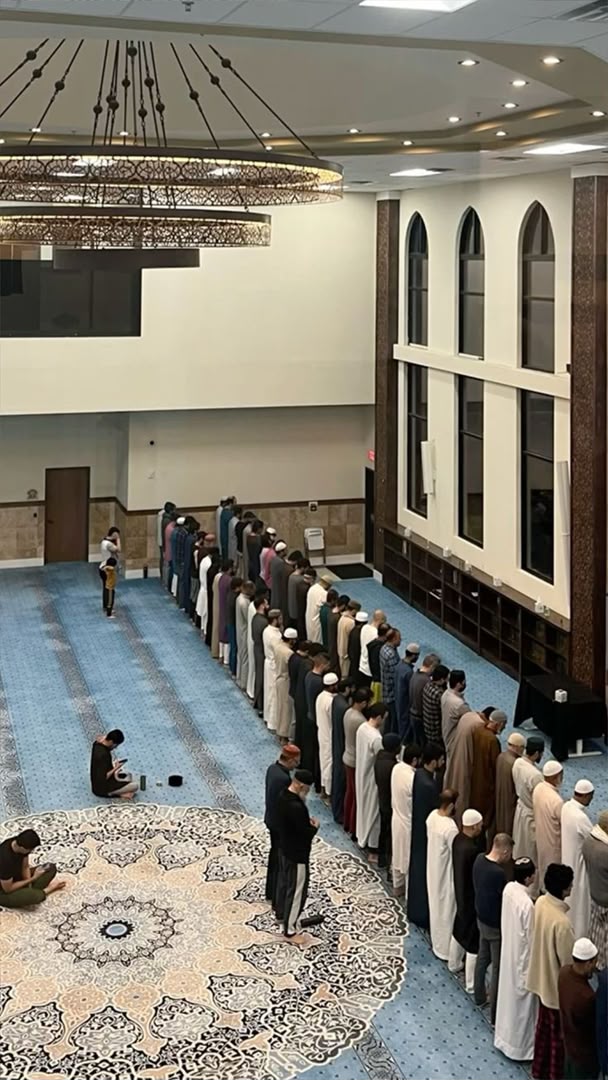
Muslims gather together in a mosque or another place where Jumuʿah is validly established. They stand shoulder to shoulder and worship Allah together.
The businessman stands beside the labourer.
The student stands beside the teacher.
The wealthy stand beside those with less wealth.
People from different families, professions and backgrounds gather for the same purpose.
Jumuʿah therefore has a powerful communal dimension that ordinary Dhuhr does not have in the same way.
THE FRIDAY PRAYER HAS A DIFFERENT ATMOSPHERE
The Islamic tradition gives Friday a number of recommended practices that help distinguish it from an ordinary day.
Muslims are encouraged to perform ghusl, maintain good personal hygiene, wear clean clothing, use perfume where appropriate and go to the mosque early.
The Prophet ﷺ also encouraged believers to send abundant blessings upon him on Friday.
These practices demonstrate that Friday is not simply another day with a different prayer. It has its own character and rhythm.
A Muslim who understands this should approach Friday with preparation rather than rushing into the mosque at the last possible moment.
WHAT IF YOU MISS JUMUʿAH?
This is where the distinction between Jumuʿah and Dhuhr becomes particularly important.
If a person has a valid excuse and cannot attend Jumuʿah, he prays Dhuhr instead.
Similarly, if a person misses Jumuʿah entirely, he does not pray two rakʿahs by himself and call that Jumuʿah. Jumuʿah is a congregational prayer and is not simply the normal Dhuhr prayer shortened to two rakʿahs.
Instead, the person who misses Jumuʿah prays the Dhuhr prayer.
There are also detailed fiqh rulings concerning someone who arrives late and catches part of the Jumuʿah prayer. Scholars discuss what counts as catching Jumuʿah and when a person must complete the prayer as Jumuʿah or pray Dhuhr instead.
Because the details can vary according to the specific circumstances and madhhab, a Muslim facing such a situation should ask a qualified scholar rather than simply guessing.
THE IMPORTANCE OF NOT DELAYING JUMUʿAH
The Qur’an gives a direct instruction concerning Friday:
“Then hasten to the remembrance of Allah and leave off business.”
(Qur’an 62:9)
This does not mean that Muslims should literally run recklessly to the mosque. Rather, it emphasizes responding promptly and giving the Friday prayer priority when its time comes.
The verse mentions business because worldly responsibilities can easily become a distraction.
A person may say, “I will finish this first.”
Then another task appears.
Then another customer arrives.
Then another phone call comes.
Before long, the person has allowed his worldly affairs to push an obligation aside.
Islam teaches us to recognise that there are moments when the dunya must wait.
Jumuʿah is one of those moments.
THE BALANCE BETWEEN WORSHIP AND WORLDLY LIFE
Interestingly, the Qur’an does not tell Muslims to abandon their worldly responsibilities permanently after Jumuʿah.
Immediately after mentioning the Friday prayer, Allah says:
“Then when the prayer is concluded, disperse throughout the land and seek the bounty of Allah, and remember Allah often so that you may succeed.”
(Qur’an 62:10)
This provides an important balance.
When the time comes for Jumuʿah, the Muslim leaves his business and responds to Allah.
When the prayer is finished, he may return to his work and seek Allah’s provision.
Islam does not teach Muslims to reject lawful work or worldly responsibilities. It teaches them not to allow those responsibilities to become more important than obedience to Allah.
WHAT MAKES JUMUʿAH SPECIAL?
The difference between Jumuʿah and Dhuhr is therefore much deeper than the number of rakʿahs.
Jumuʿah has a special khutbah.
It has a special congregational character.
It has specific rulings concerning who is obligated to attend.
It has recommended practices associated with Friday.
It brings the Muslim community together every week.
And it provides a regular opportunity for Muslims to pause from their worldly activities and reconnect with Allah.
Dhuhr remains one of the five obligatory daily prayers and has its own tremendous importance.
But on Friday, Allah has given the Muslim community a special gathering in which the believers listen, remember, pray and come together.
JUMUʿAH SHOULD NOT BECOME A ROUTINE WITHOUT MEANING
Because Jumuʿah happens every week, there is a danger that its repetition can make it feel ordinary.
A person may attend every Friday without thinking about why he is there.
He may hear the khutbah without listening.
He may pray without reflection.
He may leave the mosque and immediately return to the same habits without allowing the reminder to affect him.
But Jumuʿah is an opportunity for renewal.
Every week, the Muslim gets another chance to hear a reminder, examine his life, strengthen his relationship with Allah and reconnect with the Muslim community.
The goal should not simply be to say, “I attended Jumuʿah.”
The goal should be to leave Jumuʿah having benefited from it.
UNDERSTANDING JUMUʿAH CHANGES HOW WE APPROACH IT
Once a Muslim understands the difference between Jumuʿah and Dhuhr, Friday prayer can take on a deeper meaning.
It is not simply Dhuhr with fewer rakʿahs.
It is a special weekly act of worship.
It is a gathering.
It is a khutbah.
It is remembrance.
It is a reminder.
It is an opportunity to step away from the distractions of the dunya and give Allah our attention.
So when Friday comes, prepare for Jumuʿah with the seriousness it deserves.
Clean yourself.
Dress appropriately.
Leave your worldly affairs when the time comes.
Go to the mosque.
Listen to the khutbah.
Pray with the congregation.
Remember Allah.
And when you return to your work and your family, carry the lessons of Jumuʿah with you.
Because the real value of Friday is not simply that we stood in the mosque for a short period.
It is that we remembered who we are, who our Creator is, and where our lives are ultimately heading.
May Allah accept our Jumuʿah, increase us in beneficial knowledge, strengthen our iman and make every Friday a means of drawing closer to Him.
Ameen.
3SixtyIslam — your trusted partner for Hajj and Umrah travel. For reliable packages, proper guidance and full support throughout your sacred journey, DM @3SixtyIslam.
