


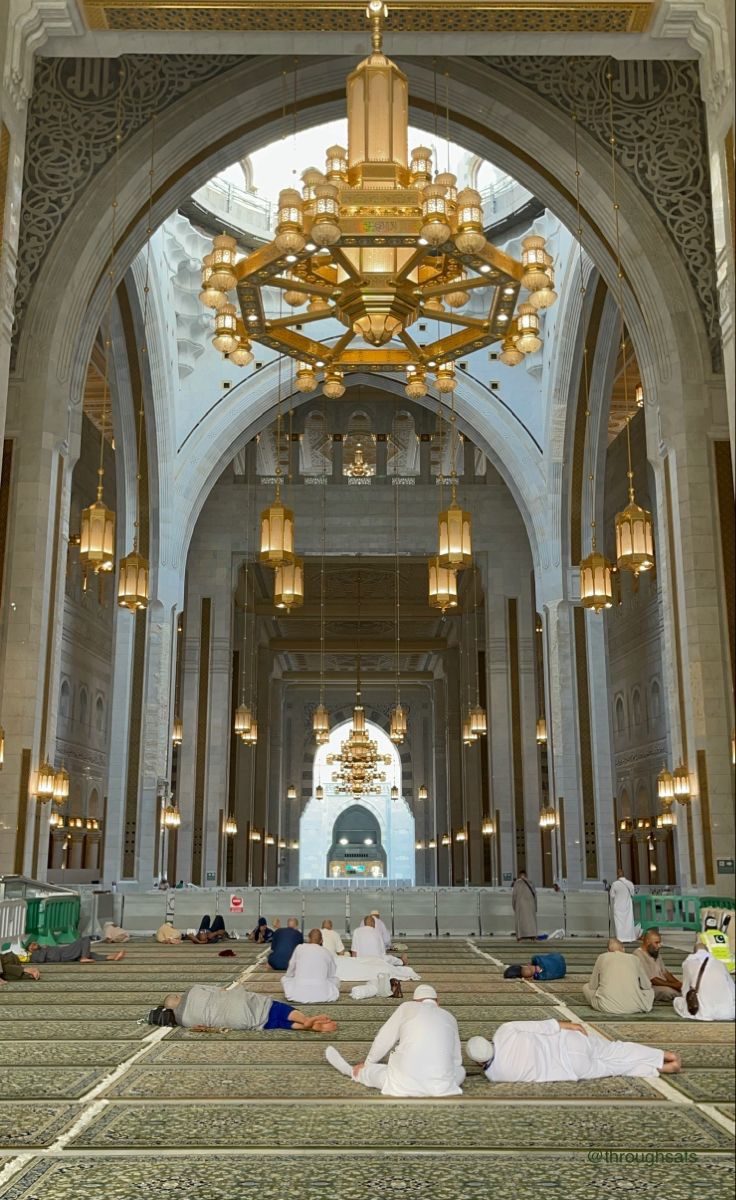
Friday is a day of great significance for Muslims. It is the day of Jumuʿah, the day when believers gather for prayer and remembrance, and a day in which Allah has placed a special period during which a Muslim’s supplication is answered.
The Prophet Muhammad ﷺ told his companions that there is a particular hour on Friday in which a Muslim asks Allah for something good and Allah grants it to him. Abu Hurayrah رضي الله عنه narrated that the Messenger of Allah ﷺ said:
“There is a time on Friday at which no Muslim servant would pray and ask Allah for something but He would give it to him.”
The Prophet ﷺ indicated that this period is short. This narration is recorded in Sahih Muslim.
This hadith gives Friday another special distinction. It is not simply a day when Muslims attend Jumuʿah and then return to their normal activities. It is also a day in which the believer should be especially conscious of turning to Allah with sincere duʿa.
But an important question remains: when exactly is this special hour?
This is where the matter becomes interesting.
THE SCHOLARS DIFFERED ABOUT THE EXACT TIME
There are authentic narrations describing more than one period on Friday, and scholars have discussed how these narrations should be understood.
One well-known view is that the special hour occurs during the time of Jumuʿah itself, particularly from the time the imam sits on the minbar until the prayer is completed.
A narration from Abu Musa al-Ashʿari رضي الله عنه identifies the period between the imam sitting on the minbar and the completion of the prayer. This position has been regarded by a number of scholars as particularly strong because of the explicit wording of the narration.
This means that the time surrounding the khutbah and Jumuʿah prayer should not be treated casually. A Muslim sitting in the mosque should listen attentively, remember Allah and take advantage of the opportunity to make sincere supplication at appropriate moments.
Another major view places the special hour during the final part of Friday, after ʿAsr and before sunset.
There is a hadith narrated by Jabir ibn ʿAbdullah رضي الله عنه in which the Prophet ﷺ said that Friday contains an hour in which a Muslim asks Allah for something and Allah gives it to him, and he instructed believers to seek that hour in the last part of Friday after ʿAsr. The narration is recorded in Sunan Abi Dawud and has been graded authentic.
This view was also associated with companions including Abu Hurayrah and ʿAbdullah ibn Salam رضي الله عنهما. In another narration, ʿAbdullah ibn Salam identified the period after ʿAsr until sunset as the time in question.
So what should a Muslim do with these different opinions?
The safest approach is not to restrict your duʿa to one narrow period.
A believer can make sincere duʿa throughout Friday, while giving particular attention to the periods identified in the authentic narrations.
THE LAST PART OF FRIDAY DESERVES SPECIAL ATTENTION
For many Muslims, Friday can become busy. There may be work, family responsibilities, shopping, traffic, social activities and preparations for the weekend. Before long, the day is almost finished.
But the final part of Friday should not be allowed to pass without remembrance of Allah.
After ʿAsr, a Muslim can deliberately slow down and spend time making duʿa. There is no need for complicated words. Allah knows what is in the heart before it is spoken.
Ask Him for forgiveness.
Ask Him to strengthen your iman.
Ask Him to guide your family.
Ask Him to protect you from sins.
Ask Him for halal provision.
Ask Him to grant you beneficial knowledge.
Ask Him to make your heart firm upon Islam.
Ask Him to accept your worship.
Ask Him for whatever good you genuinely need in this life and the next.
The point is not simply to make a long list of requests. Duʿa is an expression of our dependence upon Allah. It is the servant acknowledging that Allah is the One who possesses everything and that we are always in need of Him.
DO NOT ONLY MAKE DUʿA WHEN LIFE IS DIFFICULT
One mistake Muslims sometimes make is remembering duʿa only when they are desperate.
When someone is sick, they make duʿa.
When money is needed, they make duʿa.
When a marriage is in difficulty, they make duʿa.
When an examination is approaching, they make duʿa.
When travelling, they make duʿa.
There is nothing wrong with asking Allah during hardship. In fact, turning to Allah in difficulty is part of faith.
But our relationship with Allah should not be limited to moments of crisis.
Friday gives us an opportunity to speak to Allah even when everything appears to be going well.
Thank Allah for what you already have.
Ask Him to preserve your blessings.
Ask Him to protect you from becoming ungrateful.
Ask Him to keep your heart attached to Him when life becomes comfortable.
Ask Him to guide you before you need guidance desperately.
DUʿA IS NOT A SUBSTITUTE FOR OBEDIENCE
The special hour of Friday should also not be misunderstood.
A person cannot deliberately persist in wrongdoing and then treat duʿa as though it removes the responsibility to obey Allah.
Duʿa belongs alongside obedience, repentance and sincere effort.
If you ask Allah for guidance, you should also be willing to follow guidance.
If you ask Allah to forgive your sins, you should strive to leave those sins.
If you ask Allah for halal provision, you should pursue your livelihood through halal means.
If you ask Allah to strengthen your relationship with Him, you should take steps towards prayer, Qur’an, remembrance and obedience.
Duʿa is not merely asking Allah to change our circumstances while we refuse to change ourselves.
It is an act of worship that should accompany a sincere effort to live according to what Allah has commanded.
WHY DOES ALLAH KEEP THE EXACT HOUR SPECIAL AND SHORT?
The Prophet ﷺ described the period as short. This itself should make us more attentive to Friday.
If the exact moment were known with certainty to everyone, many people might simply wait for that particular time and neglect the rest of the day.
Instead, the believer is encouraged to remain conscious of Allah throughout Friday.
The uncertainty can itself become an opportunity for worship.
Rather than asking, “When exactly is the hour so I can make duʿa for five minutes?”, a believer can ask, “How can I make my entire Friday a day of remembrance?”
That changes the way we approach Jumuʿah.
We prepare ourselves for the prayer.
We listen to the khutbah.
We pray.
We remember Allah.
We send salawat upon the Prophet ﷺ.
We read Qur’an.
We make duʿa.
And when the afternoon comes, we continue turning to Allah.
WHAT SHOULD YOU ASK ALLAH FOR?
There is no requirement that every Friday duʿa must be about one particular subject.
Ask Allah for what is good.
Ask Him for your dunya and your akhirah.
Ask for forgiveness before asking for possessions.
Ask for guidance before asking for success.
Ask for a sound heart before asking for comfort.
Ask Allah to make your blessings a means of drawing closer to Him rather than becoming a source of distraction.
And do not forget to make duʿa for other people.
Make duʿa for your parents.
Make duʿa for your spouse and children.
Make duʿa for your relatives.
Make duʿa for Muslims facing hardship.
Make duʿa for people you know and those you may never meet.
Sometimes the most sincere duʿa is not about what we want to receive, but about asking Allah to bring goodness into the lives of others.
FRIDAY SHOULD END WITH YOUR HEART TURNED TOWARDS ALLAH
The beauty of this special hour is that it reminds us of something fundamental about Islam: the door of communication between the servant and Allah is always open.
You do not need a special location.
You do not need a particular language.
You do not need an elaborate speech.
You simply need sincerity.
Friday gives the Muslim another opportunity to stop and turn back to Allah.
Perhaps there is something you have been asking for for years.
Perhaps there is a sin you are struggling to leave.
Perhaps your iman has become weak.
Perhaps your family needs guidance.
Perhaps you are carrying a problem that nobody else knows about.
Perhaps there is something you have never been able to explain to another person.
Allah already knows.
So make duʿa.
Do not allow Friday to pass as just another day.
The Prophet ﷺ informed us that there is an hour on Friday in which a Muslim asks Allah for something good and it is granted. The exact timing has been understood differently by the scholars, with strong evidence cited for the period around Jumuʿah and for the final part of Friday after ʿAsr.
That uncertainty should not discourage us. It should encourage us to make greater use of the entire day.
Before sunset today, take a moment away from the noise.
Put your phone aside.
Raise your hands.
Speak to Allah sincerely.
Ask Him for what you need.
Ask Him for what you have forgotten to ask for.
Ask Him to forgive what you have done.
Ask Him to guide what you will do next.
And ask Him to make every Friday that comes after this one a step closer to Him.
May Allah accept our duʿas, forgive our shortcomings, strengthen our iman and grant us what is best for our dunya and our akhirah.
Ameen.
3SixtyIslam — your trusted partner for Hajj and Umrah travel. For reliable packages, proper guidance and full support throughout your sacred journey, DM @3SixtyIslam.
