


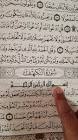
Friday is a day of worship, remembrance and reflection, and one practice that has become part of the weekly routine of many Muslims is reading Surah Al-Kahf. The 18th chapter of the Qur’an contains powerful lessons about faith, trials, knowledge, wealth, leadership and the temporary nature of worldly life.
The connection between Surah Al-Kahf and Friday is mentioned in narrations from the Prophet Muhammad ﷺ. Among them is the narration reported by Al-Hakim in which the Prophet ﷺ said that whoever recites Surah Al-Kahf on Friday will have a light between the two Fridays. Scholars have discussed the strength of the various narrations concerning this virtue, but many scholars have accepted the practice of reciting Surah Al-Kahf on Friday as recommended.
For Muslims who make it part of their Friday routine, the important point is not simply to finish the surah as quickly as possible. The Qur’an was revealed for recitation, understanding and reflection. Surah Al-Kahf contains lessons that remain deeply relevant to the challenges Muslims face today.
The surah begins with praise of Allah for revealing the Qur’an as a straight and upright Book. It then tells the story of the young people of the cave who protected their faith when they faced pressure from their society. They withdrew to the cave and placed their trust in Allah, and Allah preserved them for many years.
Their story reminds Muslims that protecting one’s iman sometimes requires courage. Faith can be challenged by family expectations, friendships, social pressure, entertainment, online culture and the desire to fit in. A Muslim may sometimes find themselves in an environment where doing what is right feels difficult.
The young people of the cave demonstrate that remaining committed to Allah is more important than gaining acceptance from people.
But Surah Al-Kahf does not only discuss the trial of faith. It also presents the story of the two men and the gardens.
One man was blessed with wealth and became proud of what he possessed. He looked at his property and assumed that his prosperity would continue. His wealth became a source of arrogance rather than gratitude.
The story provides a powerful reminder about the trial of wealth.
Money itself is not condemned in Islam. Wealth can be a blessing when it is earned lawfully and used properly. The danger comes when wealth causes a person to forget Allah, become arrogant or believe that worldly success makes them superior to others.
This lesson is particularly relevant in an age where success is constantly displayed online. Social media can make people feel that everyone else is richer, happier and more successful. Surah Al-Kahf reminds us that worldly possessions are temporary and that true security comes from Allah.
The surah then presents the story of Musa عليه السلام and the knowledgeable servant of Allah, commonly identified in Islamic tradition as Al-Khidr. This part of the surah addresses another major human weakness: assuming that we understand everything.
Musa عليه السلام was one of the greatest prophets of Allah, yet Allah taught him that there was knowledge he did not possess.
The journey teaches humility. Human beings often judge situations based only on what they can immediately see. Something may appear harmful while containing wisdom that we cannot yet understand. Something may appear beneficial while carrying consequences we have not considered.
This does not mean Muslims should stop thinking or questioning. Rather, it teaches that human knowledge has limits and that Allah’s knowledge is complete.
For a believer experiencing difficulties, this lesson can be deeply comforting.
There may be situations in life that do not make sense. A door closes. A plan fails. An opportunity disappears. A person does not understand why something happened.
Surah Al-Kahf reminds us that our limited perspective does not give us the complete picture.
The final major story is that of Dhul-Qarnayn, a ruler who was given authority and resources. Unlike the arrogant owner of the two gardens, Dhul-Qarnayn used what Allah had given him responsibly. He travelled, established justice and helped people who were vulnerable.
His story demonstrates that power and authority are also tests.
Leadership is not simply about having influence. It is about what a person does with that influence. The more Allah gives someone, the greater the responsibility that comes with it.
Taken together, the major stories of Surah Al-Kahf address several of the greatest trials human beings face: the trial of faith, the trial of wealth, the trial of knowledge and the trial of power.
That is one reason the surah remains so relevant.
Every generation faces these trials in different forms. Young Muslims may struggle to protect their identity and faith in environments that constantly pressure them to conform. Adults may be tested through wealth and status. Students and professionals may be tested by knowledge and pride. Leaders may be tested by authority and responsibility.
Surah Al-Kahf speaks to all of these realities.
Reading it every Friday can therefore become more than a weekly habit. It can become a weekly spiritual examination.
What is currently testing my iman? How do I respond when Allah gives me wealth? Do I recognise the limits of my knowledge? How do I use whatever influence Allah has given me?
These questions can transform Qur’an recitation from a routine into reflection.
Friday is already a day in which Muslims are encouraged to increase remembrance of Allah and send blessings upon the Prophet ﷺ. Adding Surah Al-Kahf to that routine gives the believer another opportunity to reconnect with the Qur’an.
It does not have to become complicated.
Find a quiet time during Friday. Read the surah attentively. If Arabic is difficult, use a reliable translation to understand its meaning. Take your time with the stories. Think about the lessons. Then ask yourself how those lessons apply to your own life.
The goal should not simply be to say, “I read Surah Al-Kahf this Friday.”
The greater goal is to allow the Qur’an to speak to the heart.
Friday returns every week, and with it comes another opportunity to open the Qur’an, reflect on its guidance and remind ourselves that the life of this world is temporary while our relationship with Allah is what ultimately matters.
Surah Al-Kahf can become part of that weekly return.
Not simply as a Friday ritual, but as a reminder to protect our faith, remain grateful for our blessings, stay humble about what we know and use whatever Allah gives us in a way that pleases Him.
